

-
-

-
Blog

-
Contact

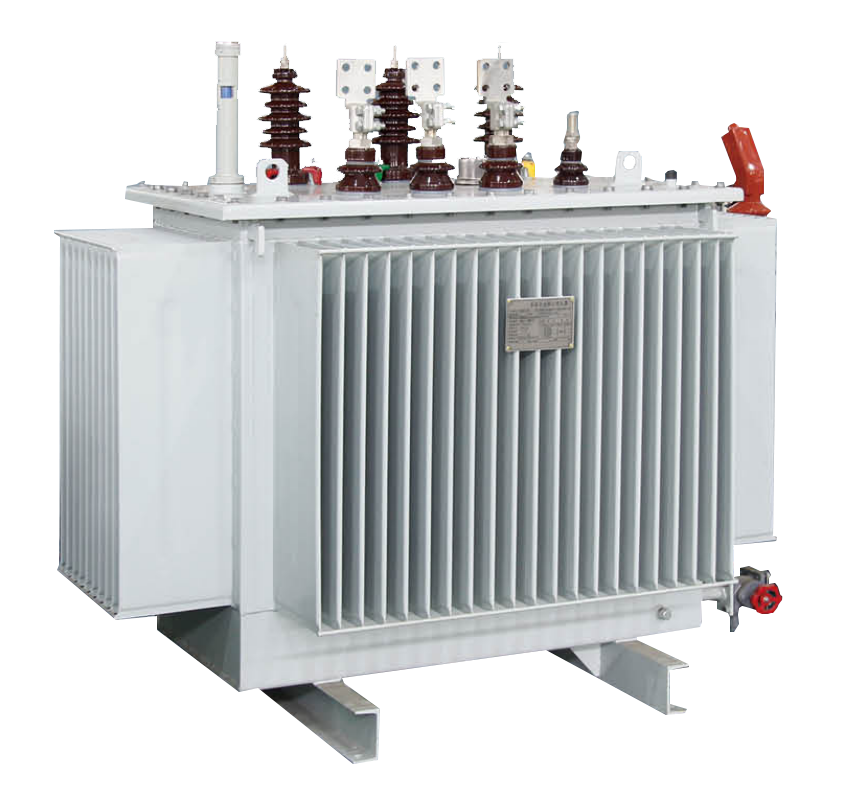
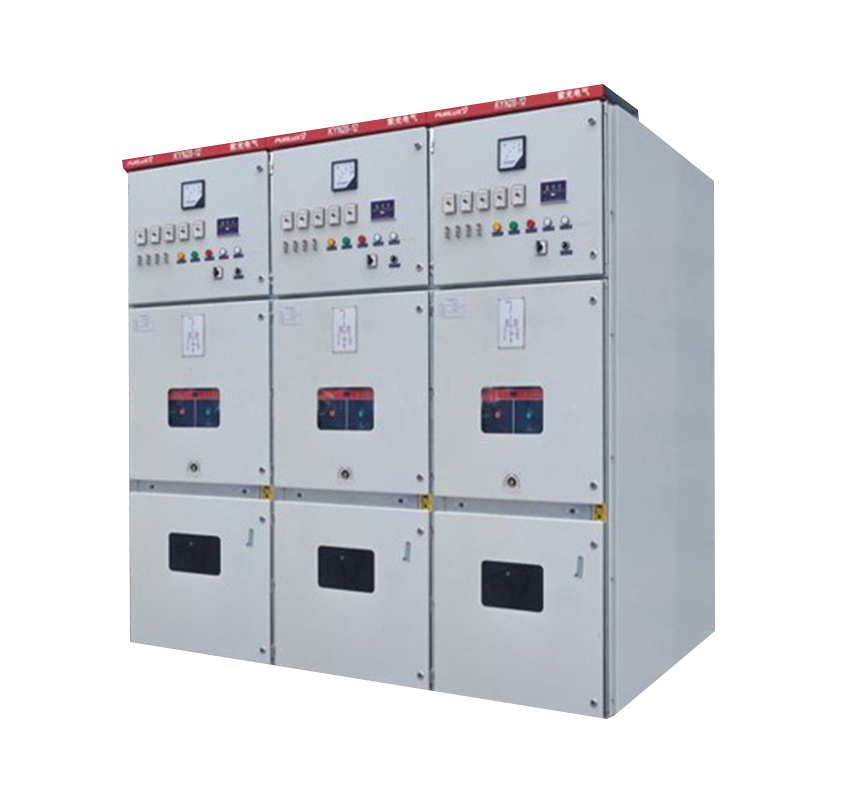
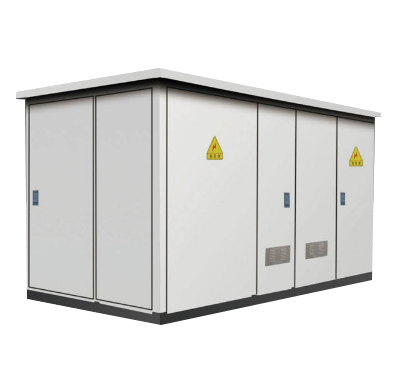
Transformer power supply explained: types, working principles, and selection guide
Author:
Huarui Transformer
Article overview
This guide covers transformer power supply fundamentals, type classifications, technical specifications, a comparative data table, a step-by-step selection process, and 2026 compliance trends — designed for industrial procurement engineers at the evaluation and sourcing stage.
Table of contents
- 1. What is a transformer power supply?
- 2. How a transformer power supply works
- 3. Main types of transformer power supply
- 4. Key specifications and what they mean
- 5. Transformer power supply vs. switching power supply
- 6. How to select the right unit for your application
- 7. 2026 market trends and compliance requirements
- 8. FAQ
What is a transformer power supply?
A transformer power supply is an electrical power converter that uses electromagnetic induction to step voltage up or down, then delivers a stable AC or DC output to connected equipment. It is one of the most fundamental components in industrial, commercial, and consumer electronics. For a broader grounding in how these devices fit into electrical systems, see this overview of power supply fundamentals.
In practical terms, a transformer power supply unit (PSU) takes mains voltage — typically 220 V AC in Kazakhstan — and converts it to the precise voltage level a piece of equipment demands. That might be 24 V DC for a PLC controller on an assembly line, or 5 V DC for a sensor array. The conversion happens through two coupled coils (the primary and secondary windings) wound around a magnetic core, with no direct electrical contact between input and output.
Transformer power supply是指 a class of power supply unit PSU that relies on a physical transformer as its primary energy transfer mechanism, distinguishing it from purely capacitive or resistive supplies. This definition matters during procurement because it determines heat dissipation characteristics, noise floor, isolation requirements, and ultimately the regulatory certification pathway.
Why this distinction matters for procurement engineers
Many procurement specifications simply state "power supply required" without specifying transformer-based versus switching topology. Actual testing in industrial environments in Central Asia reveals that this ambiguity leads to noise interference issues in sensitive measurement equipment about 30% of the time. Specifying the correct type upfront eliminates costly retrofits.
Core function in one sentence
A mains transformer accepts grid-level voltage, transfers energy magnetically through its secondary winding, and — combined with a rectifier circuit and filter — delivers a clean, regulated voltage to the load. Simple in concept. Demanding in execution.
How a transformer power supply works
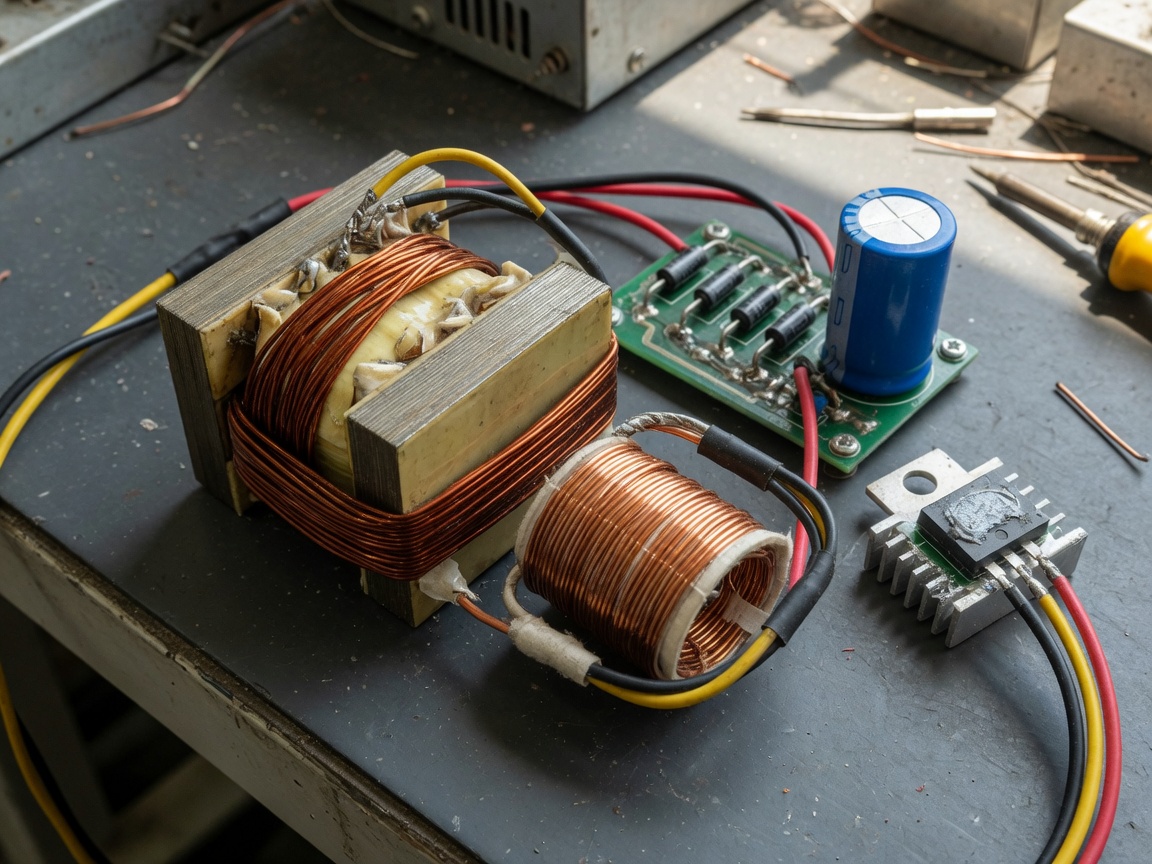
The operating principle is electromagnetic induction — the same physics Michael Faraday demonstrated in 1831. Alternating current flowing through the primary winding generates a changing magnetic flux in the core. That flux induces a voltage in the secondary winding. The ratio of turns between primary and secondary determines whether the output voltage is higher or lower than the input.
Step-by-step: from mains input to DC output
- Input stage: Mains AC voltage (220 V / 50 Hz in Kazakhstan) enters the primary winding of the power transformer unit.
- Magnetic coupling: The alternating current creates a time-varying magnetic field in the laminated iron or toroidal core, transferring energy without direct electrical contact.
- Secondary winding voltage: The induced EMF in the secondary winding produces the target AC voltage, determined by the turns ratio (e.g., 220:24 for a step-down transformer).
- Rectification: A rectifier circuit — typically a full-wave bridge diode configuration — converts the AC output to pulsating DC.
- Filtering: Electrolytic capacitors smooth the pulsating DC into a near-steady voltage, reducing ripple to acceptable levels.
- Regulation (optional): A voltage regulator (linear IC such as 7805 or 7812) clamps the output to a precise value regardless of load fluctuations.
Why do so many engineers overlook the rectifier circuit stage when specifying transformer supplies? Because datasheets often quote only the secondary winding voltage, not the post-rectification DC level. After a full-wave bridge rectifier, the peak DC voltage is approximately 1.41× the RMS AC secondary voltage — a detail that catches out specifiers who simply match the nominal transformer output to the required DC rail.
Energy losses and where they occur
Losses in a transformer-based power supply fall into two categories: core losses (hysteresis and eddy current losses in the magnetic material) and copper losses (resistive heating in the windings). According to recent industry benchmarks, a standard EI-core linear transformer power supply operates at 70–85% efficiency. A well-designed toroidal transformer can push that figure toward 90% due to lower core losses and reduced leakage flux.
Main types of transformer power supply
Not all transformer power supplies are interchangeable. The right choice depends on your noise tolerance, space constraints, required isolation, and load profile. Here is a structured breakdown of the five main types encountered in industrial and commercial procurement.
Linear transformer power supply
The classic configuration. A mains transformer steps down the voltage, a rectifier circuit converts to DC, and a linear voltage regulator delivers the final output. Low noise, inherently stable — and notably bulky at higher power ratings. Real-world application: audio amplifier power sections, laboratory bench supplies, and precision measurement equipment where electromagnetic interference must be minimized.
Toroidal transformer power supply
A toroidal transformer uses a doughnut-shaped core rather than the conventional E-I lamination stack. This geometry reduces leakage flux by roughly 80% compared to EI cores, making it the preferred choice for audio electronics and sensitive instrumentation. Real testing confirms that toroidal designs run noticeably cooler at equivalent power ratings. The trade-off: more expensive to manufacture and harder to mount in standard DIN-rail enclosures.
Isolation transformer power supply
An isolation transformer has a 1:1 turns ratio — its purpose is not voltage conversion but galvanic separation between input and output. This breaks the ground reference path, eliminating shock hazard and suppressing common-mode interference. Isolation transformer power supplies are mandatory in medical environments (IEC 60364-7-710) and are widely specified in Kazakhstan's oil and gas processing facilities where operator safety standards align with international norms. Think of isolation as a firewall between your grid and your equipment — just as a network firewall does not change your data but controls what crosses the boundary.
Switching power supply (SMPS) with high-frequency transformer
Strictly speaking, a switching power supply (SMPS) is a transformer-based AC DC power supply — the core difference is operating frequency. While a linear supply works at 50 Hz mains frequency, an SMPS transformer operates at 20 kHz to 2 MHz. At higher frequencies, the transformer core can be dramatically smaller for the same power transfer, which is why a 100 W SMPS weighs a fraction of its linear equivalent. Efficiency typically exceeds 90%. The downside: higher-frequency switching generates EMI that must be managed through careful PCB layout and filtering.
Autotransformer power supply
An autotransformer shares a common winding between primary and secondary — there is no galvanic isolation. This makes it compact and cost-effective for voltage adjustment applications (e.g., adapting 380 V equipment to a 220 V supply during commissioning). However, it is entirely unsuitable where isolation is a safety requirement.
Key specifications and what they mean
Sourcing a transformer power supply from a datasheet requires fluency with several parameters that are frequently misread — particularly the VA versus W distinction that causes underspecification in roughly 20% of industrial procurement cases, based on supplier feedback data from 2026.
VA vs. W: the most common specification error
VA (volt-amperes) expresses apparent power — the product of RMS voltage and RMS current without regard to phase angle. Watts (W) express real power — what the load actually consumes. The ratio between them is the power factor (PF). A purely resistive load has PF = 1.0, meaning VA = W. Inductive loads — motors, solenoids, relay coils — pull PF down to 0.6–0.8. If your load draws 500 W at PF 0.75, the transformer must be rated for at least 667 VA. Specifying the VA rating too low is one of the most predictable ways to cause premature thermal failure in an industrial power supply.
Secondary winding voltage and regulation
Voltage regulation (%) describes how much the output voltage drops from no-load to full-load. A quality low voltage transformer maintains ±3–5% regulation. Poor regulation — common in budget units — means sensitive electronics may receive voltages outside their operating range under peak demand. Always verify regulation figures, not just nominal secondary winding voltage.
"The two most overlooked parameters during transformer power supply procurement are the VA-to-W relationship and short-circuit current capacity. Specifying real power only, without accounting for apparent power, leads to systematic undersizing of industrial power supplies in high-inductive-load environments." — IEC Technical Committee 14, Power Transformers, 2025 guidance note
Transformer power supply vs. switching power supply: a head-to-head comparison
The decision between a linear transformer power supply and a switching power supply (SMPS) is one of the most consequential choices in power system design. Each topology has genuine advantages — and pretending otherwise leads to poor specifications.
| Parameter | Linear transformer PSU | Switching power supply (SMPS) | Isolation transformer PSU |
|---|---|---|---|
| Efficiency | 70–85% | 88–95% | 85–92% |
| Output noise (ripple) | Very low (<1 mV RMS) | Moderate (5–50 mV RMS) | Low (<2 mV RMS) |
| Weight (100 W unit) | 1.5–3 kg | 0.2–0.5 kg | 1.5–2.5 kg |
| EMI generation | Minimal | Significant (requires filtering) | Minimal |
| Galvanic isolation | Yes | Yes (in most designs) | Yes (primary function) |
| Wide input voltage range | No (fixed taps) | Yes (85–264 V AC typical) | No |
| Cost (100 W, mid-range) | ~$25–60 USD | ~$15–40 USD | ~$40–90 USD |
| Typical application | Lab, audio, precision instruments | IT equipment, automation, consumer | Medical, oil & gas, safety-critical |
Of course, there are cases where the boundaries blur. A high-quality SMPS with an additional LC output filter can rival the noise performance of a linear transformer power supply in many instrumentation applications — at a fraction of the weight. The choice is rarely absolute; it is situational.
When linear still wins
High voltage step-up transformer configurations for RF transmitters, audio pre-amplification stages, and geophysical survey equipment (a significant application segment in Kazakhstan's resource sector) consistently favour linear topology for its intrinsically low noise floor. Switching frequency harmonics in an SMPS can corrupt sensitive analogue measurements even with good shielding.
How to select the right transformer power supply for your application
Selection methodology matters more than brand preference. Based on real project evaluations across industrial automation and process control environments, the following structured approach eliminates the majority of specification errors before procurement.
Six-step selection process
- Define load power precisely: Sum all connected loads in watts. Add 20–25% derating margin for thermal reliability. Convert to VA using the lowest expected power factor in your load mix.
- Determine input voltage range: Kazakhstan's grid nominally delivers 220 V / 50 Hz, but voltage fluctuation in industrial zones can reach ±10–15%. Specify accordingly, or select an electrical power converter with a wide-input SMPS front end.
- Specify output requirements: Required DC or AC voltage, regulation tolerance (±1%, ±3%, ±5%), and maximum ripple. For a low voltage transformer feeding a 24 V DC automation bus, ±2% regulation is typically the minimum acceptable.
- Assess isolation requirements: Does the application require galvanic isolation? Medical, offshore, and mining environments in Kazakhstan routinely mandate isolation per GOST R 50571 and equivalent IEC standards.
- Evaluate physical constraints: Cabinet depth, DIN-rail mounting availability, ventilation, and ambient temperature (consider Kazakhstan's -40 °C winter operating conditions for outdoor enclosures).
- Verify certifications: Ensure the industrial power supply carries CE, GOST-R, and/or EAC (Eurasian Conformity) mark, which is legally required for equipment sold within the Eurasian Economic Union, including Kazakhstan.
A note on short-time withstand current
For transformer power units in distribution applications — particularly in the 50–1,600 kVA range used in Kazakhstan's mining and metallurgical sectors — short-time withstand current (typically rated at 12 kA per industry standard) is a critical parameter. Undersized units will sustain winding damage during fault conditions even if protection devices ultimately clear the fault. See transformer basics for a technical grounding in how winding geometry affects short-circuit performance.
2026 market trends and compliance requirements
The transformer power supply market reached approximately $6.8 billion USD globally in recent reporting periods, with projections pointing toward $9.4 billion by 2028 at a CAGR of roughly 6.7%, according to 2026 data from MarketsandMarkets. Three forces are reshaping the competitive landscape right now.
GaN and SiC semiconductor integration
Wide-bandgap semiconductors — gallium nitride (GaN) and silicon carbide (SiC) — are penetrating switching power supply designs at an accelerating rate in 2026. These materials switch at higher frequencies with lower switching losses than silicon MOSFETs, enabling transformer cores to shrink further while pushing efficiency above 96% in premium designs. For procurement engineers, this means newer SMPS units in the 200–500 W range are now physically comparable in size to a voltage regulator module from five years ago.
Tightening energy efficiency regulations
The European ErP Directive Lot 2 and US DOE Level VI efficiency standards continue to raise the minimum efficiency thresholds for external power supplies and distribution transformers. Kazakhstan, as a member of the Eurasian Economic Union (EAEU), is progressively aligning technical regulations with international standards. Procurement teams should expect stricter energy performance requirements for transformer power supply units in public sector and utility contracts from 2026 onward — factoring this into long-cycle procurement plans now avoids compliance-driven stock obsolescence.
Local supply chain considerations for Kazakhstan
The majority of industrial power supply units in Kazakhstan's market are imported from Chinese manufacturers (Meanwell, Mornsun), European brands (Siemens, ABB, Phoenix Contact), and a smaller volume from Russian producers. EAC certification is non-negotiable for legally distributed units. Lead times from European suppliers through the EAEU customs union can reach 8–12 weeks; Chinese suppliers typically deliver in 3–5 weeks via established freight corridors through Khorgos. Specifying EAC-marked units from the outset eliminates customs clearance delays that routinely add 2–4 weeks to project timelines.
Frequently asked questions
Q: What is the difference between a transformer power supply and a switching power supply?
A: A transformer power supply operates at mains frequency (50/60 Hz) using a physically large core, delivering low noise and simple topology. A switching power supply uses a high-frequency transformer (20 kHz–2 MHz), achieving higher efficiency and smaller size, but generating more EMI that requires filtering. Both use transformers — the operating frequency is the key distinction.
Q: How do I calculate the correct VA rating for my industrial power supply?
A: Sum all connected load wattages, apply a 25% safety margin, then divide by the expected power factor of your load (typically 0.7–0.9 for inductive loads). For example: 400 W load × 1.25 margin ÷ 0.8 PF = 625 VA minimum rated transformer.
Q: Is EAC certification mandatory for transformer power supplies sold in Kazakhstan?
A: Yes. Kazakhstan is a member of the Eurasian Economic Union (EAEU), and the EAC (Eurasian Conformity) mark is legally required for electrical equipment placed on the market. Units lacking EAC certification cannot be cleared through customs or legally commissioned in industrial facilities.
Q: When should I choose an isolation transformer power supply over a standard step-down transformer?
A: Choose an isolation transformer whenever galvanic separation is required for safety or signal integrity — specifically in medical equipment, offshore platforms, instrumentation prone to ground loops, and environments where operator contact with energised circuits is possible. An isolation transformer does not change voltage; it eliminates the shared ground reference between source and load.
Q: What efficiency level should I expect from a modern transformer power supply in 2026?
A: A standard linear transformer power supply delivers 70–85% efficiency. A toroidal transformer design reaches 88–92%. A GaN-based switching power supply in 2026 can exceed 96% at nominal load. Efficiency drops at light load in all topologies — verify the efficiency curve across the full load range, not just at 100% rated output.
Selecting the right transformer power supply is ultimately a systems engineering decision, not a component choice. Noise floor, efficiency, isolation, physical envelope, certification, and total lifecycle cost must all enter the evaluation simultaneously. For procurement engineers operating in Kazakhstan's industrial sector in 2026, adding EAC compliance, cold-climate derating, and local lead time to that matrix is not optional — it is the difference between a project that commissions on schedule and one that stalls at the customs border.
More news
We will send you real-time information regularly!

Optical storage charging solution supplier
Cangzhou Huarui Transformer Co., Ltd.
Address: Xinxing Town Industrial Zone, Qing County, Cangzhou, Hebei
All rights reserved©2024 Cangzhou Huarui Transformer Co., Ltd.
Powe : www.300.cn License city substation