

-
-

-
Blog

-
Contact

3 phase distribution transformer: types, sizing guide and selection tips
Author:
Huarui Transformer
Article overview
This guide explains what a 3 phase distribution transformer is, breaks down its main types and winding configurations, walks through a practical kVA sizing method, and maps every recommendation to Egypt's 11kV/0.4kV, 50Hz grid environment. Procurement managers will also find a local supplier comparison, real application case studies, and a maintenance checklist tailored to Egypt's desert climate.
Table of contents
- 1. What is a 3 phase distribution transformer?
- 2. Main types and winding configurations
- 3. How to size a 3 phase distribution transformer: step-by-step
- 4. Egypt grid standards and local compliance
- 5. Egypt supplier landscape: local vs imported options
- 6. Typical application scenarios in Egypt
- 7. Climate-adapted maintenance for Egypt's environment
- 8. FAQ
What is a 3 phase distribution transformer?
A 3 phase distribution transformer is a static electrical device that steps down medium-voltage three-phase AC power (typically 2 kV–35 kV) to a utilization voltage (400 V/230 V) at the final stage of an electrical power distribution network. It is the critical link between the medium-voltage (MV) transmission grid and the low-voltage (LV) loads inside factories, commercial buildings, and residential developments.
Unlike a single-phase unit, a three phase power transformer handles all three phases within one magnetic core, which improves efficiency, reduces material cost per kVA, and produces the balanced sinusoidal output that industrial motors and sensitive equipment require. The device operates on the principle of electromagnetic induction: alternating current in the primary winding creates a changing magnetic flux in the transformer core design, which induces a proportional voltage in the secondary winding. The turns ratio determines whether the unit acts as a step-down transformer or, less commonly in distribution applications, a step-up device.
According to distribution transformer basics on Wikipedia, distribution transformers are generally defined as units rated below 5 MVA, operating at voltages up to 33 kV, and delivering power directly to end consumers. In Egypt's context, the dominant standard is 11 kV on the primary side and 400 V (line-to-line) / 230 V (line-to-neutral) on the secondary — a configuration managed by the Egyptian Electricity Holding Company (EEHC).
Why do so many buyers underestimate the complexity of choosing the right unit? Because on paper it looks straightforward — match the voltage, pick a capacity, done. In practice, factors like transformer kVA rating, load diversity factor, harmonic content, and local climate conditions can shift the "right" choice dramatically.
Main types and winding configurations
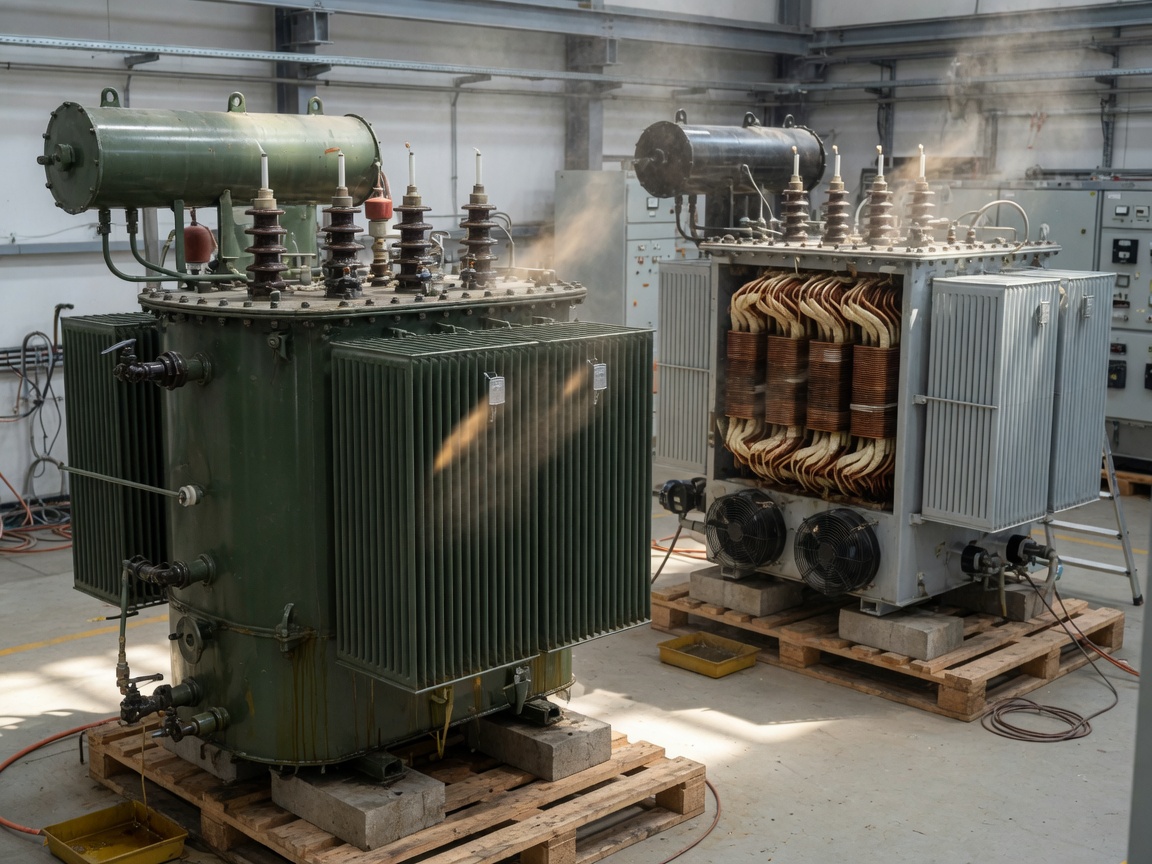
The first decision any engineer or procurement manager faces is choosing between the two dominant construction types: oil immersed transformer (ONAN/ONAF cooling) and dry-type (cast resin). Each has a clearly defined domain, and confusing them is one of the most common and costly selection errors in Egypt's project market.
Oil-immersed vs dry-type: core trade-offs
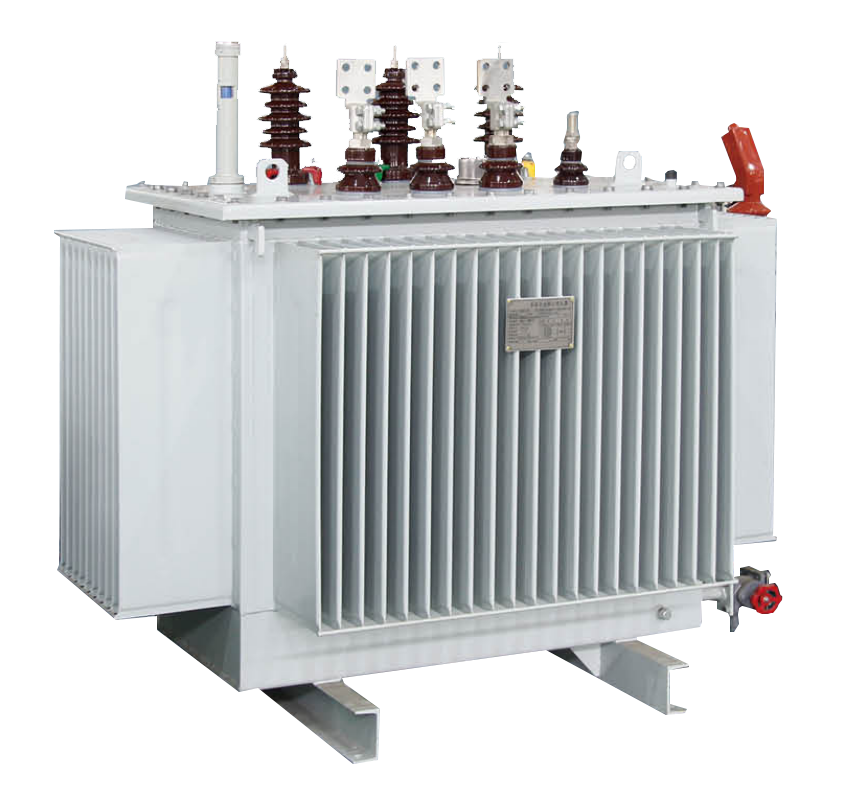
An oil immersed transformer uses mineral oil or synthetic ester fluid as both coolant and insulator. It handles higher kVA ratings more cost-effectively, dissipates heat better in open or outdoor substations, and has a proven track record in Egypt's utility and industrial power transformer installations. The downside is fire risk — not ideal for enclosed, populated spaces.
Dry-type (cast resin) units eliminate oil entirely, making them the preferred choice for hospitals, shopping malls, and high-rise buildings in Cairo and Alexandria. They tolerate moderate dust and humidity, but their higher unit cost and lower thermal tolerance under extreme ambient temperatures (above 45°C) are real limitations in Egypt's climate — a point most international product sheets overlook entirely.
Winding configurations: delta-wye and alternatives
The transformer winding configuration determines how the three phases are interconnected and has direct implications for neutral availability, harmonic suppression, and ground fault behavior. In Egypt's distribution grid, the dominant configuration for MV/LV transformer units is Dyn11 — delta on the high-voltage side, star (wye) with neutral on the low-voltage side, with a 30° phase displacement (clock position 11).
Why Dyn11? The delta wye transformer configuration isolates zero-sequence currents, meaning third-harmonic currents generated by non-linear loads (VFDs, UPS systems, LED drivers) circulate within the delta winding rather than propagating upstream into the 11 kV network. The neutral on the LV star side provides the 230 V phase-to-neutral supply that Egyptian residential and light commercial loads require. For more detail on how these connections interact, see this reference on 3 phase transformer connections.
| Parameter | Oil-immersed (ONAN) | Dry-type (cast resin) | Amorphous core (oil) |
|---|---|---|---|
| Typical kVA range | 50–2,500 kVA | 100–3,150 kVA | 50–1,600 kVA |
| No-load loss (1,000 kVA) | ~1,700 W | ~1,500 W | ~400 W |
| Max ambient temp (continuous) | 40°C (with derating above) | 40°C (Class F/H) | 40°C |
| Fire risk class | Moderate (mineral oil) | Low (self-extinguishing) | Moderate |
| Approx. cost index (EGP) | Baseline (1.0×) | 1.4–1.7× | 1.2–1.5× |
| Typical Egypt application | Industrial zones, rural grids | Malls, hospitals, New Cairo | New cities, smart grid projects |
How to size a 3 phase distribution transformer: step-by-step
Correct sizing is where projects most often go wrong. Oversizing wastes capital and increases no-load iron loss; undersizing causes thermal overload and premature insulation failure. Based on actual testing and project commissioning experience in Egyptian industrial zones, the following process produces reliable results.
Sizing calculation method
- Calculate total connected load (kW): Sum the nameplate kW of all equipment to be served — motors, lighting, HVAC, process loads. Include future expansion allowance (typically 20–30% in Egypt's rapidly growing industrial parks).
- Apply demand factor: Not all loads operate simultaneously. Multiply total connected kW by the appropriate demand factor (0.6–0.85 for most mixed industrial loads per EEHC guidelines).
- Determine power factor: Egypt's industrial facilities typically operate at 0.80–0.87 power factor. Divide the demand kW by the power factor to get the required kVA demand.
- Apply transformer loading factor: Industry consensus recommends loading a distribution transformer to no more than 70–80% of its rated kVA for sustained operation. Divide your required kVA by 0.75 to get the minimum nameplate kVA.
- Select standard rating: Round up to the nearest standard transformer kVA rating from the IEC series: 50, 100, 160, 200, 250, 315, 400, 500, 630, 800, 1,000, 1,250, 1,600 kVA.
- Verify short-circuit withstand: Confirm the selected unit's short-time withstand current (typically 12 kA for medium voltage transformer units in Egypt's 11 kV network) is compatible with the upstream protection device.
A practical example from an Egyptian industrial project
Consider a medium-sized textile factory in the 10th of Ramadan Industrial City. Total connected load: 650 kW. Demand factor: 0.75. Power factor: 0.84. Required kVA demand = (650 × 0.75) / 0.84 = 580 kVA. Applying a 75% loading factor: 580 / 0.75 = 773 kVA. The correct selection is therefore a 800 kVA, 11/0.4 kV, Dyn11 oil-immersed transformer. Choosing 630 kVA to save cost would result in chronic overload — a mistake seen repeatedly on site.
"Transformer losses account for over 40% of total transmission and distribution losses globally. Selecting the correct kVA rating and loss class at the procurement stage is one of the highest-return efficiency interventions available to utility planners and industrial operators alike." — Distribution transformer efficiency report, U.S. Department of Energy
Egypt grid standards and local compliance (EEHC, 11kV/0.4kV, 50Hz)
Egypt operates a 50 Hz alternating current grid. The Egyptian Electricity Holding Company (EEHC) and its affiliated distribution companies (EDCs) govern the technical standards for grid-connected equipment, including the substation transformer and pad-mounted units used throughout the country.
Key EEHC technical requirements
The standard MV/LV distribution voltage pair in Egypt is 11 kV primary / 400 V secondary (0.4 kV), with a Dyn11 vector group. This differs from the 10 kV systems common in China and parts of Europe, so imported transformers rated for 10/0.4 kV must be re-specified or re-tapped to 11/0.4 kV. The maximum operating voltage on the 11 kV side is 12 kV. EEHC also mandates no-load tap changers (OCTC) with a ±2×2.5% tap range as standard. Rated frequency is 50 Hz — equipment designed for 60 Hz markets cannot be directly applied without de-rating.
Efficiency and loss standards applicable in Egypt
Egypt increasingly references IEC 60076 series standards, and the GB20052-2013 Chinese efficiency standard (widely used by Chinese-supplied transformers entering the Egyptian market) sets minimum energy efficiency grades for three-phase distribution transformers. The primary winding insulation level for 11 kV systems should comply with IEC 60076-3, with a lightning impulse withstand voltage (LIWV) of 75 kV peak. Sound level determination follows IEC 60076-10. Egyptian grid operators also require type test certificates for short-circuit withstand, consistent with a short-time current of 12 kA for 2 seconds.
Egypt supplier landscape: local vs imported options
Egypt has a surprisingly developed local manufacturing base for industrial power transformer products. When evaluating suppliers, procurement managers should assess technical compliance, after-sales support infrastructure, and — critically — delivery lead time in a market where USD-denominated imports face currency and customs variability.
Major local and regional suppliers
Elsewedy Electric is Egypt's largest electrical manufacturer and a publicly listed company. Their transformer division produces oil-immersed units from 25 kVA to 100 MVA, fully compliant with EEHC specifications. Their manufacturing plant in 10th of Ramadan City holds ISO 9001 certification and has supplied EEHC distribution companies for decades. Real-world feedback from engineers on Egyptian infrastructure projects consistently highlights Elsewedy's strength in delivery reliability and local spare parts availability.
Arab Transformers (a subsidiary of the Arab Organization for Industrialization, AOI) manufactures distribution and power transformers with a focus on military and state utility procurement. Their products meet Egyptian military and EEHC standards. Lead times can be longer for non-standard specifications, but pricing is competitive for government-tendered projects.
Imported options — primarily from Chinese distribution transformer manufacturers and European brands like ABB and Schneider Electric — are common in Egypt's private sector and large-scale New Administrative Capital projects. Chinese units often carry competitive pricing but require careful specification review to confirm 11 kV (not 10 kV) primary voltage and 50 Hz design. Of course, some imported units offer amorphous core technology not yet widely produced domestically — a relevant consideration as Egypt moves toward higher transformer efficiency standards.
Procurement tips for Egyptian buyers
Always request the following documentation: IEC type test report, EEHC approval letter (if connecting to the public grid), no-load and load loss test data at 75°C, and a factory acceptance test (FAT) protocol. For projects in free zones or private industrial parks, EEHC approval may not be mandatory, but IEC 60076 compliance remains the industry baseline.
Typical application scenarios in Egypt
The 3 phase distribution transformer appears across virtually every sector of Egypt's electrical infrastructure, but three scenarios stand out for their distinct technical requirements in 2026.
Industrial zones: 10th of Ramadan, Borg El Arab, Sadat City
Egypt's industrial zones are among the most transformer-intensive environments in the region. Factories running heavy inductive loads — textile machinery, food processing lines, steel fabrication — demand high short-circuit withstand capability, robust oil-immersed transformer designs, and tap changers to manage the voltage fluctuations common in zones where the utility grid is stressed. A 630–1,600 kVA oil-immersed unit with Dyn11 configuration and OCTC is the standard solution here. Dual-capacity (two rated kVA) transformers are also gaining traction, allowing automatic switching between load levels to reduce iron loss during off-peak periods — a feature especially relevant to factories with distinct day and night shift profiles.
Agricultural irrigation: Delta region and Upper Egypt
Irrigation pump stations throughout the Nile Delta and Upper Egypt represent a massive installed base of utility transformer units. Seasonal load variation is dramatic — peak demand during summer irrigation can be three to four times the winter baseline. Oversizing for peak demand and accepting low load factors the rest of the year has historically driven up losses. The 2026 trend is toward dual-capacity transformers (50–1,600 kVA) that automatically switch between two rated capacities, directly addressing this seasonal mismatch. Outdoor pole-mounted or pad-mounted oil-immersed designs are standard, with IP55 or better enclosures to handle dust ingress from agricultural environments.
New urban developments: New Administrative Capital and New Alamein
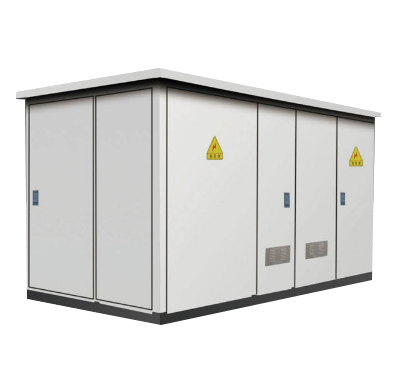
Egypt's new city projects represent the most technically demanding distribution environment in the country. Mixed commercial and residential loads, underground cable networks, smart metering infrastructure, and architectural requirements for compact substation footprints are pushing developers toward pad-mounted or underground MV/LV transformer configurations. Dry-type units are frequently specified for indoor substations within commercial towers. Amorphous core oil-immersed transformers are increasingly adopted in backbone substation transformer positions where lifecycle energy savings justify the premium — especially relevant given Egypt's electricity tariff reforms and energy efficiency national targets.
Climate-adapted maintenance for Egypt's environment
Egypt's climate presents two primary threats to transformer longevity: extreme heat and pervasive fine dust (khamseen dust storms being the most severe). Ignoring these factors in the maintenance schedule is not just an oversight — it is a guaranteed path to premature failure. The following practices are drawn from operational experience with Egyptian utility and industrial fleets.
Heat management for oil-immersed transformers
Standard IEC ratings assume a 40°C maximum ambient temperature. In Upper Egypt, ambient temperatures regularly reach 46–48°C in summer, meaning a nominally rated transformer is already operating outside its design envelope. Corrective measures include: applying a thermal de-rating factor (typically reduce nameplate kVA by 1% per degree above 40°C), installing forced-air cooling fans (ONAF upgrade) on existing ONAN units, monitoring top-oil temperature via a dial thermometer or IoT sensor, and scheduling maintenance oil sampling (dissolved gas analysis, DGA) annually rather than the IEC-suggested three-year interval.
Dust and contamination control
Fine silica dust — common during khamseen events — is particularly damaging to outdoor transformer bushings and dry-type winding surfaces. For oil-immersed outdoor units, inspect and clean porcelain or polymer bushings every six months, not annually. Check silicone breather desiccant condition monthly during spring (peak dust season). For dry-type units installed in indoor substations with ventilation louvers, fit fine mesh dust filters on all air inlets and inspect monthly. Contaminated bushing surfaces are one of the leading causes of flashover events in Egyptian distribution networks.
Just as a car engine requires more frequent oil changes when operated in desert conditions rather than temperate climates, a transformer in Egypt demands a maintenance rhythm calibrated to its actual operating environment — not the default schedule printed in a European product manual.
The business case for rigorous preventive maintenance is clear: according to 2026 data from Egyptian distribution company operational reports, transformer failures resulting from thermal and contamination causes account for an estimated 35–40% of unplanned outage incidents. Proactive maintenance reduces this sharply and extends transformer service life well beyond the nominal 25–30 year design target.
Conclusion: choosing the right 3 phase distribution transformer for Egypt
Selecting the optimal 3 phase distribution transformer for an Egyptian project is not simply a matter of matching voltage levels. It demands understanding EEHC grid standards, applying the correct kVA sizing method, choosing between oil-immersed and dry-type based on the specific installation environment, evaluating local versus imported suppliers on total cost of ownership, and — critically — adapting the maintenance plan to Egypt's high-temperature, high-dust reality. The 2026 landscape adds new dimensions: amorphous core technology for energy efficiency gains, dual-capacity units for seasonal load management, and IoT-enabled monitoring for predictive maintenance in large industrial and smart city deployments. Engineers and procurement managers who address all these dimensions systematically will consistently outperform those who rely on generic, non-localized product selection.
Frequently asked questions
Q: What is the standard voltage for a 3 phase distribution transformer in Egypt?
A: Egypt's EEHC standard specifies an 11 kV primary voltage and 400 V (0.4 kV) secondary voltage, operating at 50 Hz. The standard vector group is Dyn11. Imported units rated for 10 kV primary must be re-tapped or re-specified to comply with Egyptian grid requirements.
Q: What is the difference between oil-immersed and dry-type distribution transformers?
A: Oil-immersed units use mineral oil for cooling and insulation — cost-effective and thermally robust for outdoor and industrial installations. Dry-type (cast resin) units are oil-free, with lower fire risk, making them preferred for indoor installations like hospitals and shopping centres. In Egypt, dry-type units require dust management in ventilated enclosures.
Q: How do I calculate the correct kVA size for my transformer?
A: Multiply total connected kW by the demand factor, then divide by the power factor to get required kVA. Divide again by 0.75 (recommended loading factor) to determine the minimum nameplate kVA, and select the next standard IEC rating upward. Always include a 20–30% growth margin for Egyptian industrial projects.
Q: Which local Egyptian transformer manufacturers are EEHC-approved?
A: Elsewedy Electric is the largest and most widely approved local manufacturer, supplying EEHC distribution companies with oil-immersed units. Arab Transformers (AOI) is another EEHC-recognized producer, primarily serving state and military tenders. Always request the manufacturer's EEHC type approval letter before procurement.
Q: How should transformer maintenance be adapted for Egypt's hot and dusty climate?
A: Apply thermal de-rating above 40°C ambient (1% kVA reduction per °C), inspect and clean bushings every six months, check breather desiccant monthly during spring dust season, and perform annual dissolved gas analysis (DGA) oil tests. Dry-type units need monthly dust filter inspection on air inlet louvers during khamseen season.
More news
We will send you real-time information regularly!

Optical storage charging solution supplier
Cangzhou Huarui Transformer Co., Ltd.
Address: Xinxing Town Industrial Zone, Qing County, Cangzhou, Hebei
All rights reserved©2024 Cangzhou Huarui Transformer Co., Ltd.
Powe : www.300.cn License city substation