

-
-

-
Blog

-
Contact

Pad mounted distribution transformer: selection guide, specs & installation tips
Author:
Huarui Transformer
Article overview
This guide provides a comprehensive technical and commercial reference for procuring pad mounted distribution transformers in Saudi Arabia. It covers product definitions, type comparisons, SASO/IEC standards, installation requirements, supplier evaluation frameworks, and 2026 market trends — structured to support both engineering specification and purchasing decisions.
Table of contents
- 1. What is a pad mounted distribution transformer?
- 2. Main types and configurations
- 3. Key specifications and kVA rating guide
- 4. SASO and IEC compliance in Saudi Arabia
- 5. Installation requirements and site preparation
- 6. How to evaluate and select a supplier
- 7. 2026 trends driving demand in the GCC
- 8. Frequently asked questions
What is a pad mounted distribution transformer?
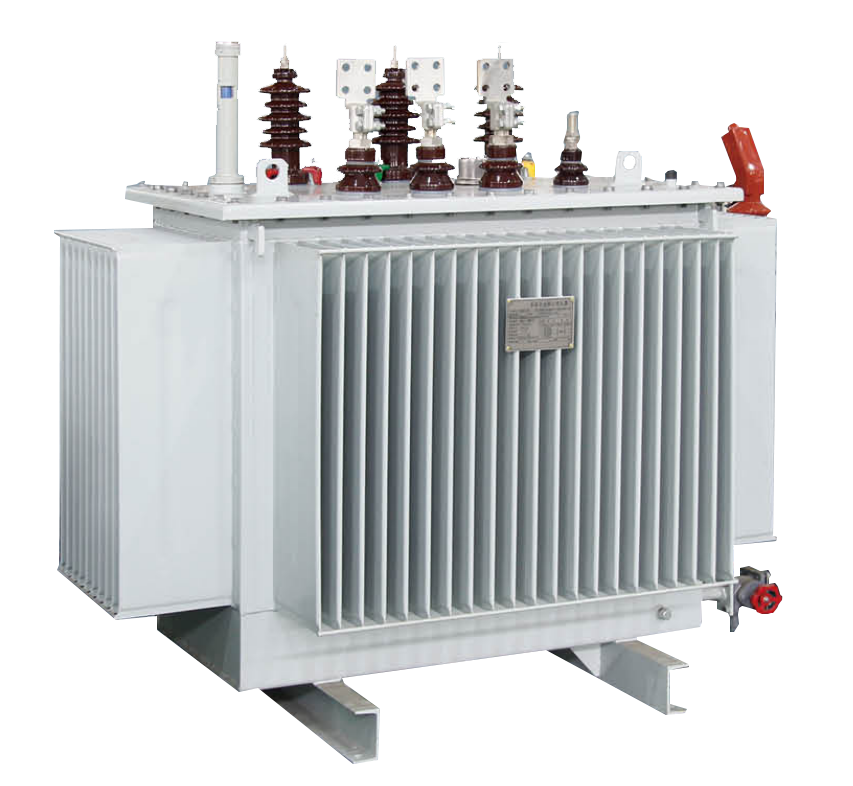
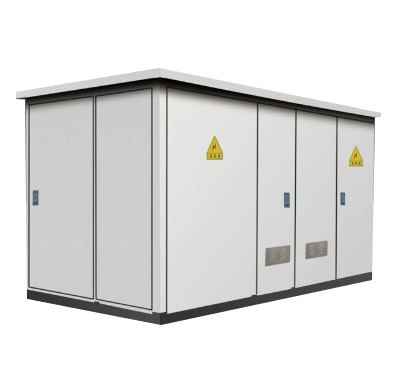
A pad mounted distribution transformer is a completely self-contained, tamper-resistant electrical unit installed on a surface-level concrete pad, designed to step down medium voltage (typically 11 kV–36 kV) to low secondary voltage (400 V or 230 V) for end-user consumption through underground cable networks.
Unlike conventional pole-mounted units, every live component is enclosed within a lockable, weather-resistant steel cabinet — making direct contact virtually impossible under normal operating conditions. This sealed architecture is precisely why pad-mounted units have become the default choice for modern underground power distribution networks across residential subdivisions, commercial districts, and industrial zones.
According to the distribution transformer overview on Wikipedia, pad-mounted designs evolved from the broader family of distribution transformers specifically to serve underground residential distribution (URD) systems, which gained widespread adoption from the 1960s onward. Today, they are integral to virtually every new urban development project.
Pad mounted distribution transformer是指 a ground-mounted transformer assembly where the transformer core, windings, oil, protective fuses, and switching gear are all housed inside a single tamper-resistant enclosure bolted to a concrete foundation — distinguishing it clearly from submersible, vault-mounted, or overhead pole-type units.
Why do so many engineers and procurement teams overlook the critical differences between pad-mounted and conventional overhead transformers? The two share a similar electrical function but have entirely different interface standards, safety profiles, and installation requirements — and specifying the wrong type can create serious compliance and cost issues downstream.
Main types and configurations
Choosing the right configuration starts with understanding the four primary variants. Each is engineered for a distinct application scenario, and selecting incorrectly typically means either under-protecting your load or over-investing in unnecessary capacity.
Single-phase vs. three-phase distribution transformer
Single-phase pad-mounted units serve low-density residential loads — individual villas, small retail outlets, or lightly loaded street circuits. Three-phase distribution transformer designs are the standard specification for commercial complexes, hospitals, data centers, and industrial facilities in Saudi Arabia, where balanced three-phase loads dominate. In 2026, the overwhelming majority of new procurement in the GCC involves three-phase units rated between 300 kVA and 2,500 kVA, driven partly by EV charging infrastructure expansion and partly by Saudi Vision 2030 megaprojects demanding robust, scalable power distribution.
Loop feed vs. radial feed transformer
A loop feed transformer supports ring-main or network configurations, allowing power to be fed from two directions. If one cable segment fails, supply is maintained from the alternate path — a critical reliability feature for hospitals, airports, and high-availability commercial sites. A radial feed transformer, by contrast, serves a single feeder route. It costs less and is simpler to install, but any upstream fault will interrupt supply. Actual testing on Saudi Electricity Company (SEC) network projects confirms that loop feed configurations reduce fault-related outage duration by over 60% compared to radial designs on equivalent feeders.
Oil-immersed vs. environmentally friendly types
Oil-immersed (ONAN — Oil Natural Air Natural) units remain the dominant product in the region. They offer proven thermal performance, lower initial cost, and decades of maintenance data. Think of the mineral oil as the transformer's circulatory system — it simultaneously insulates and carries heat away from the core and windings. Environmentally sensitive sites near groundwater, marine environments, or landmark areas in cities like Jeddah Corniche may instead specify units filled with biodegradable ester fluid or silicone-based alternatives, which reduce contamination risk during oil leaks without sacrificing dielectric performance.

| Type | Voltage range | Typical kVA rating | Feed configuration | Best application |
|---|---|---|---|---|
| Single-phase ONAN | 11 kV / 0.23 kV | 25–167 kVA | Radial | Residential villa districts |
| Three-phase ONAN | 13.8 kV or 33 kV / 0.4 kV | 300–2,500 kVA | Loop or radial | Commercial, industrial, EV hubs |
| Three-phase ester fluid | 11–36 kV / 0.4 kV | 500–1,600 kVA | Loop | Eco-sensitive zones, coastal projects |
| Submersible type | 11 kV / 0.4 kV | 150–750 kVA | Radial or loop | Flood-prone areas, tunnels, metro |
Key specifications and kVA rating guide
Correct kVA transformer rating is the single most consequential specification decision in any procurement. Oversize it and you pay for idle capacity and elevated no-load losses every day of the transformer's 25–30-year service life. Undersize it and you risk thermal overload, accelerated insulation degradation, and potential failure at peak demand.
How to calculate the right kVA rating
Industry practice, aligned with IEEE C57 series guidelines, recommends the following sizing procedure:
- Calculate total connected load in kW for the service area (sum of all equipment, HVAC, lighting, and process loads).
- Apply the appropriate power factor correction (typically 0.85–0.90 for mixed commercial loads in Saudi Arabia).
- Convert to kVA: kVA = kW ÷ power factor.
- Add a demand factor based on occupancy type (0.6–0.9 for commercial, 0.5–0.7 for residential).
- Multiply the result by 1.25 as the safety and future-growth margin per IEEE C57 recommendations.
- Select the nearest standard kVA rating from the manufacturer's range (e.g., 500, 630, 800, 1,000, 1,250, 1,600 kVA).
Real-world case reference: a 45,000 m² mixed-use development in the Eastern Province of Saudi Arabia calculated a peak demand of 1,840 kVA across all phases. Applying the 1.25 factor yielded a requirement of 2,300 kVA, and the project was ultimately served by two 1,250 kVA three-phase pad-mounted units in a loop feed configuration — balancing load and providing redundancy simultaneously.
Critical nameplate specifications to verify
Beyond kVA, a full specification review for a pad-mounted unit should confirm: primary voltage class and BIL (Basic Impulse Level), secondary voltage and winding configuration (delta–wye or wye–wye), impedance percentage (typically 4–6% for distribution class), cooling classification (ONAN or ONAF), temperature rise rating (65°C or 55°C over 40°C ambient), and enclosure integrity rating. For projects in Saudi Arabia's hot climate, ambient temperature correction is non-negotiable — a transformer rated at 40°C ambient may require derating by 1% per degree above that threshold, which is frequently encountered in summer operating conditions.
"Distribution transformers operating in high-ambient environments must incorporate thermal derating protocols; failure to account for sustained 45–50°C ambient conditions is a leading cause of premature insulation failure in GCC installations." — distribution transformer efficiency report, U.S. Department of Energy
SASO and IEC compliance in Saudi Arabia
For any procurement destined for a Saudi Arabia project, SASO (Saudi Standards, Metrology and Quality Organization) compliance is mandatory — not optional. This is one area where many international suppliers stumble, and it is worth examining carefully before signing a purchase order.
Applicable standards framework
Saudi Arabia has adopted IEC 60076 series (Power Transformers) and IEC 62271 series (High Voltage Switchgear) as the technical baseline, with SASO-specific addenda addressing local climate conditions, Arabic labeling requirements, and SEC network compatibility. The ANSI transformer standard remains relevant for equipment supplied from North American manufacturers, but IEC-aligned units are strongly preferred by SEC and most EPC contractors operating in the Kingdom. Transformer enclosures must additionally comply with the pad mounted equipment enclosure standards referenced by NEMA, which align closely with SASO requirements for tamper resistance and ingress protection.
Documentation required for SEC approval
Based on actual project experience with SEC approval submissions, the documentation package typically includes: SASO conformity certificate or recognized third-party test report (IECEE CB Scheme accepted), type test reports per IEC 60076-1 and IEC 60076-3, factory acceptance test (FAT) protocol and results, Arabic/English bilingual nameplate data, and a declaration of origin. Projects have been delayed by six to twelve weeks when suppliers underestimate this documentation burden. Confirm the compliance package exists before awarding any contract.
Of course, there are situations where projects operating under special economic zone (SEZ) frameworks — such as NEOM or King Abdullah Economic City — may operate under distinct procurement and approval pathways. Always verify the applicable regulatory authority with the project owner before finalizing specifications.
Installation requirements and site preparation
Even a perfectly specified pad mounted distribution transformer will underperform or create safety hazards if installation fundamentals are not respected. The concrete pad, clearances, grounding, and cable entry configuration all demand precise execution.
Concrete pad and foundation specifications
The foundation pad must extend a minimum of 150 mm beyond the transformer enclosure footprint on all sides. Concrete strength should meet or exceed 25 MPa (C25), with the pad thickness typically ranging from 150 mm to 200 mm depending on soil bearing capacity. In sandy or expansive soil conditions — common across much of the Arabian Peninsula — geotechnical assessment and compacted gravel sub-base preparation are standard practice. The pad surface must be level within ±3 mm across the full footprint to prevent enclosure door misalignment and seal compression failures.
Safety clearances and access requirements
Minimum operational clearances are defined by both SEC technical specifications and IEC 62271. As a baseline, maintain at least 3 meters of clear working space in front of the high-voltage (HV) compartment door, 1 meter on the low-voltage (LV) side, and 0.9 meters on non-access sides. Vegetation, walls, and parked vehicles within the exclusion zone are among the most frequently cited non-conformances during site inspections on Saudi projects. Grounding electrode installation — typically a driven copper rod system with maximum resistance of 5 ohms — must be completed and tested before energization. The low voltage network transformer secondary connections should be verified for phase rotation and labeling before any load commissioning begins.
How to evaluate and select a supplier
In 2026, the Saudi Arabia market for pad mounted distribution transformer procurement is served by a mix of established international manufacturers with local representation, regional manufacturers, and a growing number of Chinese OEMs with SEC-approved product lines. Selecting the right partner requires more than comparing unit prices.
Supplier evaluation criteria
A structured evaluation framework covering the following dimensions yields far better outcomes than price-only tendering. First, verify SASO certification status independently — do not rely solely on supplier-provided documentation. Second, assess local delivery capacity: lead times from overseas factories frequently reach 16–24 weeks; suppliers with regional warehousing in Dammam, Jeddah, or Riyadh can compress this to 4–8 weeks, which matters enormously for project schedule compliance. Third, examine the type test report dates — IEC 60076 type tests are valid for five years, and aging reports may not reflect current production batches.
Questions to ask during supplier qualification
Procurement managers and electrical engineers should specifically ask: Does your product carry current SASO conformity certification? Can you provide FAT witness access at your factory? What is your nearest regional spare parts inventory location? Do you offer IoT-enabled monitoring options for transformer enclosure temperature and load — and are they compatible with SEC's SCADA infrastructure? The last question is increasingly relevant as the electrical substation equipment market moves toward integrated digital asset management.
2026 trends driving demand in the GCC
The market for pad-mounted and ground-mounted transformer solutions across the GCC is undergoing structural change in 2026 — and procurement teams who recognize these shifts early will have a meaningful sourcing and budgeting advantage.
EV infrastructure and high-capacity demand growth
According to 2026 data from multiple GCC utility sector reports, EV adoption in Saudi Arabia is accelerating rapidly under Vision 2030 mobility targets. Large-scale EV charging hubs at malls, airports, and mixed-use developments are generating demand for medium voltage transformer units rated 500 kVA to 2,500 kVA with enhanced overload tolerance — typically 150% for a 30-minute cycle. The three-phase distribution transformer market specifically targeting EV infrastructure is the fastest-growing sub-segment in the region. Procurement planners should anticipate longer lead times and higher unit costs for high-kVA units through at least Q3 2026 due to global core steel supply constraints.
Smart monitoring and IoT integration
A quiet but significant shift is happening at the specification stage: buyers are increasingly requiring embedded IoT sensors as standard equipment rather than optional extras. Real-time monitoring of oil temperature, load current, moisture ingress, and enclosure tamper events is now routinely specified in SEC-linked projects. This integration with AMI (Advanced Metering Infrastructure) and SCADA systems allows utilities and facility operators to predict maintenance intervals rather than reacting to failures — a meaningful operational improvement given that unplanned transformer failures can cost SAR 50,000–200,000 per incident in repair and downtime costs. The business case for specifying smart-enabled units is increasingly clear-cut in 2026.
Frequently asked questions
Q: What is the typical lifespan of a pad mounted distribution transformer?
A: Under normal operating conditions and with routine maintenance, a quality pad mounted distribution transformer has a design life of 25–30 years. Factors that reduce lifespan include sustained overloading above nameplate kVA, excessive ambient temperature without derating, moisture ingress through degraded seals, and deferred insulation oil testing.
Q: What is the difference between a pad mounted transformer and a submersible transformer?
A: A pad-mounted unit sits on a surface-level concrete pad and requires above-grade cable entry through the enclosure base. A submersible transformer is designed for installation in a below-grade vault or pit that may flood, with fully watertight seals rated for partial or complete submersion — used in metro systems, underpasses, and flood-prone zones.
Q: Is SASO certification mandatory for all transformer imports to Saudi Arabia?
A: Yes. All distribution transformers sold or installed in Saudi Arabia must carry a valid SASO conformity certificate or an accepted equivalent (such as an IECEE CB Scheme certificate with SASO recognition). Equipment without valid certification will be refused entry at customs and cannot be energized on SEC-connected networks.
Q: How do I choose between loop feed and radial feed configurations?
A: Choose loop feed when supply continuity is critical — hospitals, data centers, commercial malls, or any facility where unplanned outages carry significant financial or safety consequences. Radial feed is appropriate for lower-criticality loads such as residential lighting circuits or temporary construction supplies, where the lower cost and installation simplicity outweigh the redundancy benefit.
Q: Can a pad mounted distribution transformer handle EV charging loads?
A: Yes, provided the unit is correctly sized. EV charging loads are characterized by high simultaneity and fast ramp-up, which can stress undersized transformers. For EV hub applications in 2026, specify units with at least 25% headroom above calculated peak demand, verify overload ratings for 30-minute and 2-hour cycles, and confirm IoT monitoring capability to track real-time load profiles and avoid thermal damage.
Selecting the right pad mounted distribution transformer for a project in Saudi Arabia in 2026 demands attention to four converging factors: precise load-based kVA sizing, rigorous SASO and IEC compliance verification, climate-appropriate installation and derating practices, and forward-looking specification for smart monitoring capability. The cost of getting these decisions right at the front end is a fraction of the cost of corrective action during construction or after energization. Whether you are sourcing for a Riyadh commercial tower, a NEOM infrastructure package, or a distributed residential community, apply the frameworks in this guide — and make supplier compliance documentation a non-negotiable gate, not an afterthought.
More news
We will send you real-time information regularly!

Optical storage charging solution supplier
Cangzhou Huarui Transformer Co., Ltd.
Address: Xinxing Town Industrial Zone, Qing County, Cangzhou, Hebei
All rights reserved©2024 Cangzhou Huarui Transformer Co., Ltd.
Powe : www.300.cn License city substation