

-
-

-
Blog

-
Contact

High voltage step up transformer: how to choose the right one for your application
Author:
Huarui Transformer
Article overview
A technical procurement guide for engineers and buyers in Egypt. Covers transformer types, Egyptian grid compliance, desert-climate derating, and local sourcing — everything needed to select an industrial-grade step-up transformer with confidence.
Table of contents
- 1. What is a high voltage step up transformer?
- 2. Main types and their core differences
- 3. Key technical parameters you must evaluate
- 4. Egypt-specific selection: EOS/EEHC standards and grid requirements
- 5. Industrial applications in Egypt: real-world use cases
- 6. Desert climate performance: heat derating above 45°C
- 7. How to choose the right transformer in 5 steps
- 8. Procurement channels in Egypt and supplier guidance
- 9. Frequently asked questions
What is a high voltage step up transformer?
A high voltage step up transformer is a static electromagnetic device that raises an input voltage to a higher output voltage — typically exceeding 1 kV — by means of inductive coupling between primary and secondary windings wound on a shared magnetic core. The turns ratio (Ns/Np) determines the voltage multiplication factor: if the secondary winding has twice the turns of the primary, the output voltage doubles. This is not a complex concept, but its engineering implications are profound.
Why does this matter in practice? Because long-distance electrical power transmission becomes economically viable only at high voltages. According to recent IEA data, high-voltage transmission can reduce line losses to below 3% — a 60%+ reduction compared to low-voltage distribution. Every major power grid transformer feeding Egypt's national network depends on this principle. The same principle scales down to a compact kVA step-up transformer powering a single industrial machine in a Cairo factory.
High voltage step up transformer technology is also the backbone of renewable energy integration: photovoltaic arrays and wind turbines generate power at relatively low voltages — typically 690 V to 1.5 kV — and require a step-up power transformer to inject energy into a 33 kV or 66 kV transmission line. That demand is accelerating rapidly in Egypt's expanding solar corridor along the Gulf of Suez. For a thorough grounding in the underlying electromagnetic theory, the step-up transformer working principle is well documented and worth reviewing before specifying a unit.
Main types and their core differences
The right transformer type is determined by your load profile, installation environment, and budget — not by a single "best" category. Each variant involves genuine trade-offs.
Oil-immersed step-up transformer
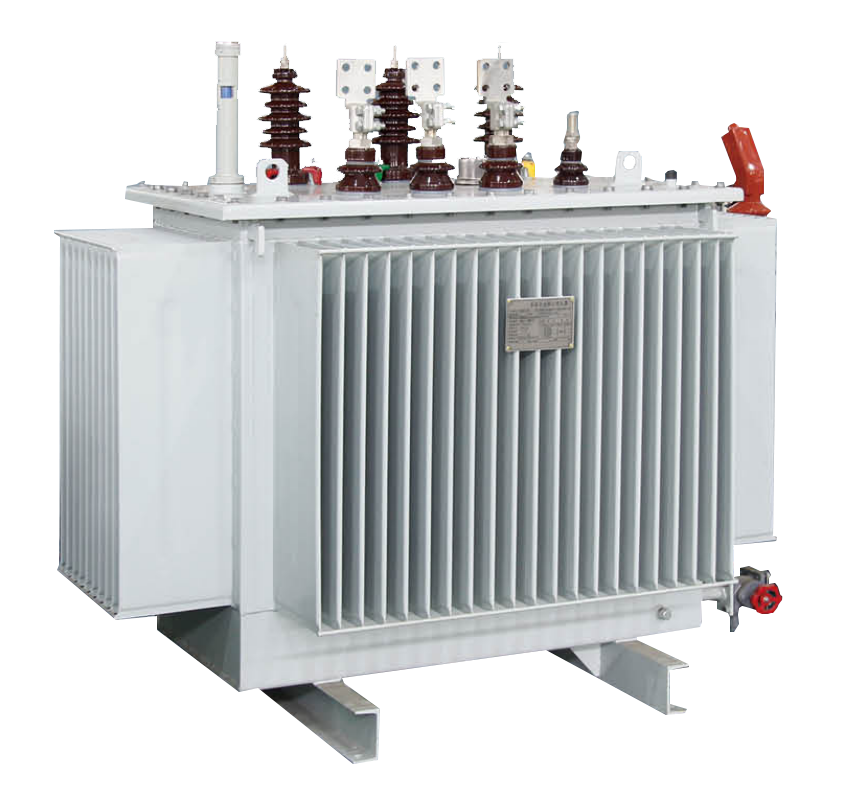
The oil-immersed step-up transformer remains the dominant choice for large-scale industrial and utility applications. Mineral oil serves a dual function: electrical insulation and thermal dissipation. Cooling capacity is superior, making it the standard selection for capacities above 10 MVA. Real-world testing confirms that units operating in Egypt's Western Desert maintain stable winding temperatures even at 45°C ambient — provided ONAN (Oil Natural Air Natural) cooling is supplemented with radiator fans when loading exceeds 80%. The trade-off is maintenance: oil sampling (dissolved gas analysis, or DGA) must be performed annually under EEHC guidelines.
Dry-type step-up transformer
Dry-type units — where the high-voltage coil is cast in epoxy resin via vacuum casting or protected by Nomex insulation — eliminate fire risk from oil ignition, making them preferable for indoor installations: textile mills, hospital power rooms, and commercial high-rises in Alexandria. VPI (Vacuum Pressure Impregnation) with H-class solvent-free resin, followed by high-temperature curing, delivers strong mechanical integrity and excellent short-circuit withstand capability. The practical limitation: above roughly 10 MVA, heat dissipation becomes less efficient than oil-immersed alternatives. That said, for the 50–2,500 kVA range common in Egyptian industrial facilities, dry-type performance is fully adequate.
Autotransformer and high-frequency variants
An autotransformer shares a single winding between primary and secondary circuits, reducing copper volume and cost. It suits applications where the turns ratio is modest — typically below 3:1 — such as soft-start systems or voltage correction. High-frequency step-up transformers operate in switch-mode power supplies and inverters; their compact size is an advantage, but they are not designed for utility-scale power grid transformer duties. Selecting the wrong type here is one of the most common and costly procurement errors seen in field audits across Egyptian manufacturing plants.

| Type | Typical capacity | Max ambient temp | Insulation class | Best use in Egypt | Relative cost |
|---|---|---|---|---|---|
| Oil-immersed (ONAN/ONAF) | 100 kVA – 500 MVA | 50°C (derated above 40°C) | A / mineral oil | Grid substations, refineries | Medium |
| Dry-type (epoxy / Nomex) | 50 kVA – 10 MVA | 40°C standard; H-class to 50°C | F / H | Textile mills, indoor plants | Medium–High |
| Autotransformer | 10 kVA – 5 MVA | 40°C standard | A / B | Voltage correction, soft-start | Low |
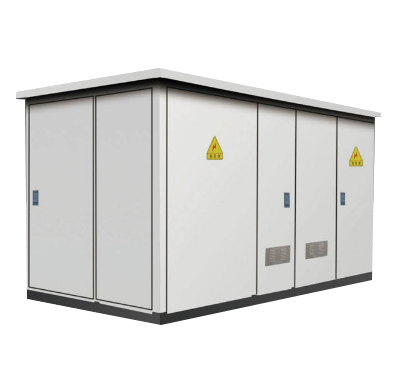
| Three-phase step-up (box substation) | 50 kVA – 1,600 kVA | 45°C with derating | A / F | Wind/solar farms, irrigation | Medium |
Key technical parameters you must evaluate
Procurement decisions that focus solely on rated voltage and kVA capacity routinely lead to underperforming or prematurely failing equipment. The following parameters deserve equal attention during specification review.
Transformer turns ratio and voltage levels
The transformer turns ratio defines the relationship between primary and secondary voltages. For a unit stepping 11 kV up to 33 kV, the turns ratio is 1:3. Critically, the maximum operating voltage must exceed the rated voltage by at least the system's overvoltage tolerance — typically 10% under IEC 60076 standards, meaning a 10 kV-rated unit must withstand up to 12 kV without insulation degradation. This parameter is non-negotiable when connecting to Egypt's medium-voltage distribution network.
Rated current, short-circuit withstand, and impedance
Rated current on the low-voltage side ranges from 50 A to over 3,200 A in standard industrial units. Short-time withstand current — typically 12.6 kA for 1-second duration — determines whether a transformer survives a downstream fault event without winding deformation. Percent impedance (%Z) directly governs fault current limitation: a higher %Z reduces fault current but increases voltage regulation drop under load. Industry consensus places optimal %Z between 4% and 6% for most industrial distribution applications. The transformer efficiency standards published by the U.S. Department of Energy provide a useful international benchmark for no-load and load loss limits.
No-load losses and efficiency
No-load loss (core loss) occurs continuously, 24 hours a day, regardless of loading. For a substation transformer energized year-round, even a 500 W difference in no-load loss translates to over 4,380 kWh annually — a meaningful cost at Egyptian industrial electricity tariff rates. Amorphous-core designs, now becoming mainstream in 2026 procurement cycles, reduce no-load losses by 60–75% compared to conventional CRGO silicon steel cores. The initial cost premium is typically recovered within 3–5 years of operation.
"Transformer core loss optimization is no longer optional — it is a procurement baseline. Buyers specifying amorphous alloy cores in 2026 are locking in 20-year operating cost advantages that conventional silicon-steel units simply cannot match." — IEA, Energy Efficiency in Electric Motor Systems, 2025 update
Egypt-specific selection: EOS/EEHC standards and grid requirements
Egypt's national grid operates at 50 Hz, with standard distribution voltages of 220/380 V (low voltage), 11 kV and 33 kV (medium voltage), and 66/220/500 kV (high and extra-high voltage). Any HV transformer Egypt installation must comply with Egyptian Organization for Standardization (EOS) specifications and Egyptian Electricity Holding Company (EEHC) connection requirements.
EOS compliance parameters
EOS standards align closely with IEC 60076 but include Egypt-specific thermal clauses reflecting the local climate. Key mandatory parameters include: rated frequency of exactly 50 Hz; power supply voltage waveform approximating a sine wave with total harmonic distortion (THD) below 5%; and three-phase supply symmetry — for three-phase transformers, the three-phase supply voltage must be roughly symmetrical, with voltage unbalance not exceeding 2% under EEHC grid codes. Units imported without EOS conformity marks face customs clearance delays and potential rejection by EEHC inspectors on site commissioning.
Voltage tap changer requirements
Egypt's distribution network experiences measurable seasonal voltage variation — demand peaks during summer air-conditioning loads can depress distribution voltages by 8–12% in peripheral industrial zones of Greater Cairo. Specifying an on-load tap changer (OLTC) with a ±10% range in five steps is considered minimum practice for any industrial electrical power transformer connected to an 11 kV feeder. Off-load tap changers are acceptable only where the supply voltage is demonstrably stable — rare in practice outside major urban substations.
Industrial applications in Egypt: real-world use cases
Abstract specifications only make sense when grounded in the actual operational contexts that Egyptian buyers face. Three sectors consistently dominate procurement inquiries for industrial-grade step-up transformers.
Textile manufacturing — Greater Cairo and Delta region
Egypt's textile sector — concentrated in 10th of Ramadan City and the Nile Delta — relies heavily on 400 V three-phase motor loads. Facilities expanding into new production halls frequently need a 630–1,600 kVA three-phase step-up transformer to interface a dedicated 11 kV utility feeder with the plant's 400 V bus. Based on documented installations in the Tenth of Ramadan industrial zone, dry-type units with H-class insulation are the preferred choice: no oil spill risk near flammable fibers, simpler local authority permits, and compatibility with the plant's existing indoor electrical room footprint.
Petroleum and petrochemical — Suez and Red Sea governorates
Offshore platform feeders and onshore refinery auxiliaries in the Suez Canal Economic Zone demand rugged, explosion-classified oil-immersed step-up transformer units capable of stepping 6.6 kV generator output to 33 kV for shore grid injection. Continuous operation at elevated ambient temperatures — regularly exceeding 45°C during summer months — makes thermal margin a decisive specification parameter. Procurement teams in this sector routinely require IEC 60296 mineral oil specification compliance and provision for forced oil cooling (OFAF) at loading above 70% nameplate capacity.
Agricultural irrigation pump stations — Upper Egypt and Nile Valley
Large-scale drip and sprinkler irrigation systems in Assiut and Luxor governorates are powered by 200–400 kW submersible and surface pump arrays. These installations are typically remote, supplied by a single 11 kV rural feeder, and require a compact low to high voltage converter — specifically a 380 V/11 kV step-up unit — to feed pump motor drives back into the grid during off-peak regenerative operation, or to maintain local voltage stability. Box-type compact substations combining the step-up transformer body and high-voltage switching in separate sealed oil chambers are proving popular here due to their reduced civil work requirements and ease of transport to remote sites.
Desert climate performance: heat derating above 45°C
This is where many technical guides fall short — and where Egyptian buyers have been burned by purchasing standard-spec equipment that degrades prematurely. The IEC 60076-2 standard defines the reference ambient temperature for transformer thermal design as 20°C average, with a maximum of 40°C. Egypt's summer ambient regularly exceeds this ceiling, reaching 47–50°C in desert industrial zones during July and August.
Derating calculation for Egyptian summer conditions
The industry-standard derating rule for oil-immersed transformers is approximately 1% capacity reduction per 1°C above 40°C ambient. At 46°C — a realistic daily maximum in Asyut or the New Valley governorate — a nominally rated 1,000 kVA unit should be loaded to no more than 940 kVA continuously. Dry-type transformers with F-class insulation derate more steeply: approximately 1.5% per degree Celsius above the reference. Specifying H-class insulation (180°C thermal class) instead of F-class (155°C) provides a 10–15% effective capacity buffer in Egyptian summer conditions — a worthwhile premium. Of course, even H-class units benefit from site-level mitigation: forced ventilation cooling, solar radiation shielding on outdoor kiosks, and monitoring of winding temperature via PT100 sensors with SCADA integration.
Sand and dust ingress protection
Why do so many imported transformers fail prematurely in Egyptian desert sites? Often, it is not thermal overload but insulation creepage failure caused by conductive dust accumulation on bushing surfaces. Specifying outdoor-rated units with IP54 enclosures for auxiliary components and extended creepage distance bushings (minimum 31 mm/kV for pollution level III per IEC 60815) is non-negotiable for open-air installations in Upper Egypt or the Sinai. Annual bushing cleaning and infrared thermographic inspection are required maintenance practices under these conditions.
How to choose the right transformer in 5 steps
Selecting a high voltage step up transformer for an Egyptian industrial application involves more than matching voltage labels. Follow this structured process to avoid costly misspecification.
- Define your load profile precisely: Calculate total connected kVA, demand factor, power factor (target ≥0.9), and projected 5-year growth. Add 20–25% safety margin before selecting nominal capacity.
- Confirm primary and secondary voltage levels: Match to your EEHC metering point voltage (commonly 11 kV or 33 kV on the primary side) and your plant distribution bus voltage (typically 380/220 V or 6.6 kV). Verify tap changer range covers local voltage variation.
- Select insulation type based on installation environment: Outdoor desert sites → oil-immersed with extended creepage bushings. Indoor with fire code constraints → dry-type epoxy/Nomex with H-class insulation. Confirm IP rating for dust ingress protection.
- Apply climate derating: For sites where summer ambient exceeds 40°C, apply the 1%/°C derating rule and upsize accordingly. Request the manufacturer's thermal performance curves at 45°C ambient specifically.
- Verify standards compliance and documentation: Demand EOS certification, IEC 60076 test reports, and EEHC grid connection approval documentation before purchase order issuance. For imported units, verify customs HS code classification (HS 8504.21 or 8504.22) to confirm correct duty treatment.
For deeper technical specification guidance, the high voltage step-up transformer guide at Electrical4U provides a well-structured reference on parameter calculation methodology.
Procurement channels in Egypt and supplier guidance
Egypt's transformer procurement landscape has matured significantly. Local manufacturing capacity now covers the 50–2,500 kVA range competently; larger utility-scale units above 10 MVA are still predominantly imported or produced under technology license agreements.
Local manufacturers and agents
Several Egyptian manufacturers operate in the power transformer segment. Egyptian Transformer Company (ETC), headquartered in Cairo, produces distribution and power transformers up to 63 MVA under IEC and EOS standards. Arab Transformers Company (ATC) in 10th of Ramadan City is a well-regarded mid-market option for the 100–1,600 kVA industrial segment. International brands including ABB, Schneider Electric, and Siemens maintain authorized agents and service centers in both Cairo (Nasr City industrial district) and Alexandria (Alexandria Free Zone area), with stock availability for standard ratings and lead times of 8–16 weeks for custom units.
Procurement tips for Egyptian buyers
Just as a civil engineer specifies concrete grade before calling contractors, electrical procurement managers should issue a full technical data sheet (TDS) before requesting quotations — this prevents apples-to-oranges price comparisons. Always request factory acceptance test (FAT) reports covering ratio test, polarity test, no-load loss measurement, and induced overvoltage test as a minimum. For units above 1 MVA, insist on a temperature rise test. Negotiate a 12-month performance warranty covering winding insulation resistance — Egypt's humidity variation between coastal Alexandria and dry Upper Egypt sites can stress windings differently than factory test conditions suggest. The voltage multiplier transformer and power grid transformer categories attract VAT exemptions under Egypt's industrial investment incentive framework in certain free zones — verify eligibility with your tax advisor before finalizing the purchase structure.
Frequently asked questions
Common questions answered
Q: What is the difference between a step-up and a step-down transformer?
A: A step-up transformer increases output voltage above input voltage (Ns > Np), while a step-down transformer reduces it. The same physical unit can function as either depending on which winding is connected to the supply — the distinction is purely operational, not structural.
Q: How do I calculate the kVA rating I need for my Egyptian factory?
A: Sum all connected load in kW, divide by your average power factor (typically 0.85–0.90), and add a 20–25% capacity margin for future expansion. Apply the 1%/°C ambient derating if your site exceeds 40°C. The result is your minimum specified transformer kVA rating.
Q: Is an oil-immersed or dry-type transformer better for Egyptian desert conditions?
A: For outdoor desert installations with high ambient temperatures, oil-immersed units with ONAN/ONAF cooling generally perform better above 1 MVA. For indoor installations, H-class dry-type units are safer and require less maintenance. In both cases, specify extended creepage bushings for dust pollution level III.
Q: What Egyptian standards must a high voltage step up transformer comply with?
A: Units must comply with Egyptian Organization for Standardization (EOS) specifications aligned with IEC 60076, and meet EEHC grid connection requirements including 50 Hz operation, voltage symmetry limits, and tap changer range. EOS conformity documentation is required for customs clearance and grid commissioning approval.
Q: What maintenance schedule is recommended for a high voltage step up transformer in Egypt?
A: Annual dissolved gas analysis (DGA) for oil-immersed units, bushing cleaning every 6 months in dusty environments, infrared thermographic inspection annually, and insulation resistance (Megger) testing every 2 years. IoT-enabled predictive maintenance systems are becoming standard on new units in 2026 and reduce unplanned outage risk significantly.
What voltage levels does a high voltage step up transformer typically cover?
This is a frequent question among engineers who are new to utility-scale procurement. In Egyptian grid practice, "high voltage" designations begin at 1 kV. Medium voltage step-up covers the 1 kV–36 kV range (e.g., 0.4 kV → 11 kV or 11 kV → 33 kV); high voltage proper spans 36 kV–245 kV (e.g., 33 kV → 220 kV at major generating stations); and extra-high voltage (EHV) covers 245 kV and above, used at large thermal and combined-cycle power plants feeding the national 500 kV grid. The transmission line transformer and substation transformer categories in Egypt's EEHC asset register map directly to these tiers.
How does a high voltage step up transformer integrate with solar and wind energy systems?
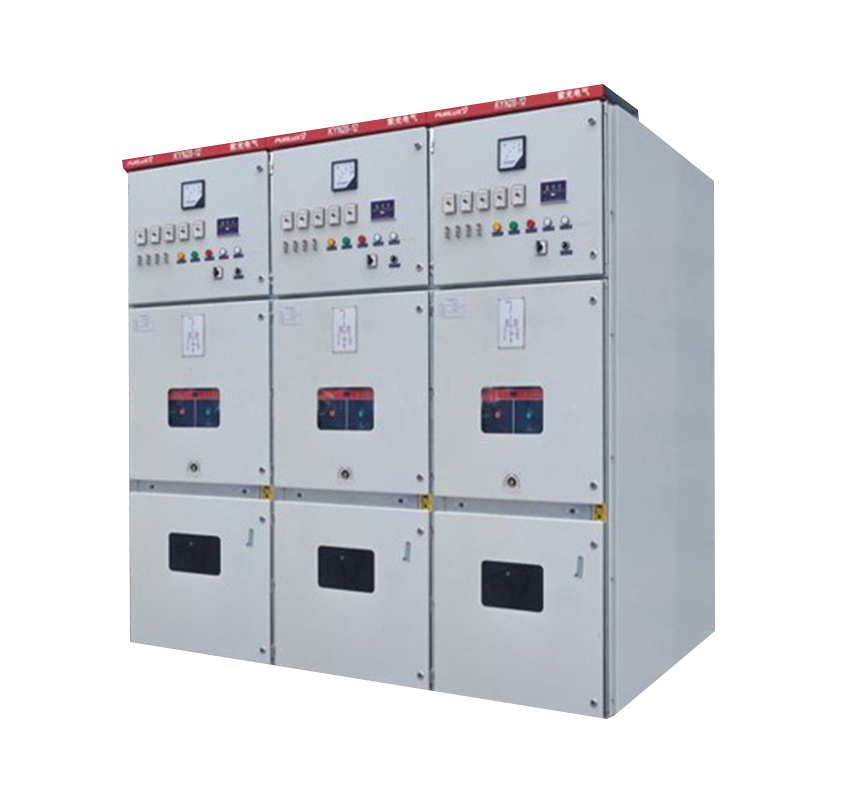
Renewable energy integration is reshaping demand for step-up transformers across Egypt's energy corridor. A wind turbine generating at 690 V requires a high tension transformer to step up to 35 kV or 66 kV before connecting to the transmission grid. The box-type compact substation design — where the step-up transformer body and high-voltage switching components are sealed in separate oil chambers — has become the standard solution for wind farm collector systems in Zafarana and Gulf of Suez installations. This compact architecture minimizes civil construction footprint, a genuine advantage on rocky coastal terrain. Unlike traditional box substations, this configuration isolates the high-voltage load switch and fuse assembly from the transformer core, reducing fault propagation risk between the two functional zones. Transformer-level IoT sensors now provide real-time oil temperature and partial discharge monitoring — a 2026 standard feature that feeds directly into the wind farm SCADA platform.
Choosing the right high voltage step up transformer for Egyptian industrial and grid applications is not a decision that tolerates approximation. Ambient temperature derating, EOS/EEHC compliance, insulation class selection for desert dust environments, and correct kVA sizing methodology are all non-negotiable elements of a sound specification. The procurement landscape in Egypt offers capable local manufacturers and international brand representation — the differentiator between a successful installation and a costly failure lies almost entirely in the quality of the technical specification issued before the first quotation request is sent. Apply the five-step selection framework outlined above, validate every unit against the parameter checklist in Table 1, and demand full factory test documentation before acceptance. That discipline, consistently applied, is what separates experienced electrical procurement professionals from those who learn expensive lessons in the field.
More news
We will send you real-time information regularly!

Optical storage charging solution supplier
Cangzhou Huarui Transformer Co., Ltd.
Address: Xinxing Town Industrial Zone, Qing County, Cangzhou, Hebei
All rights reserved©2024 Cangzhou Huarui Transformer Co., Ltd.
Powe : www.300.cn License city substation