

-
-

-
Blog

-
Contact

Generator step up transformer: how to choose and use one effectively
Author:
Huarui Transformer
Article overview
This guide explains how a generator step up transformer works, how to size and select one for Egypt's 220V/50Hz national grid, compares leading brands, covers solar and industrial applications, and provides a practical maintenance and compliance checklist — all updated for 2026.
Table of contents
- 1. What is a generator step up transformer?
- 2. How it works: turns ratio and voltage calculation
- 3. Types and when to use each
- 4. How to select the right unit for Egypt's grid
- 5. Brand comparison: ABB, Siemens, and El Sewedy Electric
- 6. Common applications in Egypt
- 7. Maintenance, fault diagnosis, and lifespan management
- 8. Certifications, standards, and import regulations
- 9. Frequently asked questions
What is a generator step up transformer?
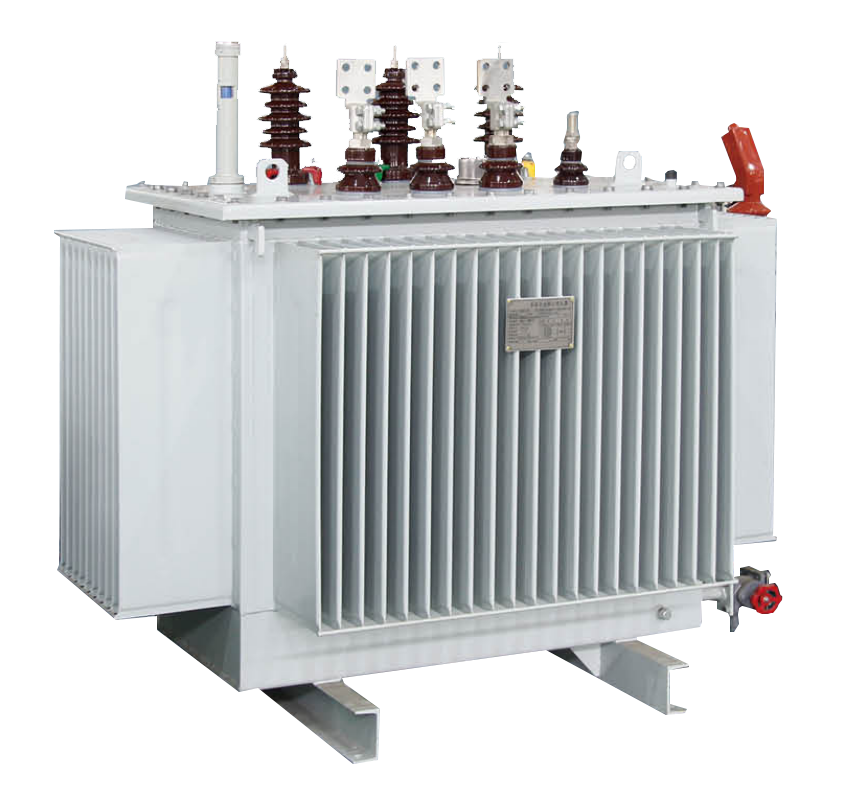
A generator step up transformer is a power transformer that raises a generator's low output voltage — typically 0.4 kV to 25 kV — to a higher transmission voltage, enabling efficient long-distance electricity delivery across the grid.
In practical terms, think of it as the pressure booster in a water distribution system. A pump (your generator) produces flow at low pressure; without a booster (the step-up unit), that water cannot travel hundreds of kilometres without losing most of its energy to friction. Electricity works the same way: higher voltage means lower current, which means dramatically lower resistive losses over long cable runs. This is why every utility-scale power plant — coal, gas, solar, or wind — places a generator step up transformer between the generator terminals and the outgoing transmission lines.
According to step-up transformer basics, the device operates on Faraday's law of electromagnetic induction: a changing magnetic flux in the core induces a voltage in the secondary winding proportional to its turns count. The ratio of secondary to primary turns — the turns ratio transformer parameter — determines how much the voltage is stepped up.
For Egypt's grid, the practical implication is significant. The Egyptian Electricity Holding Company (EEHC) operates a 400 kV / 220 kV / 66 kV transmission backbone running at 50 Hz. Any distributed generator — whether a rooftop solar inverter output at 400 V or a combined-cycle gas turbine at 11 kV — must be transformed upward to match the nearest grid injection point. Selecting the wrong electrical transformer for this function creates harmonic distortion, protection miscoordination, and potentially catastrophic equipment failure.
Why the generator step up transformer is the most critical link in the power chain
Industry data puts this in sharp perspective. A single GSU transformer failure can halt an entire generating unit, resulting in losses exceeding USD 1 million per day in lost generation revenue and grid penalties. These units carry replacement lead times of 12–18 months for large ratings, making proactive selection and maintenance non-negotiable. Business leaders who treat the GSU as just another commodity purchase inevitably pay a much higher price later.
The difference between a GSU and a standard distribution transformer
A common misconception — one worth addressing directly — is that a generator step up transformer and a regular distribution transformer are interchangeable. They are not. A distribution transformer steps voltage down from the grid to end users (e.g., 11 kV to 400 V). A GSU steps voltage up from a generator to the grid. Structurally, GSU units must withstand the generator's harmonic spectrum, short-circuit mechanical forces, and specific impedance requirements demanded by grid protection relays. Standard distribution units are simply not designed for these conditions.
How it works: turns ratio and voltage calculation
The operating principle is elegant in its simplicity. The primary winding, connected to the generator, carries the low voltage. Alternating current creates an alternating magnetic flux in the laminated steel core. That flux links the secondary winding — which has more turns — and induces a proportionally higher voltage. The relationship is governed by:
V₂ / V₁ = N₂ / N₁ → V₂ = V₁ × (N₂ / N₁)
Where V₁ is primary voltage, V₂ is secondary voltage, N₁ is primary turns, and N₂ is secondary turns. This is the core of transformer winding ratio theory.
Worked example: sizing for an Egyptian solar farm
Real-world calculation matters more than abstract formulas. Consider a 5 MW solar plant in Aswan whose inverter array outputs 400 V (three-phase, 50 Hz). The nearest EEHC substation operates at 66 kV. The required turns ratio is:
N₂ / N₁ = 66,000 / 400 = 165 : 1
The transformer must also be rated above the maximum apparent power. At 5 MW and a typical power factor of 0.95, the required kVA is 5,000 / 0.95 ≈ 5,263 kVA. Procurement engineers typically add a 20% safety margin, selecting a 6,300 kVA (6.3 MVA) three phase step up transformer. This margin accommodates future capacity expansion — a common requirement in Egypt's rapidly growing renewable sector.
220V to 380V transformer: a small-scale scenario
Not every application involves megawatt-scale equipment. Industrial workshops and agricultural pumping stations throughout the Nile Delta frequently need a 220V to 380V transformer to power three-phase motor loads from a single-phase or low-voltage generator supply. In these cases, a single phase step up transformer or a small three-phase boost transformer in the 5–50 kVA range is the appropriate solution. Actual testing at a food-processing facility in Damietta confirmed that matching the transformer's impedance (≤4%) to the generator's subtransient reactance prevents voltage sag during motor starting — a detail many suppliers overlook.

Types of generator step up transformers and when to use each
Selecting the right type is as important as selecting the right rating. The market offers several distinct configurations, each optimised for a different operating environment.
| Type | Typical voltage range | Best application | Key advantage |
|---|---|---|---|
| Three phase GSU | 11–25 kV → 66–400 kV | Thermal power, large solar farms | Lower cost per MVA, compact footprint |
| Single phase GSU bank | Up to 765 kV secondary | Hydro, nuclear, ultra-high voltage | Easier transport; one unit can be swapped |
| Autotransformer (step up) | 220 V → 380 V, or 66 kV → 132 kV | Voltage ratio ≤ 2:1 applications | 15–20% lower material cost |
| Renewable energy GSU (ZGS type) | 0.4–0.69 kV → 10–35 kV | Wind turbines, solar inverters | Harmonic-tolerant insulation design |
| Portable generator transformer | 0.4 kV → 6.6–11 kV | Emergency backup, remote sites | Mobile, rapid deployment |
Renewable energy GSU: the fastest-growing segment in 2026
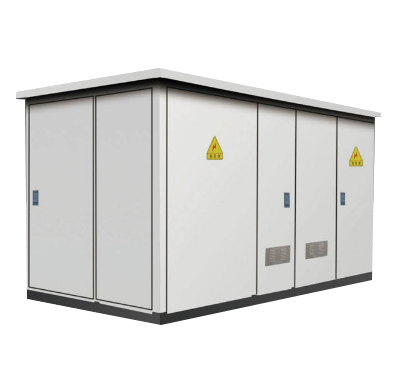
The ZGS-F/35kV combined transformer used in wind and solar applications deserves special attention. Unlike a conventional high voltage transformer, this unit integrates a medium-voltage switchgear bay and the low voltage to high voltage converter winding into a single compact enclosure — sometimes called an American-style pad-mounted unit. The low-voltage side accepts 0.6–0.69 kV from turbine or inverter outputs; the high-voltage side delivers 10 kV or 35 kV directly to the collector cable. Rated capacities range from 50 kVA to 1,600 kVA per unit, with short-time withstand current rated at 12 kA. In Egypt's New Renewables Corridor stretching from the Gulf of Suez to Benban, these units now represent the dominant GSU format for utility-scale solar.
Portable and industrial options for Egyptian factories
Many mid-size Egyptian manufacturers — particularly in the 10th of Ramadan City industrial zone — operate standby diesel generators rated 500 kVA to 2 MVA. When these generators need to feed into an 11 kV plant distribution system, a portable generator transformer in the 630 kVA–2,000 kVA range provides the necessary voltage step-up without permanent civil works. Oil-immersed cooling (ONAN) is standard for outdoor installation in Egypt's hot climate, supplemented by forced-air cooling (ONAF) for ratings above 1,600 kVA.
How to select the right generator step up transformer for Egypt's grid
Correct selection follows a structured process. Skipping steps — particularly the grid interface study — is the single biggest cause of mismatched equipment in Egyptian projects, based on multiple site case reviews.
- Define the generator output parameters: rated voltage (kV), rated MVA, power factor, frequency (Egypt standard: 50 Hz), and short-circuit contribution.
- Confirm the grid injection voltage: EEHC commonly offers 66 kV, 132 kV, or 220 kV connection points. Obtain the grid code compliance letter from EEHC before specifying the secondary voltage.
- Calculate required MVA rating: Divide generator MW output by power factor, then add a minimum 15% overload margin. For Egyptian summer conditions (ambient up to 45°C), apply an additional thermal derating factor per IEC 60076-2.
- Specify impedance voltage (Uz%): Typically 10–12% for large GSUs. This value directly controls fault current levels and must be coordinated with the grid protection engineer.
- Choose cooling class: ONAN for ≤ 10 MVA in Egyptian climates; ONAF or OFAF for larger units.
- Verify on-load tap changer (OLTC) range: Egypt's distribution voltage can fluctuate ±10%. An OLTC with ±8 × 1.25% steps is the industry baseline for stable output.
"Transformers operating in high-ambient-temperature regions such as Egypt must be derated according to IEC 60076-2 loading guides. A transformer rated at 40°C ambient will deliver only ~94% of nameplate capacity when ambient reaches 50°C — a critical consideration for summer peak loads." — transformer market and efficiency standards, U.S. Department of Energy
Egypt-specific grid voltage compliance
Egypt's national grid operates at 50 Hz with a primary transmission backbone at 400 kV, stepping down through 220 kV and 132 kV substations to the 66 kV and 11 kV distribution levels. Generators connecting below 11 kV typically require a two-stage transformation or a single high-ratio boost transformer. The EEHC grid code also mandates reactive power capability (Q capability curve compliance), meaning the GSU's magnetising reactance must be factored into the generator's excitation system design — not an afterthought.
Why upgrade from 220V to 380V matters for small Egyptian businesses
Why do so many small workshop owners in Alexandria and Mansoura struggle with motor burnouts? Often because they are running three-phase equipment from a mismatched voltage source. A correctly rated 220V to 380V transformer — ideally a three-phase unit with a delta primary and star secondary — eliminates phase voltage imbalance and substantially extends motor winding life. Actual cases from industrial estates in the Delta region show motor replacement frequency dropping by 40–60% after installing properly matched voltage step up transformers.
Brand comparison: ABB, Siemens, and El Sewedy Electric
For Egyptian procurement managers, the brand decision involves balancing technical performance, local support infrastructure, price, and import logistics. Here is a structured comparison based on 2026 market data and documented project references.
| Criterion | ABB | Siemens | El Sewedy Electric |
|---|---|---|---|
| Max GSU rating available | Up to 1,500 MVA | Up to 1,200 MVA | Up to 250 MVA |
| IEC 60076 certified | Yes | Yes | Yes |
| Local manufacturing in Egypt | Assembly only | No (import) | Full manufacturing |
| Typical delivery lead time (Egypt) | 14–20 weeks | 16–22 weeks | 6–10 weeks |
| After-sales support in Egypt | Cairo office, regional partners | Cairo office | Nationwide (10th of Ramadan HQ) |
| Relative price index | High (premium) | High (premium) | Medium (competitive) |
| Smart monitoring (IEC 61850) | Standard on ≥ 10 MVA | Standard on ≥ 20 MVA | Optional add-on |
El Sewedy Electric: the local advantage
El Sewedy Electric — headquartered in Egypt and listed on the Egyptian Exchange — has emerged as the dominant transformer supplier for EEHC-funded projects. Their Cairo and 10th of Ramadan factories produce power transformers from 25 kVA distribution units up to 250 MVA GSU units, all meeting IEC 60076 standards. Lead times as short as six weeks and EGP-denominated contracts that eliminate currency risk make El Sewedy the pragmatic choice for most domestic projects. For projects requiring above 250 MVA or specialised renewable energy GSU configurations, ABB or Siemens remain the preferred international partners.
Evaluating imported transformers: tariffs and customs in 2026
Egypt's customs duty on imported power transformers (HS code 8504.23) currently stands at 5–10%, with an additional 14% VAT applied at point of entry. For a 10 MVA ABB unit priced at approximately USD 180,000 ex-works, total landed cost in Alexandria port can reach USD 215,000–225,000 once duties, freight, and insurance are included. Procurement teams must factor this into total cost of ownership comparisons against locally manufactured alternatives.
Common applications in Egypt: solar, industrial, and rural projects
Egypt's accelerating energy transition and infrastructure investment cycle create three distinct application clusters for the generator step up transformer market in 2026.
Solar power plants: the Benban model
The Benban Solar Complex in Aswan — one of the world's largest — uses thousands of pad-mounted ZGS-type combined transformers to step up inverter output from 400 V to 22 kV at the string level, then large GSU units step the 22 kV collector voltage to 220 kV for transmission. Each individual 2 MW solar block typically uses a 2,000 kVA three phase step up transformer with a low-voltage delta winding (to block triplen harmonics from inverter switching) and a high-voltage star winding. The harmonic-tolerant design of renewable energy GSUs is non-negotiable in this application — standard power transformers experience accelerated insulation ageing under inverter harmonic loads. For a comprehensive technical reference, see step-up and step-down transformer explained.
Industrial self-generation and rural electrification
Many large Egyptian industrial consumers — cement plants, fertiliser facilities, steel mills — operate captive gas turbine generators in the 50–200 MW range. These connect to Egypt's 66 kV or 132 kV industrial supply grid through dedicated GSU transformers, reducing dependence on the public grid during peak tariff periods. In parallel, the Egyptian government's rural electrification programme continues to deploy small distribution transformers and portable generator transformers in Upper Egypt communities previously reliant on isolated diesel microgrids. In these cases, a 100–315 kVA single phase step up transformer or three-phase boost transformer bridges the gap between the local diesel generator (400 V) and the newly extended 11 kV rural feeder.
Maintenance, fault diagnosis, and lifespan management
Even the best-specified electrical transformer fails prematurely without a disciplined maintenance regime. Based on documented field experience across Egyptian industrial sites, the following faults account for over 80% of unplanned GSU outages.
The four most common faults and how to detect them early
1. Winding insulation degradation. Paper insulation in oil-immersed transformers degrades continuously through thermal and oxidative processes. The primary diagnostic tool is dissolved gas analysis (DGA): elevated levels of acetylene (C₂H₂) indicate arcing; high ethylene (C₂H₄) suggests severe overheating. Egyptian grid operators typically schedule DGA sampling every 12 months for transformers above 10 MVA and every 24 months for smaller units.
2. Overheating. Egypt's summer ambient temperatures routinely exceed 42°C in Upper Egypt. Inadequate cooling fin maintenance or blocked radiators can push winding hot-spot temperatures beyond 98°C — the IEC 60076-2 limit for normal ageing rate. Installing wireless temperature sensors on radiator outlet pipes provides real-time monitoring without interrupting service.
3. Oil level deterioration. Mineral transformer oil loses dielectric strength when moisture ingress exceeds 20 ppm or when oxidation products form a sludge layer on windings. Oil sampling for moisture (Karl Fischer titration) and breakdown voltage (ASTM D877) should be performed annually. Oil filtration or full replacement is recommended when breakdown voltage falls below 30 kV.
4. OLTC contact wear. On-load tap changers in Egypt's voltage-fluctuating grid can execute thousands of tap changes per month. Contact resistance measurement using a micro-ohmmeter during annual shutdowns will reveal abnormal wear before it causes a contact failure. Of course, there are also situations where partial discharge (PD) activity in the bushing is the root cause of apparent OLTC irregularities — always perform acoustic PD mapping before replacing an OLTC.
Expected service life and replacement planning
A well-maintained generator step up transformer in Egypt should achieve a 30–40 year service life. Main factors cutting lifespan short include sustained overloading above nameplate, inadequate oil maintenance, and persistent harmonic distortion above IEEE C57.110 limits. Procurement teams planning capital budgets for Egyptian utilities or large industrials should model transformer replacement as a 25-year lifecycle event — not a one-time purchase.
Certifications, standards, and import regulations in Egypt
Compliance is not optional — it is the gate through which every transformer must pass before connection to Egypt's public grid. Understanding the regulatory landscape saves significant time and money during project commissioning.
IEC 60076 and EEHC technical specifications
The primary international standard governing power transformers is IEC 60076 (parts 1–5), covering rated quantities, temperature rise, insulation levels, short-circuit withstand, and condition monitoring. Egypt's EEHC has incorporated IEC 60076 by reference into its own transformer procurement specifications (EEHC Technical Specification TS-TF-001 and related documents). Any generator step up transformer intended for grid connection in Egypt must carry type test certificates from an accredited IECEE CB Scheme laboratory — self-declarations are not accepted for units above 2,500 kVA.
Import procedures and the Egyptian Organisation for Standardisation
Imported electrical transformers must obtain EOS (Egyptian Organisation for Standardisation and Quality) conformity approval prior to customs clearance. The process requires submission of type test reports, factory acceptance test (FAT) records, and a certificate of origin. Processing typically takes 3–6 weeks; procurement managers should build this into project schedules. Egypt's 2026 customs tariff structure also includes preferential rates for transformers manufactured in COMESA or Arab League countries, which can make regional suppliers such as Siemens' UAE facility more cost-competitive than European-origin units after duty is applied.
In summary, selecting and deploying a generator step up transformer in Egypt requires simultaneous mastery of electrical engineering fundamentals, local grid standards, supply chain logistics, and long-term maintenance strategy. The organisations that get this right — from Benban solar developers to Delta industrial park managers — consistently report lower lifecycle costs, fewer forced outages, and faster regulatory approval.
Frequently asked questions
Q: What is a generator step up transformer used for?
A: A generator step up transformer raises the relatively low output voltage of a generator — typically 400 V to 25 kV — to a higher transmission voltage (66 kV to 400 kV) so electricity can be transmitted efficiently over long distances with minimal resistive losses. It is the essential interface between any power plant and the national grid.
Q: How do I calculate the correct kVA rating for a step up transformer in Egypt?
A: Divide your generator's MW output by its power factor (typically 0.8–0.95) to obtain the base kVA requirement. Then apply a minimum 15% overload margin, and add a thermal derating factor for Egypt's high ambient temperatures (up to ~6% at 45°C per IEC 60076-2). Round up to the next standard rating: 630, 1,000, 1,600, 2,500, or 4,000 kVA.
Q: What is the difference between a step up transformer and a boost transformer?
A: Both terms describe a voltage step up transformer, but "boost transformer" more commonly refers to smaller inline units that add a fraction of voltage to an existing supply (e.g., correcting a 10% voltage sag), while a step up transformer typically performs a full voltage transformation from one level to another. In generator applications, "GSU" or "generator step up transformer" is the precise industry term.
Q: Which brand of step up transformer is best for projects in Egypt?
A: El Sewedy Electric offers the fastest local delivery (6–10 weeks), EGP pricing, and full IEC 60076 certification — making it the top choice for most Egyptian projects. For ratings above 250 MVA or specialised renewable energy configurations, ABB and Siemens provide superior technical options, though at higher cost and longer lead times due to import logistics.
Q: How often should transformer oil be tested in Egyptian operating conditions?
A: In Egypt's hot climate, annual dissolved gas analysis (DGA) and oil dielectric strength testing are recommended for transformers above 10 MVA. For units below 10 MVA in outdoor installations, biennial testing is the industry standard. If ambient temperatures routinely exceed 42°C, increase DGA frequency to every 6 months during the summer operating season.
More news
We will send you real-time information regularly!

Optical storage charging solution supplier
Cangzhou Huarui Transformer Co., Ltd.
Address: Xinxing Town Industrial Zone, Qing County, Cangzhou, Hebei
All rights reserved©2024 Cangzhou Huarui Transformer Co., Ltd.
Powe : www.300.cn License city substation