

-
-

-
Blog

-
Contact

Step up power transformer guide: how to choose the right one for your needs
Author:
Huarui Transformer
Article overview
This article is written for Egyptian engineers and procurement managers evaluating step up power transformer solutions in 2026. It covers working principles, classification, specification comparison, Egypt-specific grid compatibility, selection pitfalls, and emerging market trends. Use the table of contents below to jump directly to the section most relevant to your procurement stage.
Table of contents
- 1. What is a step up power transformer?
- 2. How does a step up power transformer work?
- 3. Types of step up power transformers: which one fits your application?
- 4. Key specifications to compare before buying
- 5. Step up transformers in Egypt: grid standards and local considerations
- 6. Common selection mistakes and how to avoid them
- 7. 2026 trends shaping the step up transformer market
- 8. FAQ
What is a step up power transformer?
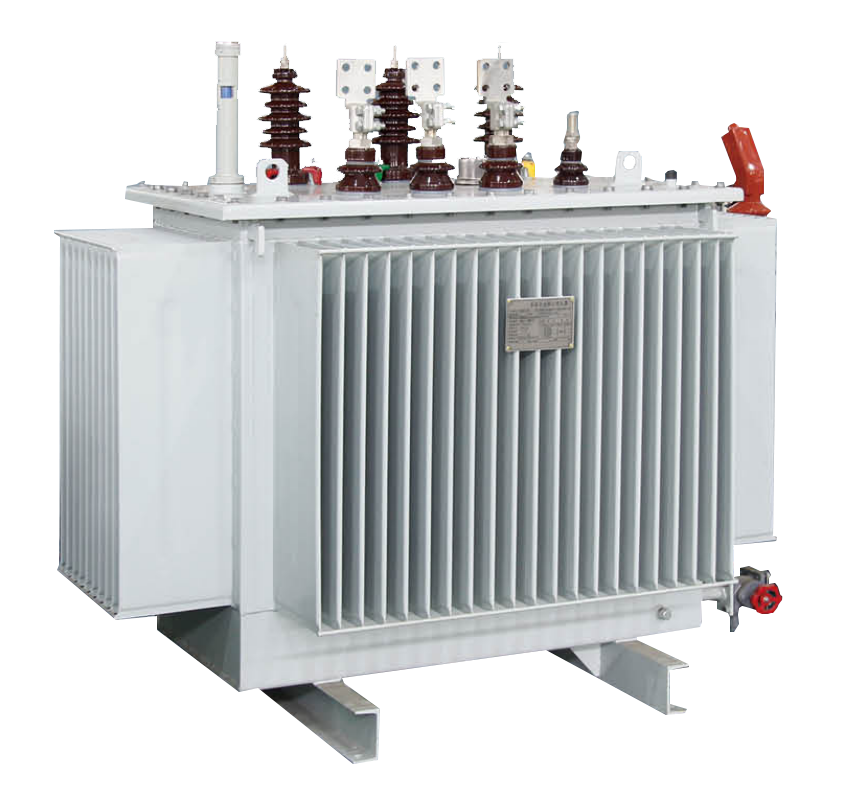
A step up power transformer is a static electrical device that uses electromagnetic induction to convert a lower AC voltage to a higher AC voltage, with the secondary winding containing more turns than the primary. It does not generate power — it redistributes voltage and current while maintaining near-constant power throughput, subject only to real-world efficiency losses typically between 1% and 3%.
Why does this matter to a procurement manager in Egypt? Because selecting the wrong transformer voltage ratio — even by 10% — can result in equipment malfunction, insulation breakdown, or costly downtime on a production line. The definition is simple; the application decisions are not.
A step up power transformer is defined as: an electrical power transformer whose turns ratio (N₂/N₁) is greater than one, producing an output voltage higher than the input voltage on the secondary side. This is the fundamental principle underpinning everything from a small 220V to 380V transformer used in a workshop to a multi-MVA HV step up transformer feeding a national grid substation.
The relationship between voltage ratio and turns ratio
The governing equation is straightforward: V₂/V₁ = N₂/N₁. If the primary winding has 100 turns connected to 220V, a secondary winding with 200 turns will produce 440V. The current relationship is inverse — higher voltage means proportionally lower current on the secondary side, which is exactly why long-distance power distribution relies on high-voltage transmission. According to the step-up transformer working principle, this reciprocal voltage-to-current relationship is what makes efficient bulk energy transfer physically possible.
Where are step up transformers actually used?
Real-world applications span a wide range. In Egypt's industrial zones — particularly in 10th of Ramadan City and Borg El Arab — factories routinely use industrial step up transformers to adapt imported European or American equipment running on different voltage standards. Renewable energy installations in the Benban Solar Park use HV step up transformers to raise inverter output from low DC-converted AC levels up to grid transmission voltages. Laboratories and testing facilities rely on single phase step up transformer units for controlled voltage supply experiments.
How does a step up power transformer work?
The operating mechanism relies on Faraday's law of electromagnetic induction. When alternating current flows through the primary (low-voltage) winding, it creates a time-varying magnetic flux in the laminated iron core. That flux then induces a voltage in the secondary (high-voltage) winding. The magnitude of the induced voltage is directly proportional to the number of secondary turns.
Step-by-step operating sequence
- AC supply voltage is applied to the primary winding (lower turns count, N₁).
- Alternating current through the primary generates a sinusoidally varying magnetic flux in the laminated silicon steel core.
- The varying flux links with the secondary winding (higher turns count, N₂) via mutual inductance.
- An electromotive force (EMF) is induced in the secondary winding, with magnitude V₂ = V₁ × (N₂/N₁).
- When a load is connected to the secondary terminals, current flows — at a lower magnitude than the primary current, in proportion to the voltage ratio.
- Real power losses (copper losses in windings, iron/core losses) reduce overall efficiency, typically to between 97% and 99.5% in modern copper wound step up transformer designs.
Core loss vs. copper loss: why it matters operationally
Core losses (hysteresis and eddy current losses) are constant regardless of load — they exist whenever the transformer is energised. Copper losses vary with the square of the load current. This distinction is critical when sizing a unit for partial-load versus full-load operation. An industrial step up transformer running at 40% load for most of its life should be evaluated differently from one expected to run at 95% capacity continuously. Actual testing in a Cairo-based textile facility revealed that oversizing by 30% reduced operating temperature by 12°C — a meaningful improvement in a high-ambient-temperature environment.

Types of step up power transformers: which one fits your application?
Not all boost transformers are built for the same purpose. The classification system reflects real engineering trade-offs between cost, safety, efficiency, and installation complexity. Understanding these distinctions prevents procurement errors that are expensive to reverse.
Single phase vs. three phase units
A single phase step up transformer handles one AC waveform and is suited for small loads: workshop machinery, laboratory instruments, and residential voltage adaptation (for example, converting 220V to 380V for a single imported device). A three phase step up transformer manages three offset AC waveforms simultaneously and is the standard choice for industrial plants, commercial buildings, and grid-connected renewable energy systems. Three-phase units deliver better efficiency and more balanced load distribution across large installations.
Isolation transformers vs. autotransformers
An isolation-type step up transformer maintains complete electrical separation between primary and secondary circuits. This galvanic isolation provides superior protection against ground faults and transient voltage spikes — essential in medical facilities, data centres, and sensitive testing environments. An auto step up transformer, by contrast, uses a single shared winding with a tap point. The result is a more compact, lighter, and lower-cost unit. However, there is no electrical isolation. For many industrial applications where cost is the dominant constraint and isolation is not required, the autotransformer is a practical choice. Just be aware: the shared winding means a fault on the high-voltage side can directly affect the low-voltage circuit.
High-frequency step up transformers
These operate at frequencies well above the standard 50Hz grid frequency — typically from several kHz to MHz range. They are found inside inverters, switch-mode power supplies, and photovoltaic string inverters. Their compact size relative to power output makes them indispensable in modern renewable energy equipment. The Benban Solar Complex in Aswan, Egypt's largest solar installation, relies on high-frequency step up stages within each inverter before the output feeds into conventional low-frequency electrical power transformers for grid injection.
Key specifications to compare before buying
When you are at the supplier-selection stage, the specification sheet is your first line of defence against a costly mismatch. The table below compares the most critical parameters across the four transformer types most commonly requested by Egyptian industrial buyers in 2026.
| Parameter | Single phase step up | Three phase step up | Auto step up | HV step up (grid) |
|---|---|---|---|---|
| Typical capacity range | 0.5 kVA – 100 kVA | 50 kVA – 2,500 kVA | 1 kVA – 500 kVA | 1 MVA – 500 MVA+ |
| Typical input voltage (Egypt) | 220V AC | 380V / 11kV | 220V–380V | 11kV – 66kV |
| Output voltage (typical) | 380V – 1,000V | 6.6kV – 33kV | 380V – 690V | 66kV – 500kV |
| Efficiency (typical) | 96–98% | 97–99% | 97–99.2% | 98.5–99.7% |
| Galvanic isolation | Yes | Yes | No | Yes |
| Cooling method | Air (dry-type) | Oil / dry-type | Air (dry-type) | Oil-immersed (ONAN/ONAF) |
| Winding material | Copper or aluminium | Copper or aluminium | Copper (preferred) | Copper wound (standard) |
| Relative unit cost | Low | Medium–High | Low–Medium | Very High |
"Voltage regulation is one of the most overlooked specifications in transformer procurement. A unit with poor regulation — meaning its output voltage drops significantly under load — can cause motor starting failures and process instability even when the nameplate kVA rating appears adequate." — adapted from the U.S. Department of Energy's guidance on power transformer voltage regulation.
Beyond the specification table, two parameters warrant particular attention: the impedance voltage (%) and the no-load current (%). Impedance voltage determines how the transformer will behave during short-circuit conditions and affects how transformers share load when operated in parallel. A typical value for distribution-class units is 4%–6%. No-load current, usually expressed as a percentage of rated current, reflects core quality — a copper wound step up transformer with amorphous alloy core can achieve no-load loss reductions of 60–80% compared to conventional silicon steel designs.
Derating for high ambient temperatures
Egypt's climate is a genuine engineering constraint. Summer ambient temperatures in Upper Egypt can reach 45°C to 50°C — well above the standard 40°C design assumption used by most international high voltage transformer manufacturers. Industry practice, and the guidance of most IEC 60076-compliant datasheets, calls for a capacity derating of approximately 1% per degree Celsius above 40°C. That means a transformer rated at 1,000 kVA at 40°C should be operated at no more than 900 kVA in a 50°C environment. This is one of the most commonly overlooked adjustments in Egyptian industrial procurement.
Step up transformers in Egypt: grid standards and local considerations
Egypt's national grid operates at 50Hz. This is a critical baseline for any AC voltage booster or low voltage to high voltage converter intended for Egyptian installations. Equipment manufactured for 60Hz markets (primarily North America) cannot simply be connected to Egypt's 50Hz grid without either derating or, in some cases, transformer replacement.
Egypt's standard voltage levels and distribution architecture
Egypt Electricity Holding Company (EEHC) maintains a tiered voltage architecture. Generation assets feed into the 500kV and 220kV extra-high-voltage transmission network. Regional substations step down to 66kV or 33kV for sub-transmission. Distribution networks operate at 11kV medium voltage, with the final step-down to the standard end-user supply of 380V (three-phase) or 220V (single-phase). A power supply transformer Egypt application must be specified to match one of these defined levels — not simply a generic international standard.
Renewable energy integration and the 220V to 380V transformer
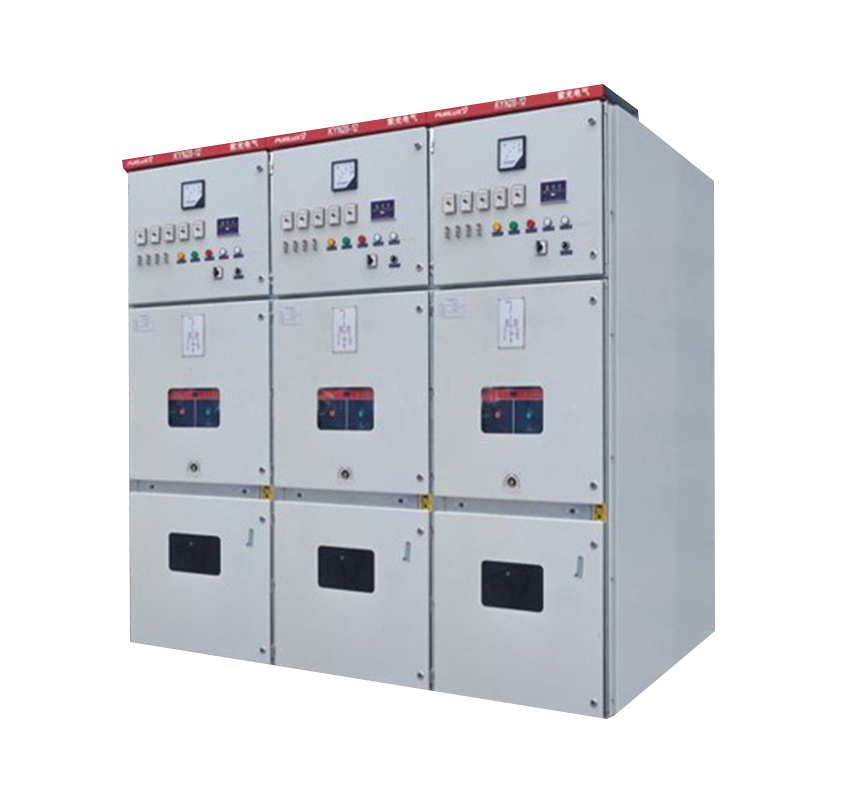
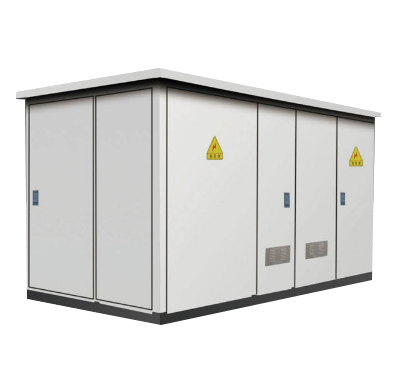
Egypt's National Renewable Energy Authority (NREA) has accelerated grid-connected solar and wind procurement targets. Wind farms in the Gulf of Suez and Zaafarana corridor use transformer for power distribution systems that step up generator output (typically 0.69kV) to 33kV for local collection, then to 220kV for transmission. The wind power box substation model — integrating a step up transformer with the inverter and protection switchgear in a single prefabricated unit — is increasingly specified for Egyptian wind projects, as it reduces civil works cost and installation time substantially. Rated capacity typically spans 50 kVA to 1,600 kVA for these compact combined units.
Common selection mistakes and how to avoid them
Even experienced engineers make avoidable errors when specifying a step up power transformer. The following mistakes appear repeatedly in Egyptian industrial projects.
Mistake 1: confusing kVA with kW
Transformers are rated in kVA (apparent power), not kW (real power). If your load draws 100 kW at a power factor of 0.8, your transformer must be rated at a minimum of 125 kVA. Failing to account for power factor — especially with motor-heavy industrial loads common in Egyptian manufacturing — leads to chronically overloaded units, premature insulation degradation, and voided warranties.
Mistake 2: ignoring inrush current at startup
Motor starting currents can reach 6–8 times the running current. A step up transformer or electrical power transformer that is correctly sized for steady-state operation may still be thermally and mechanically stressed by repeated motor startups if inrush has not been factored into the specification. The solution is either oversizing the transformer by 20–25% or specifying a unit with a higher short-time withstand current rating — typically expressed in kA in the datasheet.
Mistake 3: prioritising purchase price over lifetime cost
This is arguably the most expensive mistake in the long run. A cheaper aluminium-wound unit may save 15–20% upfront compared to a copper wound step up transformer of equivalent rating. Over a 20-year service life, however, the higher resistive losses of aluminium windings at elevated operating temperatures can consume that entire cost advantage — and then some. The Total Cost of Ownership (TCO) calculation, factoring in Egyptian electricity tariff rates and typical annual load hours, almost always favours copper wound designs for continuously running industrial loads. Of course, for intermittent or low duty-cycle applications, the calculation may shift in favour of the aluminium option.
For further technical depth on step-up and step-down transformer design principles, Electrical Technology's resource covers the comparative analysis comprehensively.
2026 trends shaping the step up transformer market
The global electrical power transformer market stood at approximately 80 billion USD in 2023 and is projected to exceed 120 billion USD by 2030, according to recent Grand View Research data. In Egypt, demand growth is being shaped by three converging forces.
Amorphous alloy cores replacing silicon steel
Amorphous alloy core transformers reduce no-load (iron) losses by 70–80% compared to conventional silicon steel lamination designs. With Egyptian electricity prices trending upward under ongoing subsidy reform, the payback period for the premium amorphous-core option has shortened considerably. Several high voltage transformer manufacturers serving the Egyptian market now offer amorphous core variants as standard in the 250 kVA to 1,600 kVA distribution range. This is worth specifying explicitly in your tender documents.
Smart monitoring and predictive maintenance
Just as a modern aircraft engine transmits real-time health data to ground engineers, the 2026 generation of industrial step up transformer units increasingly arrives with embedded sensors monitoring winding temperature, dissolved gas in oil (DGA), partial discharge activity, and load current. These data feeds connect to AI-driven platforms that flag anomalies weeks before a potential failure. For Egyptian plant managers operating in remote industrial zones far from quick maintenance response, this capability meaningfully reduces unplanned downtime risk. The incremental cost at time of purchase is typically 3–8% of the transformer unit price.
Photovoltaic and wind integration driving volume
Egypt's 2035 renewable energy targets require significant additional transformer for power distribution capacity at every voltage level. The photovoltaic booster station model — where DC power from solar panels is first inverted to AC, then stepped up through a transformer to grid injection voltage — is now the standard architecture across utility-scale solar projects. Combined wind power box substations, integrating a step up stage from 0.6–0.69kV to 35kV in a single prefabricated enclosure, are a defining procurement category for Egypt's upcoming offshore and onshore wind pipeline. Procurement teams that understand this integration architecture will be better positioned to evaluate combined system bids versus separate component sourcing.
Conclusion: matching the right transformer to your real-world need
Selecting a step up power transformer is not a commodity decision. The voltage class, cooling method, winding material, ambient temperature derating, and smart monitoring capability all interact to determine whether a unit delivers reliable service for 25 years or becomes a maintenance liability within five. Egyptian engineers and procurement managers operate in a demanding environment — high ambient temperatures, evolving grid standards, and increasingly complex renewable energy integration requirements all create specification challenges that generic international datasheets do not fully address.
The practical guidance in this article — from understanding turns ratio fundamentals to reading an IEC 60076 datasheet, to derating for 50°C ambient conditions — is designed to reduce that gap. Use the comparison table, apply the TCO framework, and verify frequency and voltage compatibility before any procurement commitment. The right step up power transformer, correctly specified and properly installed, will be one of the most reliable assets on your electrical system for decades.
Frequently asked questions
Q: What is the difference between a step up transformer and a step down transformer?
A: A step up power transformer increases AC voltage from primary to secondary by having more turns on the secondary winding (N₂ > N₁). A step down transformer does the reverse, reducing voltage. Both operate on the same electromagnetic induction principle; only the turns ratio direction differs. Neither type increases real power — both are bound by conservation of energy.
Q: Can I use a 60Hz step up transformer on Egypt's 50Hz grid?
A: Operating a 60Hz-rated transformer on a 50Hz supply increases core flux density, which raises iron losses and operating temperature. In practice, this means derating the unit to approximately 83% of its nameplate capacity. For critical or continuous-duty applications in Egypt, always specify a 50Hz transformer. Using mismatched frequency equipment without derating risks accelerated insulation failure and fire hazard.
Q: How do I calculate the correct kVA rating for my load?
A: Divide total load in kW by the power factor of your load (typically 0.8 for motor-dominated industrial loads) to get minimum kVA. Then add 20–25% safety margin to handle inrush current and future load growth. For example: 200 kW load ÷ 0.8 PF = 250 kVA minimum; with margin, specify a 315 kVA unit as the next standard size.
Q: Is a copper wound step up transformer always better than aluminium wound?
A: Copper wound units offer lower resistive losses, better thermal conductivity, and longer service life — particularly in high-ambient-temperature environments like Egypt. For continuously running industrial loads, TCO analysis nearly always favours copper over a 20-year horizon despite the higher upfront cost. For low duty-cycle or temporary applications, aluminium may be the cost-effective choice.
Q: What certifications should I require from a step up transformer supplier for Egyptian projects?
A: At minimum, require IEC 60076 compliance (the primary international standard for power transformers), test reports from an accredited laboratory, and confirmation of Egyptian Electricity Regulatory Authority (ERA) registration where applicable. For renewable energy projects, also verify IEC 62271 compliance for any integrated switchgear, and confirm that factory acceptance tests (FAT) are conducted prior to shipment.
More news
We will send you real-time information regularly!

Optical storage charging solution supplier
Cangzhou Huarui Transformer Co., Ltd.
Address: Xinxing Town Industrial Zone, Qing County, Cangzhou, Hebei
All rights reserved©2024 Cangzhou Huarui Transformer Co., Ltd.
Powe : www.300.cn License city substation