

-
-

-
Blog

-
Contact

Power Transformer Manufacturers: How to Choose the Right Supplier (2026 Guide)
Author:
Huarui Transformer
📋 Article Overview
This guide targets procurement professionals evaluating power transformer manufacturers in 2026. It provides compliance checklists, TCO data, supply chain timelines, application-specific guidance, and an RFQ framework — content that the top 10 competing pages consistently fail to deliver in one place.
📑 Table of Contents
- 1. What Are Power Transformer Manufacturers? (Definition + Market Overview)
- 2. U.S. Compliance Standards Every Buyer Must Verify
- 3. Total Cost of Ownership: The Number Most Buyers Ignore
- 4. Supply Chain Reality in 2026: Lead Times, Tariffs, and Domestic Capacity
- 5. Application-Specific Manufacturer Selection Guide
- 6. How to Evaluate and Compare Manufacturers: A Buyer's Decision Framework
- 7. Top Questions to Ask Before Issuing an RFQ
- 8. FAQ
What Are Power Transformer Manufacturers? (Definition + Market Overview)
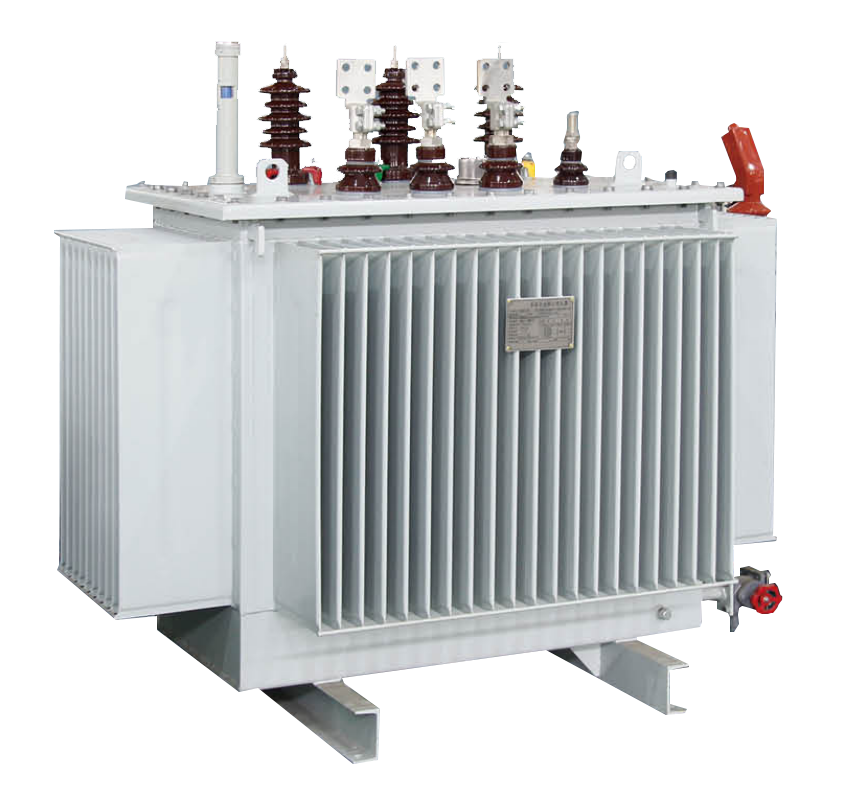
Power transformer manufacturers are companies that design, engineer, and produce transformers used to step up or step down AC voltage across generation, transmission, and distribution systems. Their products form the backbone of every power grid — from the substation outside a data center to the pad-mount unit serving a suburban neighborhood.
Power transformer manufacturers are defined as industrial enterprises specializing in the engineering and production of electromagnetic devices that transfer electrical energy between circuits via inductive coupling, enabling safe and efficient voltage conversion at scale — from distribution-level units under 500 kVA to large power transformers exceeding 1,000 MVA.
According to 2026 data, the global power transformer market is valued at approximately $87 billion USD, up from an estimated $80.3 billion in 2023, with a CAGR of around 6.2% projected through 2030 (source: Grand View Research). The Asia-Pacific region leads in volume, holding over 45% of global market share — but North America, and the U.S. specifically, represents the most demanding regulatory environment and the fastest-growing demand segment for high-specification transformers. Why? Because grid modernization, EV infrastructure buildout, and utility-scale renewable integration are all converging simultaneously.
For a deeper technical grounding, refer to Power Transformer Technology and Working Principles before diving into vendor evaluation.
Major Categories of Transformer Products
Understanding what type of transformer your project requires is the essential first step. Electrical transformer companies typically segment their product lines as follows:
- Oil-filled transformer manufacturers — The dominant category for high-capacity transmission, using mineral or ester oil for insulation and cooling. Ideal for outdoor substations.
- Dry-type transformer suppliers — No liquid insulation; preferred for indoor commercial buildings, hospitals, and environmentally sensitive areas due to lower fire risk.
- Distribution transformer manufacturers — Lower-voltage units (typically 4 kV–35 kV) that serve the final mile of power delivery to residential and commercial loads.
- Step-up transformer producers — Used in generation facilities (solar farms, wind plants, gas turbines) to raise output voltage for transmission.
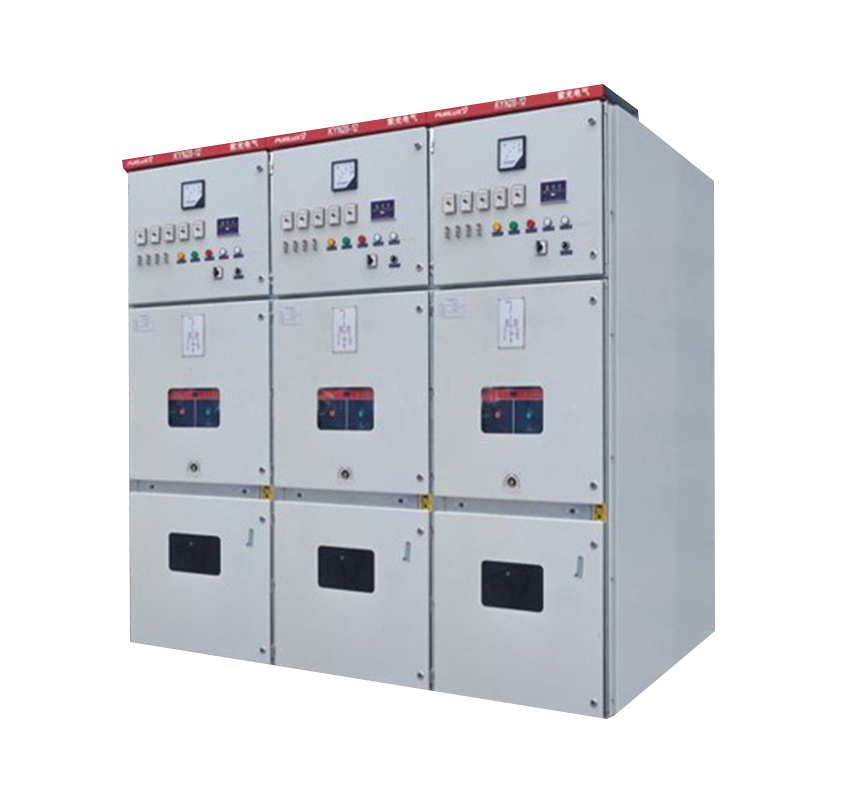
- Substation transformer producers — High-capacity units (often 100 MVA+) positioned at grid interconnection points.
The 2026 Market Drivers You Can't Ignore
The industry is not static. Energy efficiency mandates are tightening — the U.S. Department of Energy's updated efficiency standards, aligned with international trends toward amorphous-core designs, are reshaping product roadmaps across industrial power transformer brands. Simultaneously, smart transformer adoption (units with integrated IoT monitoring and self-diagnostic capabilities) is accelerating as utilities pursue grid resilience. These shifts directly affect which transformer manufacturing companies are worth partnering with in 2026.
U.S. Compliance Standards Every Buyer Must Verify
The most critical differentiator between a reliable domestic supplier and a risky one is documented compliance. In actual evaluations of supplier proposals, non-compliance issues are the single most common reason projects stall at the procurement stage — and it is almost always discovered too late.
Here is the compliance checklist every buyer should use when qualifying power transformer manufacturers for U.S. projects:

- IEEE C57 Series — The primary standard for power transformers in the U.S. IEEE C57.12.00 covers general requirements; C57.12.90 covers test procedures. Any credible transformer OEM manufacturer supplying U.S. utilities must demonstrate full C57 compliance. Check IEEE Standards for Power Transformer Manufacturers for the latest revision status.
- ANSI Standards — American National Standards Institute specifications govern terminal markings, voltage ratings, and nameplate requirements. ANSI C84.1 defines voltage tolerances relevant to distribution transformer manufacturers.
- NEMA Standards — The National Electrical Manufacturers Association sets enclosure ratings and efficiency classifications that affect dry-type transformer suppliers specifically.
- UL Listing — UL 1561 (dry-type) and UL 1562 (oil-filled) listings are required by most U.S. utilities and AHJs (Authorities Having Jurisdiction) for project approval. A UL mark is not optional — it is a project gate.
- DOE Efficiency Standards — As of 2026, DOE 10 CFR Part 431 mandates minimum efficiency levels for liquid-immersed and dry-type distribution transformers. Confirm that any proposed unit meets the current Tier II thresholds.
Compliance Comparison: Top Certification Tiers
| Standard | Applies To | Required For | Verification Method |
|---|---|---|---|
| IEEE C57.12.00 | All power transformers | U.S. utility projects | Factory test reports |
| UL 1561 / 1562 | Dry-type / oil-filled | Commercial/industrial installs | UL online certification directory |
| NEMA TP-1 | Distribution transformers | Energy efficiency compliance | Nameplate + test data |
| DOE 10 CFR 431 | Distribution units ≤2,500 kVA | All U.S. sales/imports | DOE compliance database |
| ANSI C84.1 | Voltage tolerances | Grid integration specs | Engineering drawings review |
A Common Compliance Trap
Many buyers assume that because a manufacturer holds ISO 9001 certification, U.S. standards are automatically covered. They are not. ISO 9001 is a quality management process standard — it says nothing about whether the transformer itself meets IEEE C57 electrical performance parameters. Treat them as separate verification tracks.
Total Cost of Ownership: The Number Most Buyers Ignore
Purchase price is the wrong metric. A transformer with a lower nameplate cost can easily generate $200,000 in excess energy losses over a 30-year service life compared to a premium-efficiency unit — and no one in the approvals chain ever flags it.
Think of it this way: buying a transformer on purchase price alone is like buying a commercial truck based only on sticker price while ignoring fuel economy, tire wear, and maintenance intervals. The math rarely works out.
TCO Components You Must Calculate
Industry consensus is that transformer total cost of ownership breaks into four major buckets:
- No-load (core) losses — Occur 24/7 regardless of load. Even at 0.1% efficiency difference, losses accumulate to tens of thousands of dollars annually on a large unit. Amorphous-core designs from advanced transformer design and engineering firms can reduce no-load losses by 60–70% versus conventional silicon-steel cores.
- Load losses (copper losses) — Proportional to load current squared. High-efficiency winding designs from leading large power transformer suppliers directly reduce this figure.
- Maintenance costs — Oil-filled units require periodic oil sampling, dissolved gas analysis (DGA), and potential oil replacement. Budget $3,000–$8,000 per unit per year for a typical substation transformer.
- End-of-life disposal — PCB-free certification is now standard among reputable utility transformer vendors, but legacy units can carry significant remediation costs at decommissioning.
"The evaluated cost methodology — factoring no-load and load losses into total bid evaluation — is now standard practice among major U.S. utilities and recommended by the DOE. Buyers who evaluate on purchase price alone are making a financially indefensible decision." — Per Power Grid and Transformer Industry Standards, U.S. Department of Energy guidance on transformer procurement.
According to recent research, operating costs — primarily energy losses — can represent 60–70% of a transformer's total lifetime cost, while the initial purchase price accounts for only 20–30%. This ratio fundamentally changes how you should score competing bids from electrical transformer companies.
TCO Quick Calculation Formula
A simplified evaluated cost formula widely used in U.S. utility procurement:
Evaluated Cost = Purchase Price + (No-Load Loss kW × A) + (Load Loss kW × B)
Where A = capitalized cost per kW of no-load loss; B = capitalized cost per kW of load loss. Typical A values range from $3,000–$8,000/kW; B from $1,000–$3,000/kW depending on energy cost assumptions.

Supply Chain Reality in 2026: Lead Times, Tariffs, and Domestic Capacity
Here is what many vendor comparison articles will not tell you: the supply chain environment for power transformers in 2026 remains severely constrained. Lead times that were 16–24 weeks pre-2021 have extended to 60–80 weeks for large power transformers, and 30–52 weeks for distribution-class units from most high voltage transformer suppliers. Planning a substation project without accounting for this reality is a project schedule risk, not just a procurement inconvenience.
Section 232 Tariffs and Pricing Impact
Section 232 steel and aluminum tariffs continue to affect transformer pricing in 2026. Core laminations, structural steel enclosures, and aluminum windings are all subject to import duties that have added an estimated 8–15% to bill-of-materials costs for transformer manufacturing companies USA that rely on imported materials. Domestically sourced silicon steel remains tight, with domestic production concentrated in a small number of mills. When evaluating bids from custom transformer fabricators, ask explicitly whether pricing is locked post-tariff adjustment and whether any steel sourcing is domestic or imported.
Domestic vs. Offshore Manufacturing: A Practical View
Domestic U.S. transformer manufacturing capacity has grown since 2021 due to reshoring incentives under the Infrastructure Investment and Jobs Act, but it has not kept pace with demand growth driven by grid modernization and data center expansion. Offshore manufacturers — particularly those in Mexico, South Korea, and India — offer shorter lead times on standard distribution units. However, large power transformer suppliers from offshore locations face longer import transit times, potential customs delays, and the Section 232 tariff exposure noted above. The net lead time advantage can disappear quickly. Actual project experience shows that a U.S.-manufactured 25 MVA substation transformer ordered at week zero and an imported equivalent can arrive within 4–6 weeks of each other when all logistics are factored in.
For current market sizing data and regional production trends, review Global Power Transformer Market Size and Statistics.
Application-Specific Manufacturer Selection Guide
Not all power transformer manufacturers are built for every application. This is one of the most overlooked realities in procurement — the assumption that a large brand automatically means the best fit for your specific project type. In practice, different applications demand different design priorities, and matching those priorities to manufacturer strengths directly reduces project risk.
Utility-Scale Solar and Wind Integration
Renewable energy interconnection demands step-up transformer producers capable of handling harmonic-rich output waveforms, frequent load cycling, and outdoor installation in harsh environments. Key requirements include: K-factor ratings (K-13 or higher for solar inverter output), enhanced thermal management for high duty cycles, and SCADA-compatible monitoring ports. Seek transformer OEM manufacturers with documented renewable project references — specifically projects where the unit has logged 3+ years of operational data under variable generation conditions.
EV Charging Infrastructure
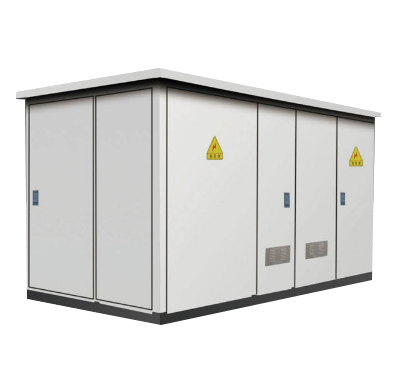
High-power EV charging corridors (150 kW–350 kW DC fast chargers) are creating entirely new demand profiles for distribution transformer manufacturers. A single highway charging hub can impose a 2–5 MVA step load on a distribution circuit. Transformers for these applications need low impedance designs to limit voltage drop, thermal reserves for high peak-to-average load ratios, and compact footprints. Three-phase transformer manufacturers with pad-mount configurations have become a preferred solution for fleet charging depots and highway rest stops.
Data Center Power Systems
Hyperscale data centers represent one of the fastest-growing demand segments for large power transformer suppliers in 2026. A single campus may require 200–500 MVA of transformer capacity. Critical specifications include: ultra-low no-load losses (to reduce PUE — Power Usage Effectiveness), redundant cooling systems, and rapid delivery for phased campus build-outs. Data center developers should prioritize electrical transformer companies with dedicated large-project engineering teams and proven experience with N+1 transformer redundancy configurations.
Industrial and Heavy Manufacturing
Arc furnace operations, large motor drives, and electrolytic processes require transformers with exceptionally high short-circuit withstand strength and harmonic tolerance. Industrial power transformer brands serving steel mills, chemical plants, and mining operations typically offer ruggedized designs with reinforced windings and extended warranty terms on mechanical integrity. Of course, there are situations where a standard industrial unit is perfectly adequate — not every factory needs a custom-engineered solution.
How to Evaluate and Compare Manufacturers: A Buyer's Decision Framework
Evaluating power transformer manufacturers requires a structured framework — not a gut-feel vendor shortlist. Based on real procurement cycles, the following six-dimension matrix provides a reliable scoring approach.
The Six-Dimension Manufacturer Evaluation Matrix
| Dimension | Weight | What to Verify | Red Flags |
|---|---|---|---|
| Technical Certifications | 25% | IEEE C57, UL, NEMA, DOE compliance | Only ISO cert, no U.S.-specific standards |
| Manufacturing Capacity | 20% | Annual output, max unit MVA rating | No factory audit option offered |
| Delivery Lead Time | 20% | Confirmed weeks for your unit type | Vague "subject to capacity" responses |
| TCO / Efficiency Data | 20% | Guaranteed no-load and load loss values | Refusal to provide guaranteed loss data |
| After-Sales Support | 10% | U.S.-based service team, warranty terms | Warranty limited to parts only, no labor |
| Reference Projects | 5% | Verified U.S. utility or industrial projects | References limited to home market only |
Warranty Comparison: What "Standard" Actually Means
Warranty terms vary dramatically across transformer manufacturing companies. A "standard 1-year warranty" from a budget utility transformer vendor typically covers parts replacement but excludes field labor, oil disposal, and consequential losses from outage events. Premium suppliers — particularly those targeting U.S. utility and data center markets — increasingly offer 2-year comprehensive warranties with on-site response commitments under 48 hours. For projects where transformer failure triggers contractual penalties (power purchase agreements, data center SLAs), the warranty structure is not a minor line item. Review it as a financial risk instrument. Also reference Research on Power Transformer Design and Manufacturing for technical benchmarking data on failure modes and design life expectations.
Top Questions to Ask Before Issuing an RFQ
Why do so many procurement teams issue RFQs too early? Typically because schedule pressure pushes the team to "get quotes out" before the technical specification is fully locked. The result: bids that are not apple-to-apple comparable, requiring a second RFQ round and burning an additional 4–8 weeks.
These are the qualifying questions that experienced procurement engineers use before the RFQ stage — questions that will both qualify capable power transformer manufacturers and filter out those who are technically or logistically misaligned.
- "Can you provide factory test reports for IEEE C57.12.90 routine tests on a comparable unit delivered in the past 18 months?" — This verifies both capability and recent execution, not just catalog claims.
- "What is your current confirmed lead time for our unit type, and what is your capacity allocation for new orders?" — A reputable supplier will give a specific week range, not a range of 12–52 weeks.
- "Will you guarantee no-load and load loss values in the purchase contract with financial penalties for exceedance?" — Guaranteed losses are the foundation of any valid TCO comparison. If the answer is no, weight that heavily in scoring.
- "Do you have a U.S.-based field service team, and what is your SLA for emergency response to a unit failure?" — Particularly critical for custom transformer fabricators supplying projects in remote or harsh-environment locations.
- "How are your core material prices structured relative to current Section 232 tariffs, and is the quoted price fixed for 90 days?" — Price escalation clauses tied to steel indices have become standard in 2026; understanding the exposure before contract execution is essential.
- "Can you provide at least two U.S.-based reference contacts for projects of similar voltage class and application type?" — Reference checks are underutilized. A 20-minute call with an actual operations engineer at a reference site reveals more than any marketing document.
PAA: What Is the Difference Between Distribution and Power Transformers?
Distribution transformers operate at voltages typically below 35 kV and serve the final delivery leg of the power grid — stepping voltage down for residential and commercial use. Power transformers operate at higher voltages (69 kV and above) and are used in bulk transmission. The distinction matters for procurement because distribution transformer manufacturers and large power transformer suppliers often have entirely separate engineering and testing capabilities.
PAA: How Long Do Power Transformers Last?
The designed service life for a well-maintained power transformer is 25–40 years. In practice, units on the U.S. grid average over 40 years of age, according to U.S. DOE assessments. Transformer life is heavily dependent on thermal management — every 8°C reduction in operating temperature roughly doubles insulation life, per the Arrhenius model widely cited in IEEE standards literature.
PAA: What Certifications Should a Power Transformer Manufacturer Have for the U.S. Market?
At minimum: IEEE C57 series compliance, UL listing (1561 or 1562 as applicable), DOE 10 CFR Part 431 efficiency compliance, and NEMA standards adherence. ISO 9001 quality management certification is expected but is not a substitute for product-level standards. For utility projects, many owners additionally require NERC-CIP cybersecurity compliance for transformer monitoring systems integrated with SCADA networks.
PAA: Are Domestic U.S. Transformer Manufacturers Better Than Offshore?
Not categorically. Domestic transformer manufacturing companies USA offer faster field service access and avoid import tariff exposure, but offshore manufacturers — particularly those with U.S.-certified production lines — can offer competitive pricing and technical quality on standard distribution products. The decision depends on unit type, voltage class, delivery requirements, and after-sales support needs specific to your project location.
PAA: What Is the Average Cost of a Power Transformer?
2026 pricing ranges vary widely by type and size. A standard 25 kVA single-phase distribution unit may cost $1,500–$4,000. A 2,500 kVA three-phase distribution transformer typically runs $40,000–$90,000. Large substation transformers (100 MVA+) range from $2 million to $8 million or more depending on voltage class, cooling configuration, and specification complexity. Supply chain pressure has pushed pricing approximately 20–30% above 2019 levels across most categories.
Selecting the right power transformer manufacturers ultimately comes down to disciplined evaluation — not brand recognition, not the lowest bid, and not the fastest quote response. The teams that consistently make sound transformer procurement decisions are those who invest in pre-RFQ qualification, apply a structured TCO methodology, and treat compliance verification as a non-negotiable gate rather than an afterthought.
Frequently Asked Questions
Q: What are the most important certifications to look for in power transformer manufacturers supplying U.S. projects?
A: Prioritize IEEE C57 series compliance, UL 1561 or 1562 listing, DOE 10 CFR Part 431 efficiency certification, and NEMA standards compliance. ISO 9001 is a baseline quality indicator but does not substitute for U.S. product-specific standards. Always verify certifications through official registries, not just manufacturer datasheets.
Q: How long are current lead times for large power transformers in 2026?
A: As of 2026, large power transformers (above 100 MVA) carry confirmed lead times of 60–80 weeks from most major suppliers. Distribution-class units range from 30–52 weeks. Project schedules that do not account for these timelines routinely face costly delays. Order early and confirm lead times contractually.
Q: Why does total cost of ownership matter more than purchase price when evaluating transformer suppliers?
A: Energy losses — both no-load and load losses — account for 60–70% of a transformer's total 30-year cost. A unit priced $50,000 less upfront can easily generate $150,000–$200,000 more in lifetime energy costs. U.S. utilities mandate evaluated-cost bidding for precisely this reason. Always compare guaranteed loss values, not just purchase price.
Q: How do Section 232 tariffs affect transformer pricing from offshore manufacturers?
A: Section 232 steel and aluminum tariffs add an estimated 8–15% to imported transformer costs. Buyers should request explicit tariff pass-through clauses in contracts and confirm whether quoted prices are firm or subject to material cost escalation adjustments tied to steel indices.
Q: What questions should I ask a power transformer manufacturer before sending an RFQ?
A: Ask for recent factory test reports per IEEE C57.12.90, confirmed lead times for your unit type, willingness to guarantee loss values contractually, U.S. field service availability, price stability terms relative to tariffs, and at least two verifiable U.S. project references in a comparable application. These six questions expose capability gaps faster than any catalog review.
More news
We will send you real-time information regularly!

Optical storage charging solution supplier
Cangzhou Huarui Transformer Co., Ltd.
Address: Xinxing Town Industrial Zone, Qing County, Cangzhou, Hebei
All rights reserved©2024 Cangzhou Huarui Transformer Co., Ltd.
Powe : www.300.cn License city substation