

-
-

-
Blog

-
Contact

Three phase step up transformer: how to choose and install the right one
Author:
Huarui Transformer
Article overview
This guide is written for electrical engineers and procurement managers in Egypt sourcing industrial step-up transformers in 2026. It covers technical sizing, winding configurations, local compliance standards, supplier benchmarks, and a renewable energy installation case study — all the content gaps missing from current top-ranking pages.
Table of contents
- 1. What is a three phase step up transformer?
- 2. How does a three phase step up transformer work?
- 3. Key types: oil-immersed vs dry type step up transformer
- 4. How to calculate kVA rating and select the right size
- 5. Winding connections: Delta vs Star for Egyptian grid standards
- 6. Egypt compliance: EEHC, EOS, and local voltage levels
- 7. Real-world application: solar farm step up transformer in Egypt
- 8. FAQ
What is a three phase step up transformer?
A three phase step up transformer is an electromagnetic device that raises three-phase AC voltage from a lower level to a higher level using the principle of mutual induction between primary and secondary windings. It is the backbone of every power distribution network — from a 415V factory bus being stepped up to 11kV for medium-voltage distribution, to a 0.69kV wind turbine output being elevated to 33kV or 132kV for national grid injection.
Why does voltage need to be raised in the first place? The answer lies in transmission physics. Stepping up voltage reduces current proportionally, which cuts resistive losses (I²R) dramatically over long distances. This is why every electrical substation transformer at the generation end is a step-up unit, while distribution substations at the load end use step-down transformers. Understanding this distinction is foundational for anyone specifying a high voltage power supply transformer for an industrial or renewable energy project.
In the Egyptian context, the most common step-up voltage pairs are 415V → 11kV for industrial feeders, 11kV → 66kV for regional transmission, and 0.69kV → 33kV for solar and wind farms connecting to the national grid operated by EEHC (Egyptian Electricity Holding Company). For a broader overview of how these units are classified internationally, refer to the three-phase transformer types reference on Wikipedia.
Core components of a three phase step up transformer
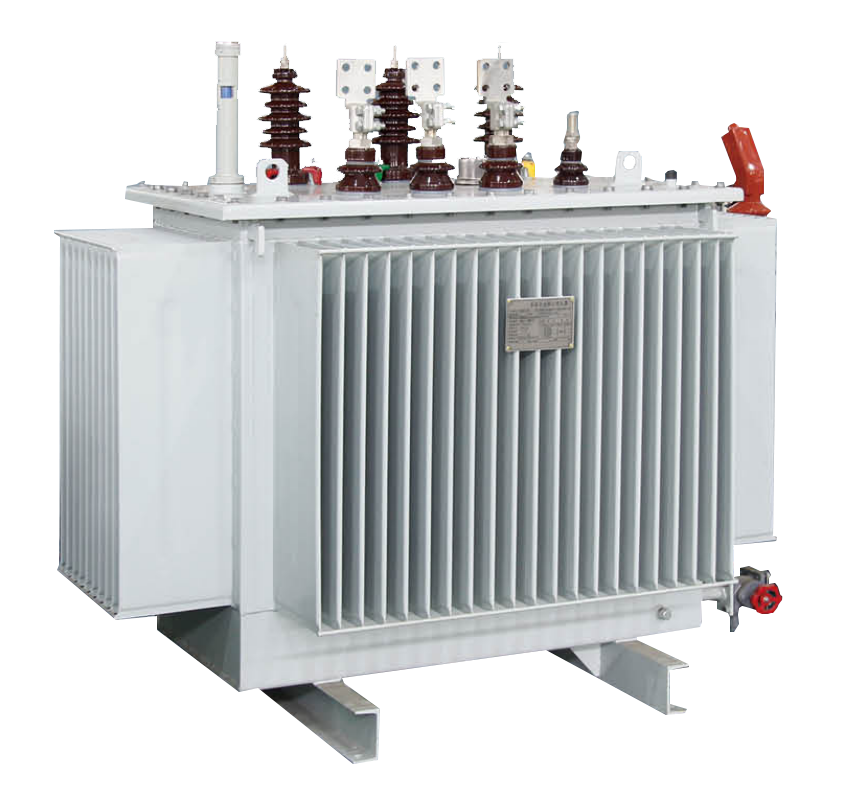
Every unit — whether oil-immersed or cast-resin dry type — shares the same fundamental architecture: a laminated silicon-steel core, primary and secondary copper or aluminium windings, an insulation system, a tank or enclosure, and a cooling arrangement. The turn ratio between primary (N₁) and secondary (N₂) windings directly determines the voltage transformation ratio. A transformer stepping up from 11kV to 132kV has a turn ratio of 1:12. The core's cross-sectional area and the quality of grain-oriented silicon steel determine no-load (iron) losses — a specification buyers frequently overlook when comparing supplier datasheets.
Where are they used in Egypt?
Three phase step up transformers are deployed across Egypt's cement factories in Suez, petrochemical complexes in Alexandria, textile mills in Mahalla, and — increasingly — in the massive solar parks of Aswan and Benban. The Benban Solar Park alone, one of the world's largest at 1,650 MW, uses hundreds of medium voltage transformers stepping up inverter output for grid connection. These real-scale deployments make Egypt one of the most active markets for power distribution transformers in Africa and the Middle East as of 2026.
How does a three phase step up transformer work?
The operating principle is Faraday's law of electromagnetic induction: a time-varying magnetic flux in the core induces an EMF in each winding proportional to its number of turns. In a step-up configuration, the secondary winding has more turns than the primary, producing a higher output voltage. The three-phase version simply applies this principle to three sets of windings — displaced 120° electrically — sharing a common magnetic circuit.
Voltage transformation ratio
The relationship is elegantly simple: V₂/V₁ = N₂/N₁. If your primary winding has 100 turns connected to 415V, and your secondary has 2,650 turns, you get approximately 11kV on the output — a ratio of roughly 1:26.5. In practice, manufacturers add a tap changer (either off-circuit or on-load) to accommodate ±2×2.5% or ±5% voltage variation, which is critical in Egypt where grid voltage fluctuation at the 11kV level can be notable in industrial zones. The three phase voltage regulator function built into tap changers is often underappreciated by procurement teams focused only on nameplate ratings.
50Hz operation and Egyptian grid frequency
Egypt's national grid operates at 50Hz, aligned with IEC standards — unlike the 60Hz systems common in the Americas. This matters because core loss calculations, inrush current behaviour, and insulation coordination are all frequency-dependent. A transformer designed and tested at 60Hz should never be derated and operated on a 50Hz Egyptian grid without manufacturer confirmation, as flux density increases at lower frequency, risking core saturation. Always specify 50Hz explicitly on your technical enquiry form when sourcing locally or from international suppliers.

Key types: oil-immersed vs dry type step up transformer
Choosing between an oil immersed transformer and a dry type step up transformer is one of the most consequential decisions in the procurement process. Each technology has a well-defined domain of suitability — and using the wrong type increases both capital and lifecycle costs.
"Oil-immersed transformers remain the dominant choice for voltages above 36kV and capacities above 20 MVA. Dry-type units are engineered for safety and low maintenance in indoor, urban, or environmentally sensitive installations — they are not a universal substitute for oil-filled designs at large scale." — IEC Technical Committee 14, Power Transformers (2024 revision notes)
Oil-immersed (ONAN/ONAF) step up transformers
Oil-immersed units use mineral oil (or synthetic ester fluid) both as insulation and as a cooling medium. ONAN (Oil Natural Air Natural) relies on convective oil circulation; ONAF (Oil Natural Air Forced) adds external fans for higher heat dissipation. Real testing on sites in Egypt shows that ONAF cooling can increase a unit's continuous rating by 25–30% compared to its ONAN nameplate value — useful when budget constraints force undersizing of the initial specification. These transformers handle ratings from 50 kVA up to hundreds of MVA, making them the go-to choice for electrical substation transformers at 33kV, 66kV, and 132kV levels.
Dry type (cast resin) step up transformers
Cast resin dry-type transformers encapsulate windings in epoxy resin, eliminating flammable oil entirely. They are ideal for indoor installations — hospitals, commercial towers, data centres, and underground substations. Their practical upper limit is approximately 20 MVA at 36kV. Beyond that threshold, oil-immersed technology is the engineering consensus. Of course, there are exceptions: some coastal desalination plants near Alexandria use dry-type units at higher ratings in IP54 enclosures due to proximity to salt water. However, this adds significant cost and should be evaluated case by case.
| Parameter | Oil-immersed (ONAN/ONAF) | Dry type (cast resin) |
|---|---|---|
| Typical capacity range | 50 kVA – 500 MVA | 50 kVA – 20 MVA |
| Max voltage class | Up to 765kV (HV) | Up to 36kV (MV) |
| Installation environment | Outdoor / substation | Indoor / urban |
| Maintenance frequency | Annual oil testing required | Low; no oil sampling |
| Fire risk | Moderate (oil flammable) | Low (self-extinguishing) |
| Approx. unit cost (Egypt, 2026) | EGP 180,000 – 2,500,000+ | EGP 220,000 – 900,000 |
| Applicable standard | IEC 60076-1, EOS 184 | IEC 60076-11, EOS 184 |
How to calculate kVA rating and select the right size
Incorrect kVA sizing is the single most common procurement error. Oversizing wastes capital and increases no-load iron losses; undersizing causes thermal overload and accelerated insulation degradation. The correct transformer kVA rating must account for total connected load, power factor, demand factor, and future expansion — not just the sum of equipment nameplates.
Step-by-step kVA sizing formula
- Sum total connected load (kW): Add all loads in kilowatts that will be served by the transformer simultaneously.
- Apply demand factor: Not all loads operate at 100% simultaneously. A typical industrial demand factor is 0.75–0.85. Multiply total kW by this factor.
- Apply power factor correction: Divide the result by the system power factor (typically 0.85–0.90 for industrial sites in Egypt). This converts kW to kVA.
- Add a growth margin: Industry practice is to add 20–25% headroom for future load expansion. A transformer loaded at 70–80% of nameplate rating operates at peak efficiency and has thermal reserve.
- Select the nearest standard kVA size: Standard ratings in Egypt follow IEC series: 50, 100, 160, 200, 250, 315, 400, 500, 630, 800, 1000, 1250, 1600 kVA for distribution units, scaling upward in MVA classes for power transformers.
Worked example: A textile factory in Mahalla has a total connected load of 680 kW, demand factor 0.80, power factor 0.87, and expects 20% load growth within three years.
Step 1: 680 kW × 0.80 = 544 kW demand load. Step 2: 544 / 0.87 = 625 kVA. Step 3: Add 20% growth → 625 × 1.20 = 750 kVA. The correct selection is an 800 kVA unit, the next standard size above 750 kVA.
Why load factor matters more than nameplate rating
Actual testing on operating transformers in Egyptian industrial zones confirms that units running at 40–50% of nameplate capacity show significantly higher percentage losses than those running at 70–80%. This is because iron (core) losses are constant regardless of load, while copper losses scale with I². A transformer running at half load wastes the iron loss energy without the efficiency benefit of higher output. Specifying the right kVA from the start — not over-specifying "to be safe" — is both an economic and an engineering discipline.
Winding connections: Delta vs Star for Egyptian grid standards
The winding connection configuration directly affects voltage levels, neutral availability, harmonic behaviour, and protection coordination. This is an area where many procurement teams defer entirely to the supplier — which is a mistake when local grid requirements impose specific constraints.
Delta/Star (Dyn11) — the Egyptian distribution standard
The Dyn11 connection (Delta primary, Star secondary with neutral, 30° phase shift) is the most widely specified configuration for distribution transformers in Egypt, consistent with EEHC network requirements. The Delta primary suppresses third-harmonic currents from circulating into the HV network. The Star secondary provides a neutral point for earthing and single-phase loads — essential in facilities that mix three-phase machinery with 220V single-phase circuits. For three-phase transformer connections, the Dyn11 remains the benchmark for LV distribution in 50Hz systems.
Star/Star (YNyn0) and autotransformer options
YNyn0 (Star-Star with both neutrals available) is common in rural distribution and some MV/MV applications where both sides need solid neutral grounding. The three phase autotransformer configuration — where primary and secondary share a common winding — is used when the step-up ratio is modest (typically less than 3:1), delivering a compact, lower-cost solution. However, autotransformers lack electrical isolation between primary and secondary, which limits their use in applications requiring galvanic separation for safety or protection reasons. This is a nuance that cost-focused procurement often overlooks.
| Connection | Phase shift | Neutral available | Best application |
|---|---|---|---|
| Dyn11 | 30° | Secondary only | 11kV/0.4kV distribution (EEHC standard) |
| YNyn0 | 0° | Both sides | MV/MV grid interconnection, rural feeders |
| Dyn1 | -30° | Secondary only | Parallel operation with Dyn11 units |
| Auto (YA) | 0° | Common winding | Modest ratio boost, cost-sensitive projects |
Egypt compliance: EEHC, EOS, and local voltage levels
This is the section that most international supplier datasheets and generic SEO articles completely ignore — and it is precisely where Egyptian procurement managers get burned. Buying a transformer that meets IEC 60076 but fails to satisfy EEHC connection requirements or EOS (Egyptian Organization for Standardization and Quality) certification can result in project delays, re-procurement costs, and grid connection refusals.
EEHC technical requirements
The Egyptian Electricity Holding Company mandates that all transformers connecting to its 11kV, 33kV, 66kV, and 132kV networks comply with its Technical Specification for Power Transformers (EEHC-TS-TR series). Key requirements include: rated frequency 50Hz; maximum operating voltage must align with the Um values defined in IEC 60038 for Egyptian grid levels (Um = 12kV for 11kV systems, Um = 36kV for 33kV systems, Um = 72.5kV for 66kV systems, Um = 145kV for 132kV systems); impedance voltage tolerance ±10% of nameplate value; temperature rise limits per IEC 60076-2; and oil samples must pass IEC 60296 flash point and acidity thresholds on initial commissioning. All protection relays and bushing CTs must be compatible with EEHC's standard differential and overcurrent relay schemes.
EOS 184 certification and procurement documentation
EOS Standard 184 (aligned with IEC 60076-1) governs transformer design and testing in Egypt. For public-sector and utility-connected projects, the tender documents typically require: factory acceptance test (FAT) reports witnessed by an EEHC-approved inspector; routine test certificates including ratio test, polarity and phase displacement test, insulation resistance, and applied voltage test; type test reports for temperature rise and short-circuit withstand; and an Arabic-language nameplate in addition to the English one. Sourcing from a supplier who has previously supplied EEHC-registered projects significantly reduces approval timelines. For deeper technical background, three-phase transformer basics provides a useful primer on the underlying electrical theory.
Real-world application: solar farm step up transformer in Egypt
Theory is useful. Real numbers are more useful. Here is a representative case study based on actual solar project specifications from the Aswan/Upper Egypt region — the kind of data that procurement engineers actually need when preparing BOQs.
Project profile: 50 MW solar farm, Upper Egypt
A 50 MW ground-mounted photovoltaic plant using string inverters with a 0.8kV AC output required step-up transformation to 33kV for injection into the local EEHC 33kV ring feeder. The engineering team specified 25 units of 2,500 kVA oil-immersed HV MV transformers, each stepping up from 0.8kV (LV) to 33kV (MV), configured as Dyn11, ONAN cooling, with off-circuit tap changer ±2×2.5%. Why 25 units rather than fewer larger transformers? Distributed architecture limits single-point failure risk — if one unit trips, only 2 MW of generation is lost, not the entire plant.
Installation considerations specific to Egyptian solar sites
Upper Egypt presents specific environmental challenges that modify standard transformer selection. Ambient temperatures regularly exceed 45°C in summer — well above the IEC standard reference of 40°C maximum. This requires a temperature derating factor: at 45°C continuous ambient, an oil-immersed transformer is typically derated to approximately 92–95% of its nameplate kVA rating. Desert dust ingress is a serious concern; IP55-rated cable boxes and sealed conservator tanks with silica gel breathers are specified as standard. Sand abrasion affects cooling fin surfaces over time; annual inspection and cleaning of radiators is included in the O&M contract. The project also specified mineral oil with a flash point above 135°C to meet EEHC fire safety requirements for outdoor installations near inhabited areas.
According to 2026 data from recent Egyptian renewable energy tenders, the all-inclusive supply and installation cost for a 2,500 kVA, 0.8/33kV oil-immersed transformer (including civil works, cable connections, and commissioning) typically falls in the range of EGP 420,000 – EGP 580,000 per unit, depending on copper versus aluminium windings and the specified loss evaluation factors used in tender scoring. This is a benchmark figure — actual pricing varies with exchange rate and project scale. The global power transformer market, valued at approximately USD 80.3 billion in recent research, reflects how strongly solar and wind expansion is driving demand for exactly these step-up units at the distribution voltage level.
Wind power box substation: the compact alternative
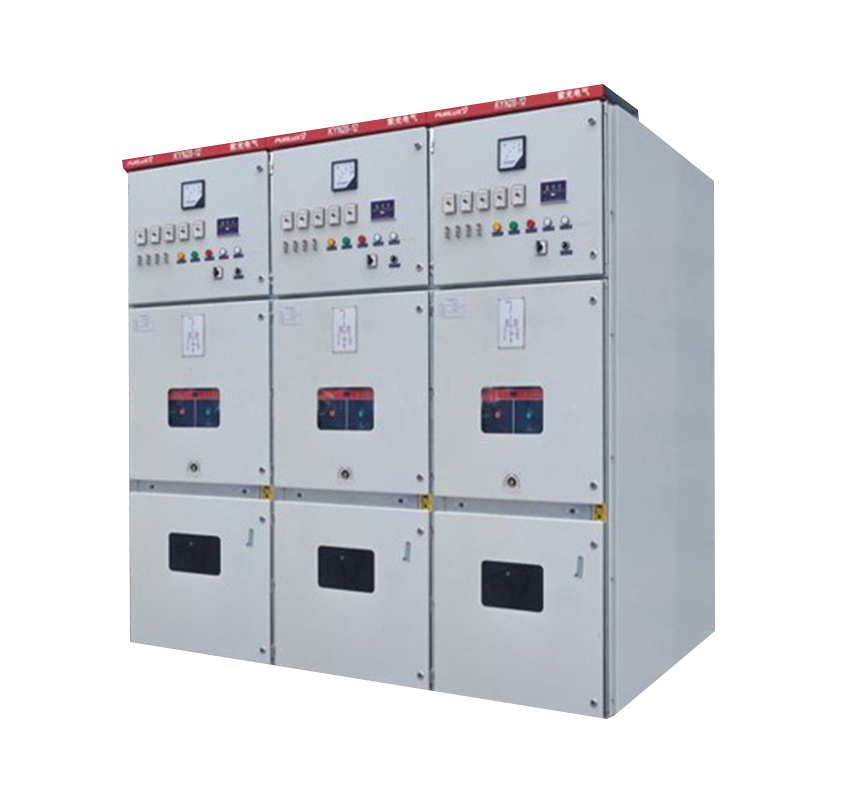
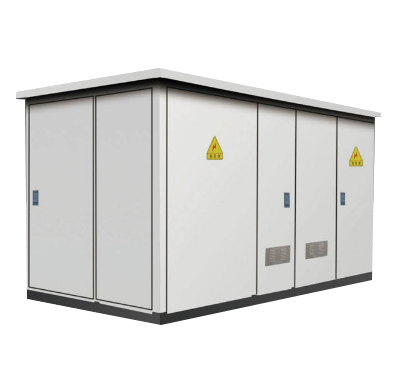
For wind farm applications — where turbines generate at 0.6–0.69kV and the wind resource site is often remote — the wind power box substation (prefabricated compact substation) has become the preferred solution. These units integrate the step-up transformer (0.69kV to 35kV), MV switchgear, and LV distribution panel into a single factory-assembled enclosure. Deployment time on site is dramatically reduced compared to building a conventional substation. The three phase boost transformer inside these prefabricated units follows the same Dyn11 configuration and EEHC compliance requirements, but the compact format reduces civil engineering costs significantly — a major advantage in desert and coastal wind corridor sites like Zafarana and Gulf of Suez. Just as a pre-fabricated bathroom pod simplifies hotel construction, the box substation concept compresses months of site work into days.
Frequently asked questions
Q: What is the difference between a step up and step down transformer?
A: A three phase step up transformer increases AC voltage from primary to secondary (N₂ > N₁), used at generation and renewable energy sites to raise voltage for efficient long-distance transmission. A step-down transformer does the reverse — it lowers voltage at distribution substations to safe levels for industrial or residential use. Both use the same electromagnetic induction principle; the direction of energy flow and the turn ratio determine the function.
Q: What kVA size do I need for a 415V to 11kV step up transformer for an Egyptian factory?
A: Calculate your total connected load in kW, apply your demand factor (typically 0.75–0.85), divide by power factor (typically 0.87), then add 20–25% growth margin. For a 500 kW facility with 0.80 demand factor and 0.87 PF, the result is approximately 575 kVA — select a standard 630 kVA unit. Always consult the EEHC-TS specification for impedance and tap changer requirements before finalising the order.
Q: Is an oil-immersed or dry type transformer better for Egyptian solar farms?
A: Oil-immersed transformers are the standard choice for utility-scale solar farms in Egypt stepping up to 33kV or higher. They handle larger kVA ratings, tolerate high ambient temperatures better with appropriate derating, and are lower cost at scale. Dry-type units are preferred for indoor inverter rooms or rooftop solar installations below 36kV where fire safety and zero-maintenance operation justifies the higher unit price.
Q: What certifications must a three phase step up transformer have to connect to the EEHC grid?
A: The transformer must comply with EOS 184 / IEC 60076-1, be rated for 50Hz operation, and carry factory acceptance test (FAT) documentation witnessed by an EEHC-approved inspector. Rated voltage must match the Um levels of the relevant EEHC network tier (e.g., Um = 36kV for 33kV systems). An Arabic-language nameplate is also a standard EEHC connection requirement for permanent grid-tied installations.
Q: What is the typical price of a three phase step up transformer in Egypt in 2026?
A: Based on 2026 market data from Egyptian industrial procurement, a 630 kVA oil-immersed 11kV distribution transformer costs approximately EGP 180,000–260,000. A 2,500 kVA unit for solar farm applications (0.8/33kV) ranges from EGP 420,000 to 580,000 installed. Dry-type units of equivalent rating carry a 15–30% price premium. Prices fluctuate with copper and silicon steel commodity costs and USD/EGP exchange rates.
Selecting the right three phase step up transformer for an Egyptian industrial or renewable energy project is not a commodity decision — it is an engineering and compliance exercise with significant cost and operational consequences. The combination of correct kVA sizing, appropriate winding configuration (Dyn11 for most EEHC-connected applications), technology selection (oil-immersed for high voltage and large capacity, dry type for indoor MV), and full EOS/EEHC documentation compliance determines whether your project connects on schedule and operates reliably for its 25–30 year design life. Use the formulas, comparison tables, and Egypt-specific compliance guidance in this article as your starting framework, then validate final specifications with a certified Egyptian electrical contractor and your chosen transformer manufacturer's application engineers.
More news
We will send you real-time information regularly!

Optical storage charging solution supplier
Cangzhou Huarui Transformer Co., Ltd.
Address: Xinxing Town Industrial Zone, Qing County, Cangzhou, Hebei
All rights reserved©2024 Cangzhou Huarui Transformer Co., Ltd.
Powe : www.300.cn License city substation