

-
-

-
Blog

-
Contact

Power Transformer for Sale: Buyer's Guide to Types, Specs & Pricing
Author:
Huarui Transformer
📋 Article Overview
This buyer's guide addresses the full procurement lifecycle for power transformers for sale in the US market. You will find a structured comparison of transformer types, a specification selection framework, total cost of ownership analysis, lead time benchmarks, compliance checklists, and supplier evaluation criteria — all grounded in 2026 market conditions and designed for professionals at the decision-making stage.
📑 Table of Contents
- 1. What Is a Power Transformer for Sale?
- 2. Types of Power Transformers: Which One Do You Actually Need?
- 3. Buyer's Guide: How to Select by kVA, Voltage, and Cooling Type
- 4. New vs. Reconditioned Transformers: Lead Time, Cost & Risk Analysis
- 5. Compliance and Standards Every US Buyer Must Know
- 6. Power Transformer Pricing: What to Expect in 2026
- 7. How to Evaluate a Transformer Supplier
- 8. FAQ
What Is a Power Transformer for Sale?
A power transformer for sale is a commercially available electrical device that transfers energy between two or more circuits through electromagnetic induction, stepping voltage up or down for transmission, distribution, or end-use applications. In the US market, available units range from compact 15 kVA single-phase distribution transformers to massive 800 MVA transmission-class units destined for high-voltage substations.
The market encompasses three distinct procurement channels: new OEM units built to order, surplus inventory from utility upgrades, and professionally reconditioned transformers that have been tested and certified for redeployment. Each channel carries different lead times, price points, and risk profiles — a distinction that frequently determines project timelines for US contractors and engineers.
Why do so many procurement teams still struggle to find the right unit despite a growing number of suppliers? The answer lies in specification complexity. Voltage class, kVA rating, cooling method, impedance percentage, winding configuration, and applicable standards all intersect in ways that make "just buying a transformer" far more nuanced than it appears. According to Global Power Transformer Market Size and Industry Statistics, the global transformer market was valued at approximately $61.4 billion in 2023 and is projected to exceed $96 billion by 2030 — demand growth driven heavily by US grid modernization, AI data center buildout, and renewable energy integration.
In 2026, with major OEM backlogs extending well past 12 months, understanding all available options is not just advisable — it is operationally critical.
The Three Market Segments Explained
New OEM transformers are manufactured to IEEE or IEC specifications and carry full factory warranties, typically ranging from one to five years. They are the default choice when project schedules allow sufficient lead time and when the application demands the highest efficiency ratings under DOE 2016 standards.
Surplus and refurbished units occupy a strategically important middle ground. Actual testing in refurbishment facilities has found that properly reconditioned oil-immersed transformers — those subjected to dissolved gas analysis (DGA), power factor testing, and dielectric fluid replacement — can return to near-original performance specifications. This is not a compromise; it is a legitimate procurement strategy, particularly under current supply constraints.
Used power transformers sold "as-is" represent the highest-risk category and require detailed inspection protocols before any purchase commitment. The absence of test documentation is a hard disqualifier for any critical application.
Who Is Buying Power Transformers in 2026?
The buyer profile has shifted noticeably. Historically, utility companies and industrial manufacturers dominated transformer procurement. In 2026, data center operators and renewable energy developers have emerged as major demand drivers. A single hyperscale data campus may require dozens of medium-voltage industrial transformers, while a utility-scale solar farm needs both step-up transformers at the inverter level and transmission-class units at the point of interconnection. This demand surge has compressed available inventory across the entire supply chain, making early-stage sourcing a competitive advantage.

Types of Power Transformers: Which One Do You Actually Need?
Selecting the correct transformer type is the foundational decision — and getting it wrong is expensive. The primary classification axis in US practice splits units into dry-type transformers and oil-cooled transformers (also called liquid-filled or oil-immersed transformers), with further subdivision by voltage class and application.
Dry-Type vs. Oil-Cooled: The Core Trade-Off
Dry-type transformers use air as the cooling medium and are the standard choice for indoor commercial and institutional installations — office buildings, hospitals, data centers, and schools — where environmental regulations restrict flammable liquids. They are inherently safer in enclosed spaces, require no containment infrastructure, and qualify for installation in occupied buildings under NEC Article 450. Their practical capacity ceiling sits around 30 MVA, and they are rarely deployed above 35 kV.
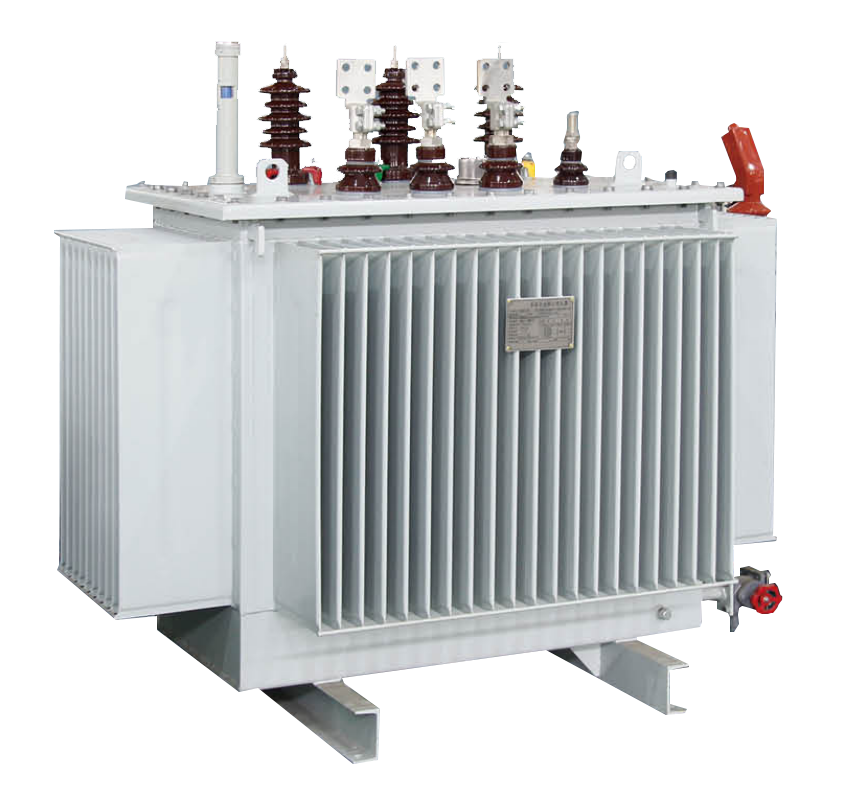
Oil-cooled transformers dominate every application where capacity exceeds 30 MVA or operating voltage exceeds 35 kV. The mineral oil serves dual functions: electrical insulation and heat dissipation. Utility transformers, large industrial transformers, and transmission-class electrical power transformers are virtually all oil-immersed. The trade-off is the need for spill containment infrastructure (oil containment pits or vaults) and regular fluid testing — costs that are well understood and manageable in outdoor substation environments.
Classification by Application
A distribution transformer operates at 35 kV and below, serving the final mile of power delivery to residential subdivisions, commercial complexes, and light industrial facilities. It is the most commonly traded unit in the secondary market — high-volume, relatively standardized, and available with shorter lead times than transmission-class equipment.
A utility transformer (also called a substation transformer or power transformer in the strict IEEE sense) operates in the 69 kV to 765 kV range and connects transmission networks to distribution systems. These units are custom-engineered, heavily regulated, and subject to lead times that, as of 2026, commonly reach 16 to 52 weeks for standard ratings and well beyond that for large MVA ratings. A step-up transformer increases voltage for long-distance transmission from a generation source; a step-down transformer reduces it for safe end-use delivery. Both configurations are available across the full voltage spectrum.
For specialized industrial applications — arc furnaces, rectifier duty, traction power — dedicated industrial transformers with custom impedance profiles and winding configurations are required. These are rarely available off the shelf and almost always sourced directly from a transformer manufacturer with a detailed engineering specification.
| Type | Voltage Range | Typical kVA/MVA | Cooling | Primary Application | Avg. New Lead Time (2026) |
|---|---|---|---|---|---|
| Distribution Transformer | Up to 35 kV | 15 kVA – 5,000 kVA | Oil / Dry | Commercial, Residential, Light Industrial | 8–20 weeks |
| Substation / Utility Transformer | 69 kV – 765 kV | 10 MVA – 800 MVA | Oil (ONAN/ONAF) | Utility Grid, Transmission | 16–52+ weeks |
| Dry-Type Transformer | Up to 35 kV | 15 kVA – 30,000 kVA | Air (AN/AF) | Indoor, Data Centers, Hospitals | 10–24 weeks |
| Industrial Transformer | Varies | 500 kVA – 100 MVA | Oil / Dry | Furnaces, Rectifiers, Heavy Industry | 20–60 weeks |
Buyer's Guide: How to Select by kVA, Voltage, and Cooling Type
The most common and costly mistake in transformer procurement is under-specifying — selecting a unit based on nominal load rather than actual system demand with appropriate safety margins. This section provides a structured selection framework built around the four variables that matter most to US procurement engineers.
Step-by-Step Selection Framework
- Calculate true kVA demand: Sum all connected loads (in watts), apply a power factor correction (typically 0.85–0.95 for industrial loads), and add a 20–25% capacity buffer to accommodate future load growth and inrush current events.
- Confirm primary and secondary voltage: Identify the incoming utility voltage (e.g., 12.47 kV or 34.5 kV for medium-voltage feeders) and the required secondary voltage (480V, 208V, or 4.16 kV are common US standards). Verify tap configurations if voltage regulation is needed.
- Select cooling class based on installation environment: ONAN (Oil Natural Air Natural) is the baseline for outdoor oil-filled units. ONAF (Oil Natural Air Forced) adds cooling fans for higher continuous ratings from the same core and coil assembly — critical when space is constrained. Indoor locations default to dry-type AN or AF cooling.
- Specify impedance percentage: Standard distribution transformers carry 2–6% impedance. Higher impedance (5.75% is a common utility specification) limits fault current, protecting downstream equipment. Lower impedance reduces voltage drop under load. This parameter is non-negotiable for system coordination studies.
- Define winding configuration: Delta-Wye (Dyn1 or Dyn11) is the dominant configuration in North American utility practice. Wye-Wye and Delta-Delta configurations suit specific industrial applications. Mismatching winding configuration when paralleling transformers causes circulating currents and potential damage.
- Confirm applicable standards: US projects require ANSI/IEEE C57 series compliance. DOE 2016 efficiency standards apply to distribution transformers 10 kVA through 10 MVA. UL listing is required for all indoor dry-type units in commercial construction.
Common Application Scenarios and Recommended Specs
For a 500,000 sq. ft. distribution center requiring 2 MVA of service at 480V secondary from a 12.47 kV utility feed: a 2,500 kVA oil-cooled transformer with Dyn1 winding, 5.75% impedance, ONAN cooling, and DOE 2016-compliant efficiency rating is the appropriate specification baseline. For a data center pod running 1.5 MW of IT load at 480V: two 1,500 kVA dry-type transformers in an N+1 configuration provide both the necessary capacity and redundancy. The redundant configuration adds upfront cost but eliminates downtime risk — a trade-off data center operators consistently accept.
According to Power Transformer Technology and Working Principles, the fundamental electromagnetic principles governing transformer design have remained consistent for over a century, but modern materials science — amorphous core alloys, nomex insulation, ester-based dielectric fluids — has significantly improved efficiency and environmental performance at comparable kVA ratings.

New vs. Reconditioned Transformers: Lead Time, Cost & Risk Analysis
The decision between a new and reconditioned power transformer is rarely a simple quality preference — it is a supply chain calculation. In 2026, with new OEM lead times for medium-voltage units frequently running 16 to 52 weeks, and large substation units extending beyond a year, the reconditioned transformer market has moved from fallback option to primary sourcing strategy for time-critical projects.
Total Cost of Ownership: Beyond the Purchase Price
A new 1,000 kVA, 15 kV distribution transformer might carry a list price of $35,000–$55,000 in current US market conditions. A reconditioned equivalent might be priced at $18,000–$30,000. That gap looks decisive on a purchase order — but it is not the complete picture.
Installation costs (foundation work, bus connections, protection relays, commissioning) typically run $15,000–$40,000 regardless of whether the transformer is new or reconditioned. Annual efficiency losses are where long-term costs diverge. A unit that doesn't meet DOE 2016 minimum efficiency standards may consume an additional 0.3–0.8% of throughput energy as no-load losses — over a 20-year service life at industrial energy rates, that differential can easily exceed the original purchase price difference. Reconditioned units that have been re-rated and certified to current efficiency standards avoid this penalty; those sold without efficiency certification may not.
"The total cost of ownership for power transformers over a 30-year service life is dominated not by purchase price but by core losses, load losses, and maintenance expenditures. Procurement decisions that optimize only for upfront cost routinely underperform on lifecycle economics." — Energy Efficiency Standards for Power Transformers, U.S. Department of Energy
Risk Assessment Framework for Used and Reconditioned Units
Not all reconditioned transformers carry equivalent risk. The difference between a well-refurbished unit and a liability lies entirely in documentation and testing protocol. Before committing to any used power transformer purchase, require the following:
First, dissolved gas analysis (DGA) of the dielectric oil — this is the single most informative diagnostic test available for oil-immersed units, identifying incipient faults including overheating, partial discharge, and arcing through gas-in-oil concentration ratios. Second, power factor (dissipation factor) testing on the main insulation, confirming dielectric integrity. Third, turns ratio test (TTR) verifying winding accuracy across all tap positions. Fourth, a full nameplate verification against the original design drawings — critical for parallel operation compatibility. Fifth, written warranty terms specifying minimum remaining service life, typically expressed as a percentage of calculated total insulation life.
When a seller cannot provide DGA results and power factor test data, walk away. That documentation gap is not a negotiation point — it is a structural risk that no price discount compensates for adequately. Of course, there are situations where a well-documented surplus unit from a utility retirement program carries lower operational risk than a new unit from an unfamiliar offshore manufacturer with limited US service infrastructure. Provenance and documentation matter more than age alone.
Compliance and Standards Every US Buyer Must Know
US transformer procurement operates within a specific regulatory and standards framework that many buyers — particularly those sourcing from international transformer manufacturers for the first time — underestimate. Non-compliant equipment can fail utility interconnection approval, fail building inspection, or expose the buyer to liability in the event of a fault.
The Core Standards Framework
The ANSI/IEEE C57 series is the governing technical standard for power transformers in the United States. C57.12.00 covers general requirements for liquid-immersed distribution, power, and regulating transformers. C57.12.01 covers dry-type transformers. Compliance with C57 is expected by utilities, EPCs, and industrial owners as a baseline requirement — not an optional enhancement. Transformers designed to IEC standards (common from European and Asian manufacturers) require specific verification of dimensional, rating, and protection compatibility before US deployment. IEEE Standards and Guidelines for Power Transformers provides the complete technical framework and ongoing updates to these specifications.
The DOE 2016 efficiency rule (10 CFR Part 431) mandates minimum efficiency levels for liquid-immersed and medium-voltage dry-type distribution transformers sold in the US. Buying a transformer online from a supplier who cannot confirm DOE compliance puts the buyer at regulatory risk, particularly for any unit that will be sold or transferred to a utility or government entity.
UL Listing, NEMA, and NEC Considerations
UL 1561 (dry-type general purpose) and UL 1562 (dry-type industrial) listings are required for virtually all indoor dry-type installations in commercial and institutional construction in the US. Unlisted equipment will not pass AHJ (Authority Having Jurisdiction) inspection. NEMA standards, particularly NEMA ST 1 for dry-type transformers, define enclosure ratings and temperature rise classifications used broadly in US specifications. Aligning with Research Papers on Power Transformer Design and Applications confirms that the integration of these standards in design practice consistently improves both safety outcomes and long-term operational reliability across industrial installations.
Power Transformer Pricing: What to Expect in 2026
Transformer prices in 2026 reflect a market under structural supply pressure. Raw material costs — electrical grade steel for cores, copper or aluminum for windings, mineral oil for insulation — remain elevated relative to pre-2022 levels. Combined with strong demand from grid modernization programs and data center construction, transformer prices have not retreated to historical norms despite some supply chain stabilization.
2026 US Market Price Reference Ranges
For standard oil-cooled distribution transformers in the 500–2,500 kVA range, expect new OEM pricing between $28,000 and $90,000 FOB factory, depending on voltage class, efficiency tier, and configuration. Dry-type units in the same kVA range typically carry a 15–25% price premium over oil-cooled equivalents due to higher material costs and more complex insulation systems. Large substation transformers (10 MVA and above) are priced on a project basis; budget figures of $150,000 to well over $1 million are realistic depending on MVA rating, voltage class, and specified accessories (bushings, OLTC, monitoring systems).
Reconditioned units — when properly documented — typically price at 45–65% of comparable new OEM cost. The discount reflects not quality but market dynamics: faster delivery, no factory warranty, and the absence of the manufacturer's production margin. For a procurement team managing a $3M substation project with a firm commissioning date, a $200,000 saving on a reconditioned transformer combined with a 6-week vs. 40-week lead time is a compelling operational and financial argument. To buy transformer online effectively, require supplier quotations to specify whether pricing includes freight, installation accessories, and factory test reports.
Hidden Costs That Affect Final Project Budget
Transformer price is only one line item. Freight for large oil-filled units (which may weigh 20,000 to 400,000 lbs) requires specialized transport permits and specialized hauling equipment — budget $5,000 to $50,000+ depending on unit size and distance. Factory witness testing, if specified, adds $3,000–$8,000 in travel and supervision costs but provides critical pre-shipment quality assurance. Extended warranty packages, oil containment systems, and seismic restraint requirements (in applicable US regions) all add measurable cost that should be captured in the project budget before issuing a purchase order.
How to Evaluate a Transformer Supplier
In a market where transformer prices and lead times vary dramatically between suppliers, the quality of the supplier relationship is itself a project risk variable. A low quoted price from a supplier with limited US service infrastructure, no factory testing capability, and no local spare parts inventory can easily become the most expensive decision of a project.
Key Supplier Qualification Criteria
Proven US market experience is the first filter. A transformer supplier with references from comparable US projects — same voltage class, similar application — provides a verifiable quality signal. Ask specifically for US utility interconnection approvals or EPC contractor references; these represent the highest qualification bar in the domestic market.
Manufacturing and testing capability matters disproportionately for high-voltage units. A credible transformer manufacturer maintains an in-house high-potential (Hi-Pot) test facility, impulse test capability for transmission-class units, and the ability to perform all routine tests per ANSI/IEEE C57.12.90 (liquid-immersed) or C57.12.91 (dry-type) without subcontracting critical steps. Factory test reports should be a contractual deliverable, not an optional extra.
Red Flags in Supplier Evaluation
Inability to provide UL listing documentation for indoor dry-type units is an immediate disqualifier for US commercial projects. Vague or conditional compliance statements ("designed to meet" rather than "certified to") on DOE efficiency requirements indicate a product that may not pass utility or AHJ scrutiny. Refusal to provide factory test reports before final payment represents an unacceptable contractual risk. Just as a building's structural load capacity is non-negotiable, the tested and documented performance of a high-voltage transformer is not a parameter subject to commercial compromise. The broader industry consensus, reflected in major US utility procurement standards, is that technical documentation and certified test results are contractual baselines, not premium options. Well-established transformer suppliers understand this expectation and meet it without friction.
PAA: Frequently Asked Questions from Buyers
How long does it take to get a power transformer delivered in the US in 2026?
For standard distribution transformers (under 5,000 kVA), expect 8–20 weeks for new OEM units and 2–6 weeks for reconditioned inventory. Large substation transformers can require 16–52+ weeks for new production. Reconditioned alternatives, where technically acceptable, remain the most effective tool for compressing lead times on time-critical projects.
What is the difference between a distribution transformer and a power transformer?
In strict IEEE terminology, "power transformer" refers to units rated above 500 kVA and above 34.5 kV — typically used in transmission and substation applications. Distribution transformers serve the end-use delivery segment at voltages below 35 kV. In commercial usage, "power transformer for sale" is used broadly to describe the full range of electrical power transformers across both voltage classes.
Are reconditioned transformers reliable for industrial applications?
Yes — when properly tested and documented. A reconditioned transformer supported by DGA results, power factor test data, turns ratio test confirmation, and a written warranty represents a technically sound procurement option. The key variable is documentation quality, not the reconditioned status itself. Experienced industrial operators routinely use refurbished units for non-critical and backup applications.
What efficiency standards apply to power transformers sold in the US?
The DOE 2016 rule (10 CFR Part 431) sets mandatory minimum efficiency levels for liquid-immersed distribution transformers (10 kVA–10 MVA) and medium-voltage dry-type transformers sold in the US. ANSI/IEEE C57 series governs technical design and testing requirements. UL listing is required for indoor dry-type units in commercial construction. All three frameworks should be confirmed with any transformer supplier during the quotation phase.
Frequently Asked Questions
Q: Where can I find a power transformer for sale with short lead times in the US?
A: Reconditioned transformer dealers and electrical surplus suppliers maintain ready-to-ship inventory across common ratings (75 kVA–5,000 kVA). Online B2B platforms also list surplus utility inventory. Always verify compliance documentation and test reports before committing. Lead times for quality reconditioned units typically run 2–6 weeks.
Q: What is the average price of a 1,000 kVA power transformer in 2026?
A: New OEM pricing for a 1,000 kVA, 15 kV oil-cooled distribution transformer in the US market currently ranges from $38,000 to $62,000, depending on voltage class, efficiency tier, and accessories. Reconditioned equivalents typically price between $20,000 and $35,000. Freight, installation, and commissioning costs are additional line items not included in transformer unit pricing.
Q: Do I need a UL-listed transformer for a US commercial building installation?
A: Yes. Indoor dry-type transformers installed in US commercial buildings are required to carry UL 1561 or UL 1562 listing to pass Authority Having Jurisdiction (AHJ) inspection under NEC Article 450. Non-listed equipment will not receive installation approval regardless of stated technical specifications or international certifications.
Q: How do I calculate the right kVA rating for my transformer?
A: Sum total connected load in watts, divide by 1,000 to convert to kW, then divide by your system power factor (typically 0.85–0.95) to obtain kVA demand. Add a 20–25% safety margin for load growth and inrush. Select the next standard kVA rating above your calculated demand from your supplier's available ratings (e.g., 500, 750, 1,000, 1,500, 2,000 kVA).
Q: What is the difference between ONAN and ONAF cooling in oil transformers?
A: ONAN (Oil Natural Air Natural) relies entirely on passive convection — oil circulates by thermosiphon and heat dissipates through tank surface radiation and natural air movement. ONAF (Oil Natural Air Forced) adds external cooling fans that activate at defined temperature thresholds, increasing continuous rating capacity by 12–33% from the same core assembly without increasing transformer footprint — a key advantage in space-constrained substation designs.
Final Recommendations for US Buyers
Procuring a power transformer for sale in 2026 demands more than a price comparison. The convergence of extended OEM lead times, evolving efficiency mandates, and increasing technical complexity across application types means that under-informed procurement decisions carry real project and financial consequences.
Start every procurement engagement with a fully documented technical specification — kVA, primary and secondary voltage, cooling class, impedance, winding configuration, and applicable standards. Engage at least three qualified suppliers concurrently, and evaluate each against compliance documentation, test report capability, and verifiable US market references. Where project timelines are constrained, reconditioned units supported by full diagnostic documentation represent a technically sound and commercially rational alternative to new OEM equipment.
The broader market trend — driven by data center expansion, renewable grid integration, and aging US infrastructure replacement — means that transformer supply pressure is unlikely to ease significantly through 2026 and beyond, per 2026 data from major industry forecasters. Early sourcing, rigorous specification, and supplier qualification are the practical levers available to procurement teams navigating this environment. The buyers who approach power transformer for sale procurement with technical discipline consistently achieve better outcomes on cost, schedule, and long-term operational performance than those who treat it as a commodity purchase.
More news
We will send you real-time information regularly!

Optical storage charging solution supplier
Cangzhou Huarui Transformer Co., Ltd.
Address: Xinxing Town Industrial Zone, Qing County, Cangzhou, Hebei
All rights reserved©2024 Cangzhou Huarui Transformer Co., Ltd.
Powe : www.300.cn License city substation