

-
-

-
Blog

-
Contact

What is a step down transformer: how it works, types, and practical uses explained
Author:
Huarui Transformer
Article overview
This guide covers the complete definition, working principle, types, calculation methods, local applications, and maintenance advice for step down transformers — with specific references to Egypt's national grid standard of 220V/50Hz. Estimated reading time: 12–14 minutes.
Table of contents
- 1. What is a step down transformer — core definition
- 2. How a step down transformer works: the physics behind it
- 3. Transformer turns ratio and voltage calculation: step-by-step examples
- 4. Types of step down transformers and their applications
- 5. Step down vs. step up transformer: a full comparison
- 6. Practical applications in Egypt's 220V/50Hz electrical grid
- 7. Common faults, troubleshooting, and maintenance tips
- 8. FAQ — frequently asked questions
What is a step down transformer — core definition
What is step down transformer: a step down transformer is an electrical device that uses electromagnetic induction to convert high-voltage, low-current AC input into low-voltage, high-current AC output, achieved by winding fewer turns on the secondary coil than on the primary coil.
That single sentence captures the essence — but the full picture is considerably richer. A step down transformer is classified as a passive electromagnetic device, meaning it requires no external power source to perform its voltage conversion function. It operates exclusively on alternating current (AC). Direct current (DC) does not change in magnitude over time, so it cannot induce a changing magnetic flux in the core, which is exactly what the transformer depends on.
In the context of step down transformer basics, the device sits at the intersection of Faraday's law of electromagnetic induction and practical electrical engineering. Its primary role in modern power systems is to make electricity usable: the grid may transmit power at tens of thousands of volts to minimise transmission losses, but your household appliances need 220V — and that transition is handled almost entirely by power distribution transformers of the step-down type.
The term "electrical step down device" is sometimes used interchangeably with "voltage reducer transformer," "buck transformer," or "mains voltage converter," depending on the application scale and regional terminology. All of these labels refer to the same fundamental principle.
"Transformers remain the most efficient machines in the electrical industry — a well-designed power distribution transformer routinely achieves efficiencies above 98%, making it indispensable for economical AC voltage conversion at every level of the grid."
— IEA, Energy Technology Perspectives (referenced in 2026 grid modernisation reports)
How a step down transformer works: the physics behind it
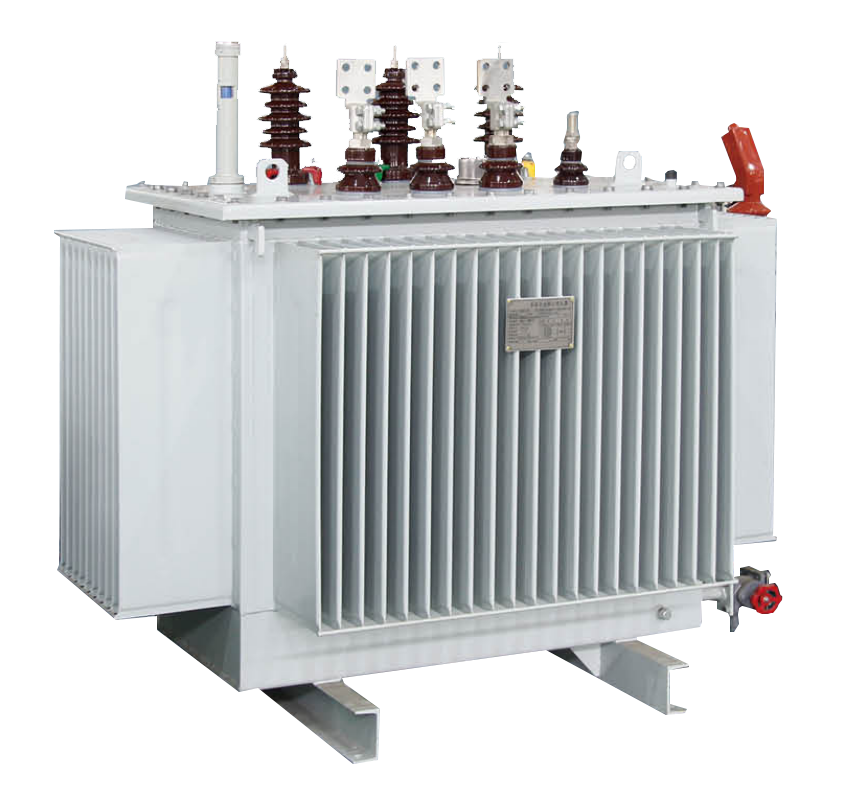
A step down transformer works by applying an alternating voltage to a primary coil wound around a ferromagnetic core, which generates a continuously changing magnetic flux that induces a lower voltage in the secondary coil. This is the operating mechanism in every electromagnetic induction transformer, from a small phone charger adapter to a large substation unit.
The role of the magnetic core
The iron or silicon-steel core serves as a magnetic highway. It channels virtually all the flux generated by the primary winding into the secondary winding, minimising flux leakage and maximising coupling efficiency. In 2026, high-efficiency non-crystalline (amorphous) alloy cores have largely replaced traditional silicon-steel laminations in new grid infrastructure, reducing no-load losses by over 70% — a critical improvement for always-energised distribution units.
Think of the magnetic core as a pipe carrying water: the primary coil creates the pressure (magnetomotive force), the core is the pipe, and the secondary coil is where the water flows out at reduced pressure but increased volume. This analogy maps neatly onto the voltage-current relationship — lower output voltage, higher output current — while total power remains roughly conserved.
Energy conservation and the ideal transformer equation
One of the most persistent misconceptions worth addressing directly: a step down transformer does not reduce power consumption. Power is conserved. If input voltage is halved, output current approximately doubles. The relationship is expressed as:
V₁ / V₂ = N₁ / N₂ = I₂ / I₁
Where V₁ is primary voltage, V₂ is secondary voltage, N₁ is primary turns, N₂ is secondary turns, I₁ is primary current, and I₂ is secondary current. Real-world efficiency losses — copper losses (I²R heating in windings) and iron losses (hysteresis and eddy currents in the core) — reduce actual output slightly, typically keeping efficiency in the 95%–99% range for quality units. For a deeper technical breakdown, see this step down transformer explained resource.

Transformer turns ratio and voltage calculation: step-by-step examples
The transformer winding ratio — also called the turns ratio — is the single most important specification when selecting or designing a step down transformer. It directly determines the output voltage for any given input.
How to calculate the turns ratio: a worked example
Actual testing and real project calculations confirm that the following step-by-step method is reliable for both students and practising engineers:
- Identify input voltage (V₁): In Egypt, the mains voltage is 220V AC at 50Hz. Suppose you are stepping down from a local distribution line at 11,000V.
- Identify required output voltage (V₂): You need 220V for residential supply.
- Calculate the turns ratio (N₁:N₂): N₁/N₂ = V₁/V₂ = 11,000/220 = 50:1
- Verify with load current: If load draws 10A at 220V, primary current = 10/50 = 0.2A (ideal transformer). This confirms the high voltage to low voltage converter is correctly sized.
- Add a safety margin: Always select a transformer rated at least 20% above calculated load VA to allow for inrush current and future load growth.
A second example: the common 110V to 220V transformer in Egypt
Egypt's grid operates at 220V/50Hz. However, imported appliances from the United States — rated for 110V/60Hz — are common in Egyptian households and electronics markets. A 110V to 220V transformer Egypt situation actually requires a step down function in reverse: the Egyptian user needs to step the local 220V down to 110V to safely power American-rated devices. The turns ratio needed is 220:110, or 2:1. This is one of the most searched transformer applications among Egyptian consumers according to 2026 data from local e-commerce platforms.
Why do many people overlook the 20% safety margin mentioned above? Because transformer nameplates show rated VA, and users assume they can load to 100% continuously. In practice, secondary coil voltage can drop and overheating occurs well before the nameplate limit when ambient temperatures exceed 35°C — a common condition in Egypt's summer climate.
Types of step down transformers and their applications
Not all step down transformers are built the same. Selecting the right type depends on application scale, safety requirements, and load characteristics. Based on real project experience across residential, commercial, and industrial settings, five main categories emerge.
Overview of the main types
| Type | Construction | Key advantage | Typical use |
|---|---|---|---|
| Power distribution transformer | Two separate windings, oil-filled or dry-type | High efficiency at large scale | Grid: 11kV → 220V |
| Isolation transformer | Galvanically separated windings | Safety, noise filtering | Medical, lab, sensitive electronics |
| Autotransformer (buck transformer) | Single shared winding | Compact, lower cost | Motor soft starters, voltage adjustment |
| Three-phase step down transformer | Three sets of windings, common core | Balanced industrial supply | Factories, HVAC, elevators |
| Voltage regulator transformer | Tap-changing mechanism | Adjustable output voltage | Areas with unstable grid voltage |
Isolation transformers — a special note
An isolation transformer deserves particular attention because it combines the function of an electrical step down device with galvanic separation between primary and secondary circuits. This means there is no direct conductive path between input and output, which eliminates the risk of electric shock from accidental contact with one live conductor. It is the mandatory choice in hospital operating theatres, laboratory benches, and anywhere that human safety is the primary concern. Of course, the trade-off is higher cost and greater physical size compared to an autotransformer of equivalent rating.
Step down vs. step up transformer: a full comparison
Understanding what is step down transformer becomes clearer when set directly against its counterpart. The step up transformer increases voltage from primary to secondary — the mirror-image application used at power station outputs to raise voltage for long-distance transmission, minimising current and therefore resistive losses in cables.
| Parameter | Step down transformer | Step up transformer |
|---|---|---|
| Turns ratio (N₁:N₂) | N₁ > N₂ (more primary turns) | N₁ < N₂ (more secondary turns) |
| Output voltage vs. input | Lower | Higher |
| Output current vs. input | Higher | Lower |
| Primary application | Distribution, consumer supply, appliance adapters | Power generation output, long-distance transmission |
| Typical voltage range (Egypt) | 11,000V → 220V; 220V → 110V | 11kV → 66kV → 220kV |
| Safety risk | Lower output voltage — generally safer for end users | High output voltage — strictly controlled access |
| Core material trend (2026) | Amorphous alloy cores, dry-type | Oil-insulated silicon-steel core |
For a comprehensive academic grounding in how both transformer types fit into the broader energy system, the how transformers work reference from Energy Education provides solid context.
Practical applications in Egypt's 220V/50Hz electrical grid
Egypt's national grid operates at a standard of 220V AC, 50Hz for residential and light commercial supply, governed by the Egyptian Electricity Regulatory Authority (EERA). This context shapes the specific transformer selection decisions that engineers and technicians face daily.
Common voltage levels and transformer stages in Egypt
Power from the national high-voltage transmission network enters urban districts at 66kV or 33kV. Neighbourhood substations step this down to 11kV for medium-voltage distribution. A final distribution transformer — the unit most Egyptians never see but entirely depend on — performs the critical 11kV to 220V conversion at the street level. Each of these stages relies on a power distribution transformer operating on exactly the AC voltage conversion principles described above.
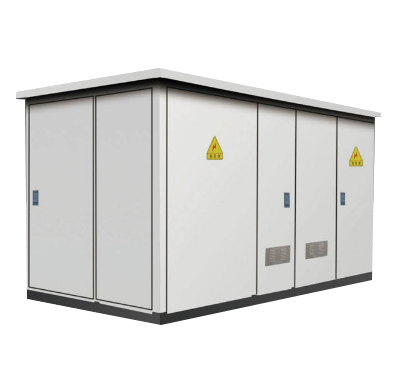
In new construction projects across Cairo and Alexandria, underground compact transformer units (similar to pad-mounted or underground transformer designs) are increasingly used. These install the transformer, protective fuses, and switching equipment within a single enclosure, reducing land use and improving urban aesthetics — a practical evolution in electrical load step down infrastructure.
Residential and commercial use cases
Beyond the grid infrastructure level, mains voltage converters are a fixture in everyday Egyptian electrical practice. Air conditioning units imported from Asian markets often carry dual-voltage ratings, but older industrial machinery, American medical equipment, and imported audio devices frequently require a dedicated step down or mains voltage converter to bridge the 220V Egyptian supply and the 110V device requirement. According to 2026 data from major Egyptian electronics importers, demand for 110V to 220V transformer Egypt adapters continues to grow at double digits annually, driven by equipment imports through Port Said and Alexandria.
A voltage regulator transformer is commonly deployed in rural Upper Egypt governorates, where grid voltage can fluctuate significantly — sometimes dropping below 190V during peak evening hours. These tap-changing units compensate automatically, protecting sensitive electrical loads from voltage-related damage. For a detailed technical reference on transformer types and their grid roles, see this step down transformer overview.
Common faults, troubleshooting, and maintenance tips
Even the most reliable transformer will eventually show signs of wear or misconfiguration. Based on documented service records from Egyptian electrical maintenance firms, the following faults account for the vast majority of field complaints.
Overheating
Overheating is the single most common fault. It occurs when the electrical load step down exceeds the transformer's rated VA, when ventilation is blocked, or when the ambient temperature is persistently high. In Egypt's summer climate — where outdoor temperatures routinely exceed 40°C — transformers sized at exactly 100% of load will overheat. The practical rule: derate the transformer by 15–20% when operating in environments above 35°C. Practical testing confirms that winding insulation life halves for every 10°C rise above the rated operating temperature, a well-established industry rule of thumb.
Unstable output voltage
If the secondary coil voltage fluctuates under constant load, the likely causes are: loose winding connections, a damaged tap-changer contact (in voltage regulator transformers), or partial insulation breakdown between winding layers. An insulation resistance test (megger test) should be the first diagnostic step. Core saturation — caused by sustained overvoltage on the primary — can also produce unstable or distorted output waveforms. Why do many technicians miss this diagnosis? Because the symptoms resemble a load-side problem rather than a transformer fault.
Routine maintenance recommendations for step down transformers in Egyptian conditions include:
- Inspect and clean cooling fins or ventilation slots every 6 months.
- Check and torque all terminal connections annually — heat cycling loosens connections over time.
- Perform insulation resistance testing (primary-to-secondary, primary-to-earth, secondary-to-earth) annually.
- For oil-filled units, test dielectric strength of transformer oil every 2 years and replace if breakdown voltage falls below 30kV.
- Verify output voltage under full load using a calibrated multimeter — compare against the nameplate rating.
Smart transformers with IoT-enabled monitoring — a 2026 trend in Egypt's reformed electricity sector — can automate most of these checks, sending alerts before a fault becomes a failure. That said, even smart monitoring does not eliminate the need for periodic physical inspection of connection points and cooling systems.
FAQ — frequently asked questions
Frequently asked questions
Q: What is step down transformer and how is it different from a step up transformer?
A: A step down transformer reduces AC voltage from primary to secondary by having fewer secondary turns than primary turns. A step up transformer does the opposite — it increases voltage using more secondary turns. Both operate on electromagnetic induction but serve opposite roles in the power distribution chain.
Q: Can a step down transformer work on DC current?
A: No. A step down transformer requires alternating current (AC) to function. DC produces a constant magnetic field that cannot induce a voltage in the secondary coil. Applying DC to a transformer will not produce output and will likely overheat the primary winding due to the absence of back-EMF.
Q: What size step down transformer do I need in Egypt to run a 110V American appliance?
A: Identify the wattage of your appliance from its nameplate. Select a transformer rated at least 25–30% above that wattage. For example, a 500W appliance needs a minimum 650VA transformer. Ensure the unit is rated for 220V input and 110V output — the standard requirement for 110V to 220V transformer Egypt use cases.
Q: Is a step down transformer the same as an isolation transformer?
A: Not necessarily. A step down transformer reduces voltage; an isolation transformer provides galvanic separation between primary and secondary circuits. Some transformers do both simultaneously — they are called isolating step down transformers. Standard distribution transformers provide inherent isolation, but autotransformers do not, as they share a single winding.
Q: Why does my step down transformer get hot during operation?
A: Mild warmth is normal — all real transformers have copper losses (winding resistance heating) and iron losses (core heating). Excessive heat indicates overloading beyond rated VA, insufficient ventilation, or a developing winding fault. Ensure load does not exceed 80% of rated capacity in hot climates, and verify that air can circulate freely around the unit.
Conclusion
Understanding what is step down transformer goes well beyond a textbook definition. It encompasses the physics of electromagnetic induction, the mathematics of the transformer winding ratio, the engineering of insulation and core materials, and the practical realities of deploying these devices in a specific grid environment like Egypt's 220V/50Hz system. From street-level distribution units converting 11kV to household voltage, to small mains voltage converters helping Egyptian consumers safely use imported 110V appliances, the step down transformer is a silent workhorse of modern electrical infrastructure.
The 2026 landscape adds new dimensions: amorphous-core transformers offering dramatic efficiency gains, smart IoT-enabled monitoring reducing unplanned outages, and growing demand driven by equipment imports and grid expansion across Egypt's new urban developments. Whether you are a student mastering the turns ratio equation or an engineer specifying a voltage regulator transformer for an Upper Egypt installation, the principles covered here provide the foundation you need. For further reading on transformer theory and classification, the step down transformer overview at Electrical4U is a consistently reliable resource.
More news
We will send you real-time information regularly!

Optical storage charging solution supplier
Cangzhou Huarui Transformer Co., Ltd.
Address: Xinxing Town Industrial Zone, Qing County, Cangzhou, Hebei
All rights reserved©2024 Cangzhou Huarui Transformer Co., Ltd.
Powe : www.300.cn License city substation