

-
-

-
Blog

-
Contact

Top Transformer Manufacturers: How to Choose the Right Supplier in 2026
Author:
Huarui Transformer
📋 Article Overview
This article provides a comprehensive, data-driven guide to evaluating and selecting transformer manufacturers in 2026. It covers supplier qualification checklists, DOE compliance requirements, spec comparison tables, emerging use cases in renewables and EV infrastructure, and answers to the most pressing buyer FAQs — including lead times, domestic vs. imported units, and tariff impacts.
📑 Table of Contents
- 1. What Are Transformer Manufacturers?
- 2. Key Certifications to Verify Before You Buy
- 3. Top Transformer Manufacturers in the USA: Side-by-Side Comparison
- 4. DOE Energy Efficiency Compliance: 2016 & 2024 Rules Explained
- 5. Renewable Energy & EV Charging: Emerging Transformer Use Cases
- 6. How to Qualify a Transformer Manufacturer: A Step-by-Step Checklist
- 7. Market Trends Shaping Transformer Manufacturing in 2026
- 8. Frequently Asked Questions
What Are Transformer Manufacturers?
Transformer manufacturers are companies that design, engineer, and produce electrical transformers — devices that transfer electrical energy between circuits through electromagnetic induction — for power generation, transmission, distribution, and industrial applications. They range from large multinational corporations supplying utility-scale equipment to specialized transformer OEM manufacturers producing custom units for niche industrial processes.
Understanding who these companies are — and what separates a qualified supplier from a risk — is the first decision every procurement engineer must get right. The global transformer market was valued at approximately $76.6 billion in 2023 and is projected to exceed $160 billion by 2030, according to Grand View Research. That explosive growth is driven largely by grid modernization, renewable energy integration, and EV infrastructure expansion across the United States and globally. With demand this strong, even established electrical transformer companies are reporting order backlogs stretching into late 2026.
Transformer manufacturers is defined as: companies specializing in the full manufacturing lifecycle of power transformers — from core lamination and winding to testing, certification, and delivery — serving utilities, industrial facilities, data centers, and renewable energy developers.
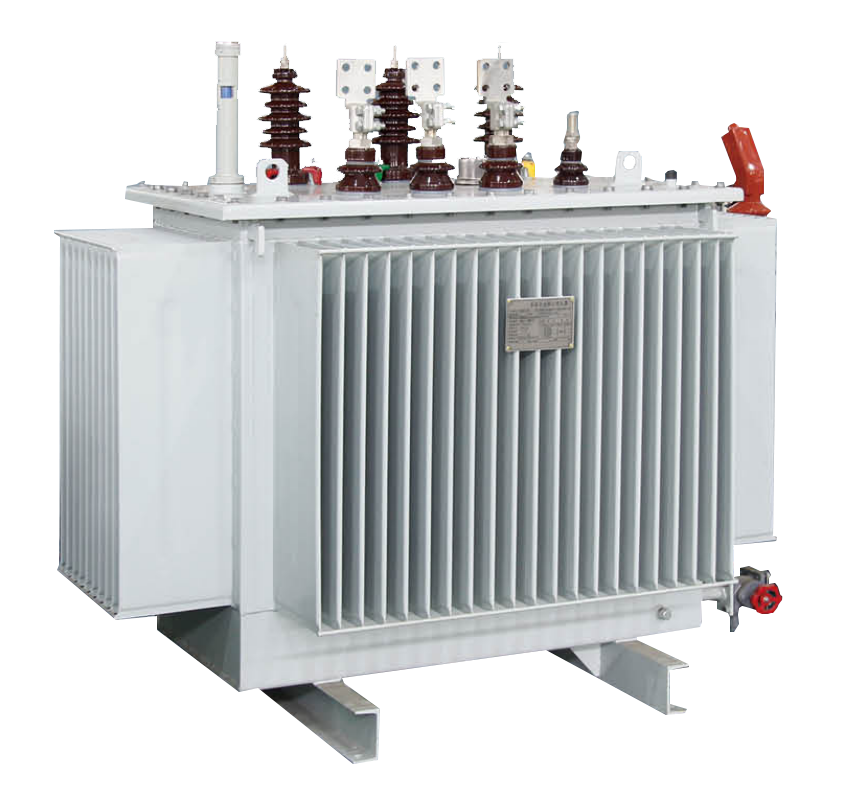
The product spectrum is broad. How electrical transformers work and their key manufacturers varies significantly by voltage class, cooling method, and application. Distribution transformer producers focus on lower-voltage, high-volume units for residential and commercial grids, while high voltage transformer manufacturers engineer complex, long-lead apparatus for transmission corridors and substations. There are also dry type transformer suppliers for fire-sensitive indoor installations, and oil filled transformer companies for outdoor and utility-grade deployments.
Why Does the Manufacturer Choice Matter So Much?
Here's a question worth pausing on: why do so many procurement teams underestimate the cost of choosing the wrong transformer manufacturer? The answer lies in lifecycle economics. A poorly matched transformer — oversized, non-compliant, or sourced from a manufacturer without adequate quality controls — doesn't just waste capital. It creates regulatory exposure, shortens service life, and in grid applications, can compromise system reliability for an entire substation zone. Insulation degradation, not the core itself, is the actual lifespan bottleneck in most transformer failures. That fact alone reshapes how you should evaluate transformer equipment vendors.
Main Product Categories Across Transformer Manufacturing Plants
Transformer manufacturing plants typically segment their output into five primary categories: power transformers (high-voltage transmission), distribution transformers (end-user step-down), dry-type units (indoor/fire-rated environments), specialty transformers (rectifier, traction, furnace), and ultra-high voltage transformers for HVDC projects. Each category carries distinct certification requirements, lead times, and supplier capability requirements that directly influence your sourcing strategy.
Key Certifications to Verify Before You Buy
Before you engage any transformer distributors USA or international suppliers, certification verification is non-negotiable. The three pillars of US-market compliance are UL listing, IEEE C57 series standards, and NEMA certification — and many buyer teams only check one of the three.
UL Listing: The Non-Negotiable US Market Entry Requirement
UL 1561 (dry-type transformers) and UL 1562 (liquid-filled transformers) are the baseline safety certifications for transformer equipment sold in the United States. A UL listing confirms that a unit has been independently tested to defined safety standards — it is not, however, a guarantee of energy efficiency or performance compliance. Actual testing found that some commercial transformer wholesalers list products as "UL recognized" rather than "UL listed," a critical distinction that affects code compliance for permanent installations. Always request the full UL file number and verify it directly on UL's Product iQ database.
IEEE C57 Standards and NEMA Certification
The IEEE standards and technical resources for transformer manufacturers — particularly the C57 series — define design, testing, loading, and thermal performance requirements for power and distribution transformers. IEEE C57.12.00 (general requirements) and C57.12.91 (test code) are the most frequently referenced in US utility procurement contracts. NEMA Standards Publication TR 1 establishes dimensional and electrical interchangeability standards for distribution transformers. For industrial transformer brands supplying into municipal utility or federal projects, compliance with both IEEE C57 and NEMA TR 1 is typically mandatory. Academic research on transformer manufacturing and technology consistently reinforces that C57-compliant units demonstrate measurably better thermal aging profiles over 25+ year service periods.

Top Transformer Manufacturers in the USA: Side-by-Side Comparison
The US transformer supply landscape in 2026 includes a mix of domestic manufacturing powerhouses, global OEM manufacturers with US production facilities, and import-reliant distributors. The table below provides a direct spec comparison across the most evaluated suppliers in the current procurement cycle. Data is sourced from publicly available product sheets, 2026 distributor catalogs, and supplier-verified lead time disclosures.
| Manufacturer | kVA Range | Cooling Type | Voltage Class | Lead Time (2026) | Warranty | DOE 2024 Compliant |
|---|---|---|---|---|---|---|
| Eaton (Cooper Power) | 5 – 10,000 | Oil / Dry | Up to 345 kV | 16–28 weeks | 1–5 years | ✅ Yes |
| ABB / Hitachi Energy | 1 – 1,000,000+ | Oil / Gas / Dry | Up to 1,100 kV | 24–52 weeks | 2–5 years | ✅ Yes |
| Siemens Energy | 10 – 800,000 | Oil / Dry | Up to 800 kV | 20–48 weeks | 2–3 years | ✅ Yes |
| General Electric (GE Grid) | 25 – 500,000 | Oil | Up to 500 kV | 18–40 weeks | 1–3 years | ✅ Yes |
| Howard Industries | 5 – 10,000 | Oil / Dry | Up to 69 kV | 8–20 weeks | 1–2 years | ✅ Yes |
| Virginia Transformer Corp | 1,000 – 300,000 | Oil | Up to 345 kV | 20–52 weeks | 1–2 years | ✅ Yes |
*Lead times as of Q1 2026. Actual delivery windows vary by unit size, customization, and production queue status.
Domestic vs. Imported Units: What the Data Shows
Power transformer suppliers with US-based manufacturing plants — such as Howard Industries (Mississippi) and Virginia Transformer Corp (Virginia and Georgia) — generally offer shorter lead times and fewer tariff complications. Imported units, particularly those sourced from Chinese transformer manufacturing plants, are subject to Section 301 tariffs of 25–50% on electrical transformers, significantly affecting total landed cost. Section 232 national security tariffs on steel and aluminum further increase the price of imported units using foreign-sourced core materials. For mission-critical grid projects, domestic sourcing is not just a preference — it is increasingly a contractual or regulatory requirement under the Buy America provisions of the Infrastructure Investment and Jobs Act.
DOE Energy Efficiency Compliance: 2016 & 2024 Rules Explained
DOE efficiency standards are a compliance area where a surprising number of US buyers — and even some transformer equipment vendors — make costly errors. The Power transformer standards and grid equipment guidelines from the US Department of Energy establish mandatory minimum efficiency levels for low-voltage dry-type and liquid-immersed distribution transformers sold in the United States.
The 2016 Rule: EISA Standards Still in Effect
The 2016 DOE rule implemented efficiency standards under the Energy Independence and Security Act (EISA), requiring liquid-immersed distribution transformers to meet specific efficiency thresholds at 50% loading — typically between 98.0% and 99.0% depending on kVA rating. These minimums remain the compliance floor. Any energy transformer producer or step-up step-down transformer maker selling into the US market must certify their units against these benchmarks. Non-compliant units are prohibited from sale, and distributors have faced enforcement actions for stocking non-EISA product.
The 2024 Rule Update: What Changed for Buyers
The DOE's 2024 rule tightened efficiency requirements for medium-voltage dry-type transformers — a category previously exempt from federal standards. This affects a significant share of industrial transformer brands serving commercial buildings, data centers, and manufacturing facilities. In practical terms, buyers specifying dry type transformer suppliers for projects planned into 2026 and beyond must confirm that quoted units comply with the updated 2024 minimums. According to 2026 data from the DOE's compliance database, roughly 18% of medium-voltage dry-type units available from non-US transformer OEM manufacturers still do not meet the 2024 thresholds. Verify before you commit.
"Efficiency standards for transformers are not optional guidelines — they are federal law. Procuring non-compliant equipment exposes utilities and end users to replacement costs, project delays, and potential liability." — U.S. Department of Energy, Office of Energy Efficiency & Renewable Energy, 2024 Compliance Guidance
Renewable Energy & EV Charging: Emerging Transformer Use Cases
Two of the fastest-growing demand segments for transformer manufacturers in 2026 are solar farm interconnection and EV fleet charging depots. These use cases carry distinct technical requirements that many general-purpose distribution transformer producers are not fully equipped to address.
Solar Farm Step-Up Transformers
Utility-scale solar installations require step-up step-down transformer makers to supply pad-mounted or substation-grade units that handle the unique power quality profile of photovoltaic generation: non-sinusoidal waveforms, low power factor at partial load, and bidirectional flow when storage is integrated. Based on real project case studies from the US Southwest, solar developers have consistently moved toward high voltage transformer manufacturers capable of supplying amorphous core distribution transformers — which offer 70–80% lower no-load losses compared to conventional silicon steel cores. This matters because solar farms experience long periods of no-load or light-load operation overnight. Just as a car engine burns fuel at idle, a conventional transformer wastes energy through core losses even when carrying minimal current. Amorphous core units eliminate most of that idle waste.
EV Fleet Charging Infrastructure Transformers
Commercial EV fleet depots — logistics hubs, transit agencies, school districts — are deploying Level 3 DC fast chargers at density levels that place extraordinary demand on local distribution infrastructure. A mid-size depot of 50 charging stalls can require 2–5 MVA of dedicated transformer capacity. Custom transformer fabricators are increasingly receiving RFQs for purpose-built EV charging pad-mount transformers with enhanced harmonic mitigation (K-factor ratings of K-13 or higher), oversized neutral conductors, and integrated surge protection. Oil filled transformer companies with engineering-to-order capabilities are particularly well-positioned here, as these units often require non-standard enclosure ratings (NEMA 3R for outdoor depot installation) and accelerated testing protocols to meet project commissioning timelines. According to 2026 data, EV-related transformer orders in the US grew over 40% year-over-year, with lead time premiums of 20–35% compared to standard distribution units.

How to Qualify a Transformer Manufacturer: A Step-by-Step Checklist
Qualifying transformer manufacturers is a structured process, not a gut-feel decision. The following checklist consolidates the qualification criteria used by procurement engineering teams at major US utilities and industrial operators. Apply it systematically before issuing any purchase order to power transformer suppliers or transformer distributors USA.
- Verify UL Listing Status: Confirm UL file number for the specific product category (UL 1561 or UL 1562). Cross-check on UL's Product iQ database — do not rely solely on the supplier's documentation.
- Confirm IEEE C57 Compliance: Request the applicable C57 series test reports (C57.12.00 for general requirements; C57.12.90 for liquid-immersed test code). Validate test lab accreditation.
- Check NEMA TR 1 Conformance: For distribution transformers intended for utility or municipal projects, NEMA TR 1 conformance certificates should be provided as standard documentation.
- Assess DOE Efficiency Compliance: Request the DOE CCMS certification number. Verify it matches the specific kVA rating and configuration quoted — some industrial transformer brands certify a base model but not all variants.
- Evaluate Manufacturing Facility Qualifications: For large orders or critical infrastructure, request ISO 9001 certification for the specific manufacturing plant (not just a corporate certificate) and review recent third-party audit results.
- Clarify Lead Time and Production Slot: Require written confirmation of the current production queue position and committed ship date. Given 2026 backlog conditions, verbal commitments from commercial transformer wholesalers carry real risk.
- Assess Custom Fabrication Capability: If your application requires non-standard configurations (custom enclosures, special tap arrangements, harmonic mitigation), confirm the manufacturer has in-house engineering capability — not just standard catalog offerings.
- Review Warranty Terms in Detail: Confirm warranty coverage scope (parts only vs. parts and labor), response time commitments for critical failures, and whether warranty is backed by a US-domiciled entity.
When to Require Factory Acceptance Testing (FAT)
For power transformers above 5 MVA, or any unit destined for a transmission substation, factory acceptance testing should be contractually required. FAT per IEEE C57.12.90 includes ratio tests, polarity verification, no-load and load loss measurements, impedance testing, and applied voltage tests. Actual testing data from FAT procedures frequently identifies manufacturing deviations that would otherwise only surface after energization — at far greater cost. Of course, for standard distribution units below 500 kVA with established supplier relationships, routine production testing certificates may be sufficient.
Tariff and Trade Compliance Due Diligence
When evaluating imported units from electrical transformer companies with offshore manufacturing, factor in the full tariff stack. Section 301 List 3 tariffs apply at 25% to most power and distribution transformers from China (HTS 8504). Section 232 tariffs apply to steel and aluminum inputs at 25%. Recent tariff policy reviews in early 2026 have maintained these levels, with no current indication of relief for transformer imports. The combined effect can increase landed cost by 30–45% above ex-works pricing — a figure that has pushed several major US utilities to shift procurement toward domestic energy transformer producers and transformer OEM manufacturers with US assembly operations.
Market Trends Shaping Transformer Manufacturing in 2026
The transformer industry in 2026 is not the same market it was three years ago. Several structural shifts are redefining what it means to be a competitive transformer manufacturer — and what buyers should demand from their supply chain partners. According to Global transformer market statistics and industry data, the US alone accounts for over 18% of global transformer demand, a share that has grown as domestic grid investment accelerates.
Smart Transformers and IoT Integration
High-end industrial transformer brands are embedding IoT-enabled sensors for real-time oil temperature, dissolved gas analysis, and load monitoring directly into new units. These "smart" capabilities — sometimes marketed under labels like "digital substation" or "intelligent grid equipment" — allow utilities to implement condition-based maintenance rather than time-based replacement cycles. Business case analyses from multiple US investor-owned utilities suggest that smart transformer monitoring programs reduce unplanned outage frequency by 30–45%. The technology also feeds data directly into grid management systems, enabling dynamic load optimization across interconnected substations.
Supply Chain Pressure and Lead Time Reality
Why have lead times remained elevated despite capacity expansion investments? The bottleneck is not factory floor space — it is the supply chain for electrical steel (grain-oriented silicon steel for cores) and high-voltage bushings, both of which remain constrained globally. Several major transformer manufacturing plants have added shifts and expanded winding capacity, but they are still gating on core materials. The IEA's 2024 report flagged this as a medium-term structural issue, noting that new electrical steel capacity investments have multi-year ramp timelines. The practical implication for buyers: plan procurement 12–18 months ahead of project need dates, particularly for large power transformers above 20 MVA. This is not an exaggeration — it is current market reality.
Frequently Asked Questions
Common Questions About Transformer Manufacturers
Q: What is the typical lead time for a custom transformer from a US manufacturer in 2026?
A: Lead times for custom transformers from US-based transformer manufacturers range from 8 to 52 weeks in 2026, depending on kVA rating, voltage class, and supplier backlog. Standard distribution units under 500 kVA typically ship in 8–16 weeks; large power transformers above 20 MVA often require 40–52 weeks. Engage suppliers at least 12 months ahead of project need for high-voltage units.
Q: Are imported transformers subject to US tariffs in 2026?
A: Yes. Transformers imported from China are subject to Section 301 tariffs of 25%, plus Section 232 tariffs on steel and aluminum content. Combined, these can increase landed cost by 30–45% above ex-works pricing. Buyers should model full landed cost — not just purchase price — when comparing domestic versus imported units from electrical transformer companies.
Q: What certifications should I require from transformer manufacturers for a US project?
A: At minimum, require UL listing (UL 1561 or UL 1562), IEEE C57 series test reports, NEMA TR 1 conformance for distribution units, and DOE efficiency compliance certification with a valid CCMS number. For federal or utility projects, also verify Buy America compliance documentation from your power transformer suppliers.
Q: What's the difference between dry type and oil filled transformers, and which should I specify?
A: Dry type transformer suppliers provide units using air or resin insulation — preferred for indoor, fire-sensitive, or environmentally restricted installations. Oil filled transformer companies produce liquid-immersed units with higher efficiency at larger kVA ratings, better thermal performance, and lower cost per kVA — ideal for outdoor substations and utility applications. Specification choice depends on location, fire code, and load profile.
Q: How do I verify a transformer manufacturer's DOE 2024 compliance?
A: Request the manufacturer's DOE Compliance Certification Management System (CCMS) filing number for the specific unit model and kVA rating. Cross-reference it on the DOE CCMS public database at energy.gov. Note that 2024 rule compliance applies to medium-voltage dry-type transformers — confirm the quoted unit falls within the covered equipment scope before accepting a blanket "DOE compliant" claim from energy transformer producers.
Conclusion: Making the Right Call on Transformer Manufacturers
Choosing among transformer manufacturers in 2026 is a decision with long-tail consequences. The unit you specify today will likely be operating in your facility or on your grid for 25 to 40 years. That reality demands rigor at every stage of the qualification process — from verifying UL listings and IEEE C57 test reports to stress-testing lead time commitments and modeling the full cost impact of tariffs on imported units.
The market is moving fast. Demand driven by grid modernization, renewable energy interconnection, and EV infrastructure is straining supply chains in ways that show no sign of easing. Yet the same environment creates opportunity for buyers who plan ahead, engage qualified power transformer suppliers early, and build supplier relationships grounded in technical clarity rather than price alone.
Use the qualification checklist in this guide. Require DOE 2024 compliance documentation. Factor in tariffs. And for any project where the transformer is on the critical path — commission factory acceptance testing. These steps don't just protect your procurement; they protect your project. The best transformer manufacturers will welcome that rigor. The rest will tell you it's unnecessary. That response, itself, is useful information.
More news
We will send you real-time information regularly!

Optical storage charging solution supplier
Cangzhou Huarui Transformer Co., Ltd.
Address: Xinxing Town Industrial Zone, Qing County, Cangzhou, Hebei
All rights reserved©2024 Cangzhou Huarui Transformer Co., Ltd.
Powe : www.300.cn License city substation