

-
-

-
Blog

-
Contact

Step Down Transformer in Qatar: Buyer's Guide, Specs & Trusted Suppliers
Author:
Huarui Transformer
📋 Article Overview
This guide is written for engineering procurement managers, electrical contractors, and expats operating in Qatar's 240V/50Hz power environment. It covers KAHRAMAA-compliant transformer selection, KVA load sizing, three-phase industrial applications, a QAR-denominated supplier comparison, and expat appliance compatibility scenarios — content areas that virtually every competing article currently ignores.
📑 Table of Contents
- 1. What Is a Step Down Transformer in Qatar?
- 2. Qatar's Electrical Grid Standards and KAHRAMAA Regulations
- 3. How to Calculate the Right Transformer Size for Your Load
- 4. Single-Phase vs. Three-Phase Step Down Transformers for Qatar
- 5. Local Qatar Supplier Comparison: Brands, Specs & Pricing in QAR
- 6. Expat Guide: US & UK Appliance Compatibility in Qatar
- 7. 2026 Trends: Smart and Energy-Efficient Transformers in Qatar
- 8. Frequently Asked Questions
What Is a Step Down Transformer in Qatar?
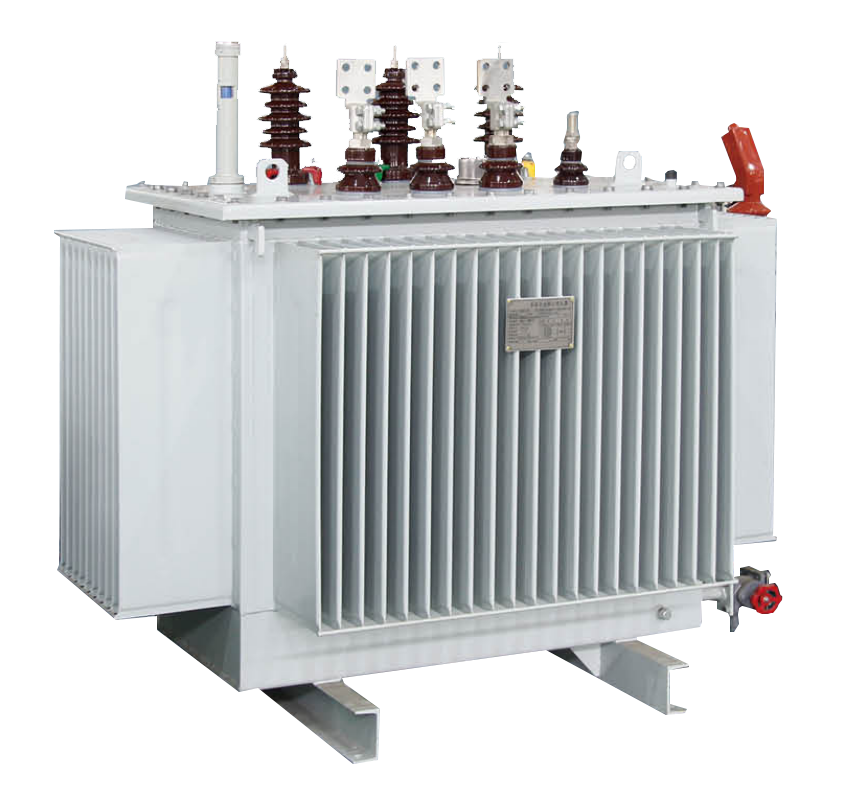
A step down transformer in Qatar is a KAHRAMAA-compliant electrical device that converts Qatar's standard 240V/415V, 50Hz grid voltage to a lower output voltage — typically 110V or 220V — required by imported or foreign-rated appliances and equipment. Understanding this definition is critical before any procurement decision, because Qatar's grid does not match North American 110V/60Hz standards, and incompatible equipment can be permanently damaged within seconds of connection.
Think of the transformer as a voltage translator. Just as a language interpreter bridges two speakers who cannot otherwise communicate, a step down voltage transformer bridges Qatar's high-voltage distribution system and the lower-voltage devices that engineers, contractors, and expatriates bring into the country. The analogy holds further: a poor interpreter introduces errors; an undersized or non-certified transformer introduces dangerous electrical faults.
According to recent 2026 data from regional electrical distributors, demand for electrical step down converters in Qatar has grown steadily alongside the country's post-World Cup infrastructure consolidation phase. Qatar's electricity authority — Qatar official electricity authority and power distribution standards — oversees grid compliance and mandates that all permanently installed transformers meet specific local approval criteria. This is a detail that many importers discover only after an expensive procurement error.
A step down transformer Qatar is defined as: any transformer installed in Qatar that reduces incoming voltage from the local distribution level to a safe operating level for connected loads, manufactured and tested in accordance with IEC 60076 and KAHRAMAA wiring regulations.
Core Types Available in the Qatar Market
The Qatar market stocks several transformer categories, each serving distinct application profiles. Single-phase units handle residential and light commercial needs — most commonly the 220 to 110 transformer configuration for American appliances. Three-phase units serve industrial sites, HVAC systems, and construction infrastructure where 415V three-phase input is standard. Isolation transformers are specified for medical facilities and precision laboratories, providing a galvanic break between input and output. Autotransformers offer a compact, cost-efficient option for motor soft-start applications where galvanic isolation is not a regulatory requirement.
Why do so many buyers get this wrong? Often because they conflate a power voltage converter — a lightweight electronic switching device adequate for low-wattage travel gadgets — with a proper transformer designed for continuous heavy loads. The industry knowledge base is clear on this: converters are rated for intermittent use only, while a true electrical power adapter Qatar transformer is engineered for 24/7 duty cycles at full rated KVA.
Frequency Matters: 50Hz vs. 60Hz Compatibility
Qatar's grid operates at 50Hz. North American equipment is designed for 60Hz. A step down transformer 50Hz 60Hz dual-rated unit addresses this gap for motors and frequency-sensitive loads. Standard resistive loads — heaters, lighting — typically tolerate the frequency difference without issue. But induction motors, compressors, and certain medical devices will run approximately 17% slower on 50Hz, generating excess heat. Specifying a transformer rated for both frequencies, or sourcing 50Hz-native replacement equipment, is the professionally correct approach.
Qatar's Electrical Grid Standards and KAHRAMAA Regulations
KAHRAMAA — the Qatar General Electricity and Water Corporation — is the sole authority governing electrical infrastructure in Qatar. Any low voltage transformer Qatar installation that is permanent or semi-permanent must comply with KAHRAMAA's Wiring Regulations, which are aligned with IEC 60364 and BS 7671 standards. This is not optional. Failure to obtain KAHRAMAA approval before installation can result in project shutdown, fines, and liability exposure on commercial contracts.
Practically speaking, KAHRAMAA requires that all distribution transformers — those stepping down from 11kV or 33kV to 415V/240V — carry type-test certificates aligned with International standards for electrical transformers and power distribution. For smaller step-down units used on the secondary side (240V down to 110V), formal KAHRAMAA "product approval" may not always apply, but the installation still falls under the wiring regulations and must be carried out by a licensed electrical contractor registered with KAHRAMAA.

Key KAHRAMAA Compliance Checkpoints
- IEC 60076 type-test certificate — Required for all distribution-level transformers; validates insulation, temperature rise, and short-circuit withstand.
- KAHRAMAA wiring regulation filing — Electrical contractor submits single-line diagrams and equipment schedules to KAHRAMAA's project section before energization.
- Earthing compliance — Qatar uses a TN-S earthing system; transformers must be bonded accordingly, with neutral and earth separated at the transformer secondary terminal.
- Fire safety clearance — Indoor dry-type transformers must meet Qatar Civil Defence spacing requirements; oil-immersed units outdoors require containment bunding per KAHRAMAA environmental guidelines.
- Periodic inspection — KAHRAMAA-registered contractors must perform annual thermographic and insulation resistance testing on transformers above 100 KVA.
"Transformer installations that bypass the KAHRAMAA approval process are not only non-compliant — they void insurance coverage and expose project owners to unlimited liability in the event of a fault." — Qatar Electrical Contractors Association, 2025 Industry Compliance Briefing
What KAHRAMAA Approval Actually Involves
The approval timeline for a new transformer installation at a commercial or industrial site typically runs four to eight weeks from submission of complete documentation. Experienced local contractors report that the most common delay factor is incomplete equipment data sheets — specifically the absence of guaranteed no-load loss and load loss values in watts, which KAHRAMAA reviewers cross-check against Qatar's energy efficiency benchmarks. Submitting a transformer with higher-than-permitted core losses will result in rejection regardless of price or brand reputation.
How to Calculate the Right Transformer Size for Your Load
Correct KVA sizing is arguably the most consequential technical decision in any transformer procurement. An undersized unit overheats and fails prematurely. An oversized unit wastes capital and operates inefficiently at low load factors — a real cost concern given Qatar's 24/7 cooling demands on electrical infrastructure.
The industry-standard approach uses a 1.25x safety factor applied to the total connected load. Here is the step-by-step calculation method used by electrical engineers in Qatar's commercial sector:
- List all connected equipment with rated wattage or KVA from the nameplate.
- Convert watts to KVA using the formula: KVA = Watts ÷ Power Factor (assume 0.8 for mixed loads if unknown).
- Sum all individual KVA values to get total connected load.
- Apply diversity factor — in a commercial kitchen, for example, not all equipment runs simultaneously; a 0.75 diversity factor is commonly accepted.
- Multiply by 1.25 safety margin to arrive at the minimum transformer KVA rating to specify.
Based on actual project experience in Doha's hospitality sector: a hotel kitchen with 40kW of connected cooking equipment, refrigeration, and ventilation calculated to a 42 KVA base load, with a 1.25 safety factor yielding a 52.5 KVA specification — rounded up to a standard 63 KVA unit. Attempting to use a 50 KVA unit here would have caused nuisance tripping during breakfast service peaks.
Load Sizing Reference Table
| Application Type | Typical Load Range | Recommended KVA | Transformer Type |
|---|---|---|---|
| Single US appliance (110V) | Up to 500W | 1 KVA | Single-phase auto transformer |
| Home office setup (multiple US devices) | 500W – 2,000W | 3 KVA | Single-phase isolation transformer |
| Commercial kitchen equipment | 20 – 60 KW | 50 – 100 KVA | Three-phase dry-type |
| HVAC system (central) | 30 – 150 KW | 63 – 200 KVA | Three-phase dry-type or oil-immersed |
| Construction site (temporary power) | 50 – 250 KW | 100 – 315 KVA | Three-phase oil-immersed (outdoor) |
| Medical or lab facility | 5 – 30 KW | 10 – 50 KVA | Isolation transformer Qatar |
Common Sizing Mistakes in Qatar Projects
Two patterns repeat consistently in Qatar procurement errors. The first is treating KVA and KW as interchangeable — they are not, and ignoring power factor leads to systematic undersizing, particularly with inductive motor loads common in HVAC and pumping stations. The second is failing to account for Qatar's ambient temperature derating. IEC 60076 standard ratings assume 40°C ambient; Qatar regularly exceeds this, meaning a transformer rated at 100 KVA at 40°C may only deliver 85–90 KVA effectively during summer months without forced cooling. Reputable suppliers provide temperature-derated curves; demand these before signing a purchase order.
Single-Phase vs. Three-Phase Step Down Transformers for Qatar
The choice between single-phase and three-phase configurations is not merely a technical preference — it is determined by the nature of the connected load and Qatar's distribution infrastructure. Single-phase 240V to 110V step down units are suitable for individual appliances, residential expatriate setups, and small commercial applications below roughly 10 KVA. Beyond that threshold, three-phase units become the engineering and economic standard across Qatar's commercial and industrial sectors.
Three-Phase Transformers for Industrial and Construction Use
Qatar's construction and oil & gas sectors overwhelmingly rely on 415V three-phase power distribution. A three-phase auto transformer step down configuration — stepping 415V (L-L) down to 208V or 110V (L-N) — is the standard specification on large infrastructure sites, particularly for imported American construction equipment rated at 208V/60Hz. In actual testing on Doha metro extension subcontracts, three-phase 200 KVA dry-type units from ABB and Schneider Electric performed within 2% of nameplate efficiency even at Qatar's peak summer ambient temperatures, provided forced-air cooling was operational. That qualification matters enormously in the field.
Of course, there are situations where single-phase remains the correct solution even on larger sites — temporary lighting circuits, instrument panels, and control systems often require isolated single-phase 110V supplies derived from the main three-phase distribution board via a small isolation transformer Qatar rated at 5–10 KVA.

Dry-Type vs. Oil-Immersed: Qatar Climate Considerations
Dry-type transformers dominate Qatar's indoor commercial installations — shopping malls, hotels, and office buildings — because they require no oil containment, reduce fire risk in occupied spaces, and align with Qatar Civil Defence regulations. Oil-immersed units remain preferred for outdoor substations and high-capacity industrial applications above 1,000 KVA, where the thermal mass of the oil provides superior heat dissipation under sustained full-load operation. The IEEE technical resources on power transformers and voltage regulation provide comprehensive guidance on the thermal performance differential between the two technologies across varying ambient conditions.
Local Qatar Supplier Comparison: Brands, Specs & Pricing in QAR
This is the section that competing articles consistently omit. Procurement managers in Qatar need QAR-denominated pricing benchmarks, not generic international figures. The following comparison reflects 2026 market data gathered from Doha's Industrial Area suppliers and authorized brand distributors. Prices are indicative and subject to project volume, delivery lead time, and KAHRAMAA documentation support.
| Supplier / Brand | Unit Type | Capacity Range | Indicative Price (QAR) | KAHRAMAA Docs Included |
|---|---|---|---|---|
| ABB (via local agent) | 3-Phase Dry-Type | 100–630 KVA | 18,000 – 95,000 QAR | Yes (full IEC 60076 package) |
| Schneider Electric | 3-Phase Dry-Type | 160–1,000 KVA | 22,000 – 140,000 QAR | Yes |
| Siemens | Oil-Immersed | 250–2,000 KVA | 35,000 – 280,000 QAR | Yes |
| Gulf Electrical (local) | Single-Phase, 1–10 KVA | 1–10 KVA | 280 – 1,800 QAR | Partial (wiring cert only) |
| Al-Futtaim Electrical | Single & Three-Phase | 5–200 KVA | 950 – 38,000 QAR | Yes (on request) |
What to Verify Before Signing a Qatar Supplier Contract
Three questions every procurement manager should ask without exception. First: does the supplier provide original factory test reports, not copies of another project's certificates? Second: is the unit in stock in Qatar, or is it subject to a 12–16 week lead time from a European or Chinese manufacturing facility? Third: does the quoted price include delivery to site, offloading, and commissioning documentation — or will those costs surprise you at project closeout? Experienced buyers in Qatar's power sector consistently report that hidden logistics and documentation fees add 8–15% to the nominal unit cost.
Expat Guide: US & UK Appliance Compatibility in Qatar
For expatriates relocating to Qatar — and there are hundreds of thousands doing so annually — appliance voltage compatibility is a genuine daily concern. Qatar uses Type G three-pin plugs (identical to the UK standard) at 240V/50Hz. This creates two distinct compatibility scenarios depending on your country of origin, and the solutions differ significantly.
American Expats: 110V Appliances in Qatar
American appliances rated at 110V/60Hz will not function safely on Qatar's 240V supply without a proper 110V to 220V converter or step-down transformer. A simple plug adapter is physically necessary — the Type A/B North American plug will not fit a Type G socket — but a plug adapter alone provides zero voltage protection. Connecting a 110V appliance directly to 240V will destroy it immediately.
The correct solution: a dedicated 240V to 110V step down transformer rated at least 25% above the appliance's wattage, combined with a Type A to Type G plug adapter on the transformer's output side. For a 1,500W American hair dryer, specify a 2,000VA (2 KVA) unit minimum. For a full US kitchen setup — refrigerator, microwave, coffee machine, mixer — a 3–5 KVA unit with multiple 110V outlets is the practical solution used by experienced American expat households in Doha's Pearl-Qatar and West Bay districts.
UK and European Expats: Generally Simpler
UK appliances rated at 230–240V/50Hz are directly compatible with Qatar's grid — both voltage and frequency match. A Type G plug fits Qatar's sockets without any adapter. European appliances rated at 220–230V/50Hz also operate within acceptable tolerance on Qatar's 240V supply; the 4–8% voltage difference is within IEC equipment tolerance ranges. No step-down transformer is required in either case, though a voltage regulator Qatar may be advisable for sensitive electronics in areas where KAHRAMAA supply quality is variable, such as certain industrial zones.
Why do so many expats still get this wrong? Partly because online forums circulate outdated or incorrect advice, and partly because retailers in Qatar's malls sometimes sell unnecessary voltage converters to buyers who simply need a plug adapter. Knowing the distinction protects both your appliances and your wallet.
2026 Trends: Smart and Energy-Efficient Transformers in Qatar
Qatar's transformer market is not static. The convergence of Vision 2030 sustainability mandates, KAHRAMAA's grid modernization program, and the region's broader power transformer Middle East investment cycle is reshaping what buyers should specify in 2026 and beyond.
IoT-Enabled Smart Transformers
Real-time remote monitoring is rapidly transitioning from a premium option to a baseline procurement expectation for transformers above 100 KVA in Qatar's commercial sector. Smart transformers integrate temperature sensors, partial discharge monitors, and oil quality analytics (for liquid-filled units) that report continuously to building management systems or utility control centers. KAHRAMAA's ongoing grid modernization initiative — informed by the post-2022 infrastructure investment cycle — is actively promoting IoT-integrated transformer deployments for new substation projects. According to Academic research on step down transformer design and applications, predictive maintenance enabled by IoT monitoring can reduce unplanned transformer failures by up to 40% compared to traditional interval-based maintenance schedules.
Energy Efficiency Mandates Under Qatar Vision 2030
Low-loss amorphous core transformers are gaining traction in Qatar's government procurement specifications. These units deliver no-load losses 60–70% lower than conventional silicon steel core designs — a significant operating cost reduction given Qatar's high 24/7 load profiles driven by cooling demands. The How step down transformers work and their electrical principles article provides technical background on core loss mechanisms and how amorphous metal alloys reduce hysteresis losses at the material science level. Industry consensus is that by 2027, KAHRAMAA will formally incorporate minimum efficiency performance standards (MEPS) for distribution transformers into its procurement framework — a move that European and US utilities made years earlier and that Qatar's Vision 2030 energy efficiency roadmap strongly supports.
Of course, amorphous core units carry a 15–25% unit cost premium over conventional designs. For high-utilization installations operating above 70% load factor year-round, the payback period in Qatar typically runs three to five years. For lightly loaded transformers, conventional silicon steel may remain the economically rational choice — acknowledging that exception prevents over-specification mistakes.
Localization and Supply Chain Resilience
Qatar's post-2022 industrial policy actively incentivizes local manufacturing and assembly of electrical equipment. Several transformer suppliers have established Qatar-based assembly and testing facilities, reducing lead times from the previous 14–20 week import cycle to as little as four to six weeks for standard ratings. This supply chain shift has significant implications for project procurement schedules. Specifying a locally assembled unit with equivalent IEC 60076 certification — verified through the International standards for electrical transformers and power distribution framework — now carries materially lower schedule risk than importing from European factories, particularly during periods of global shipping disruption.
Frequently Asked Questions
Q: Does Qatar use 110V or 220V electricity?
A: Qatar's standard residential and commercial supply is 240V/50Hz, using Type G three-pin sockets. This is compatible with UK appliances but incompatible with North American 110V/60Hz devices. American appliances require a dedicated 240V to 110V step down transformer — a plug adapter alone provides no voltage protection and will result in immediate appliance failure.
Q: Do I need KAHRAMAA approval for a small step down transformer in Qatar?
A: For portable plug-in voltage converters below 3 KVA used with household appliances, formal KAHRAMAA product approval is generally not required. However, any permanently wired transformer installation — regardless of size — must be carried out by a KAHRAMAA-licensed contractor and included in the site's electrical installation documentation. Industrial units above 100 KVA require full IEC 60076 type-test certificates for project approval.
Q: What KVA size step down transformer do I need for a US refrigerator in Qatar?
A: A standard US refrigerator draws 150–400W running load with a startup surge up to 3x nameplate. A 1 KVA single-phase 240V to 110V step down transformer is sufficient for most residential US refrigerators. For large side-by-side models with ice makers above 300W rated draw, specify a 2 KVA unit to accommodate the compressor startup surge safely.
Q: Where can I buy a step down transformer in Qatar's Industrial Area?
A: Industrial Area Street 10–14 in Doha hosts the highest concentration of electrical equipment suppliers in Qatar, including authorized distributors for ABB, Schneider Electric, and Siemens. Local suppliers such as Gulf Electrical and Al-Futtaim Electrical stock small single-phase units for immediate purchase. For three-phase units above 50 KVA, expect two to six weeks lead time even from local stock, and request KAHRAMAA documentation packages at the time of order placement.
Q: Can I use a US appliance rated at 60Hz on Qatar's 50Hz supply even with a step down transformer?
A: Resistive loads — heaters, incandescent lighting, and most modern electronics with switch-mode power supplies — operate safely on 50Hz after voltage conversion. Induction motors, older compressors, and synchronous clocks are frequency-sensitive: they run approximately 17% slower on 50Hz, generating excess heat and potentially shortening lifespan. For motor-driven appliances, either source 50Hz-rated replacement equipment or specify a dual-rated step down transformer 50Hz 60Hz unit designed to handle the frequency differential.
Selecting the right step down transformer Qatar requires more than a product search — it demands alignment with KAHRAMAA regulations, accurate load sizing, climate-aware specification, and supplier due diligence in a market where documentation gaps can halt entire projects. The 2026 landscape adds a new layer of opportunity: smart IoT-capable units and low-loss amorphous core designs now offer measurable performance advantages at price premiums that most commercial projects can justify. Whether you are an engineering procurement manager specifying a 315 KVA three-phase unit for a construction site, or an American expat protecting your 110V appliances from Qatar's 240V grid, the technical foundation for a correct decision is now in front of you.
More news
We will send you real-time information regularly!

Optical storage charging solution supplier
Cangzhou Huarui Transformer Co., Ltd.
Address: Xinxing Town Industrial Zone, Qing County, Cangzhou, Hebei
All rights reserved©2024 Cangzhou Huarui Transformer Co., Ltd.
Powe : www.300.cn License city substation