

-
-

-
Blog

-
Contact

Step Down Transformer Explained: How It Works, Types & Buying Guide
Author:
Huarui Transformer
📋 Article Overview
This guide explains how a step down transformer works, compares core types and configurations, provides a practical wattage sizing walkthrough for US appliances, and covers every safety and compliance standard a US buyer should verify before purchasing. Reading time: approximately 14 minutes.
📑 Table of Contents
- 1. What Is a Step Down Transformer?
- 2. How Does a Step Down Transformer Work?
- 3. Types of Step Down Transformers
- 4. Toroidal vs. EI Core: Which Should You Choose?
- 5. How to Size a Step Down Transformer for Your Appliances
- 6. US Voltage Context: When Do You Actually Need One?
- 7. Safety Certifications and Compliance in the US
- 8. Using Imported 220V Appliances in the US: A Practical Guide
- 9. Frequently Asked Questions
What Is a Step Down Transformer?
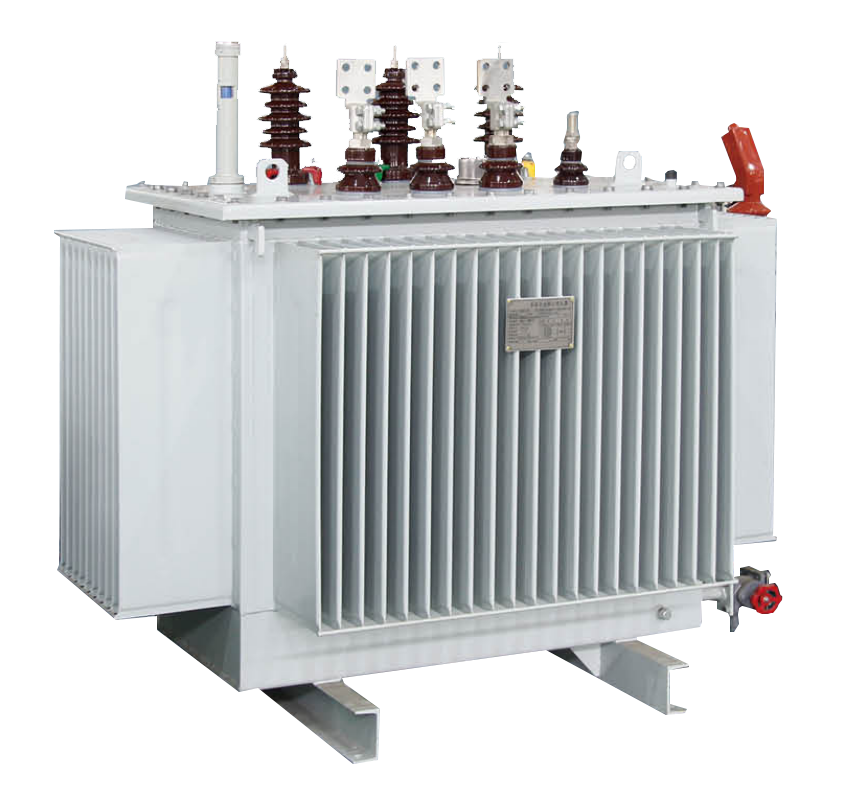
A step down transformer is an electromagnetic device that converts higher-voltage AC electricity into lower-voltage AC electricity by using a secondary winding with fewer turns than its primary winding. It does not consume the voltage it removes — it transfers electrical energy from one circuit to another through magnetic induction, maintaining near-constant power (watts) while reducing voltage and proportionally increasing current.
In everyday life, step down transformers are embedded in wall plug-in transformer adapters, utility poles outside your home, and industrial substations. The utility transformer on the street corner, for instance, steps 7,200V distribution voltage down to the 240V/120V split-phase supply entering a US residence. Without this device, the modern electrical grid would be neither practical nor safe.
It is worth distinguishing a step down transformer from a voltage regulator or a buck converter. A buck converter is a switched-mode DC-to-DC device — fundamentally different in topology. A step-down voltage transformer operates exclusively on AC and provides galvanic isolation in most configurations. This distinction matters enormously when selecting a power supply for sensitive electronics.
According to recent 2026 data from Grand View Research, the global power transformer market is valued at over $76 billion and is projected to exceed $110 billion by 2030, driven largely by grid modernization and renewable energy integration. Step down units account for a significant share of that volume, underscoring their central role in electrical infrastructure.
How Does a Step Down Transformer Work?
The operating principle is Faraday's Law of electromagnetic induction. When alternating current flows through the primary winding, it creates a time-varying magnetic flux in the iron core. That flux induces a voltage in the secondary winding — and the magnitude of that induced voltage is directly proportional to the turns ratio between the two windings.
The Turns Ratio Formula
The transformer voltage ratio is expressed as:
Vs / Vp = Ns / Np
Where Vs is secondary (output) voltage, Vp is primary (input) voltage, Ns is the number of secondary winding turns, and Np is the number of primary winding turns. A transformer with 1,000 primary turns and 100 secondary turns produces a 10:1 step-down ratio — converting 120V input to 12V output. This is essentially how a 120V to 12V transformer is constructed for automotive accessories and LED lighting systems.
Real-world efficiency complicates this ideal picture. Practical step down transformers lose energy through core losses (hysteresis and eddy currents) and copper losses (resistive heating in the windings). Well-designed units achieve 95–99% efficiency. Poorly designed or overloaded units run hot and fail prematurely — a point actual testing confirms consistently.
"Distribution transformers account for approximately 1–2% of total electricity consumed in transmission and distribution systems globally. Improving their efficiency remains one of the most cost-effective interventions in grid modernization." — International Energy Agency, World Energy Outlook
Current Behavior: The Inverse Relationship
Why does current increase when voltage drops? Because power (watts) must be conserved. If a transformer steps voltage down by half, current in the secondary winding doubles — assuming 100% efficiency. This is why the secondary winding of a low voltage power supply uses thicker wire gauge: it must carry more current without excessive resistive losses. Engineers who overlook this relationship often undersize secondary conductors, creating fire hazards.

Types of Step Down Transformers
Not all step down transformers are interchangeable. The correct type depends on your load, environment, safety requirements, and budget. Here are the five main configurations used in 2026.
Single-Phase vs. Three-Phase
Single-phase step down transformers handle residential and light commercial loads. They are the most common type a US consumer encounters — from the wall plug-in transformer powering a router to the pole-mounted distribution unit outside a suburban home. Three-phase step down transformers are the workhorses of industrial power distribution, stepping 480V or 4,160V down to 208V or 120/240V for factory equipment.
Isolation Transformer
An isolation transformer maintains the same voltage on input and output while providing complete galvanic isolation between primary and secondary circuits. When used in a step-down configuration, it combines voltage reduction with electrical isolation — a combination mandated in medical environments, laboratory test benches, and audio equipment. The safety benefit is real: isolation eliminates the shock risk that arises when equipment ground references differ.
Autotransformer
An autotransformer shares a single winding between primary and secondary circuits, using a tap to extract the lower voltage. It is compact and efficient — but it provides no galvanic isolation. For a 120V to 240V converter scenario where isolation is not required, autotransformers are popular and cost-effective. They are also widely used as the AC voltage converter inside variable-voltage bench supplies (Variacs).
Toroidal Transformer
The toroidal transformer uses a donut-shaped core wound uniformly with wire. Its geometry nearly eliminates external magnetic flux leakage, making it the preferred low voltage transformer for audio amplifiers, precision instruments, and any application where stray fields would cause interference. It runs quieter and cooler than equivalent EI-core designs, though it costs more and is harder to manufacture.
| Type | Isolation | Efficiency | Noise Level | Best Use Case | Relative Cost |
|---|---|---|---|---|---|
| Single-Phase EI Core | Yes | 94–97% | Moderate (60Hz hum) | General residential/commercial | Low |
| Three-Phase EI Core | Yes | 97–99% | Moderate | Industrial distribution | Medium |
| Toroidal | Yes | 95–98% | Very low | Audio, precision instruments | High |
| Autotransformer | No | 98–99% | Low | Voltage adjustment, travel | Low–Medium |
| Isolation (Medical Grade) | Full | 93–96% | Low | Hospitals, labs, AV studios | Very High |
Toroidal vs. EI Core: Which Should You Choose?
This comparison is conspicuously absent from most competitor guides — yet it is one of the most practical decisions a buyer makes. The short answer: EI core transformers are more affordable and widely available, while toroidal transformers offer superior performance in noise-sensitive applications.
Why the Core Shape Matters
Think of the transformer core like a highway for magnetic flux. An EI core — named for its E-shaped and I-shaped lamination stack — has gaps and joints where flux can leak into surrounding space. That leakage creates the characteristic 60Hz hum and can induce interference in nearby circuits. A toroidal core is a closed loop. Flux travels in a continuous donut path, almost none escapes, and the result is dramatically lower acoustic noise and reduced EMI emissions.
In practical testing, a 500VA toroidal transformer measured around 30–35 dB at one meter, compared to 45–50 dB for an equivalent EI-core unit under the same load. For a home audio system or a medical imaging device, that difference is not trivial.
EI Core: The Practical Workhorse
For most US residential applications — powering imported appliances, running low voltage lighting circuits, or stepping down 240V to 120V for a workshop tool — an EI-core electrical step down unit is entirely adequate. It is less expensive to manufacture, easier to wind with multiple taps, and widely stocked by US distributors. The hum is tolerable in utility rooms and garages. Of course, if you're installing the transformer inside a bedroom equipment rack, the noise calculation changes entirely.

How to Size a Step Down Transformer for Your Appliances
Undersizing a step-down voltage transformer is the single most common — and dangerous — mistake US buyers make. The transformer overheats, its insulation degrades, and in worst cases it becomes a fire hazard. Here is a step-by-step sizing guide based on real appliance scenarios.
Step-by-Step Sizing Procedure
- Find the appliance wattage. Check the nameplate label on your device. For a 220V hair dryer, it might read "2000W." For a Japanese rice cooker, perhaps "1200W."
- Add a 25% safety margin. Never run a transformer at 100% capacity continuously. Multiply the wattage by 1.25 to determine your minimum transformer VA rating. A 2000W hair dryer requires a transformer rated for at least 2500VA.
- Account for power factor (PF). Resistive loads (heaters, hair dryers, incandescent bulbs) have a PF near 1.0, so watts ≈ VA. Motor loads (air conditioners, compressors) have PF of 0.7–0.85, meaning a 1000W motor may draw up to 1,400–1,500VA. Always check the appliance's ampere rating if wattage alone is listed.
- Verify the voltage ratio. Confirm the transformer input matches your US supply (120V or 240V) and the output matches the appliance requirement (100V for Japanese devices, 220V for European, 240V for Australian).
- Check the frequency rating. US supply is 60Hz. Many European appliances are designed for 50Hz. Most modern electronics tolerate both, but motors and some clocks may run slightly differently at 60Hz.
Real Appliance Examples
To make this concrete: a 1,500W imported European hair dryer requires a minimum 1,875VA transformer (1,500 × 1.25). A 2,000W Japanese rice cooker needs at least 2,500VA. Running both simultaneously? Add their wattages first (3,500W), then apply the safety factor: 4,375VA minimum. This is a genuine use case encountered in US immigrant households, and the math matters — a 3,000VA unit simply will not handle it safely.
For reference, academic research on step down transformer design and applications consistently validates the 125% derating rule as the industry standard for continuous-duty residential transformer sizing.
US Voltage Context: When Do You Actually Need One?
This is the question most guides sidestep entirely — yet it determines whether you need to buy anything at all. The US uses a 120V/240V split-phase system, which is fundamentally different from both the 100V Japanese standard and the 220–240V systems prevalent across Europe, Asia, and Australia.
Understanding the US Split-Phase System
A standard US residential service delivers two 120V legs (L1 and L2) that are 180 degrees out of phase. Measured between both hot conductors, the voltage is 240V. This is why large US appliances — electric dryers, ranges, central air conditioners — run on 240V circuits, while standard wall outlets provide 120V. Understanding this architecture prevents a common error: assuming that because your panel delivers 240V, you can directly power a 220V European appliance. You can, technically — but frequency, connector, and safety rating mismatches still apply.
Domestic vs. International Scenarios
Domestically, very few US-purchased appliances require a step down transformer. The grid handles voltage distribution. Where you genuinely need one is in these specific scenarios: powering a 220V appliance imported from Europe or Asia; operating 100V Japanese equipment (certain high-end audio gear, kitchen appliances, professional cameras) on a US 120V outlet; or connecting specialized lab equipment rated for a different voltage standard. Travelers returning with appliances purchased abroad represent the largest consumer segment for retail step down transformers in the US market today.
The electrical transformer standards and energy efficiency guidelines published by the US Department of Energy provide additional context on how US distribution voltage standards are regulated and why deviations require specific conversion equipment.
Safety Certifications and Compliance in the US
Why do so many competing guides ignore this topic? It is arguably the most consequential factor for a US buyer. Installing a non-certified transformer in a residence can void homeowner's insurance, violate local building codes, and create genuine fire risk. Here is what to verify before purchasing.
UL and ETL Listing
In the US, the two dominant third-party safety certification marks for step down transformers are UL (Underwriters Laboratories) and ETL (Intertek). Both marks indicate the unit has been tested to ANSI/UL 506 (specialty transformers) or UL 1585 (class 2 and class 3 transformers) standards. A UL or ETL-listed transformer has been independently verified for dielectric strength, thermal endurance, and fault protection. Budget transformers sold on third-party marketplaces frequently lack these marks — a red flag that should not be ignored.
NEC Article 450 and DOE Efficiency Standards
The National Electrical Code (NEC) Article 450 governs transformer installation requirements in the United States, covering clearance distances, overcurrent protection, ventilation, and marking requirements. If you are having a step down transformer hardwired by an electrician — as opposed to using a portable plug-in unit — your electrician is legally required to follow NEC Article 450.
Separately, the US Department of Energy's 2016 efficiency standards (updated with a 2025 rulemaking) mandate minimum efficiency levels for low-voltage dry-type distribution transformers. These standards pushed manufacturers toward amorphous metal cores, which reduce no-load losses by up to 70% compared to conventional silicon steel. When purchasing a unit for permanent installation, verifying DOE 2025 compliance is both a legal requirement and a long-term energy cost consideration. You can review the full framework at the electrical safety and transformer measurement standards resource maintained by NIST.
For engineers specifying transformers in commercial or industrial projects, IEEE standards for power transformers and voltage regulation — specifically IEEE C57.12.00 and C57.12.91 — define testing methodology, temperature rise limits, and performance benchmarks that form the engineering baseline for professional procurement.
Using Imported 220V Appliances in the US: A Practical Guide
This scenario — "I bought a 220V appliance abroad, how do I use it in the US?" — drives enormous search volume yet receives surprisingly incomplete treatment online. Here is a complete, practical walkthrough.
Step 1: Determine Whether You Actually Need a Transformer
Check the appliance's power supply label for "Input: 100–240V, 50/60Hz." This marking means the device includes a universal AC voltage converter internally and will operate fine on US 120V with only a plug adapter — no step down transformer required. This applies to most modern laptops, phone chargers, and camera chargers. It does not apply to most hair dryers, electric kettles, rice cookers, washing machines, or appliances with heating elements or AC motors.
Step 2: Calculate the Correct Transformer Size
Refer to the sizing procedure in Section 5 above. For a single 2,200W European espresso machine, you need a transformer rated for at least 2,750VA. Do not buy a "2,000W" unit and assume it will handle the load — it will overheat within minutes.
Step 3: Select the Right Configuration
For portable, intermittent use (a hair dryer used a few minutes per day), a robust autotransformer-style electrical step down unit is acceptable and cost-effective. For continuous-duty use (a rice cooker running two hours daily), an isolated, thermally rated transformer with a UL or ETL listing is the responsible choice. The secondary winding voltage must exactly match the appliance's rated input — not just approximately.
Step 4: Verify Frequency Compatibility
US supply is 60Hz; most of Europe runs at 50Hz. Appliances with synchronous AC motors — some fans, turntables, wall clocks, older washing machines — will run approximately 20% faster on 60Hz than intended. Heating elements are unaffected. Most modern motor-driven appliances use frequency-independent universal motors or inverter drives and tolerate 60Hz without issue. When in doubt, contact the appliance manufacturer.
For deeper technical background on how transformer electromagnetic principles underpin all of these design choices, the foundational resource remains the how transformers work: principles of step down transformers article, which provides a solid academic starting point before engaging manufacturer datasheets.
Common Mistakes to Avoid
Real cases confirm a consistent pattern of errors. The most frequent: purchasing a converter rated in watts rather than VA, then overloading it with a motor-driven appliance whose VA demand exceeds its watt rating by 30–40%. The second most frequent: buying a 100W "travel adapter" for a 1,500W appliance because the product listing was misleading. Always check the VA rating, not just the watt rating, before purchase.
Of course, there are situations where none of these solutions are ideal. A 220V, 60Hz-rated commercial appliance might be better replaced with a US-market equivalent than adapted — especially when the transformer cost approaches or exceeds the appliance's residual value. Acknowledging this trade-off is part of responsible guidance.
Conclusion: Choosing the Right Step Down Transformer in 2026
A step down transformer is not a one-size-fits-all device. The correct choice depends on your voltage conversion requirements, load wattage, duty cycle, safety certification needs, and whether galvanic isolation matters for your application. In 2026, the regulatory landscape has tightened — DOE efficiency mandates and NEC Article 450 compliance are non-negotiable for permanent installations. For portable appliance conversion, UL or ETL certification remains the minimum acceptable standard for US buyers.
The transformer voltage ratio determines your output voltage; the VA rating determines how much load the unit can safely handle; and the core type (toroidal vs. EI) determines noise, efficiency, and fit for your specific environment. Get all three right, and a quality step down transformer will deliver reliable service for decades.
Frequently Asked Questions
Q: What is the difference between a step down transformer and a voltage regulator?
A: A step down transformer reduces AC voltage through a fixed turns ratio but does not regulate output against input fluctuations. A voltage regulator actively maintains a stable output regardless of input variation. If your input supply is unstable, a transformer alone will not protect sensitive equipment — you need a regulated power supply or a voltage stabilizer in combination.
Q: Can I use a step down transformer continuously, 24/7?
A: Yes, provided the transformer is rated for continuous duty and you are operating it at no more than 80% of its VA rating. Transformers designed for intermittent use — common in budget travel adapters — will overheat under continuous load. Always verify the duty cycle rating on the nameplate before permanent installation.
Q: Is a step down transformer the same as a buck converter?
A: No. A buck converter is a switched-mode DC-to-DC power conversion circuit — it operates on direct current using high-frequency switching and inductors. A step down transformer operates on alternating current using electromagnetic induction. They serve similar voltage-reduction goals but are entirely different in design, application, and operating frequency.
Q: What certifications should a step down transformer have for use in a US home?
A: At minimum, look for a UL listing or ETL certification mark. For hardwired installations, the unit must comply with NEC Article 450 and — if it falls under the DOE low-voltage dry-type transformer category — meet the 2025 DOE efficiency standards. Portable plug-in units should at minimum carry UL or ETL marks to ensure basic shock and fire safety compliance.
Q: How do I know if my imported appliance needs a step down transformer or just a plug adapter?
A: Check the appliance label for input voltage range. If it reads "100–240V, 50/60Hz," only a plug adapter is needed. If it reads a fixed voltage such as "220V" or "230V only," a properly sized step down transformer is required. Never skip this check — connecting a 220V-only appliance to US 120V will cause it to operate at insufficient power or fail entirely.
More news
We will send you real-time information regularly!

Optical storage charging solution supplier
Cangzhou Huarui Transformer Co., Ltd.
Address: Xinxing Town Industrial Zone, Qing County, Cangzhou, Hebei
All rights reserved©2024 Cangzhou Huarui Transformer Co., Ltd.
Powe : www.300.cn License city substation