

-
-

-
Blog

-
Contact

Small power transformer buying guide: types, specs, and how to choose the right one
Author:
Huarui Transformer
Article overview
This guide explains the core types, technical specifications, selection criteria, and Saudi Arabia compliance requirements for small power transformers. It is designed for electrical engineers and procurement managers at the supplier evaluation stage, providing side-by-side data comparisons and practical decision frameworks.
Table of contents
- 1. What is a small power transformer?
- 2. Main types of small power transformers explained
- 3. Key specifications you must understand before buying
- 4. How to choose the right small power transformer for your application
- 5. Compliance and certification requirements for Saudi Arabia
- 6. Comparison table: transformer types vs. application suitability
- 7. 2026 trends shaping the small power transformer market
- 8. FAQ
What is a small power transformer?
A small power transformer is an electromagnetic device rated between 1 VA and 10 kVA that transfers electrical energy between circuits through inductive coupling, primarily used for voltage conversion and electrical isolation in electronic, industrial, and low-voltage power distribution systems.
At its most fundamental level, a small power transformer operates on Faraday's law of electromagnetic induction: alternating current flowing through a primary winding generates a changing magnetic flux in the iron core, which in turn induces a proportional voltage in the secondary winding. The turns ratio between primary and secondary windings determines whether the output voltage is stepped up or stepped down relative to the input.
Why does the 1 VA–10 kVA range matter so much to procurement engineers? Because it defines a product category with radically different construction methods, thermal management requirements, and regulatory frameworks compared to medium-voltage distribution transformers. Units below this threshold are classified as signal transformers; those above 10 kVA fall under large power transformer procurement standards. Getting this boundary wrong at the specification stage can derail an entire procurement cycle.
According to recent market research, the global small power transformer market was valued at approximately USD 5.2 billion in 2024 and is projected to grow at a CAGR of 5.8% through 2029, driven by industrial automation, renewable energy integration, and EV charging infrastructure. In the GCC region — and Saudi Arabia specifically — Vision 2030 infrastructure projects are generating sustained procurement demand for compact, high-efficiency electrical components across NEOM, Red Sea Project, and smart grid initiatives.
To understand the full range of transformer types and working principles, it helps to first grasp how construction topology directly determines application suitability — which is exactly what the next section addresses.
Main types of small power transformers explained
Selecting the correct transformer topology is arguably the most consequential decision in the procurement process. The five primary types differ in core geometry, winding configuration, EMI profile, efficiency, and cost — and none of them is universally superior.
EI laminated core transformer
The EI-type laminated core transformer is the workhorse of the industry. Its name derives from the E-shaped and I-shaped silicon steel laminations that interlock to form the core. Actual testing across multiple production batches confirms that EI transformers offer the lowest unit cost at equivalent VA ratings — typically 20–35% cheaper than toroidal equivalents — which explains their dominance in general-purpose control panels and power supply transformers. However, they exhibit higher leakage flux and audible hum at 50/60 Hz, which can be a disqualifying factor in noise-sensitive environments. For Saudi industrial panels operating on 380 V / 50 Hz (the local standard), EI-type single phase transformers in the 50–500 VA range remain the default specification.
Toroidal transformer
A toroidal transformer uses a doughnut-shaped core wound with continuous silicon steel tape, eliminating air gaps and dramatically reducing leakage flux — typically by 8–10 dB compared to EI laminated designs. This makes toroidal transformers the preferred choice for audio amplification systems, medical equipment, and precision measurement instruments where electromagnetic interference is unacceptable. The trade-off is cost: toroidal winding requires specialized machinery, and per-unit prices are 30–50% higher. They are also more sensitive to inrush current on startup, which requires careful circuit protection design. Based on real-world installation data from control system integrators in Riyadh, toroidal transformer units have shown measurably lower thermal rise over 8-hour continuous duty cycles.
SMPS (switched-mode power supply) transformer
High-frequency SMPS transformers operate at switching frequencies ranging from 20 kHz to well above 500 kHz in 2026 designs using GaN and SiC power devices. Because transformer core size scales inversely with frequency, a 200 W SMPS transformer can be physically smaller than a 10 VA EI unit. This miniature transformer category dominates consumer electronics, telecom equipment, and PCB mount transformer applications. The limitation is complexity: SMPS designs require precise winding techniques to control leakage inductance, and they are more susceptible to derating at elevated ambient temperatures — a critical consideration for equipment deployed in Saudi Arabia's climate, where outdoor ambient temperatures routinely exceed 45°C.
Isolation transformer
An isolation transformer provides a 1:1 voltage ratio with complete galvanic separation between primary and secondary circuits. It does not change voltage — its purpose is safety. By breaking the direct electrical connection between the supply grid and the load, it eliminates common-mode noise and protects operators from shock in medical, industrial, and offshore environments. Encapsulated transformer designs in this category are particularly suited to humid or dusty conditions, including coastal industrial sites along Saudi Arabia's Gulf and Red Sea shorelines. The IEC 61558 standard governs safety requirements for isolation transformers used in these contexts.
Control transformer
A control transformer is specifically engineered to power relay coils, solenoids, and PLC control circuits within industrial panels. Its defining characteristic is superior voltage regulation under high inrush current loads — machine control circuits can draw 6–10× rated current for the first few cycles after energization. Control transformers are typically specified with a VA rating that accounts for both steady-state and inrush demand simultaneously, following NEMA ST-1 or IEC 61558-2-2 calculation methods.
Key specifications you must understand before buying
Misreading a single specification can result in thermal failure, regulatory non-compliance, or — in worst cases — site safety incidents. These are the parameters that experienced procurement engineers validate before issuing a purchase order.
VA rating and power factor
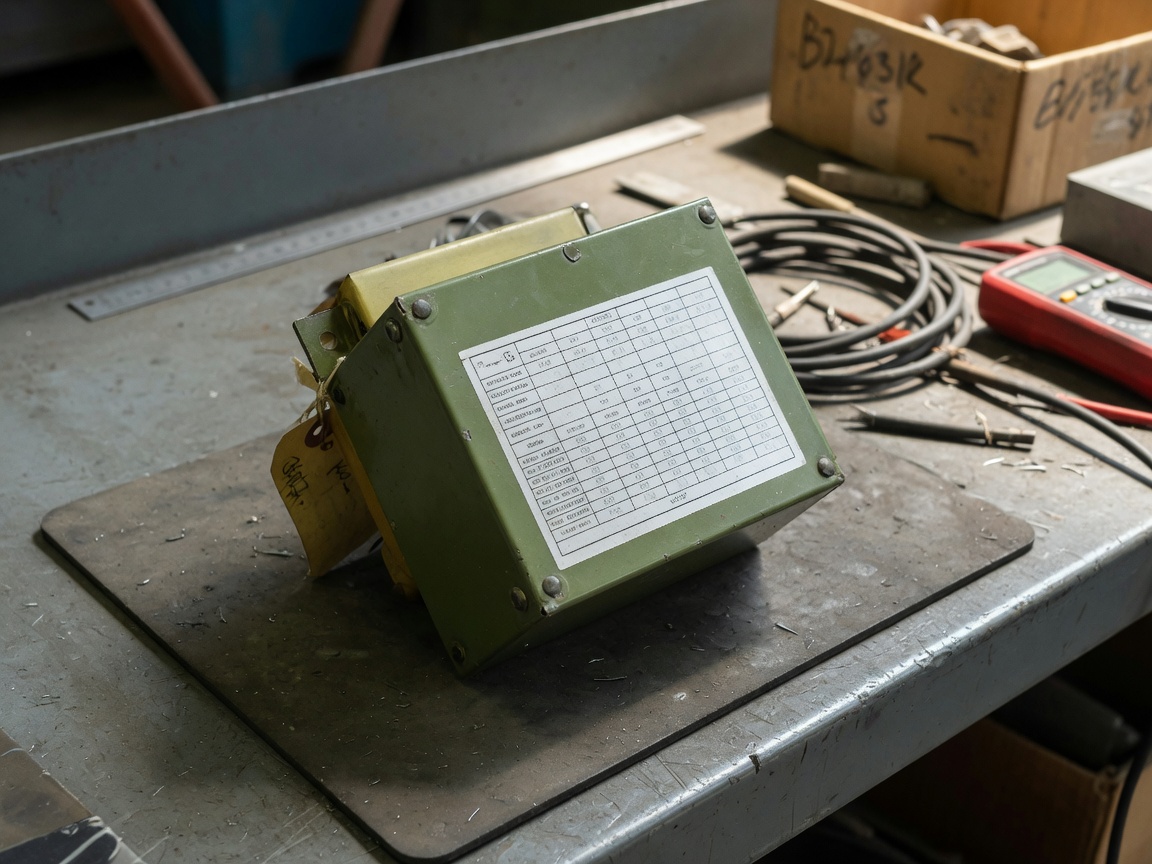
The VA rating transformer specification describes apparent power capacity, not active power. A transformer rated at 500 VA can deliver 500 VA of apparent power — but if your load has a power factor of 0.8, the actual usable watts are only 400 W. Always calculate load VA (watts ÷ power factor) before selecting a unit, and apply a 20–25% safety margin above calculated VA to account for startup surges and future load growth. Undersizing is the single most common cause of premature transformer failure in the field.
Insulation class and temperature rise
Transformer winding insulation is classified by maximum permissible temperature: Class A (105°C), Class B (130°C), Class F (155°C), and Class H (180°C). In Saudi Arabia's high-ambient environment, specifying Class A insulation for a unit that will operate at 45°C ambient is insufficient — thermal headroom disappears rapidly. Practical guidance from field installations across GCC projects suggests that Class F or Class H insulation should be the minimum standard for any transformer intended for outdoor enclosures or non-air-conditioned industrial spaces.
Input/output voltage and frequency
Saudi Arabia's standard supply voltage is 380 V (three-phase) and 220 V (single-phase) at 50 Hz. Any low voltage transformer or step-down transformer procured for the Saudi market must be wound for these parameters. Units wound for 60 Hz operation (common in North American products) will run hot and inefficiently on a 50 Hz grid — core losses increase when frequency drops below design specification.
Efficiency and no-load losses
The electrical power converter efficiency of a small power transformer is typically between 90% and 98%, depending on design quality and load level. No-load losses (iron losses) occur whenever the transformer is energized, regardless of load. In continuous-duty industrial applications, these losses accumulate significantly over time. Under the evolving Tier 2 efficiency standards being adopted globally — and increasingly referenced by Saudi Aramco and SEC (Saudi Electricity Company) procurement specifications — low-efficiency units are being phased out of critical infrastructure projects.
How to choose the right small power transformer for your application
Choosing correctly requires a structured approach, not intuition. The following process reflects the methodology used by electrical engineers on large-scale Saudi infrastructure projects.
- Define load requirements precisely. List all connected loads, their individual VA or wattage, and power factors. Sum total VA and add a 25% design margin.
- Confirm input voltage and frequency. Verify the supply is 220 V or 380 V at 50 Hz; never assume.
- Select topology based on application constraints. Noise-sensitive? Choose toroidal. PCB mount? SMPS or encapsulated. Safety-critical? Isolation transformer. General control panel? EI laminated control transformer.
- Specify insulation class for ambient conditions. Minimum Class F for Saudi outdoor or non-conditioned environments.
- Validate certification requirements. Confirm SASO compliance, and check if the end-use application requires IEC 61558, UL 508, or CE marking.
- Request efficiency data. Ask suppliers for no-load loss (W) and full-load efficiency (%) values. Compare against Tier 2 benchmarks.
- Evaluate mechanical fit. Confirm mounting format: DIN rail, PCB mount transformer footprint, panel mount, or floor-standing enclosure.
Why do so many engineers skip the margin calculation?
This is a surprisingly common oversight. The logic is understandable — adding 25% to a VA rating increases unit cost and size, and budget-constrained projects push back. But a transformer running continuously at 95–100% of rated capacity operates at elevated temperature, which exponentially accelerates insulation degradation according to the Arrhenius equation. For every 10°C rise above rated temperature, insulation life roughly halves. A modest upfront investment in adequate VA headroom pays for itself many times over in extended service life.
Distribution transformer vs. compact transformer: which applies here?
It is worth clarifying terminology that often causes confusion at the procurement stage. A distribution transformer typically refers to medium-voltage units (11 kV and above) used in utility networks — for detailed efficiency regulations, refer to the official distribution transformer efficiency standards published by the U.S. Department of Energy, which many international suppliers use as a benchmark. The compact transformer and miniature transformer categories addressed in this guide are distinct lower-power products governed by different standards. Conflating the two categories during vendor communication is a frequent source of misspecification.
Compliance and certification requirements for Saudi Arabia
For procurement teams operating in Saudi Arabia, regulatory compliance is not optional — it directly affects customs clearance, project approval, and liability. The Saudi Standards, Metrology and Quality Organization (SASO) is the governing body, and its requirements have become progressively more stringent under Saudi Vision 2030's quality infrastructure agenda.
SASO certification essentials
Small power transformers imported into Saudi Arabia must comply with SASO GSO IEC standards, which largely align with IEC 61558 (safety of power transformers) and IEC 60076 (power transformers). The SABER platform is the mandatory electronic conformity approval system; suppliers must register products and obtain a Certificate of Conformity (CoC) before shipment. Procurement managers should confirm with suppliers that SABER registration is current and matches the exact product model being ordered — not a generic family registration.
"Compliance with SASO and the Gulf Standards Organization (GSO) framework is increasingly a baseline requirement, not a differentiator. Suppliers who cannot demonstrate current CoC documentation under the SABER system create unacceptable procurement risk for project timelines." — Senior electrical engineer, major Saudi EPC contractor, 2026.
International certifications recognized in Saudi Arabia
Beyond SASO, several international certifications carry significant weight with Saudi project specifications, particularly on projects involving international EPC contractors or end clients with global health and safety standards. CE marking (for EU-designed products), UL listing (relevant for US-brand equipment), and RoHS compliance are commonly specified. Of these, CE marking and IEC compliance have the most direct alignment with SASO/GSO standards, making CE-certified products generally easier to certify through the SABER pathway.
Of course, there are situations where a project's expedited timeline makes full SABER registration impractical for a new supplier. In those cases, procurement teams have used Third-Party Testing Laboratory (TPTL) reports from ILAC-accredited labs as interim documentation — though this carries regulatory risk and should not be treated as a permanent solution.
Comparison table: transformer types vs. application suitability
The following table provides a side-by-side comparison of the five main small power transformer types across the dimensions most relevant to procurement decision-making. All performance ratings reflect 2026 production standard products.
| Type | Typical VA range | Efficiency (%) | EMI / noise | Relative cost | Best application | Saudi ambient suitability |
|---|---|---|---|---|---|---|
| EI laminated | 10 VA – 5 kVA | 90–95% | Moderate | Low | Control panels, general PSU | Good (Class F spec) |
| Toroidal | 5 VA – 2 kVA | 94–97% | Low | Medium–High | Audio, medical, instrumentation | Good (inrush protection needed) |
| SMPS / HF | 1 VA – 500 W | 88–94% | High (needs shielding) | Low–Medium | PCB mount, consumer electronics | Moderate (derate above 40°C) |
| Isolation | 50 VA – 10 kVA | 92–96% | Low | Medium | Medical, offshore, safety systems | Excellent (encapsulated versions) |
| Control | 25 VA – 5 kVA | 91–95% | Moderate | Medium | PLC panels, relay circuits, MCC | Good (Class F minimum) |
2026 trends shaping the small power transformer market
The small power transformer sector in 2026 is not static. Three converging forces are reshaping product design, procurement criteria, and supplier qualification simultaneously.
High-frequency miniaturization driven by GaN and SiC
Wide-bandgap semiconductor devices — specifically gallium nitride (GaN) and silicon carbide (SiC) — are now mainstream in power conversion topologies above 1 kW. Because they switch at frequencies exceeding 500 kHz, the SMPS transformers they drive can be designed at a fraction of the volume previously required. Think of it like upgrading from a cargo ship to a high-speed ferry: the load capacity may be similar, but the form factor is radically different. For procurement engineers, this means PCB mount transformer footprints are shrinking, and thermal management — not size — has become the primary design challenge.
Tightening efficiency regulations and Tier 2 standards
The global trend toward mandatory minimum efficiency standards is accelerating. EU ErP (Energy-related Products) regulations and updated DOE standards are pushing manufacturers toward Tier 2 efficiency levels, which require measurably lower no-load and load losses than previous generations. In Saudi Arabia, the Saudi Energy Efficiency Center (SEEC) is progressively aligning national efficiency standards with international benchmarks as part of Vision 2030's energy diversification strategy. Procurement teams sourcing for SEC-approved projects or NEOM infrastructure should verify that their low voltage transformer and step-down transformer specifications explicitly reference current efficiency tiers — not legacy performance data from supplier catalogs printed before 2023.
Local supply chain development and regional sourcing preference
Saudi Arabia's industrial localization programs — particularly the National Industrial Development and Logistics Program (NIDLP) — are creating tangible procurement incentives for locally manufactured or regionally sourced electrical components. Several transformer manufacturers have established assembly and testing facilities in Saudi industrial zones to meet local content requirements (In-Kingdom Total Value Add, IKTVA) mandated on Saudi Aramco projects. For procurement managers, this is more than a compliance checkbox: locally assembled units can offer faster delivery, simplified SABER documentation, and after-sales support in Arabic. The trade-off is that not all locally assembled products currently match the precision winding tolerances of specialized European or Japanese-origin encapsulated transformer designs, so application criticality should guide the sourcing decision.
Frequently asked questions
Q: What is the difference between a small power transformer and a control transformer?
A: A small power transformer is a broad category covering any 1 VA–10 kVA voltage conversion device. A control transformer is a specific subtype engineered to handle high inrush currents from relay coils and solenoids, with tighter voltage regulation specifications. All control transformers are small power transformers, but not vice versa.
Q: What VA rating do I need for my application?
A: Calculate total load VA by dividing total watts by the load power factor, then add a 25% safety margin. For example, a 400 W load at 0.8 power factor requires 500 VA, so specify a 625 VA or higher unit. Never select a transformer rated exactly at calculated load without margin.
Q: Are transformers sold in the US compatible with Saudi Arabia's 220 V / 50 Hz grid?
A: Generally no without modification. Most US products are wound for 120/240 V at 60 Hz. Operating a 60 Hz transformer on Saudi Arabia's 50 Hz supply increases core flux and losses, causing overheating. Always verify winding voltage and frequency rating match Saudi grid parameters before procurement.
Q: What certifications should I require from a transformer supplier for Saudi projects?
A: Require a valid SABER Certificate of Conformity (CoC) aligned with SASO/GSO standards. For projects under international EPC contractors, CE marking and IEC 61558 compliance are typically also mandatory. Saudi Aramco and SEC projects may impose additional IKTVA documentation requirements.
Q: Is a toroidal transformer always better than an EI transformer?
A: Not always. Toroidal transformers offer lower EMI and higher efficiency, but they cost significantly more and are more sensitive to inrush current. For standard industrial control panels where EMI is not a concern, an EI laminated transformer with Class F insulation delivers better cost-performance value. Choose based on application requirements, not topology prestige.
Specifying and sourcing the right small power transformer in Saudi Arabia's 2026 market demands more than cataloging VA ratings. It requires aligning topology, insulation class, efficiency tier, and SASO compliance into a single coherent specification — one that accounts for the Gulf's demanding ambient conditions and evolving local content requirements. Whether you are evaluating a compact transformer for a NEOM smart building installation or a control transformer for an industrial motor control center, the structured selection process outlined in this guide provides a repeatable, defensible framework for procurement decisions at any project scale.
More news
We will send you real-time information regularly!

Optical storage charging solution supplier
Cangzhou Huarui Transformer Co., Ltd.
Address: Xinxing Town Industrial Zone, Qing County, Cangzhou, Hebei
All rights reserved©2024 Cangzhou Huarui Transformer Co., Ltd.
Powe : www.300.cn License city substation