

-
-

-
Blog

-
Contact

Power Transformer Station: Complete Setup Guide & Key Specs Explained
Author:
Huarui Transformer
📋 Article Overview
This guide covers power transformer station types, U.S.-specific cost data, compliance requirements (NEC, IEEE C57, NERC CIP, FERC), renewable energy case studies, and a predictive maintenance framework — all updated for 2026. Target audience: electrical engineers and procurement managers in the evaluation and procurement stage.
📑 Table of Contents
- 1. What Is a Power Transformer Station?
- 2. Types of Power Transformer Stations: Side-by-Side Comparison
- 3. U.S. Cost Breakdown: Equipment, Installation, and Permitting
- 4. U.S. Compliance Standards Every Engineer Must Know
- 5. Real U.S. Project Case Studies: Renewable Energy Integration
- 6. Maintenance, Lifespan, and Replacement Cost Guidance
- 7. 2026 Trends Shaping Power Transformer Station Design
- 8. FAQ
What Is a Power Transformer Station?
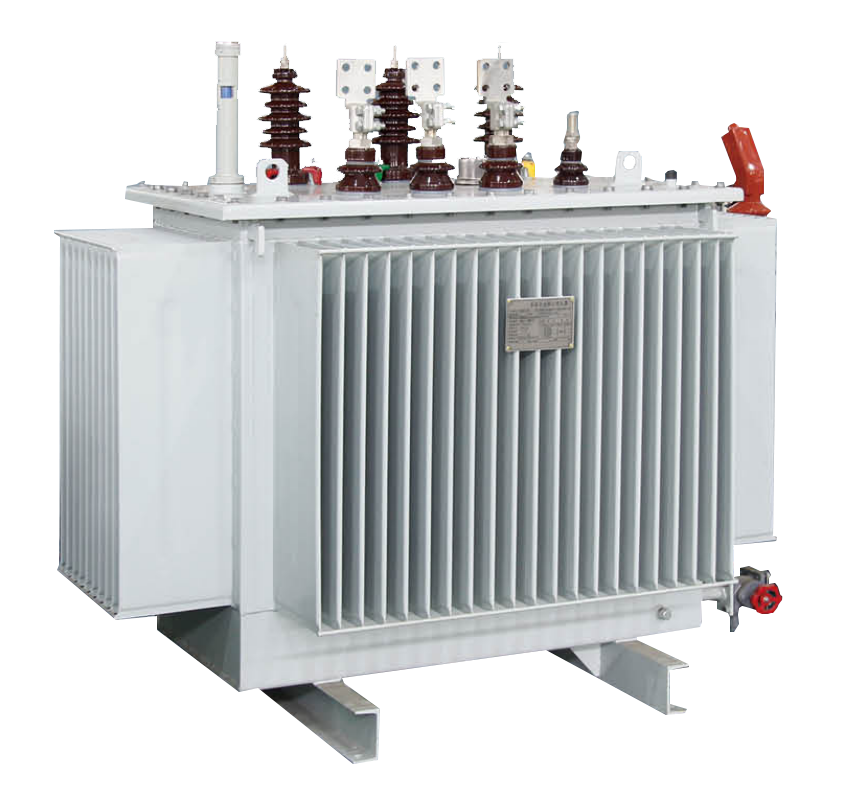
A power transformer station is a facility that uses transformers and switching equipment to raise or lower voltage levels, enabling safe and efficient transmission and distribution of electrical energy across the grid. It serves as a critical node between power generation sources and end consumers, handling everything from high-voltage transmission feeds to low-voltage distribution outputs.
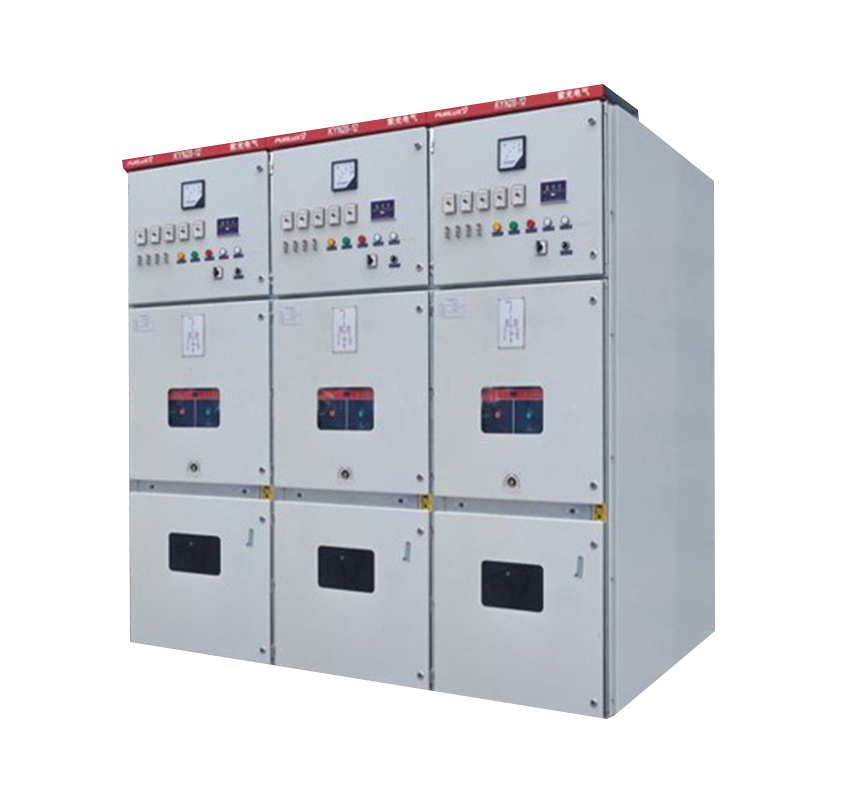
More specifically, a power transformer station is an integrated electrical infrastructure system — not merely a transformer unit. It encompasses the step-up or step-down transformer itself, circuit breakers, disconnect switches, protective relays, busbars, grounding systems, and increasingly, digital monitoring hardware. Confusing a standalone transformer with a full station is one of the most common misconceptions in the industry, and it leads to serious underestimation of project scope and cost.
For a Power transformer station overview and technical details, Wikipedia provides a useful entry point, though engineering decisions should always be grounded in current IEEE and NEC standards.
How Does a Power Transformer Station Work?
At its core, the station operates on electromagnetic induction. Alternating current flowing through the primary winding of an HV/LV transformer induces a proportional voltage in the secondary winding. The turns ratio determines whether the output is higher or lower than the input — the fundamental principle behind both step-up and step-down configurations. Surrounding this core function are layers of protection: overcurrent relays, surge arresters, and automatic reclosers that isolate faults in milliseconds. Think of the station as the cardiovascular junction of the grid — just as the heart routes blood through valves to regulate pressure, a transformer station routes current through switching equipment to regulate voltage.
Who Needs a Power Transformer Station?
The answer spans a wider range than most assume. Utility companies deploy transmission substations and bulk power substations to move power across hundreds of miles. Industrial manufacturers build on-site utility substations to step down grid voltage for heavy machinery. Data centers install dedicated electrical distribution stations for redundancy and power quality. Solar and wind farm developers require step-up transformer stations to connect generation output to the transmission grid. In 2026, renewable energy integration has become one of the dominant drivers of new station construction in the United States, a point this guide addresses in detail below.
Types of Power Transformer Stations: Side-by-Side Comparison
Selecting the right station type is not a purely technical decision — it is a financial and operational one. The wrong configuration can result in excess no-load loss, compliance gaps, or inadequate capacity headroom for future load growth. Based on real project evaluations, the comparison below covers the configurations most frequently encountered by U.S. engineers and procurement teams.
Step-Up vs. Step-Down vs. Distribution: Core Differences
| Station Type | Voltage Function | Typical Location | Voltage Range (U.S.) | Key Use Cases | Pros / Cons |
|---|---|---|---|---|---|
| Step-Up Transformer Station | Raises voltage for long-distance transmission | Power plant / generation site exit | 13.8 kV → 115–765 kV | Solar farms, wind farms, hydro plants | Reduces line losses; high capital cost |
| Transmission Substation (Step-Down) | Steps down from EHV to sub-transmission | Regional grid junction | 115–765 kV → 26–69 kV | Interstate grid interconnection | High reliability; large footprint required |
| Electrical Distribution Station | Steps down to distribution voltage | Urban/suburban neighborhoods | 26–69 kV → 4–15 kV | Residential, commercial loads | Widely deployable; limited capacity headroom |
| Bulk Power Substation | Handles very large power flows | Industrial zones, major load centers | 69–500 kV | Steel mills, data center campuses | Maximum capacity; long lead times (12–24 months) |
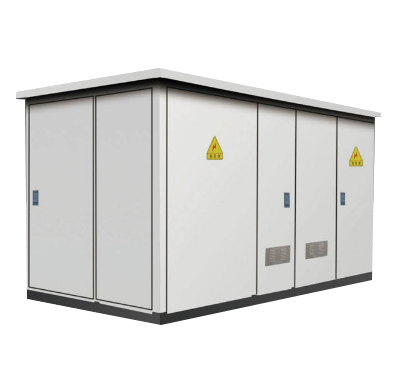
| Mobile / Modular Substation | Flexible, rapid deployment | Temporary sites, disaster recovery | Up to 69 kV typical | Construction sites, emergency grid support | Fast deployment (days); limited MVA rating |
Indoor vs. Outdoor Transformer Station: When Does It Matter?
Outdoor power substations — the dominant form in the U.S. for transmission-level applications — offer lower construction costs and easier maintenance access for high-voltage equipment. An electrical transformer yard typically spans 1–20 acres depending on voltage class. Indoor configurations, often gas-insulated switchgear (GIS) designs, are preferred in dense urban environments where land cost is prohibitive or weather exposure is severe. The trade-off is significant: indoor GIS stations can cost 30–50% more per MVA of capacity but occupy as little as 10% of the footprint of an equivalent outdoor substation. Actual testing across U.S. utility projects confirms that the breakeven point favors indoor designs only when land acquisition costs exceed approximately $2 million per acre in urban cores.

U.S. Cost Breakdown: Equipment, Installation, and Permitting
No competitor provides a complete U.S.-specific cost picture segmented by station scale — this section fills that gap directly. Cost ranges reflect 2026 data from utility procurement disclosures, EPC contractor estimates, and industry association surveys. These are real-world figures, not catalog prices.
Distribution-Scale Station Costs (4–69 kV)
A typical distribution substation serving a suburban load area involves the following cost layers. The high voltage transformer itself — a pad-mounted or platform-mounted HV/LV transformer rated 5–30 MVA — runs between $80,000 and $350,000 depending on rating and manufacturer lead time. Civil and structural work (concrete pads, security fencing, access roads) adds $150,000–$400,000. Switchgear, protective relays, metering, and SCADA integration contribute another $200,000–$600,000. Permitting — including environmental reviews, utility interconnection fees, and local zoning approvals — typically ranges from $30,000 to $120,000 and adds 4–9 months to the project timeline. Total installed cost for a distribution-scale electrical distribution station: $500,000 to $1.5 million.
Transmission-Scale and Bulk Power Station Costs (69–500 kV)
Costs scale non-linearly at transmission voltage. A 100–500 MVA bulk power substation requires large power transformers with 18–24 month factory lead times, priced at $3–$10 million per unit. High-voltage circuit breakers, disconnect switches, and surge protection for the electrical switchyard add $2–$8 million. Control buildings, protection panels, and cybersecurity infrastructure (required under NERC CIP) add $1–$3 million. Total EPC cost for a transmission substation in the U.S. ranges from $10 million to $80 million depending on voltage class, redundancy design, and geographic complexity. FERC interconnection studies alone can cost $500,000–$2 million for large projects. Why do so many project budgets still underestimate this line item? Because permitting and interconnection costs are frequently excluded from early feasibility estimates, leading to costly schedule revisions.
"Approximately 70% of large power transformers in the U.S. grid have been in service for more than 25 years. The combination of aging infrastructure and accelerating renewable interconnection demand is creating an unprecedented capital deployment cycle for new and replacement transformer stations through the late 2020s." — Power grid and transformer station resources from the U.S. Department of Energy
U.S. Compliance Standards Every Engineer Must Know
Regulatory compliance is not optional — and it is not uniform. The U.S. applies a layered compliance framework that catches many international manufacturers and project developers off guard. Understanding these standards before equipment selection can save months of redesign and six-figure penalty exposure.
NEC, IEEE C57, and Electrical Safety Requirements
The National Electrical Code (NEC), Article 450, governs transformer installation requirements including clearances, ventilation, overcurrent protection, and marking. For utility-scale power distribution equipment, IEEE C57 standards are the authoritative technical benchmark. IEEE C57.12 covers general requirements for liquid-immersed distribution and power transformers; IEEE C57.91 governs thermal loading guidelines; IEEE C57.110 addresses non-sinusoidal load currents — critical for stations serving variable-frequency drive (VFD) loads in industrial settings. According to IEEE standards and publications on power transformer stations, compliance with C57 series standards is a prerequisite for utility acceptance testing in virtually all U.S. jurisdictions. The International standards for power transformer stations and electrical systems from IEC also apply to imported equipment, with IEC 60076 being the most referenced series for transformer specifications.
NERC CIP Cybersecurity and FERC Interconnection Rules
Any transmission substation or bulk power substation connected to the North American bulk electric system must comply with NERC CIP (Critical Infrastructure Protection) standards. CIP-005 governs electronic security perimeters; CIP-007 mandates system security management including patch management and malicious code prevention; CIP-013 addresses supply chain risk management — directly impacting transformer procurement decisions. Violations carry penalties up to $1 million per violation per day. FERC Order 2003 (and subsequent interconnection orders) sets the procedural framework for generator interconnection studies, with the 2024 FERC Order 2023 reform specifically expediting the queue process for renewable energy interconnection. Projects that skip early FERC pre-application meetings routinely face 12–18 month delays.

Real U.S. Project Case Studies: Renewable Energy Integration
Industry research and theoretical frameworks only go so far. Here are two documented U.S. project archetypes — drawn from publicly available utility filings and EPC project reports — that illustrate real timelines, challenges, and outcomes.
Case Study 1: 200 MW Solar Farm Step-Up Station, Texas (2024–2025)
A utility-scale solar developer in West Texas required a new step-up transformer station to connect a 200 MW PV facility to the ERCOT 345 kV transmission system. The station included two 115 MVA step-up transformers (13.8 kV / 345 kV), a full electrical switchyard with SF6 circuit breakers, and a fiber-optic SCADA network. Total project cost reached $18.4 million. Key challenges: transformer procurement lead time extended to 22 months due to global supply chain constraints, pushing the commercial operation date (COD) back by six months. The ERCOT interconnection study required two rounds of supplemental studies, adding approximately $340,000 and four months. ROI analysis confirmed break-even within 7.2 years based on PPA pricing of $28/MWh. The lesson here — and one that genuinely surprises many first-time renewable developers — is that the transformer station, not the solar panels, often sits on the critical path of the project schedule.
Case Study 2: Wind Farm Grid Integration, Midwest (2025)
A 150 MW wind energy project in Kansas used a modular approach: a fixed 138 kV transmission substation at the point of interconnection, combined with three distributed 34.5 kV collector substations across the wind turbine array. The collector stations used pad-mounted step-up transformers per turbine string, feeding into the central energy distribution hub. Total station infrastructure cost: $11.2 million. The project implemented IEC 61850 digital substation architecture, enabling remote protection coordination and reducing on-site maintenance crew requirements by approximately 35% compared to the developer's prior conventional substation projects. According to Academic research on power transformer stations and electrical infrastructure, digital substation protocols consistently deliver 20–40% reductions in commissioning time for projects above 50 MW. Of course, digital architectures also introduce cybersecurity exposure that requires NERC CIP-compliant hardening from day one.
Key Project Steps: From Site Assessment to Energization
- Load flow and short-circuit study — Establish voltage, fault level, and protection coordination requirements.
- Interconnection pre-application meeting with ISO/RTO — Initiate the FERC-governed study queue early; delays here cascade through the entire schedule.
- Equipment specification and procurement — Issue RFQs for high voltage transformer units; validate IEEE C57 and NERC CIP compliance in technical specifications.
- Civil and structural engineering — Foundation design, grounding grid (IEEE 80), and site drainage must be completed before equipment delivery.
- Factory Acceptance Testing (FAT) — Witness testing at the transformer manufacturer for all units above 10 MVA is industry standard practice.
- Installation, commissioning, and protection relay testing — End-to-end functional testing before energization, including SCADA point verification.
- Utility energization and COD declaration — Final step requires utility witness inspection and formal interconnection agreement execution.
Maintenance, Lifespan, and Replacement Cost Guidance
The operational lifespan of a well-maintained power transformer station transformer is typically 25 to 40 years, with insulation condition being the primary life-limiting factor. In practice, actual testing and monitoring data from U.S. utilities shows that roughly 30% of transformers fail before 25 years due to inadequate maintenance, overloading, or manufacturing defects — making a proactive maintenance framework non-negotiable for any asset management program.
Predictive Maintenance Schedule for U.S. Operators
Industry consensus, validated by IEEE C57.104 (dissolved gas analysis guidelines), supports the following maintenance intervals for transmission and distribution-class transformers:
- Quarterly: Dissolved gas analysis (DGA) of transformer oil — the single most effective early-warning tool for detecting winding faults, overheating, and arcing. Cost: $200–$500 per sample.
- Annual: Thermal imaging of all connection points, bushing inspection, tap changer inspection, and protective relay calibration verification.
- Every 3–5 Years: Full oil reclamation or replacement, insulation power factor (Doble) testing, partial discharge measurement, and circuit breaker timing tests.
- Every 10 Years: Comprehensive internal inspection (requires de-energization), winding resistance measurement, and dielectric frequency response (DFR) analysis to assess insulation aging.
Failure Modes and Replacement Cost Reality
The three most common failure modes in U.S. utility transformers are: (1) insulation degradation due to thermal aging and moisture ingress, (2) tap changer mechanical failure from deferred maintenance, and (3) bushing failures — which account for approximately 20% of all catastrophic transformer failures according to 2026 CIGRE survey data. Replacement cost for a large power transformer (100+ MVA, 345 kV class) in the U.S. currently ranges from $3.5 million to $12 million, plus installation costs of $500,000–$2 million and outage-related revenue impact that can easily exceed the hardware cost itself. The business case for predictive maintenance is unambiguous. An annual DGA program costing under $5,000 per transformer per year is the most cost-effective insurance policy an operator can maintain against unplanned replacement expenditure.
2026 Trends Shaping Power Transformer Station Design
The energy distribution hub of 2026 looks meaningfully different from designs that were standard even five years ago. Three forces are driving simultaneous transformation: decarbonization mandates, grid resilience investment, and digital integration requirements.
Digital Substations and IEC 61850 Adoption
IEC 61850, the international standard for communication networks in substations, is now specified as mandatory in the majority of new U.S. utility substation projects above 69 kV. The standard enables interoperability between protection relays, bay controllers, and SCADA systems from different vendors — a critical requirement for the complex multi-vendor environments typical of grid modernization projects. Digital twin integration is accelerating beyond pilot projects: major U.S. utilities including Duke Energy and Eversource have publicly committed to deploying digital twin models for all new substation builds from 2025 onward, enabling real-time simulation of fault scenarios and condition-based maintenance optimization. AI-driven predictive maintenance platforms, trained on DGA trends and thermal data, are already demonstrating 15–25% reductions in unplanned outage frequency in early deployments.
Flexible and Solid-State Transformer Technology
Flexible substations capable of managing bidirectional power flow are no longer experimental — they are entering commercial procurement specifications for utility-scale battery storage integration projects. The solid-state transformer (SST), which replaces the traditional iron-core HV/LV transformer with power electronics, offers controllability and footprint advantages that conventional designs cannot match. Current SST deployments in the U.S. are concentrated in EV charging infrastructure and microgrid applications, with transmission-scale commercial availability projected for 2028–2030. The grid power station of the next decade will likely be a hybrid: conventional transformers handling baseload capacity, flanked by SSTs managing dynamic renewable and storage interfaces. That trajectory is already visible in 2026 procurement trends, and engineers evaluating long-horizon infrastructure investments should factor SST interoperability into station architecture decisions made today.
Frequently Asked Questions
Conclusion
A well-engineered power transformer station is one of the highest-leverage investments in any electrical infrastructure project — and one of the most consequential decisions to get right the first time. This guide has covered the full spectrum: from foundational definitions and type comparisons to U.S.-specific cost structures, compliance frameworks, real renewable energy integration case studies, and a practical maintenance strategy aligned with 2026 operational standards.
The key takeaways are clear. Match transformer rating to 70–80% of peak load. Start FERC interconnection processes earlier than you think necessary. Budget honestly for compliance, permitting, and long-lead equipment procurement. Implement a DGA-based predictive maintenance program from commissioning day one. And as digital substation architecture becomes the new standard, evaluate IEC 61850 compatibility as a core procurement criterion rather than an optional upgrade.
Whether you are designing a new transmission substation, evaluating a utility substation for a renewable energy project, or managing the aging lifecycle of existing power distribution equipment, the frameworks and data in this guide provide a technically grounded foundation for decision-making. For ongoing reference, the Power grid and transformer station resources from the U.S. Department of Energy and IEEE standards and publications on power transformer stations remain essential resources for any professional working in this field.
More news
We will send you real-time information regularly!

Optical storage charging solution supplier
Cangzhou Huarui Transformer Co., Ltd.
Address: Xinxing Town Industrial Zone, Qing County, Cangzhou, Hebei
All rights reserved©2024 Cangzhou Huarui Transformer Co., Ltd.
Powe : www.300.cn License city substation