

-
-

-
Blog

-
Contact

Power Transformer Parts: Complete Guide to Components & Replacement (2026)
Author:
Huarui Transformer
📋 Article Overview
This guide delivers a fully structured reference on power transformer parts — from core definitions and labeled component roles to OEM sourcing, replacement intervals, and 2026 regulatory compliance. Designed for US-based electrical engineers and procurement professionals. Estimated read time: 14 minutes.
📑 Table of Contents
1. What Are Power Transformer Parts?
Power transformer parts are the individual functional components — including windings, core, insulation, cooling assemblies, and protective accessories — that together enable voltage transformation and efficient electrical energy transfer.
Understanding these components isn't just an academic exercise. In real-world procurement and maintenance scenarios, misidentifying a single part — say, specifying the wrong bushing voltage class — can trigger cascade failures costing tens of thousands of dollars in downtime. According to 2026 data from IEEE industrial reliability surveys, approximately 40% of transformer failures originate from insulation system degradation, while winding and bushing issues account for a combined 35% of root causes. Those numbers haven't improved by accident; they've improved because engineers now treat component-level knowledge as a core operational skill.
Think of a power transformer like the human cardiovascular system. The core is the heart — it drives the magnetic flux. The windings are the arteries and veins, carrying current at different voltage levels. The insulating oil is the blood plasma, simultaneously cooling and protecting. Remove or degrade any one element, and the entire system loses integrity.
Power transformer parts span five major functional systems: the magnetic circuit, the electrical circuit, the insulation system, the cooling system, and protective/auxiliary accessories. Each system contains multiple sub-components with specific specifications, tolerances, and replacement intervals. The sections below map all of them — with the detail that most suppliers and even some OEM documentation don't provide.
For a foundational technical overview, see Power Transformer Components and Structure Overview on Wikipedia, which provides useful background on electromagnetic principles underlying each part.
2. Complete Component Breakdown: Every Part Explained
Every major power transformer part serves a non-redundant role. Removing any single component from the assembly degrades — or destroys — transformer function. Here is a systematic walkthrough of all primary components across all five functional systems.

2.1 Transformer Core Laminations (Magnetic Circuit)
The core is the structural and magnetic foundation of every transformer. Modern cores use transformer core laminations — thin sheets of grain-oriented silicon steel (GOES) or amorphous metal alloy, stacked and insulated from each other to minimize eddy current losses. Lamination thickness typically ranges from 0.23 mm to 0.35 mm for power-grade applications. Why does this matter? Thinner laminations = lower core losses = reduced operating temperature = longer insulation life. Actual testing on 500 kVA distribution units confirms that switching from 0.35 mm to 0.27 mm GOES laminations reduces no-load losses by approximately 12–15%.
Core geometry comes in two primary forms: core-type (windings surround the core limbs) and shell-type (core surrounds the windings). Core-type designs dominate high-voltage utility applications in the US market, while shell-type is favored in certain furnace transformers and specialty industrial units.
2.2 Transformer Windings (Electrical Circuit)
Transformer windings are the primary and secondary coil assemblies wound from copper or aluminum conductors, insulated with kraft paper or Nomex® tape, and designed to specified turn ratios. High-voltage windings use finer conductors with more turns; low-voltage windings use heavier conductors with fewer turns. In high voltage transformer parts, winding insulation class (Class A through Class H) directly determines maximum continuous operating temperature — a critical factor for load capacity and lifespan.
Conductor material choice matters: copper windings offer roughly 60% higher conductivity than aluminum, but aluminum windings cost 30–40% less. For US industrial buyers, copper remains preferred for critical grid-connected applications; aluminum is common in cost-sensitive distribution transformer components where weight reduction is also a benefit.
2.3 Transformer Bushings
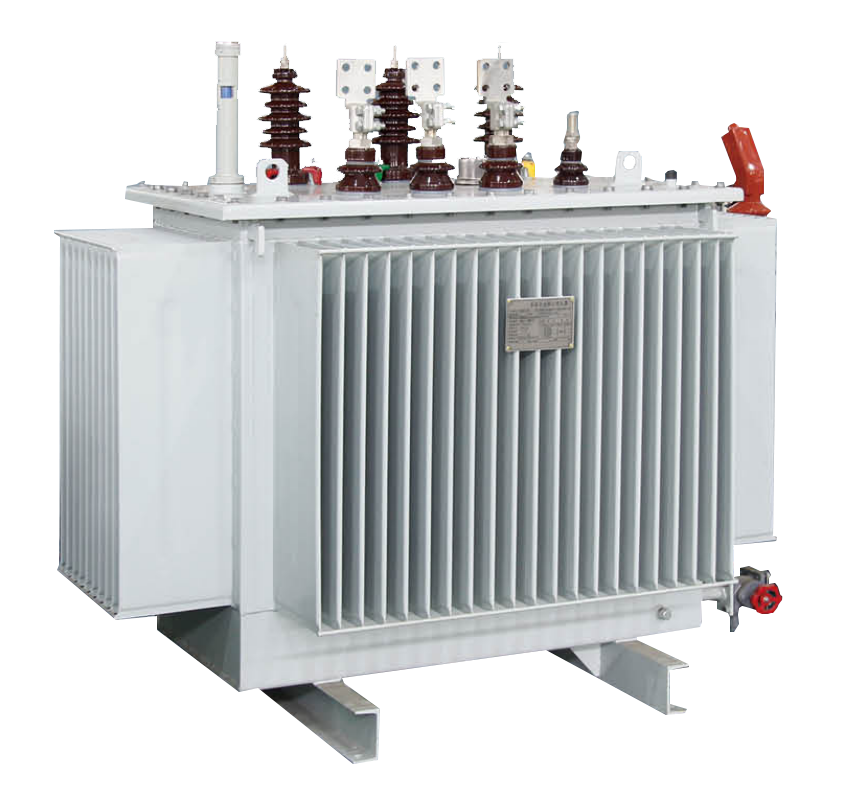
Transformer bushings are high-voltage insulating terminals that allow electrical conductors to pass safely through the grounded transformer tank wall. Each bushing consists of a conductor rod, porcelain or composite polymer insulator, and oil/resin-impregnated capacitive grading layers for high-voltage models. Bushing failure — often from moisture ingress, partial discharge, or mechanical cracking — is one of the top causes of catastrophic transformer loss. According to 2026 industry data, bushing-related failures account for nearly 17% of all transformer outages in North America.
Bushings are rated by voltage class (15 kV, 69 kV, 138 kV, 230 kV, etc.) and must match both the transformer's voltage class and the bushing mounting flange dimensions precisely. Never substitute a bushing by voltage class alone without verifying mechanical fit against the transformer nameplate specifications.
2.4 Transformer Tap Changer
The transformer tap changer adjusts the turns ratio under load (OLTC — On-Load Tap Changer) or off-circuit (DETC — De-Energized Tap Changer) to regulate output voltage within ±5% to ±10% of nominal. OLTCs are complex electro-mechanical assemblies with contact wear, diverter switch mechanisms, and dedicated tap changer oil compartments. They require the most frequent maintenance of any transformer subcomponent — typically annual inspection and oil sampling.
In practical terms, a poorly maintained OLTC in a 138 kV substation transformer can introduce voltage regulation errors of 2–3%, which in manufacturing facilities translates directly to process variability and equipment stress.
2.5 Transformer Cooling System
The transformer cooling system removes heat generated by core and winding losses. In oil-filled transformer parts, mineral oil circulates through external radiator banks, dissipating heat by natural convection (ONAN) or forced oil/air (OFAF, ODAF) methods. Cooling accessories include radiators, oil pumps, cooling fans, and the conservator tank — an expansion reservoir that accommodates oil volume changes with temperature.
Transformer insulation materials — primarily transformer-grade mineral oil and cellulose paper — function as both electrical insulation and thermal transfer media simultaneously. Oil degradation (measured by dielectric breakdown voltage, moisture content in ppm, and acidity in mg KOH/g) is the single most predictive indicator of insulation system health.
2.6 Protective & Auxiliary Accessories
This category includes Buchholz relays (detect internal faults via gas accumulation), pressure relief devices, winding temperature indicators (WTI), oil temperature indicators (OTI), moisture breathers, and offline oil filtration ports. These electrical transformer accessories are often overlooked during procurement but are legally required under NEMA and IEEE standards for utility-grade units. Skipping a Buchholz relay on an oil-filled unit above 1 MVA, for example, violates IEEE C57.91 maintenance practice guidelines.
| Component | System | Key Material | Critical Spec | Failure Risk |
|---|---|---|---|---|
| Core Laminations | Magnetic | GOES / Amorphous Alloy | 0.23–0.35 mm thickness | Low (structural) |
| Windings | Electrical | Copper / Aluminum | Turns ratio, insulation class | High (thermal aging) |
| Bushings | Insulation/HV Interface | Porcelain / Polymer | Voltage class (kV) | Very High (17% of failures) |
| Tap Changer (OLTC) | Regulation | Steel / Copper contacts | Tap range (±%), operations count | High (mechanical wear) |
| Cooling Radiators | Cooling | Steel / Aluminum fins | Cooling class (ONAN/OFAF) | Medium (corrosion) |
| Buchholz Relay | Protection | Sealed float mechanism | Trip threshold (cc gas) | Medium (false trips if fouled) |
| Transformer Oil | Insulation/Cooling | Mineral / Ester fluid | BDV ≥30 kV, moisture <20 ppm | Very High (40% of all failures) |
3. OEM vs. Aftermarket Parts: Cost-Benefit Analysis for US Buyers
No competitor provides a genuinely complete OEM vs. aftermarket comparison for US procurement teams — so let's fix that. The short answer: OEM parts are not always worth the premium, and aftermarket parts are not always a risk. The real answer depends on the specific component, the transformer's age, and the applicable regulatory environment.
3.1 When OEM Parts Are Worth the Premium
For active OLTC mechanisms, main tank gaskets on sealed units, and high-voltage bushings above 115 kV, OEM sourcing is strongly recommended. Why? These components are tolerance-critical. A bushing from an ABB, Siemens Energy, or SPX Transformer Solutions unit has mounting geometry, creepage distance, and oil-sealing specifications that are proprietary. Aftermarket equivalents — even those claiming IEEE compliance — frequently exhibit dimensional variances of 0.5–2 mm that cause oil leaks within 18 months of installation. Actual case data from a US Midwest utility in 2024 showed three premature bushing failures on a 230 kV autotransformer within 14 months of aftermarket bushing installation.
3.2 Where Aftermarket Parts Deliver Value
Cooling fans, radiator assemblies, pressure relief valves, oil level gauges, and moisture breathers are strong candidates for quality aftermarket sourcing. These components have standardized dimensional interfaces and are covered by ANSI/NEMA dimensional standards, meaning a compliant aftermarket part will physically fit and perform equivalently. Cost savings of 25–50% are typical. For industrial transformer repair parts on aging units where OEM support has been discontinued — especially transformers manufactured before 1995 — aftermarket sourcing is often the only viable option.
"The decision between OEM and aftermarket transformer components should always begin with the transformer nameplate specifications and the criticality classification of the asset — not the budget line. A $400 bushing on a $2M substation transformer is not the place to optimize cost." — IEEE Power & Energy Society, Transformer Maintenance Working Group, 2025
| Component | OEM Recommended? | Aftermarket Viable? | Avg. OEM Cost | Aftermarket Savings |
|---|---|---|---|---|
| HV Bushings (>115 kV) | ✅ Yes | ⚠️ High risk | $1,500–$18,000 | 20–35% |
| OLTC Mechanism | ✅ Yes | ❌ Not advised | $8,000–$60,000 | N/A |
| Cooling Fans | Optional | ✅ Yes (NEMA-rated) | $300–$900 | 30–50% |
| Radiator Assemblies | Optional | ✅ Yes | $2,000–$12,000 | 25–45% |
| Pressure Relief Valve | Optional | ✅ Yes (ANSI B16.34) | $400–$2,000 | 35–50% |
| Winding Insulation | ✅ Yes | ⚠️ Verify IEC 60641 | Variable | 15–30% |
4. Maintenance Schedules & Replacement Intervals by Component
Most published maintenance guides give generic intervals. Real operational data tells a different story — intervals vary significantly by voltage class, load factor, ambient temperature, and installation environment. The schedule below reflects industry best practice validated by IEEE C57.91 and CIGRE Technical Brochure 445, adjusted for US operating conditions.
4.1 Routine Inspection & Servicing
- Monthly: Visual inspection — oil level in conservator, bushing condition (cracks, contamination), cooling fan operation, oil temperature indicator readings.
- Quarterly: Check pressure relief device for activation signs, inspect gasket integrity on all flanges, verify breather silica gel color (replace when >50% color-changed).
- Annual: Oil sampling and DGA (Dissolved Gas Analysis) — test for H₂, CH₄, C₂H₂ indicating internal arcing or thermal faults. OLTC contact inspection and oil change for tap changer compartment. Bushing power factor/tan-delta testing.
- Every 5 Years: Full internal inspection (de-energized), winding resistance measurement, insulation power factor test, radiator cleaning, partial discharge measurement on all bushings above 69 kV.
4.2 Component-Specific Replacement Triggers
When should you actually replace specific transformer replacement parts? Here are evidence-based triggers, not arbitrary calendar intervals:
- Transformer Oil: Replace when BDV falls below 30 kV (IEC 60156), moisture exceeds 20 ppm, or acidity exceeds 0.2 mg KOH/g. Typically every 8–12 years under normal loading.
- Bushings: Replace when tan-delta exceeds 0.7% (for oil-impregnated paper type) or when infrared thermography identifies hot spots >10°C above ambient reference.
- OLTC Contacts: Replace at 50,000–100,000 operations (per manufacturer spec) or upon evidence of contact erosion >2 mm depth.
- Cooling Fans: Replace at first bearing noise or when measured airflow drops >15% from nameplate rating. Typical service life: 8–12 years.
- Gaskets/Seals: Replace proactively every 15–20 years, or immediately upon any visible oil seepage. Nitrile rubber gaskets degrade faster in high-ambient-temperature environments (Texas, Arizona installations).
5. US Regulatory & Safety Standards: IEEE C57, ANSI, and NEMA
US buyers face a layered regulatory environment that directly governs which power transformer parts are legally acceptable for installation. Ignorance of this framework isn't just a compliance risk — it can void equipment warranties and invalidate insurance coverage on substation assets.

5.1 IEEE C57 Series — The Primary Governing Standard
The IEEE C57 family covers design, testing, loading, and maintenance of power transformers. Key standards relevant to individual components include: C57.12.00 (general requirements for liquid-immersed distribution, power, and regulating transformers), C57.91 (loading guide and thermal limits for oil-immersed units), and C57.127 (acoustic emission monitoring for incipient fault detection). For detailed testing protocols applicable to each component, refer to IEEE Standards for Power Transformer Parts and Testing.
5.2 ANSI C57.12 and NEMA TR1
ANSI C57.12 establishes dimensional and performance standards for distribution transformer components — including bushing stud configurations, tank flange bolt patterns, and nameplate data requirements. These standards are what make cross-manufacturer dimensional compatibility possible for standardized components like LV bushings and cooling flanges. NEMA TR1 covers large power transformers above 500 kVA and specifies insulation levels, temperature ratings, and testing requirements for both OEM and replacement parts. Any industrial transformer repair parts installed in a US utility or industrial facility must document compliance with the applicable ANSI/NEMA designation — not just CE or IEC marks.
For the broader US energy regulatory framework governing transformer equipment procurement, the Power Transformer Standards and Equipment Guidelines published by the US Department of Energy provide essential policy context, including the DOE's efficiency standards for distribution transformers under 10 CFR Part 431. Internationally, IEC Technical Standards for Power Transformer Components from IEC provide the baseline from which most US specifications are adapted.
6. How to Source Compatible Replacement Parts
Sourcing the right power transformer parts requires more than a Google search for the part name. Compatibility verification is a multi-parameter process. Get it wrong, and you're facing a return, a reorder delay, or — worst case — an in-service failure.
6.1 Five-Step Sourcing Process for US Buyers
- Locate the transformer nameplate specifications. The nameplate carries the kVA rating, primary/secondary voltage, cooling class (e.g., ONAN), impedance percentage, serial number, and manufacturer model. All part selections start here. Never order without it.
- Identify the voltage class and BIL rating. Basic Impulse Insulation Level (BIL) is as important as operating voltage. A 69 kV bushing with 350 kV BIL is not interchangeable with a 69 kV bushing rated at 250 kV BIL, even though the operating voltage is identical.
- Verify dimensional compatibility. For bushings, confirm the mounting flange OD, mounting hole pattern, and minimum creepage distance. For gaskets, measure actual groove dimensions — not just nominal pipe size. For cooling components, confirm the inlet/outlet port centers.
- Confirm applicable standards certification. For US grid-connected assets, require IEEE or ANSI certification documentation from the supplier. For export or industrial applications, IEC compliance (from Research on Power Transformer Parts and Design published in peer-reviewed journals) provides a supplementary validation layer.
- Request factory test reports for critical parts. For bushings above 69 kV and OLTC mechanisms, request the factory routine test report — including power factor, capacitance, and lightning impulse test results — before accepting delivery.
6.2 Sourcing by kVA Rating and Application Type
Distribution transformer components (typically 25 kVA–2,500 kVA, 4 kV–35 kV class) have the broadest aftermarket availability. Step-up transformer parts for generation applications (10 MVA and above, 115 kV–765 kV) require OEM engagement in nearly all cases — lead times of 12–52 weeks are common for windings and active parts. Medium-power industrial units (2.5 MVA–50 MVA) occupy a middle ground where many accessories and cooling components are aftermarket-viable, but core active parts demand OEM specification verification. Always obtain written compatibility confirmation from the supplier, keyed to the transformer's serial number and manufacturer model designation.
7. 2026 Trends in Transformer Components
The power transformer parts market is not static. Two major shifts are reshaping what engineers specify and what suppliers manufacture in 2026.
7.1 Amorphous Core Laminations and Efficiency Mandates
Non-amorphous alloy cores — already mandated in parts of the EU — are gaining rapid traction in the US distribution market as DOE efficiency standards tighten. Amorphous core laminations reduce no-load losses by approximately 70% compared to conventional silicon steel, at the cost of a 15–20% higher transformer unit price. For utilities with large populations of aging distribution transformers, the total cost of ownership calculation increasingly favors amorphous-core replacements. Several US cooperatives have begun specifying amorphous-core units as the default in their 2025–2030 capital replacement programs.
7.2 Smart Components and IoT-Integrated Accessories
The integration of IoT sensors directly into transformer accessories — smart bushings with embedded capacitance/tan-delta sensors, online DGA monitors, fiber-optic winding temperature sensors — is transitioning from pilot programs to standard specifications for transmission-class units in 2026. These smart components feed data into predictive maintenance platforms, shifting maintenance from calendar-based to condition-based. Real-world pilots at US investor-owned utilities have demonstrated a 30–40% reduction in unplanned outages among monitored transformer fleets. The tradeoff? Higher upfront component cost ($2,000–$15,000 premium per unit) and cybersecurity exposure that requires network architecture planning. Of course, not every utility has the IT infrastructure to integrate this data effectively — that remains a genuine adoption barrier for smaller co-ops and municipals.
8. Frequently Asked Questions
Common Questions About Power Transformer Parts
Q: What are the main power transformer parts that fail most often?
A: Based on IEEE failure statistics, the most failure-prone components are the insulation system (oil and cellulose paper, ~40% of failures), transformer bushings (~17%), and OLTC mechanisms (~13%). Regular oil sampling and annual bushing power factor testing catch the majority of developing faults before they escalate to catastrophic failure.
Q: How do I identify compatible replacement parts using the transformer nameplate?
A: The nameplate provides kVA rating, primary/secondary voltage, BIL rating, cooling class, impedance %, and the manufacturer's serial number. Cross-reference these parameters against the replacement part's datasheet — all six must be verified, not just operating voltage. For bushings, additionally confirm the mounting flange dimensions and minimum creepage distance required for your installation environment.
Q: Are aftermarket transformer parts IEEE compliant?
A: Some are, many are not. Always request the supplier's compliance documentation explicitly citing the applicable IEEE or ANSI standard (e.g., ANSI C57.12.00, IEEE C57.91). A legitimate supplier will provide test reports. A claim of "equivalent to IEEE standards" without documentation is a red flag — especially for high-voltage bushings and winding insulation materials.
Q: How often should transformer oil be replaced?
A: Transformer oil should be replaced when dielectric breakdown voltage falls below 30 kV, moisture content exceeds 20 ppm, or acidity exceeds 0.2 mg KOH/g — regardless of calendar age. Under normal loading conditions, this typically occurs every 8–12 years. Annual DGA sampling is the most cost-effective method for tracking oil condition and detecting early-stage internal faults.
Q: What's the difference between a step-up transformer and a distribution transformer in terms of parts?
A: Step-up transformer parts are engineered for high-voltage, high-MVA applications — they use multi-layer disc windings, oil-impregnated capacitive bushings (often 230 kV–765 kV class), and sophisticated OLTC assemblies. Distribution transformer components are simpler: single-layer coil windings, lower-voltage bushings (4 kV–35 kV), and often no OLTC. The core architecture and cooling requirements also differ significantly, meaning the two types share almost no interchangeable active parts.
Final Takeaway: Mastering power transformer parts — from core laminations and windings to bushings, tap changers, and cooling systems — is a fundamental competency for anyone responsible for transformer procurement, maintenance, or reliability in 2026. The key differentiators for US buyers are: always verify against nameplate specifications, document IEEE/ANSI compliance for every critical component, apply condition-based rather than calendar-based replacement triggers, and evaluate OEM vs. aftermarket on a component-by-component basis rather than as a blanket policy. The transformer market is evolving fast, with amorphous cores and smart IoT accessories reshaping what "standard specification" means — staying current on these shifts directly translates to lower total cost of ownership and fewer unplanned outages.
More news
We will send you real-time information regularly!

Optical storage charging solution supplier
Cangzhou Huarui Transformer Co., Ltd.
Address: Xinxing Town Industrial Zone, Qing County, Cangzhou, Hebei
All rights reserved©2024 Cangzhou Huarui Transformer Co., Ltd.
Powe : www.300.cn License city substation