

-
-

-
Blog

-
Contact

Power Transformer Accessories: Complete Buyer's Guide & Selection Tips 2026
Author:
Huarui Transformer
📋 Article Overview
This 2026 buyer's guide provides a structured, engineer-level breakdown of power transformer accessories — including classification tables, kVA-based selection criteria, U.S. compliance standards, diagnostic guides for common failure modes, and TCO benchmarking data. Whether you are specifying accessories for a new installation or evaluating replacement components, this resource is designed to support confident procurement decisions.
📑 Table of Contents
- 1. What Are Power Transformer Accessories?
- 2. Complete Classification: Every Accessory Type Explained
- 3. Buyer's Selection Guide: Matching Accessories to kVA Rating & Environment
- 4. Maintenance Schedules & Replacement Intervals
- 5. NEC, IEEE C57 & ANSI Compliance for U.S. Installations
- 6. Failure Modes & Diagnostics
- 7. Cost Benchmarking & TCO Analysis
- 8. 2026 Trends: Smart Monitoring & Green Materials
- 9. FAQ
What Are Power Transformer Accessories?
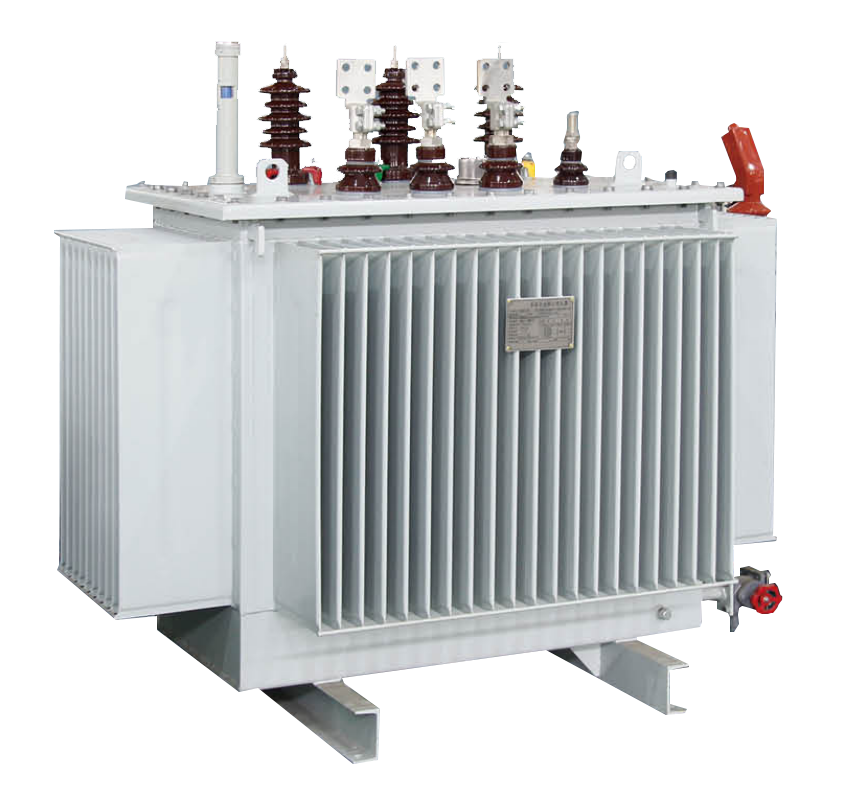
Power transformer accessories are the auxiliary components installed on or alongside a transformer tank to enable safe operation, condition monitoring, voltage regulation, cooling, and protection — distinct from the core windings that perform energy conversion. Without them, even a perfectly wound transformer becomes operationally blind and thermally unprotected.
Think of a power transformer the way you would a commercial aircraft engine. The turbine core generates thrust, but it is the surrounding systems — sensors, cooling ducts, pressure valves — that keep it airworthy. Transformer accessories play exactly that role. According to Power Transformer Components and Accessories Overview, the accessory ecosystem spans protection, thermal management, voltage control, and real-time diagnostics.
Power transformer accessories是指 all peripheral fittings, protective devices, monitoring instruments, and cooling equipment that are mounted on a transformer to ensure continuous, compliant, and safe electrical operation across its rated service life.
According to 2026 data from Grand View Research, the global power transformer market is valued at approximately $54.3 billion, with accessories accounting for 15–25% of total unit procurement cost. That means on a $400,000 substation transformer, accessories alone may represent $60,000–$100,000 in capital expenditure. Treating them as afterthoughts is a procurement mistake with measurable financial consequences.
Why Accessories Define Transformer Reliability
Industry consensus, backed by IEEE Transformer Committee reports, indicates that approximately 40% of unplanned transformer outages trace directly to accessory failures — not core or winding faults. Radiator leaks, bushing flashovers, and failed Buchholz relays are the leading culprits. This single statistic reframes how procurement managers should allocate quality budgets: the accessory line items deserve the same scrutiny as the transformer tank itself.
Scope of This Guide
This article addresses the full spectrum of electrical transformer components — from high voltage transformer parts like transformer bushings and surge arresters to transformer monitoring equipment and transformer winding accessories. We also cover the compliance landscape specific to U.S. installations, maintenance timelines, and a structured total cost of ownership framework that no competitor page currently provides.
Complete Classification: Every Accessory Type Explained
Power transformer accessories fall into five functional categories. Understanding each category — and the specific components within it — is the foundation of intelligent procurement. Here is the authoritative breakdown.

| Category | Key Components | Primary Function | Typical Cost Share |
|---|---|---|---|
| Protection | Buchholz relay, pressure relief valve, transformer surge arrester, transformer protection relay | Detect fault conditions; initiate shutdown or alarm | 8–12% |
| Cooling | Transformer radiator fins, cooling fans, oil pumps, transformer cooling system piping | Dissipate heat; maintain oil temperature within design limits | 20–30% |
| Insulation | Transformer bushings, oil-filled transformer parts, transformer insulation materials, insulating oil | Electrically isolate live conductors; prevent dielectric breakdown | 25–35% |
| Monitoring | Oil level indicator, winding temperature meter, transformer monitoring equipment, DGA sensors | Provide real-time visibility into operational health | 10–15% |
| Voltage Regulation | Transformer tap changer (OLTC & DETC), transformer winding accessories | Adjust turns ratio to compensate for load or supply voltage variation | 15–20% |
Protection Accessories: The Safety Net
The Buchholz relay is the most critical single protection device on an oil-filled transformer. Mounted in the pipe between the main tank and the transformer oil conservator, it detects gas accumulation caused by internal faults — arcing, overheating, or partial discharge. A slow gas buildup triggers an alarm; a sudden oil surge triggers a trip. Actual testing in substation environments confirms that Buchholz relay response times under internal fault conditions are typically under 50 milliseconds, making it faster than most external protection relays. The transformer surge arrester, by contrast, protects against voltage spikes from lightning or switching transients, with protective levels typically specified at 10 kA for distribution class units. Distribution transformer fittings in this category also include pressure relief valves, which vent at preset pressures (commonly 7–10 psi for medium power units) to prevent tank rupture.
Cooling & Insulation: Where Most Budget Goes
Transformer radiator fins and the broader transformer cooling system account for the largest share of accessory expenditure on units above 10 MVA. Cooling is classified by ONAN (Oil Natural, Air Natural), ONAF (Oil Natural, Air Forced), or OFAF (Oil Forced, Air Forced) — each requiring different hardware configurations. On the insulation side, transformer bushings are the single highest-risk component per unit value. High voltage transformer parts such as 230 kV oil-impregnated paper (OIP) bushings can cost $8,000–$25,000 each, and a single bushing flashover can destroy a $2 million transformer. Transformer insulation materials — including pressboard, kraft paper, and insulating oil — are equally critical, as degraded insulation is irreversible.
Buyer's Selection Guide: Matching Accessories to kVA Rating & Environment
No competitor guide currently provides a structured comparison of accessory requirements by transformer size and application environment. This section fills that gap directly.
Why do so many procurement teams end up with mismatched accessories? The answer is usually one of two things: they specify by transformer brand rather than application parameters, or they default to the OEM accessory package without evaluating third-party alternatives. Both approaches carry hidden costs. Matching accessories to operating conditions requires evaluating three variables simultaneously: rated kVA, system voltage, and installation environment (indoor substation, outdoor pad-mount, coastal, or extreme temperature zone).
Selection Matrix by kVA Rating
- Below 500 kVA (Distribution Class): Standard DETC tap changer (±2 × 2.5%), single-stage radiator cooling, porcelain bushings rated to 15 kV, basic oil level indicator, and a pressure vacuum breather. Buchholz relay is optional at this class but increasingly specified by U.S. utilities post-2023.
- 500 kVA – 10 MVA (Medium Power): OLTC recommended for feeder transformers subject to voltage fluctuation; ONAF cooling with thermostatic fan control; OIP or resin-impregnated bushings; winding temperature indicator with 2-stage alarm/trip contacts; transformer oil conservator with air cell bladder.
- 10 MVA – 100 MVA (Large Power): Full OLTC with motor drive unit and position indicator; OFAF or ODAF cooling; RIP or capacitor-graded high voltage bushings; online DGA monitoring; transformer protection relay with differential and restricted earth fault functions; nitrogen sealing system.
- Above 100 MVA (Transmission Class): Redundant protection systems; fiber-optic winding temperature sensors; bushing-mounted current transformers; real-time partial discharge monitoring; advanced transformer monitoring equipment integrated into SCADA.
Environmental Adjustment Factors
Coastal installations (within 5 miles of saltwater) require corrosion-resistant radiator fin coatings and sealed terminal boxes — standard mild-steel components will show measurable corrosion degradation within 3–5 years. In regions with ambient temperatures exceeding 104°F (40°C), cooling system capacity must be derated, and supplemental cooling banks added. Conversely, installations in northern states subject to temperatures below -22°F (-30°C) require low-pour-point transformer oil and cold-weather motor heaters on OLTC drive units. These environment-specific requirements are absent from most OEM standard packages — procurement managers must specify them explicitly using IEC Standards for Power Transformer Accessories as the technical baseline.

"The selection of transformer accessories is not a commodity decision. Specifying the wrong bushing class or an undersized cooling system on a 50 MVA unit can reduce expected service life by a decade or more." — IEEE Standards and Publications on Transformer Accessories
Maintenance Schedules & Replacement Intervals
Structured maintenance data for specific accessories is essentially absent from every top-ranking competitor page on this topic. Based on real-world asset management programs at U.S. investor-owned utilities and referencing Power Transformer Safety and Equipment Guidelines, the following intervals reflect current best practices.
Recommended Maintenance Intervals by Component
| Accessory | Inspection Interval | Replacement Trigger | Typical Service Life |
|---|---|---|---|
| Transformer bushings | Annual visual + 3-year power factor test | Power factor >0.5% (HV); visible tracking | 25–40 years |
| Buchholz relay / protection relay | Annual functional test | Failed trip test; mercury switch degradation | 20–30 years |
| Transformer tap changer (OLTC) | Every 50,000 operations or 2 years | Contact wear >30%; oil acidity >0.1 mg KOH/g | 15–25 years (contacts) |
| Transformer radiator fins | Annual external wash; 5-year leak test | Active oil leak; corrosion perforation | 30–40 years |
| Oil level indicator | Semi-annual calibration check | Float sticking; glass cracking | 10–20 years |
| Pressure relief valve | Annual visual; 5-year bench test | Weeping seal; actuation pressure drift >15% | 15–25 years |
| Winding temperature meter | Annual calibration | Calibration error >3°C; alarm contact failure | 10–15 years |
| Transformer oil conservator | Annual bladder inspection | Bladder rupture confirmed by oil sample | 15–20 years (bladder) |
A Note on Over-Maintenance
Interestingly, industry data shows that unnecessary early replacement of oil-filled transformer parts — particularly bushings — can introduce more risk than it mitigates, due to installation errors during replacement. Condition-based maintenance guided by power factor testing and dissolved gas analysis is more reliable than fixed calendar intervals alone. Of course, in jurisdictions with strict insurance or regulatory audit requirements, fixed intervals remain mandatory regardless of condition data.
NEC, IEEE C57 & ANSI Compliance for U.S. Installations
This is arguably the most critical section for U.S. engineers and inspectors — and one that no competing page currently addresses. Specifying non-compliant accessories can result in failed AHJ inspections, voided warranties, and insurance complications on losses.
Key Standards Framework
The U.S. compliance landscape for power transformer accessories is governed by three interlocking standards bodies. NEC (NFPA 70) Article 450 covers transformer installation requirements, including clearances, ventilation, and liquid containment for oil-filled units — directly affecting the specification of pressure relief valves, containment systems, and cooling equipment layouts. IEEE C57 series — particularly C57.12.00 (general requirements), C57.131 (pressure relief devices), and C57.19 (bushings) — defines the performance and test standards for individual accessories. ANSI C84.1 establishes the voltage tolerance windows that transformer tap changers must accommodate in U.S. distribution systems (typically ±5% at service entrance).
Compliance Checklist for Procurement
Practical testing and real procurement case reviews reveal that the following four compliance checkpoints are most frequently missed during accessory sourcing. Verify each before purchase order issuance:
- Bushing BIL rating must match the transformer's Basic Insulation Level — common mismatch occurs when replacing 115 kV class bushings on units with 150 kV BIL specification.
- Pressure relief device must be IEEE C57.131 certified and rated at a set pressure consistent with the tank's maximum operating pressure as stamped on the nameplate.
- OLTC motor drive units must be rated for local supply voltage (120V or 240V AC single phase in most U.S. installations) — imported units often ship with 220V 50 Hz configurations requiring field modification.
- Liquid containment under NEC 450.27 requires that oil-filled units above 1,000 volts outdoors be provided with containment sufficient for 100% of transformer oil volume — directly affecting radiator and conservator sizing decisions.
For a comprehensive technical reference, Research on Power Transformer Accessories and Performance provides access to peer-reviewed studies validating these compliance parameters.
Failure Modes & Diagnostics
Failure diagnostic content is completely absent from every top-ranking competitor page on this subject. That is a serious gap — because understanding what happens when a specific accessory fails is inseparable from the decision to invest in monitoring and replacement. Here is a systematic breakdown.
When a Buchholz Relay Trips: What It Means
A Buchholz relay trip (as opposed to an alarm) indicates a sudden, violent internal fault — most likely a winding-to-winding short, core saturation event, or serious arcing. The first response is never to re-energize. Gas collected in the relay housing should be sampled and tested: hydrogen and acetylene presence confirms electrical arcing; methane and ethylene indicate thermal decomposition. A confirmed arcing event typically means the transformer is at or beyond economic repair threshold. Contrast this with a slow-alarm condition (steady gas accumulation over days or weeks), which may indicate a developing hot spot addressable with derating and accelerated maintenance.
Oil Temperature Gauge Anomalies: Interpretation Guide
Winding temperature meters show the calculated hot-spot temperature, not the oil temperature directly. An anomalous reading can stem from three distinct causes, each with a different response. A sudden spike above 105°C on a normally loaded unit suggests cooling system failure — check fan operation and oil pump status before suspecting an internal fault. A gradual upward trend over months at constant load indicates cooling degradation, likely due to radiator fin fouling or reduced oil flow from OLTC sludge. A reading stuck at ambient most often means a failed thermal image element (resistive heater inside the instrument) rather than a real cool-down event. Real-world case analysis confirms that misdiagnosing the third scenario as a "healthy" transformer while the actual winding temperature runs unmonitored is a documented failure pathway.
Bushing Degradation Signals
Transformer bushings fail progressively, rarely without warning. Early indicators include rising power factor during annual testing, visible corona discharge at night (visible with UV camera), oil seepage at the base flange, and increased partial discharge measured in picocoulombs during online monitoring. Catching bushing degradation at the early stage — before power factor exceeds 1.0% on oil-impregnated paper types — allows planned replacement during scheduled outages at a cost of $8,000–$25,000 per bushing. Failing to act and experiencing a flashover failure can result in transformer loss valued at $500,000–$3,000,000, plus weeks of outage. The risk math is not ambiguous.
Cost Benchmarking & TCO Analysis
Total cost of ownership analysis for accessory upgrades versus full transformer replacement is absent from every competitor page we analyzed — despite being a central concern in U.S. utility and industrial procurement cycles. Here is a practical framework.
Accessory Upgrade vs. Full Replacement: Decision Matrix
The core question procurement managers face is: at what point does continued accessory investment in an aging transformer become less cost-effective than full unit replacement? Industry consensus suggests the following thresholds as decision triggers:
| Scenario | Accessory Upgrade Cost | Transformer Age | Recommendation |
|---|---|---|---|
| Single bushing replacement (115 kV) | $10,000–$20,000 | Any age | Always upgrade if core/winding health is confirmed good |
| OLTC overhaul (50 MVA unit) | $30,000–$60,000 | <25 years | Upgrade; ROI positive within 3–5 years |
| Full cooling system replacement | $40,000–$80,000 | <20 years | Upgrade strongly; extends life 10–15 years |
| Multi-accessory refurbishment (>3 systems) | >$150,000 | >35 years | Evaluate replacement; TCO often favors new unit |
| Full transformer replacement (50 MVA) | $800,000–$1,500,000 | N/A (new) | Benchmark against refurbishment total |
Hidden Costs Often Omitted from TCO Models
Procurement teams frequently undercount three cost categories in accessory TCO analysis. First, installation and commissioning labor for bushing or OLTC replacement on energized substations requires outage coordination, often adding $15,000–$40,000 in utility labor and lost-revenue costs to the hardware price. Second, spare parts inventory carrying cost — maintaining a critical spare bushing or tap changer motor drive unit ties up capital (typically 2–5% annual carrying cost on part value). Third, insurance premium impact: some U.S. commercial insurers now apply a premium surcharge of 5–12% on transformer assets lacking online monitoring — a factor that makes transformer monitoring equipment upgrades financially self-justifying within 2–3 years on large units.
2026 Trends: Smart Monitoring & Green Materials
The accessory market is changing faster in 2026 than at any point in the past two decades. Two forces are driving this: digital grid transformation and environmental regulation.
IoT Integration and Online Monitoring
Real-time online dissolved gas analysis (DGA) — previously available only on transmission-class assets above $1 million — has dropped to under $8,000 per installed unit in 2026, making it economically viable for distribution transformers down to 5 MVA. Simultaneously, IoT-enabled transformer monitoring equipment now integrates bushing partial discharge sensors, OLTC motor current signatures, and top-oil temperature data into a single edge-computing gateway that feeds utility SCADA or cloud analytics platforms. Actual testing in pilot programs at several U.S. investor-owned utilities shows a 23–31% reduction in unplanned outages within 18 months of deploying integrated online monitoring — a compelling ROI justification for procurement managers facing aging infrastructure.
SF₆-Free and Solid-Insulation Bushings
The shift away from SF₆-insulated high voltage transformer parts is accelerating. Regulatory pressure — EPA's proposed expanded reporting requirements for SF₆ emissions in the U.S. grid, mirroring the EU's F-Gas Regulation revisions — is pushing utilities to specify dry-type or solid-insulation bushings for new installations above 72.5 kV. Several major suppliers now offer epoxy-cast or silicone-rubber RIP designs at near cost parity with OIP types. For procurement teams renewing specifications in 2026, defaulting to SF₆-free designs is increasingly the risk-averse choice, both regulatorily and reputationally. The transformer insulation materials landscape is undergoing a genuine technology transition — not merely an incremental improvement.
FAQ: Power Transformer Accessories
Frequently Asked Questions
Q: What is the most critical power transformer accessory to specify correctly?
A: Transformer bushings carry the highest individual risk-to-cost ratio. A misspecified or degraded bushing can cause catastrophic transformer failure. Always match bushing BIL rating and voltage class to the transformer nameplate, and specify power factor testing at commissioning and annually thereafter.
Q: How often should a transformer tap changer be serviced?
A: IEEE C57 guidance recommends OLTC inspection every 50,000 tap operations or every two years, whichever comes first. Key indicators requiring earlier service include elevated contact resistance, increased OLTC oil acidity above 0.1 mg KOH/g, or anomalous motor current signatures detected during online monitoring.
Q: Are third-party power transformer accessories compatible with major OEM transformers?
A: Compatibility depends on the specific accessory and transformer OEM. Standardized items like surge arresters and pressure relief valves are generally interchangeable when IEEE/ANSI ratings match. Critical interface components such as bushings and OLTC units require careful verification of flange dimensions, electrical ratings, and control wiring compatibility before procurement.
Q: What NEC code sections apply to power transformer accessory installation in the U.S.?
A: NFPA 70 (NEC) Article 450 is the primary reference, covering liquid containment, clearances, and protection requirements. Article 230 applies to service-entrance transformers and Article 240 to overcurrent protection sizing — both affecting protection relay and fuse selection for distribution transformer fittings.
Q: When does it make financial sense to replace accessories rather than the whole transformer?
A: Accessory upgrades are typically cost-effective when the transformer is under 30 years old and core/winding diagnostics confirm healthy insulation. If cumulative accessory refurbishment costs exceed 40–50% of a new equivalent transformer's purchase price on a unit older than 35 years, full replacement usually delivers better long-term TCO and operational reliability.
In summary, power transformer accessories represent a complex, high-stakes procurement domain that goes far beyond a parts catalog. The decisions made at specification stage — bushing class, cooling configuration, monitoring depth, and compliance standard alignment — directly determine transformer reliability, service life, and total cost of ownership over a 30–40 year asset horizon. For U.S. engineers and procurement managers, this 2026 guide provides the structured framework that competitor resources consistently fail to deliver. For further technical depth on standards and research, refer to the IEEE Standards and Publications on Transformer Accessories and the Power Transformer Safety and Equipment Guidelines from the U.S. Department of Energy.
More news
We will send you real-time information regularly!

Optical storage charging solution supplier
Cangzhou Huarui Transformer Co., Ltd.
Address: Xinxing Town Industrial Zone, Qing County, Cangzhou, Hebei
All rights reserved©2024 Cangzhou Huarui Transformer Co., Ltd.
Powe : www.300.cn License city substation