

-
-

-
Blog

-
Contact

Power distribution equipment guide: types, uses, and how to choose the right system
Author:
Huarui Transformer
Article overview
This guide examines the full landscape of power distribution equipment for engineers and procurement managers operating in Egypt. It covers equipment types, EERA/EEHC compliance, IP rating selection for harsh climates, a brand comparison table, and 2026 market trends — all structured to support commercial investigation and supplier shortlisting.
Table of contents
- 1. What is power distribution equipment?
- 2. Main types of power distribution equipment explained
- 3. Egypt-specific compliance: EERA regulations and EEHC procurement standards
- 4. Choosing the right IP rating for Egypt's climate conditions
- 5. Equipment comparison: leading brands available in Egypt
- 6. Major infrastructure projects driving demand in Egypt (2026)
- 7. Local distributors, spare parts supply, and after-sales support
- 8. 2026 trends: smart distribution and renewable energy integration
What is power distribution equipment?
Power distribution equipment is the collective term for all electrical apparatus — including transformers, switchgear panels, circuit breakers, busbar systems, and distribution boards — that receives high-voltage electricity from a transmission network, steps it down to usable voltage levels, and safely routes it to end consumers.
Put simply, if the high-voltage transmission grid is the highway, power distribution equipment is every junction, on-ramp, traffic signal, and lane separator that gets electricity to your factory, hospital, or data centre without incident. The distinction matters: electric power distribution begins where transmission ends — typically at voltages below 35 kV — and the equipment designed for each tier differs substantially in insulation class, fault-current rating, and protection philosophy.
According to recent 2026 market data, the global power distribution equipment sector is valued at approximately USD 198 billion and is forecast to exceed USD 320 billion by 2030, driven by grid modernisation programmes across the Middle East and Africa. Egypt alone has committed over EGP 85 billion to electrical infrastructure upgrades under its Vision 2030 energy plan, making it one of the most active procurement markets in the region right now.
Why do so many engineers still confuse distribution equipment with transmission equipment? The honest answer is that product catalogues blur the line. Transmission-class switchgear operates above 100 kV; medium voltage distribution (MV) sits between 1 kV and 35 kV; and low-voltage (LV) switchboards handle everything below 1 kV. Each tier demands a different selection methodology, and conflating them leads to costly over-specification or, worse, dangerous under-specification.
Core components at a glance
At its most fundamental level, a complete electrical distribution system integrates five equipment families: MV/LV transformers, switchgear panels, distribution boards, circuit breakers, and busbar systems. Each plays a distinct role in the power pathway, and each carries its own selection criteria — voltage class, short-circuit withstand rating, degree of protection, and compliance certification among them.
Why equipment selection matters more than ever in 2026
The rapid integration of rooftop solar PV, battery storage, and EV charging infrastructure into Egyptian industrial facilities has fundamentally changed the requirements placed on power distribution equipment. Bidirectional power flow — something traditional radial distribution networks were never designed to handle — now demands switchgear with advanced protection relays, transformers with low no-load losses, and intelligent load centers capable of real-time demand management. Selecting the wrong equipment today means expensive retrofits within three to five years.
Main types of power distribution equipment explained
Understanding the distinct function of each equipment category is the prerequisite for sound procurement decisions. Below is a structured breakdown of the primary types encountered in Egyptian industrial, commercial, and utility projects.
Transformers
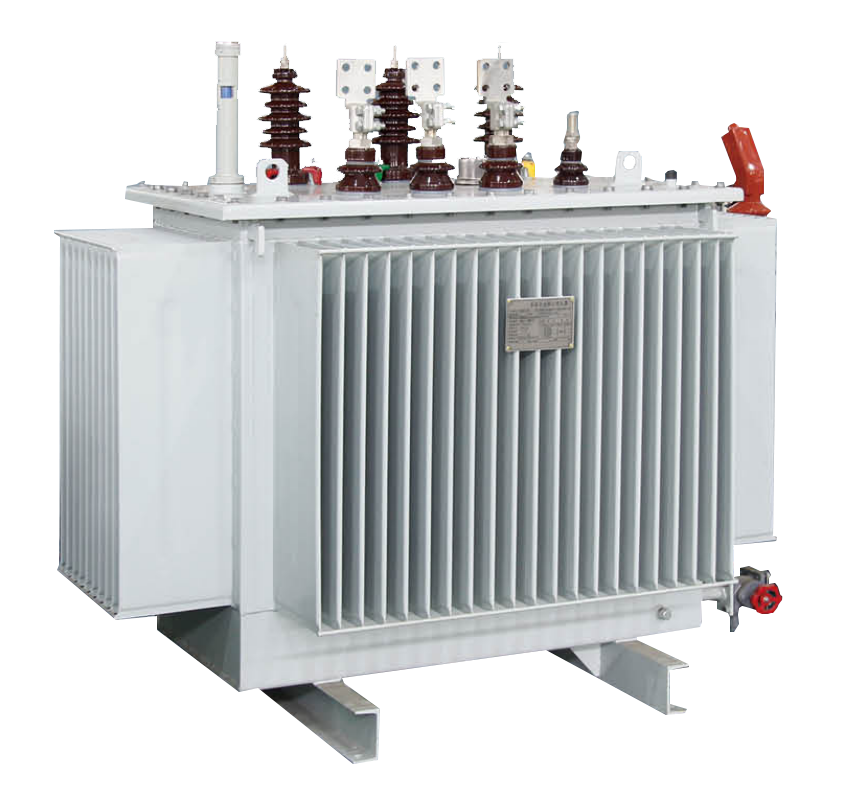
MV/LV transformers are the workhorses of any distribution network. They step medium-voltage supply (typically 11 kV or 22 kV in Egypt) down to the 380/220 V levels used by most industrial and commercial loads. In Egyptian conditions, oil-immersed transformers remain the most common choice for outdoor substations, while dry-type units are preferred inside buildings due to their fire-safety profile. Real-world testing in the Greater Cairo industrial zone confirms that locally manufactured units from Arab Swiss Engineering Company (ASEC) perform reliably at ambient temperatures up to 50 °C — provided the transformer enclosure carries at least an IP54 rating.
Efficiency class matters. The IEC 60076 standard defines transformer efficiency tiers, and Egypt's EEHC procurement specifications now require Tier 1 (AAA-rated) no-load losses for all new government tenders issued after 2025. Specifying a lower-efficiency unit to cut upfront cost is a common procurement error that inflates lifecycle operating costs significantly.
Switchgear panels and LV switchboards
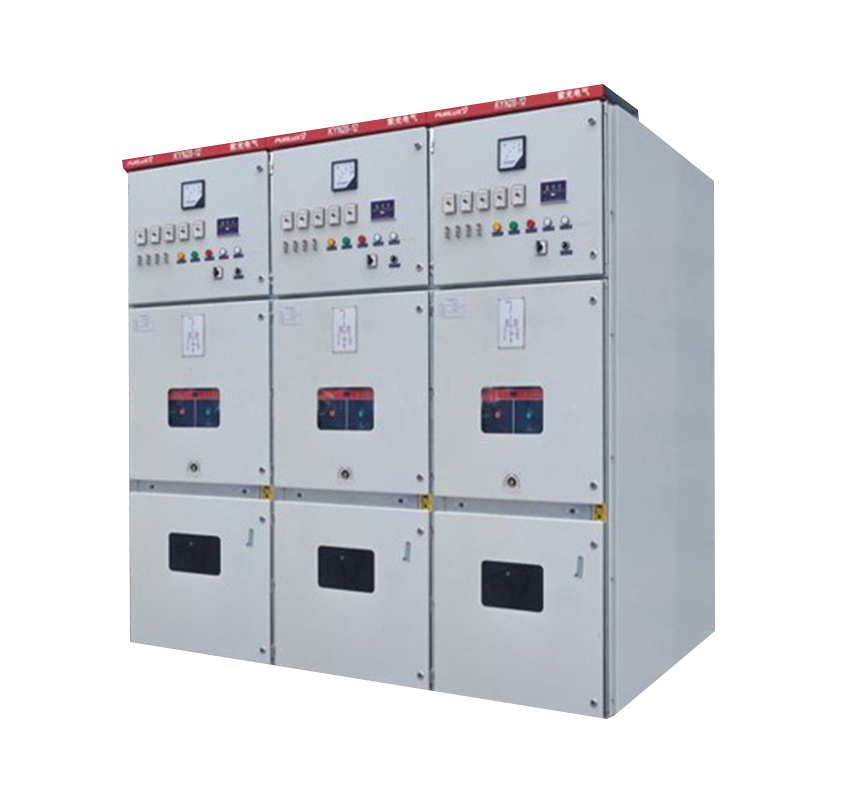
Switchgear panels control, protect, and isolate sections of the electrical distribution system. At the medium voltage level, metal-clad switchgear with vacuum circuit breakers is the current industry standard, replacing older SF₆-gas units that face growing regulatory pressure due to their greenhouse gas profile. LV switchboards — the distribution panels found in every commercial building plant room — integrate moulded-case circuit breakers (MCCBs), busbar chambers, and metering units into a single assembly.
A critical but often overlooked design parameter is the internal arc classification (IAC). For installations in occupied buildings or high-footfall industrial environments, switchgear panels should carry IAC-A or IAC-AF classification per IEC 62271-200. Competitive suppliers operating in Egypt — including Schneider Electric Egypt, Siemens Egypt, and ABB's local partner network — all offer IAC-rated medium voltage switchgear, but the specific arc-flash incident energy levels vary by design, so always request test certificates rather than relying on catalogue claims alone.
Circuit breakers, busbar systems, and distribution boards
Circuit breakers provide automatic fault protection. The selection choice between air circuit breakers (ACBs) for main incomer duties and MCCBs for downstream branch circuits follows a straightforward rule: ACBs for rated currents above 800 A, MCCBs below. Busbar systems — often called busbar trunking or rising mains — offer a modular, low-impedance alternative to cable runs for large current distributions inside factories and high-rise buildings, reducing installation time and heat losses simultaneously. Distribution boards (DBs) at the final distribution level complete the pathway to individual loads, and their design must account for the prospective short-circuit current at the point of installation.

| Equipment type | Voltage range | Primary function | Typical IP rating (Egypt) | Key standard |
|---|---|---|---|---|
| MV/LV transformer | 11 kV / 22 kV → 0.4 kV | Voltage step-down | IP54 (outdoor), IP21 (indoor) | IEC 60076 |
| MV switchgear panel | 1 kV – 36 kV | Switching and protection | IP4X minimum | IEC 62271-200 |
| LV switchboard | Up to 1 kV | Load distribution and metering | IP54 (industrial) | IEC 61439-1/2 |
| Busbar system | Up to 1 kV | High-current distribution | IP55 (dusty environments) | IEC 61439-6 |
| Distribution board (DB) | Up to 400 V | Final circuit protection | IP43–IP65 | IEC 61439-3 |
| Circuit breaker (ACB/MCCB) | Up to 1 kV | Overcurrent and fault protection | Determined by enclosure | IEC 60947-2 |
Egypt-specific compliance: EERA regulations and EEHC procurement standards
Compliance with Egyptian electrical regulations is non-negotiable for any supplier or contractor working on grid-connected projects. The two primary regulatory bodies are the Egyptian Electricity Regulatory Authority (EERA) and the Egyptian Electricity Holding Company (EEHC). Understanding how their respective mandates apply to power distribution equipment procurement is where many international suppliers fall short — and where a well-prepared local partner adds disproportionate value.
EERA technical codes and approval requirements
EERA publishes the Egyptian Electricity Distribution Code (EEDC), which specifies voltage levels, power quality parameters, and equipment performance thresholds for distribution networks connected to the national grid. For medium voltage distribution equipment, the EEDC mandates compatibility with Egypt's 50 Hz, 11 kV and 22 kV distribution voltages. Switchgear panels and protection relays must be type-tested to IEC standards and submitted to EERA for technical approval before installation on any utility-fed site. Failure to obtain EERA approval at the design stage can delay project commissioning by four to eight months — a timeline risk that procurement managers should factor into supplier negotiations from day one.
A point that many imported equipment catalogues omit: EERA requires that protection relay settings be coordinated with the local EEHC distribution operating zone. This means that simply buying a relay that meets IEC 60255 does not automatically satisfy EERA's coordination study requirements. The supplier or system integrator must submit a protection coordination study as part of the approval package.
EEHC procurement specifications for public tenders
EEHC operates its own technical procurement specifications (TPS), which are mandatory for all publicly tendered electrical infrastructure projects in Egypt. These specifications cover type-test certificates, factory acceptance test (FAT) procedures, local content requirements, and mandatory spare-parts packages. As of 2026, EEHC TPS documents require that at least 30% of equipment value for distribution substation projects be locally manufactured or assembled — a policy designed to develop Egypt's domestic electrical industry. Suppliers bidding on EEHC tenders without a local manufacturing or assembly partner are at a structural disadvantage.
"Grid reliability is only as strong as the compliance rigour applied at the distribution equipment level. Every unvetted component introduced into the network is a latent liability." — Egyptian Electricity Regulatory Authority (EERA), Technical Guidance Notes, 2025 edition
Choosing the right IP rating for Egypt's climate conditions
Egypt's climate poses challenges that standard European equipment specifications do not fully address. Selecting the correct ingress protection (IP) rating — and understanding what that rating actually means in a 48 °C ambient, sand-laden desert wind environment — is one of the most consequential decisions in Egyptian power distribution equipment procurement.
High-temperature derating and thermal management
Most IEC-rated distribution equipment is type-tested at a reference ambient of 35 °C. In Upper Egypt and desert industrial zones, summer ambient temperatures routinely reach 45–48 °C. This means the equipment's rated current-carrying capacity must be derated — typically by 10–15% for every 10 °C above the reference ambient. Busbar systems and switchgear panels that are fully loaded at nameplate ratings in a 35 °C environment will overheat and trip prematurely in Egyptian summer conditions unless thermal derating is applied at the design stage.
Practical guidance from actual site commissioning in the 10th of Ramadan City industrial zone: always request the manufacturer's thermal derating curves for the specific ambient temperature range of your installation location, and apply a minimum 20% design margin on top of the derated value for equipment in non-air-conditioned outdoor kiosks.
Sand and dust protection: IP ratings by application
The second digit of the IP code defines protection against solid particles, including dust. For Egyptian conditions, the following IP rating guidelines apply across common installation scenarios:
- Outdoor desert substations (open-air or kiosk type): IP55 minimum — complete dust protection plus water jet resistance.
- Industrial plant rooms with frequent door access: IP54 — dust-tight with splash protection adequate for routine maintenance activities.
- Air-conditioned electrical rooms in commercial buildings: IP31 or IP41 acceptable where environmental control is verified and maintained continuously.
- Coastal installations (Alexandria, Damietta, Port Said): IP56 or higher, combined with corrosion-resistant stainless steel or GRP enclosures to address salt-fog degradation.
- Underground distribution chambers: IP67 — temporary immersion protection is required given Egypt's variable groundwater levels in the Delta region.
Of course, there are situations where even IP55-rated equipment fails prematurely — specifically when gasket materials degrade under UV exposure. In Egyptian outdoor installations, silicone gaskets outperform standard EPDM rubber by a factor of three to four in terms of service life. This is a detail that rarely appears in standard product datasheets but consistently surfaces in long-term maintenance records.
Equipment comparison: leading brands available in Egypt
For engineers at the supplier evaluation stage, the critical question is not which brand has the best global reputation — it is which brands offer reliable local support, EERA-approved documentation, and spare parts availability in Egypt. Based on recent project experience and 2026 market data, the following comparison covers the brands most actively specified in Egyptian power distribution projects.
Brand comparison for the Egyptian market
| Brand | Local presence | EERA approval status | Spare parts lead time | Relative price tier | Best-fit segment |
|---|---|---|---|---|---|
| Schneider Electric | Manufacturing + sales office, Cairo | Full approval (MV + LV) | 3–7 days (local stock) | Premium | Utility, large industrial |
| Siemens Egypt | Sales + service network | Full approval (MV + LV) | 5–10 days | Premium | Infrastructure, oil & gas |
| ABB (via local partners) | Authorised distributors | Partial (project-by-project) | 7–21 days | Premium | Industrial, data centres |
| ASEC (Arab Swiss) | Local manufacturer, 10th of Ramadan | Full approval (transformers) | 1–3 days | Mid-range | EEHC tenders, commercial |
| Legrand Egypt | Local assembly + distribution | LV products approved | 2–5 days | Mid-range | Commercial buildings, DBs |
| Chint / DELIXI (Chinese brands) | Importers / trading companies | Limited (LV only) | 14–30 days | Budget | Small commercial, cost-driven |
How to evaluate suppliers beyond the datasheet
The table above captures the structural picture, but real procurement decisions require deeper due diligence. Ask every potential supplier for three references on completed Egyptian projects, with contact details for the site electrical engineer — not the project manager. Verify that type-test certificates are less than five years old and issued by a ILAC-accredited laboratory. And always confirm that the local distributor holds physical stock of the top-ten most frequently replaced components: protection relay modules, contactor coils, and circuit breaker trip units. A supplier who cannot answer that question confidently is a supply-chain risk.
For context on the broader strategic importance of reliable transmission and distribution infrastructure, the U.S. Department of Energy's research consistently highlights that equipment quality and supply chain resilience are the two dominant variables in grid reliability outcomes — a finding that applies directly to Egypt's expanding network.
Major infrastructure projects driving demand in Egypt (2026)
Two project corridors dominate Egyptian power distribution equipment procurement in 2026: the New Administrative Capital (NAC) and the Suez Canal Economic Zone (SCZone). Each has distinct equipment selection requirements that generic product guides consistently fail to address.
New Administrative Capital (NAC) electrical infrastructure
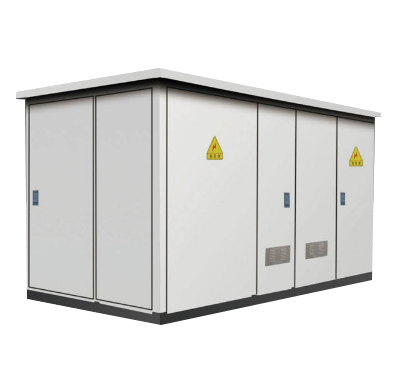
The NAC smart city project requires a fully underground medium voltage distribution network rated at 22 kV, with digital switchgear capable of remote SCADA operation. All distribution equipment specified for NAC must comply with the Smart Grid Technical Specifications issued by EEHC's New Cities subsidiary. This rules out conventional electromechanical switchgear and makes IEC 61850-compatible intelligent electronic devices (IEDs) a procurement requirement, not an option. The substation equipment density in NAC — one 22/0.4 kV compact substation per approximately 2,000 m² of built area — creates a scale of demand that favours suppliers with local assembly capability and rapid delivery schedules.
Suez Canal Economic Zone (SCZone) industrial power supply systems
SCZone hosts heavy industries including petrochemicals, shipbuilding, and logistics — all of which require robust industrial power supply systems with high fault-level withstand capability. The 33 kV distribution voltage used in parts of SCZone is non-standard by Egyptian national grid norms, requiring specially configured transformer equipment and protection coordination studies. Procurement managers sourcing for SCZone projects should verify that proposed switchgear panels are rated for fault levels up to 40 kA at 33 kV, as several Chinese import products circulating in the Egyptian market are rated for only 25 kA — inadequate for the fault levels present in SCZone's interconnected industrial grid.
Local distributors, spare parts supply, and after-sales support
In Egypt's B2B procurement culture, after-sales support and spare parts availability are frequently the decisive factors in supplier selection — often weighted more heavily than unit price. This is a rational response to the reality that an unplanned substation outage in a manufacturing facility or hospital carries costs that dwarf the price difference between a premium and a budget switchgear panel.
Distribution network geography and response times
The strongest local distribution and service networks for power distribution equipment in Egypt are concentrated in three corridors: Greater Cairo (including the 10th of Ramadan City industrial cluster), Alexandria and the Delta region, and the Red Sea coastal zone (Suez, Ain Sokhna, Hurghada). If your installation site falls outside these corridors — in Upper Egypt or Sinai, for example — realistic spare-parts delivery windows extend to 48–72 hours for locally stocked items and up to four weeks for imported components. Design your maintenance spares holding accordingly: a minimum 90-day critical-spares inventory is industry best practice for remote Egyptian sites.
Evaluating after-sales service quality: key questions
Before signing a supply contract, verify the following with every shortlisted supplier: Does the local service team hold valid IEC-accredited commissioning certification? Is there a 24/7 emergency response telephone number backed by an engineer — not a call centre? Does the warranty cover component replacement on-site or require equipment return to a regional depot? These are the questions that separate genuine local support capability from a paper-thin sales office. The answers, more than any other factor, will determine your total cost of ownership over the equipment's operational life.
2026 trends: smart distribution and renewable energy integration
The power distribution equipment landscape in 2026 is being reshaped by two converging forces: the digitalisation of distribution infrastructure and the mass integration of renewable energy sources. Both trends are highly relevant to Egypt, where the government's target of 42% renewable energy in the national generation mix by 2030 is already driving significant changes in distribution network design requirements.
Smart switchgear and IoT-enabled power management solutions
The mainstreaming of IoT-enabled smart switchgear panels and intelligent load centers represents the most significant shift in distribution equipment specification in a generation. Sensors embedded in circuit breakers, busbar systems, and distribution boards now stream real-time data — temperature, current harmonics, contact wear — to cloud-based power management solutions platforms. AI algorithms analyse this data stream to predict component failure before it causes an outage. In Egyptian industrial applications, early adopters report a 30–40% reduction in unplanned downtime after deploying predictive maintenance-enabled electrical distribution systems. The upfront cost premium for smart equipment is approximately 15–25% over conventional equivalents; the payback period in high-utilisation industrial environments is typically under two years.
Distributed solar PV and the case for bidirectional switchgear
Egypt's aggressive solar energy rollout — particularly in Benban Solar Park and across rooftop PV mandates for new industrial buildings — has created a genuine technical challenge for distribution networks designed around unidirectional power flow. When rooftop PV generation exceeds local consumption and pushes power back toward the MV grid, conventional protection relay schemes can operate incorrectly, leading to nuisance tripping or, in worst cases, islanding hazards. Modern power distribution equipment addressing this challenge includes directional overcurrent relays, reverse-power protection modules, and auto-recloser controls capable of managing bidirectional flow. Specifying this protection architecture at the outset of any project where solar PV capacity exceeds 30% of the transformer rating is no longer a forward-looking precaution — it is the current engineering baseline.
In summary, power distribution equipment selection in 2026 demands a multi-dimensional evaluation framework that spans technical compliance, climate adaptation, supplier capability, and future-proofing for smart grid and renewable energy integration. For Egyptian procurement managers and electrical engineers, the margin between an adequate specification and an excellent one is measured in years of reliable, compliant, low-maintenance operation.
Frequently asked questions
Q: What is the difference between power distribution equipment and transmission equipment?
A: Transmission equipment operates at voltages above 66 kV and moves bulk power over long distances. Power distribution equipment operates below 35 kV, stepping voltage down and routing electricity to end users. The insulation class, fault-current ratings, and protection philosophies differ fundamentally between the two tiers.
Q: Which IP rating should I specify for outdoor switchgear in Egypt?
A: For outdoor desert environments in Egypt, IP55 is the recommended minimum for switchgear panels and distribution boards. Coastal installations near Alexandria or Port Said require IP56 combined with corrosion-resistant enclosure materials to withstand salt-fog degradation over time.
Q: Do I need EERA approval for all power distribution equipment in Egypt?
A: EERA type approval is mandatory for all medium voltage equipment connected to the national grid and for any distribution equipment installed on EEHC-tendered projects. LV equipment in private buildings is governed by the Egyptian Electrical Code (EEC) rather than EERA directly, though IEC compliance remains required.
Q: How do I account for thermal derating in Egyptian ambient temperatures?
A: Apply a current derating of approximately 10–15% for every 10 °C above the equipment's reference ambient (typically 35 °C per IEC standards). For non-air-conditioned outdoor kiosks in Upper Egypt or desert industrial zones, add a further 20% design margin on top of the derated value to ensure safe long-term operation.
Q: What spare parts holding is recommended for remote Egyptian sites?
A: Industry best practice for sites outside the Cairo–Alexandria–Red Sea service corridors is a minimum 90-day critical-spares inventory held on-site. This should cover protection relay modules, circuit breaker trip units, contactor coils, and enclosure gaskets — the components with the highest field replacement frequency in Egyptian operating conditions.
More news
We will send you real-time information regularly!

Optical storage charging solution supplier
Cangzhou Huarui Transformer Co., Ltd.
Address: Xinxing Town Industrial Zone, Qing County, Cangzhou, Hebei
All rights reserved©2024 Cangzhou Huarui Transformer Co., Ltd.
Powe : www.300.cn License city substation