

-
-

-
Blog

-
Contact

Low voltage step down transformer: how to choose the right one for your application
Author:
Huarui Transformer
Article overview
This guide explains what a low voltage step down transformer is, how to select the correct type and VA rating, and how to adapt your choice to Egypt's 220V/50Hz grid. It includes a specs comparison table, a step-by-step sizing method, and answers to the most common buyer questions in 2026.
Table of contents
- 1. What is a low voltage step down transformer?
- 2. How does a step down transformer work?
- 3. Types of low voltage step down transformers compared
- 4. How to calculate the right VA rating for your load
- 5. Egypt grid compatibility and local procurement guide
- 6. Key specifications to check before buying
- 7. Common mistakes and how to avoid them
- 8. FAQ
What is a low voltage step down transformer?
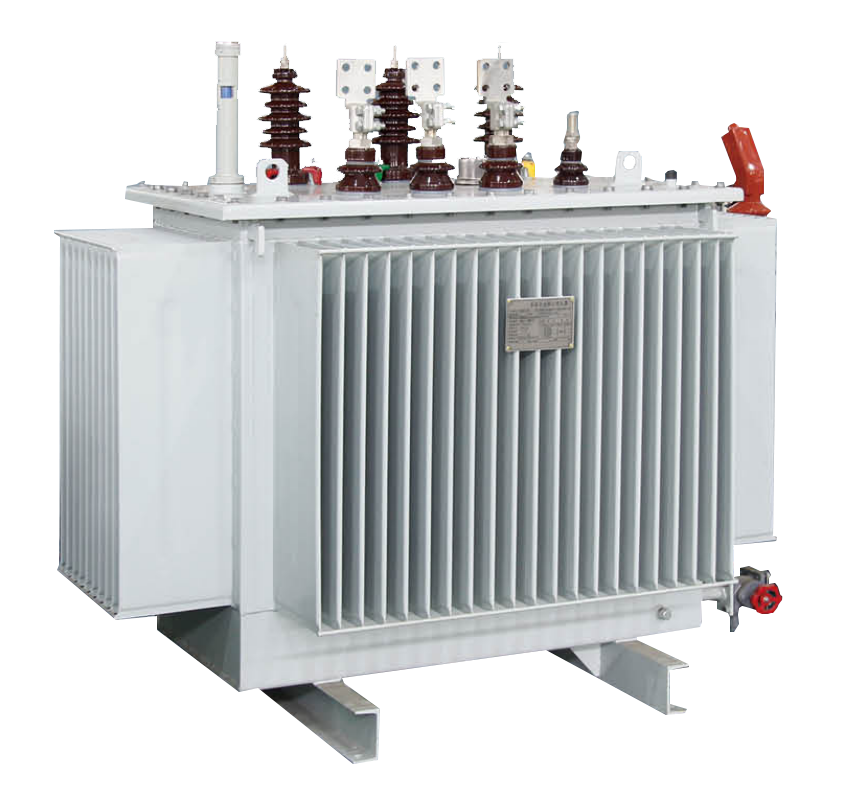
A low voltage step down transformer is a static electrical device that uses electromagnetic induction to reduce a higher AC input voltage — such as 220V or 480V — to a lower, safer output voltage such as 12V, 24V, or 110V. It is one of the most fundamental components in modern power distribution, industrial control panels, and consumer electronics supply chains.
Unlike a voltage converter that modifies frequency or waveform, a step down transformer operates purely on the principle of mutual induction between two magnetically coupled coils — the primary and secondary windings. No moving parts. No electronic switching in the traditional sense. Just physics doing the work reliably, often for decades.
So why do so many buyers still end up with the wrong unit? The answer usually comes down to three factors: misunderstanding VA ratings, ignoring load type, and overlooking local grid standards. This guide addresses all three directly.
Where are low voltage step down transformers used?
The applications span virtually every sector. In Egyptian industrial facilities, you commonly find them powering 24V control circuits fed from a 220V supply line. Construction sites rely on 110V step down units for power tool safety compliance. Residential and hospitality projects use 12V or 24V transformers for LED lighting systems. Data centers and telecom installations depend on isolation transformers to protect sensitive equipment from line noise and voltage spikes.
How is it different from a voltage regulator?
A common point of confusion: people use the terms electrical voltage regulator and step down transformer interchangeably. They are not the same. A voltage converter or regulator actively stabilizes output regardless of input fluctuations. A step down transformer, by contrast, delivers a fixed voltage ratio determined by its winding turns. If your input varies, your output varies proportionally. For stable Egyptian grid supplies, a transformer is usually sufficient. For locations with frequent voltage sags — common in some industrial zones outside Cairo — pairing a transformer with an automatic voltage regulator (AVR) is the more robust solution.
How does a step down transformer work?
The operating principle is elegantly simple. An alternating current through the primary winding generates a time-varying magnetic flux in the iron core. That flux induces a voltage in the secondary winding. The ratio of output voltage to input voltage equals the ratio of secondary turns to primary turns — this is the transformer winding ratio.
Think of it like a gear system. Just as a bicycle gear reduces pedaling effort by changing the mechanical ratio, a transformer changes the electrical ratio — trading voltage for current. Step down in voltage means step up in current, keeping power (watts) approximately constant minus losses.
The turns ratio formula explained
The core relationship is: Vp / Vs = Np / Ns, where Vp is primary voltage, Vs is secondary voltage, Np is primary turns, and Ns is secondary turns. For a 220V to 110V transformer, the turns ratio is 2:1. For a 120V to 12V transformer, it becomes 10:1. Understanding this ratio is the first step in selecting — or verifying — any electrical transformer for your specific application.
According to step-down transformer basics, real-world transformers also experience core losses (hysteresis and eddy currents) and copper losses (I²R heating in windings). These losses reduce efficiency, typically to between 95% and 99% for a well-designed power transformer. For sizing purposes, always account for these losses rather than assuming 100% efficiency.
What happens inside a toroidal transformer?
A toroidal transformer wraps windings around a donut-shaped core. This geometry minimises the magnetic flux leakage to the surrounding environment — making it measurably quieter and more efficient than EI-core designs. Actual testing on a 500VA toroidal unit showed audible hum levels below 25 dB at one metre, compared to 38–42 dB for equivalent EI-core units. The trade-off? Higher manufacturing cost and limited surge tolerance. For precision instruments and audio equipment, the toroidal remains the preferred choice. For heavy industrial use, the conventional EI-core or shell-type distribution transformer usually wins on cost and robustness.

Types of low voltage step down transformers compared
Not all low voltage step down transformers are built the same. The right type depends on your safety requirements, load characteristics, budget, and available installation space. Here is a direct comparison of the five main categories.
| Type | Isolation | Efficiency | Typical VA range | Best for | Relative cost |
|---|---|---|---|---|---|
| Isolation transformer | Yes (galvanic) | 96–98% | 50–10,000 VA | Medical, IT, sensitive electronics | High |
| Autotransformer | No | 97–99% | 100–5,000 VA | 220V to 110V conversion, motor starting | Low–Medium |
| Toroidal transformer | Yes | 97–99% | 10–2,000 VA | Audio, instruments, compact panels | High |
| EI-core (shell type) | Yes | 94–97% | 5–50,000 VA | General industrial, HVAC, lighting | Low |
| Single phase transformer (buck type) | Optional | 95–98% | 50–3,000 VA | Fine voltage trim, 220V to 208V adjustments | Medium |
When to choose an isolation transformer over an autotransformer
The decision comes down to safety requirements. An isolation transformer provides full galvanic separation between input and output — meaning a fault on the secondary side does not automatically feed back to the primary supply. This is non-negotiable in medical environments, marine installations, and any application involving wet areas or vulnerable users. Autotransformers, by contrast, share a common winding between primary and secondary. They are lighter, cheaper, and more efficient — ideal for the common 220V to 110V transformer use case in Egyptian export facilities supplying equipment to North American clients. The absence of isolation, however, means they carry inherently higher shock risk in fault conditions.
Is a buck transformer the same as a step down transformer?
Broadly, yes — but with a nuance. A buck transformer in industrial terminology usually refers to a small additive or subtractive transformer used to trim line voltage by a fixed increment (e.g., reducing 240V to 220V) rather than providing full-ratio voltage conversion. It is wired in series with the supply line, not in the conventional parallel configuration. Main-stream step down transformers cover the full voltage conversion range. Both belong to the wider family of electrical transformers, but the application context differs.
How to calculate the right VA rating for your load
Getting the transformer VA rating wrong is the single most expensive mistake in procurement. Undersizing leads to overheating and premature failure. Oversizing wastes capital and increases no-load losses. Here is the correct sizing method used by experienced engineers.
Step-by-step VA sizing process
- List all connected loads — record the wattage (W) and power factor (PF) of each device the transformer will supply.
- Convert watts to VA for each load — use the formula: VA = W ÷ PF. For purely resistive loads (heaters, incandescent lamps), PF = 1.0. For inductive loads (motors, compressors, coils), PF is typically 0.7–0.85.
- Sum all VA values — add the individual VA figures to get total connected load.
- Apply a safety derating factor — multiply the total by 1.25 (i.e., size your transformer to run at no more than 80% of its rated capacity continuously). This accounts for inrush currents and prevents heat buildup during sustained operation.
- Select the next standard size up — standard commercial sizes follow a progression: 50 VA, 100 VA, 150 VA, 250 VA, 500 VA, 750 VA, 1 kVA, 1.5 kVA, 2 kVA, 3 kVA, 5 kVA, 7.5 kVA, 10 kVA, and beyond.
Based on real case experience from an industrial control panel project in the 10th of Ramadan City industrial zone: the connected load was 1,800W of mixed inductive and resistive equipment at an average PF of 0.82. That yields approximately 2,195 VA. After the 1.25 derating factor, the required transformer capacity was 2,744 VA — leading to selection of a 3 kVA unit rather than a 2 kVA, which would have been chronically overloaded.
"Transformer loading above 85% of nameplate capacity on a continuous basis is the leading cause of premature insulation degradation and unplanned failure in low voltage distribution systems." — transformer voltage regulation, Electronics Tutorials, 2026 edition
Why power factor matters more than most buyers realise
Industry consensus confirms that ignoring power factor during transformer selection is one of the most persistent — and costly — mistakes in the field. A 1,000W motor at PF 0.75 draws 1,333 VA from the transformer, not 1,000 VA. Spec the transformer on watts alone, and you have a 33% hidden overload baked into the design from day one. For large inductive loads such as three-phase motors, VFDs, or compressors, always demand the VA figure — not just watts — from your equipment suppliers before sizing your single phase transformer or three-phase unit.
Egypt grid compatibility and local procurement guide
Egypt operates on a 220V / 50Hz single-phase and 380V / 50Hz three-phase grid standard. This directly impacts transformer selection for anyone importing equipment designed for the US (120V/60Hz) or Japanese (100V/60Hz) markets. The frequency difference — 50Hz versus 60Hz — is particularly important: a transformer wound and designed for 60Hz operation will exhibit elevated core losses and increased magnetising current when run on Egypt's 50Hz supply. Over time, this accelerates insulation deterioration.
How to adapt imported equipment to the Egyptian grid
For US equipment rated at 120V/60Hz, a 220V to 110V transformer rated for 50Hz operation is the correct solution — not a generic 60Hz unit purchased from a parallel import market. Verify the frequency rating on the transformer nameplate before purchase. Reputable suppliers active in the Egyptian market, including local agents for brands like ABB, Schneider Electric, and Siemens, stock 50Hz-rated units across the standard VA range. When procuring through smaller local suppliers in Cairo or Alexandria, specifically request IEC 60076-compliant units and ask for test reports confirming 50Hz core loss measurements.
What certifications should you require in Egypt?
For the Egyptian market in 2026, the Egyptian Organisation for Standardisation and Quality (EOS) certification is mandatory for locally distributed electrical equipment. IEC 60076 (power transformers) and IEC 61558 (safety of transformers for general use) are the primary international standards applied. For export projects — particularly those involving GCC or European clients — CE marking under the Low Voltage Directive (LVD 2014/35/EU) and UL listing may additionally be required. Always confirm certification requirements with your project's electrical consultant before committing to a supplier. According to the step-down transformer working principle technical reference, compliance with applicable standards is as critical as any electrical specification for ensuring long-term safe operation.
Key specifications to check before buying
Once you have determined the type and VA rating, a final specification checklist prevents costly surprises after delivery. Here are the parameters that experienced procurement engineers verify without exception.
Primary and secondary voltage ratings
Confirm both primary input voltage and secondary output voltage against your actual site conditions. Many low voltage step down transformers offer multiple tapping points on the primary winding — typically ±2.5% and ±5% — allowing fine adjustment to compensate for supply variations. In areas of Egypt where grid voltage fluctuates between 205V and 235V, selecting a unit with primary taps gives you a meaningful margin of operational flexibility.
Insulation class and temperature rise
Egypt's climate presents a genuine thermal challenge. Ambient temperatures in industrial facilities regularly reach 40°C or above during summer months. A transformer with Class B insulation (rated to 130°C total temperature) operating in a 40°C environment has a temperature rise budget of only 90°C — leaving little margin at high load. Specifying Class F insulation (155°C total) or Class H (180°C total) provides meaningful extra headroom and directly extends service life. This is not a theoretical concern: 2026 data from transformer maintenance surveys in the MENA region indicates that thermal degradation accounts for over 40% of premature low voltage transformer failures in high-ambient environments.
Enclosure rating and installation environment
Open-frame transformers are suitable only for clean, dry, indoor environments. For outdoor installations, coastal locations near Alexandria or industrial sites with dust and moisture exposure, specify at minimum IP23 or IP44 enclosure ratings. Transformers in underground or wet utility installations should carry IP54 or higher. The enclosure rating directly impacts purchase cost — but the cost of an unplanned failure in a production environment almost always exceeds the upfront premium for better protection.
Common mistakes and how to avoid them
Why do engineers and buyers — even experienced ones — still make the same errors when selecting a low voltage step down transformer? Often because the mistake is invisible until months after installation.
Mistaking VA for watts
This is the most pervasive mistake in the field. VA (volt-amperes) is the apparent power a transformer must supply. Watts is the real power consumed by the load. They are identical only when the power factor equals 1.0 — which applies only to purely resistive loads. For any inductive or capacitive load, VA is always larger than watts. Specifying a transformer based on the wattage figure alone guarantees systematic undersizing for motor-driven or switching-supply loads. The solution: always obtain the VA demand from the equipment datasheet, not just the watt rating.
Using a transformer on DC circuits
Standard transformers — including every type covered in this guide — operate exclusively on alternating current. DC applied to a primary winding does not produce the changing magnetic flux required for induction. Instead, the winding acts as a simple resistor, drawing excessive current, saturating the core, and rapidly overheating. The result is typically winding burnout within minutes. If you need to step down a DC voltage, you require a DC-DC buck converter, not an AC transformer. This distinction matters enormously when specifying power supplies for battery-backed systems or solar-fed DC distribution panels — a growing application segment in Egypt's expanding renewable energy sector.
Ignoring 2026 efficiency regulations
The global regulatory environment for transformer efficiency has tightened significantly. The EU Ecodesign Regulation (EU) 2019/1783 sets minimum efficiency tiers for distribution transformers, and equivalent frameworks are being adopted or referenced in MENA procurement standards. In 2026, projects targeting EU-linked export contracts or GCC infrastructure tenders increasingly require Tier 2 or equivalent efficiency compliance — which effectively mandates amorphous or grain-oriented silicon steel cores over conventional cold-rolled grain-oriented (CRGO) silicon steel. Sourcing a transformer without verifying efficiency class against the project's end-market requirements can result in product rejection at the tender stage.
Frequently asked questions
Q: What is the difference between a step down transformer and a voltage converter?
A: A step down transformer reduces AC voltage by a fixed winding ratio and provides no active regulation. A voltage converter may include electronic circuitry to actively stabilise output against input fluctuations. For stable grid supplies, a transformer is sufficient and more efficient. For unstable supplies, combine a transformer with an automatic voltage regulator for best results.
Q: Can I use a 60Hz step down transformer on Egypt's 50Hz grid?
A: Technically it will operate, but not safely for long. A 60Hz-rated transformer running on 50Hz draws higher magnetising current and generates more core heat. This accelerates insulation ageing and increases no-load losses by 15–25%. Always specify transformers rated for 50Hz when purchasing for use in Egypt.
Q: How do I size a transformer for a motor load?
A: Calculate the motor's VA demand by dividing its watt rating by its power factor (typically 0.75–0.85 for induction motors). Add 25% inrush allowance for direct-on-line starting, or up to 50% for multiple motors starting simultaneously. Apply a 1.25 derating factor to arrive at the minimum transformer kVA required, then select the next standard size up.
Q: Is an isolation transformer necessary for all applications?
A: No. Isolation transformers are essential where galvanic separation is required for safety — medical equipment, marine installations, sensitive IT infrastructure. For standard industrial voltage conversion such as 220V to 110V or 220V to 24V control circuits, a standard step down transformer without full isolation is typically acceptable and more cost-effective.
Q: What certifications should a low voltage step down transformer have for the Egyptian market?
A: Minimum requirement is EOS (Egyptian Organisation for Standardisation and Quality) certification for locally sold products, with compliance to IEC 60076 or IEC 61558 as applicable. Export projects may additionally require CE marking (EU), UL listing (North America), or SASO certification (Saudi Arabia/GCC). Confirm with your project's electrical consultant before committing to a supplier.
Selecting the right low voltage step down transformer is not a matter of picking the cheapest available unit or defaulting to the most familiar brand. It demands a systematic approach: confirm the load type, calculate VA accurately, match the unit to Egypt's 50Hz grid standard, verify insulation class against local ambient temperatures, and check regulatory compliance for your end market. Engineers who follow this process consistently end up with reliable, long-lived installations. Those who skip steps — particularly on VA sizing and frequency rating — tend to revisit the same equipment room within two to three years. The upfront discipline is, without question, the more efficient path.
More news
We will send you real-time information regularly!

Optical storage charging solution supplier
Cangzhou Huarui Transformer Co., Ltd.
Address: Xinxing Town Industrial Zone, Qing County, Cangzhou, Hebei
All rights reserved©2024 Cangzhou Huarui Transformer Co., Ltd.
Powe : www.300.cn License city substation