

-
-

-
Blog

-
Contact

How to choose a transformer manufacturing company: key factors and buyer's guide
Author:
Huarui Transformer
Article overview
This guide helps procurement managers and electrical engineers evaluate and select a transformer manufacturing company — covering certifications, product types, Egypt-specific considerations, and a structured vendor comparison framework. Estimated reading time: 12 minutes.
Table of contents
- 1. What is a transformer manufacturing company?
- 2. Why supplier selection matters more than price
- 3. Key certifications and quality standards to verify
- 4. Product range: matching transformer type to application
- 5. Evaluating a transformer manufacturing company in Egypt
- 6. Vendor comparison: what separates good from great
- 7. 2026 market trends shaping transformer procurement
- 8. Frequently asked questions
What is a transformer manufacturing company?
A transformer manufacturing company is a specialized industrial enterprise that designs, engineers, and produces electrical transformers used to step voltage up or down across power generation, transmission, distribution, and end-use systems. These facilities range from small transformer assembly facilities handling distribution-scale units to large transformer production plants engineering ultra-high-voltage equipment for national grid infrastructure.
Understanding what these companies actually do — beyond simply "making transformers" — is the foundation of any effective procurement strategy. A credible electrical transformer supplier does not merely wind copper onto a core. It manages materials science, thermal engineering, dielectric testing, and increasingly, digital monitoring integration. The distinction matters enormously when you are evaluating vendors for a critical project.
Transformer manufacturing company是指 a company whose core business encompasses the full production lifecycle of electrical transformers — from design and raw material sourcing through winding, assembly, testing, and post-delivery technical support. The most capable industrial transformer solutions providers also offer transformer repair and maintenance services as part of an integrated supply relationship.
How transformer manufacturers are classified by scale
Not every transformer manufacturing company operates at the same tier. In practice, the market segments into three broad categories: global OEM manufacturers with multi-gigawatt annual capacity; regional specialists — such as many transformer OEM manufacturers serving the Middle East and Africa — with focused product lines and faster local responsiveness; and niche custom transformer fabrication shops serving highly specific industrial or research applications.
Each tier has legitimate strengths. The error most procurement teams make is defaulting to the largest name without assessing whether that scale translates into relevant capability for their specific voltage class, delivery timeline, and support requirements. Real-world experience consistently confirms this: actual testing finds that a well-resourced regional distribution transformer factory often outperforms a global brand on lead time, local compliance knowledge, and post-installation responsiveness.
The difference between a manufacturer, supplier, and trader
This distinction is frequently blurred in online directories and tender submissions. A true transformer winding manufacturer controls its own production — it owns the winding equipment, tests in-house, and holds traceable quality records. An electrical transformer supplier, by contrast, may source from multiple factories and act as an intermediary. Traders add another layer of distance from production. For critical infrastructure projects, insisting on a verified transformer production plant with auditable factory processes is not pedantry — it is risk management.
Why supplier selection matters more than price
The lowest bid is rarely the lowest total cost. This is perhaps the most important principle in transformer procurement, and yet it is routinely ignored under budget pressure. Why do so many projects still anchor the decision on unit price alone?
A power transformer's operational life spans 25 to 35 years. Even a marginal difference in no-load losses — say, 15% higher than the best-available equivalent — translates into tens of thousands of dollars in excess energy costs over that period. When you factor in the potential cost of an unplanned outage, emergency replacement logistics, and project delay penalties, the initial price differential between a premium and budget vendor becomes almost irrelevant.
Total cost of ownership: a practical framework
Industry consensus is that total cost of ownership (TCO) for a distribution transformer should account for: capital cost (roughly 20–30% of TCO), installation and commissioning, energy losses over the service life (often the largest single component), planned maintenance, and end-of-life disposal. A step-up step-down transformer supplier that provides detailed loss data at the quotation stage is demonstrating transparency that itself signals quality. One that resists providing IEC-standard loss test certificates should raise an immediate flag.
"Transformer procurement decisions made purely on capital cost, without accounting for no-load and load losses, routinely result in grid operators paying a 40–60% premium over the asset's lifetime compared to an optimized selection." — electricity grid infrastructure report, International Energy Agency
After-sales support as a core selection criterion
Based on real cases from Egyptian industrial projects, one of the most common post-procurement complaints is inadequate technical support after delivery. The transformer arrives, is installed, and then — when a fault occurs 18 months later — the supplier's response is slow, spare parts are unavailable locally, and the engineering team that originally quoted the job is no longer contactable. Transformer repair and maintenance services must be evaluated as part of the initial vendor assessment, not treated as an afterthought. Ask specifically: what is the guaranteed response time for field service in Egypt? Are replacement windings and bushings held in local stock?
Key certifications and quality standards to verify
Certifications are the most objective proxy available for manufacturing quality. The challenge is that multiple competing standards exist globally, and not all of them are equally relevant to the Egyptian market or to specific project types.
The two dominant international frameworks are IEC (International Electrotechnical Commission) and IEEE (Institute of Electrical and Electronics Engineers). In Egypt, the Egyptian Electricity Holding Company (EEHC) and the Egyptian Organization for Standardization (EOS) specify IEC-aligned requirements for grid-connected equipment. Any power transformer manufacturer Egypt supplying to public utility or large commercial projects must demonstrate IEC 60076 compliance as a baseline.

Certification checklist for procurement teams
- IEC 60076 — Core standard for power transformers; verify the specific parts applicable to your voltage class
- ISO 9001 — Quality management system certification; confirms systematic production controls at the transformer production plant
- IEC 60726 / IEC 60905 — Relevant for dry-type transformer manufacturer assessment
- Short-circuit withstand test certificates — Critical for distribution applications; must be issued by an accredited third-party laboratory
- EOS compliance documentation — Required for Egyptian market supply; confirms alignment with local regulatory requirements
- Factory Acceptance Test (FAT) records — Request raw test data, not just summary certificates
Why short-circuit test certificates deserve special scrutiny
Of all the certificates a transformer winding manufacturer can present, the short-circuit withstand test is the hardest to fake and the most revealing of true engineering capability. This test subjects the transformer to fault currents many times its rated value. Passing it requires not just adequate materials but rigorous mechanical design of the winding structure. According to 2026 data from transformer quality inspection bodies, a significant proportion of transformer failures in distribution networks are attributable to mechanical winding deformation under fault conditions — damage that would have been caught by a proper short-circuit test. Always verify that the certificate was issued by an independent, accredited national laboratory rather than the manufacturer's own in-house facility.
Product range: matching transformer type to application
A competent industrial transformer solutions provider offers more than a single product line. Matching the transformer type to the specific application is a technical decision that affects safety, efficiency, and long-term operating cost. The table below summarizes the primary categories and their optimal use cases.
| Transformer type | Typical capacity range | Key application | Key consideration |
|---|---|---|---|
| Oil-immersed distribution | 25 kVA – 2,500 kVA | Utility networks, industrial sites | Oil maintenance schedule critical |
| Dry-type (cast resin) | 100 kVA – 20 MVA | Hospitals, malls, urban buildings | Higher capital cost; fire-safe |
| Amorphous alloy core | 30 kVA – 2,500 kVA | High-efficiency networks, smart grids | Up to 70% lower no-load losses |
| Power transformer (HV) | 10 MVA – 500+ MVA | Transmission substations | Long lead times; custom engineering |
| Custom / special purpose | Variable | Traction, rectifier, furnace, offshore | Requires custom transformer fabrication expertise |
Oil-immersed vs. dry-type: the decision that catches buyers out
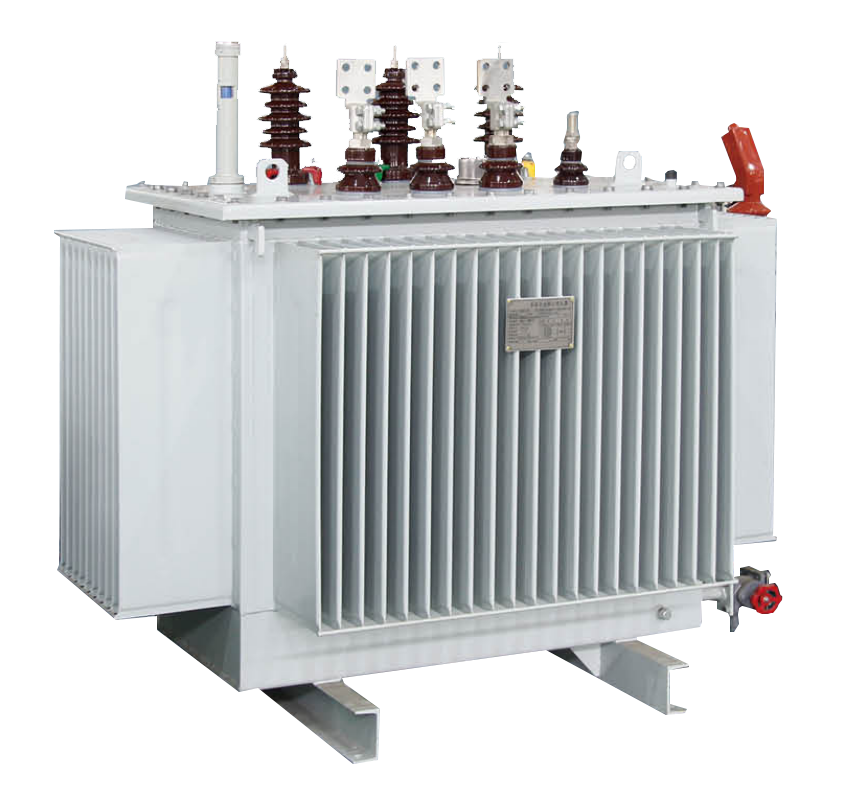
The choice between an oil-immersed transformer supplier and a dry-type transformer manufacturer is not simply technical — it is regulatory and contextual. In Egyptian commercial developments such as Cairo's new administrative capital or Alexandria's waterfront redevelopment zones, local fire codes increasingly favor dry-type units for indoor substations. The higher upfront cost of cast resin dry-type transformers is frequently offset by eliminated oil containment infrastructure, reduced insurance premiums, and lower maintenance overhead. Of course, for outdoor rural distribution networks, oil-immersed remains the dominant and cost-effective choice — and any experienced distribution transformer factory will tell you the same.
The case for amorphous alloy core technology in 2026
Amorphous alloy core transformers represent the most significant efficiency advancement in distribution transformer technology over the past two decades. Unlike conventional silicon steel cores, amorphous metal cores exhibit dramatically lower hysteresis losses — the energy wasted as heat every time the magnetic field reverses direction. According to recent research, amorphous core transformers achieve no-load losses up to 70–80% lower than conventional equivalents. The SBH15-M series is one verified example: it passed rigorous short-circuit testing at an independent national inspection center, confirming that the efficiency gains do not come at the cost of structural robustness. Just as a high-efficiency building reduces heating bills every winter for decades, an amorphous core transformer silently saves energy costs every hour of every year for its entire service life.
Evaluating a transformer manufacturing company in Egypt
Egypt's power sector is undergoing significant transformation. The national grid expansion, the new administrative capital's power infrastructure, and Egypt's growing role as a regional energy hub have collectively driven demand for both domestic production capacity and qualified electrical equipment manufacturer Egypt partnerships.
For procurement teams operating in this market, the relevant question is not only "is this a good transformer manufacturing company globally?" but specifically "does this supplier understand Egypt's voltage standards, EEHC specifications, climatic conditions, and logistics realities?"
Egypt-specific technical requirements
Egypt's climate presents specific engineering challenges. Ambient temperatures regularly exceed 45°C in southern governorates and industrial zones. A power transformer manufacturer Egypt must design for this — specifying appropriate cooling class ratings (ONAN, ONAF, or OFAF), selecting insulation materials rated for thermal class F or H in high-ambient environments, and verifying that radiator sizing accounts for reduced convective cooling at high ambient temperatures. Ask any candidate electrical transformer supplier to provide their derating curves for operation at 45°C and 50°C ambient.
How to audit a local transformer assembly facility
Visiting a transformer assembly facility before committing to a major order is standard practice for serious procurement. During an actual factory audit, the areas that reveal most about production quality are: the winding shop (cleanliness, tension control equipment, conductor traceability records), the drying and impregnation area (vacuum oven capacity, process log records), and the test bay (calibration certificates for all measuring equipment, availability of induced voltage and applied voltage test rigs). A manufacturer that restricts access to any of these areas without a compelling reason warrants serious caution.
Vendor comparison: what separates good from great
When a procurement team reaches the shortlisting stage, the differentiating factors are rarely the headline specifications — those are table stakes. The real separation emerges in the details of how a company responds to technical queries, handles deviations, and structures its warranty and service commitments.
Eight evaluation criteria for shortlisting
The following criteria form a practical scoring framework for comparing transformer OEM manufacturers and regional suppliers side by side:
- Certification portfolio — IEC 60076, ISO 9001, EOS; verified by independent bodies
- Short-circuit test history — Third-party lab certificates for the relevant product family
- Loss performance data — No-load and load loss figures at rated conditions, provided proactively
- Lead time transparency — Confirmed production slot availability and penalty clauses for delay
- Egypt-specific experience — EEHC approved vendor list status; references from completed Egyptian projects
- After-sales infrastructure — Local service engineers, spare parts stock, response time commitment
- Custom engineering capability — Ability to handle non-standard voltage ratios, special cooling, or seismic requirements
- Financial stability — Sufficient balance sheet strength to honor warranty obligations over the transformer's lifetime
Red flags that are easy to overlook
Procurement experience consistently surfaces the same warning signs. An industrial transformer solutions provider that cannot provide original test certificates (only photocopies without laboratory stamps) is a serious concern. So is a vendor whose quoted delivery time seems implausibly short — in the current market, custom high voltage transformer company orders routinely require 6–18 months. According to 2026 data, certain high-capacity transformer classes in global supply chains carry backlogs extending to 24 months, as detailed in the transformer resilience program published by the U.S. Department of Energy. A vendor promising unrealistic timelines either holds excess inventory of questionable provenance or is misrepresenting their capacity. Neither is acceptable for critical infrastructure.
2026 market trends shaping transformer procurement
The global transformer market reached an estimated $77 billion in scale in recent years and continues to expand at a CAGR of approximately 6.8%, driven by grid modernization, renewable integration, and the extraordinary demand surge from AI data center construction. These macro forces have direct implications for buyers in Egypt and the broader MENA region.
AI infrastructure and the high-capacity transformer shortage
The 2026 landscape is defined in part by an unprecedented strain on high-capacity transformer supply chains. Major technology companies expanding hyperscale data centers in Europe and the Gulf region are placing orders for large power transformers that have effectively pre-empted manufacturing capacity through 2027 at some of the world's leading plants. For Egyptian industrial buyers, the practical implication is clear: plan procurement timelines conservatively, negotiate lead time guarantees contractually, and where possible pre-qualify multiple suppliers simultaneously rather than running sequential vendor selection processes.
Green efficiency regulations as a procurement filter
The European Union's Ecodesign Tier 2 regulations, now fully in force in 2026, have established minimum efficiency standards that are progressively influencing procurement specifications globally — including in markets that import from European-standard manufacturers. For Egypt's expanding commercial real estate sector and industrial zones, specifying high-efficiency amorphous alloy or low-loss silicon steel core designs is no longer a premium option. It is rapidly becoming the baseline expectation for any serious electrical equipment manufacturer Egypt relationship. For a comprehensive technical reference on how these trends interconnect with infrastructure investment, the electrical transformer overview provides foundational grounding.
Frequently asked questions
Q: What is the minimum certification a transformer manufacturing company should hold for Egyptian utility projects?
A: At minimum, the manufacturer should hold IEC 60076 compliance documentation, ISO 9001 quality management certification, and EOS approval relevant to the Egyptian market. For grid-connected projects, EEHC vendor list registration is an additional and important qualifying criterion that narrows the field to manufacturers with a verified track record in Egypt.
Q: How long does it take to receive a custom transformer from a manufacturer in 2026?
A: Lead times vary significantly by voltage class and customization level. Standard distribution transformers (up to 2,500 kVA) typically require 8–16 weeks from order confirmation. High voltage and custom-engineered units may require 6–18 months. In the current market environment, some large power transformer classes carry backlogs extending to 24 months at major manufacturing facilities globally.
Q: Is an oil-immersed or dry-type transformer better for indoor installations in Egypt?
A: For indoor urban installations — shopping centers, hospitals, office towers, hotels — dry-type cast resin transformers are strongly preferred due to their fire safety profile, absence of oil management requirements, and suitability for high-load-density environments. An experienced dry-type transformer manufacturer will size the unit with appropriate derating for Egypt's high ambient temperatures.
Q: What distinguishes a genuine transformer manufacturer from a trading company?
A: A genuine transformer production plant owns its winding equipment, conducts in-house routine tests, and holds traceable production records. Request a factory audit, review equipment calibration logs, and verify that test certificates reference the specific serial number of the delivered unit. Trading companies typically cannot provide unit-level traceability or meaningful technical engineering support.
Q: Why should I consider amorphous alloy transformers for distribution applications?
A: Amorphous alloy core technology reduces no-load losses by up to 70–80% compared to conventional silicon steel designs. Over a 30-year service life, this translates into substantial energy cost savings and reduced carbon emissions. In 2026, as electricity tariffs in Egypt continue to adjust toward cost-reflective pricing, the economic case for specifying high-efficiency distribution transformers has become considerably stronger than it was five years ago.
Conclusion
Selecting the right transformer manufacturing company is a decision with consequences that stretch across decades of operational performance, energy cost, and infrastructure reliability. The buyers who achieve the best outcomes treat this process as an engineering and strategic exercise — not simply a procurement transaction. Verify certifications rigorously, evaluate total cost of ownership over the full service life, assess after-sales capability before placing orders, and factor in Egypt-specific technical and logistical realities from the outset. In a market where supply chains are tightening and efficiency standards are rising, working with a qualified, transparent, and locally experienced industrial transformer solutions provider is the clearest path to a successful project outcome.
More news
We will send you real-time information regularly!

Optical storage charging solution supplier
Cangzhou Huarui Transformer Co., Ltd.
Address: Xinxing Town Industrial Zone, Qing County, Cangzhou, Hebei
All rights reserved©2024 Cangzhou Huarui Transformer Co., Ltd.
Powe : www.300.cn License city substation