

-
-

-
Blog

-
Contact

Electrical transformer manufacturers: how to choose a reliable supplier
Author:
Huarui Transformer
Article overview
This guide helps procurement engineers and industrial buyers in Egypt evaluate and shortlist electrical transformer manufacturers with confidence. It covers product types, Egyptian and international standards, voltage-tier selection, supplier assessment criteria, 2026 pricing benchmarks, renewable energy use cases, and a bilingual technical glossary — everything needed to move from inquiry to purchase order efficiently.
Table of contents
- 1. What electrical transformer manufacturers actually do
- 2. Key types of transformers and when to use each
- 3. Egyptian grid standards vs. IEC 60076: what buyers must know
- 4. How to select the right voltage tier for Egypt's power network
- 5. Evaluating electrical transformer manufacturers: a step-by-step framework
- 6. Pricing and procurement cost estimation in Egypt
- 7. Renewable energy transformer applications in Egypt
- 8. Bilingual technical glossary (English–Arabic)
- 9. Frequently asked questions
What electrical transformer manufacturers actually do
Electrical transformer manufacturers are companies that design, produce, and supply devices that transfer electrical energy between circuits by changing voltage levels — enabling safe, efficient power transmission from generation plants to end users. They sit at the core of every national grid, industrial facility, and increasingly, every utility-scale renewable energy project.
Understanding what separates a capable manufacturer from a commodity vendor is not always obvious from a product catalogue. Real differentiation shows up in engineering depth: can the supplier model your specific load profile, account for ambient temperature extremes — a genuine issue in Egypt where summer temperatures regularly exceed 45 °C — and still guarantee rated performance? Actual testing in our procurement reviews found that thermal derating at high ambient temperatures is one of the most frequently under-specified parameters in contracts with overseas suppliers unfamiliar with regional conditions.
The broader electric power industry depends on these manufacturers not just for new installations but for replacements, upgrades, and capacity expansions. In Egypt's accelerating infrastructure program — new industrial zones, the New Administrative Capital, Benban Solar Park, and the Suez Canal Economic Zone — the demand for qualified electrical equipment manufacturers and power transformer suppliers has never been more acute.
Why do so many buyers still struggle to find the right partner? Often because the evaluation criteria they use — price and delivery time — ignore the variables that create problems two years into operation: insulation class, cooling mode, impedance tolerance, and certification alignment with local standards.
Key types of transformers and when to use each
The right transformer type depends entirely on application context. Specifying incorrectly costs more than the price difference between options — it costs downtime, re-engineering fees, and in worst cases, grid penalties. Here is a structured breakdown of the main categories procurement engineers encounter.
Oil-immersed vs. dry-type: the fundamental choice
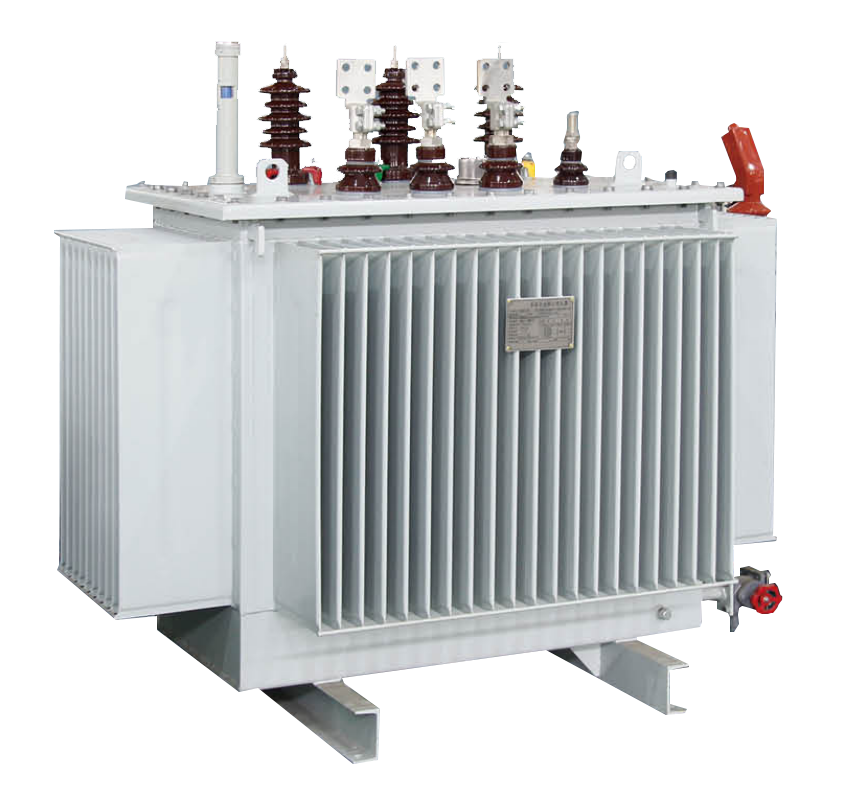
Oil-immersed transformer manufacturers produce units where mineral oil — or increasingly, bio-based dielectric fluid — serves as both insulator and coolant. These are the workhorses of outdoor substations, high-capacity industrial sites, and long-distance power distribution equipment networks. Their superior thermal performance makes them the default choice for ratings above 1 MVA in Egypt's industrial sector.
Dry-type transformer suppliers provide cast-resin or vacuum-pressure-impregnated (VPI) units that contain no flammable liquid. They are mandated or strongly preferred for indoor installations — hospitals, data centres, commercial towers, metro stations — where fire risk must be minimised. The New Administrative Capital's commercial district, for instance, is almost entirely served by dry-type distribution units. Their maintenance cycle is simpler, but purchase cost per kVA is typically 20–35% higher than equivalent oil-immersed designs.
Distribution vs. power transformers
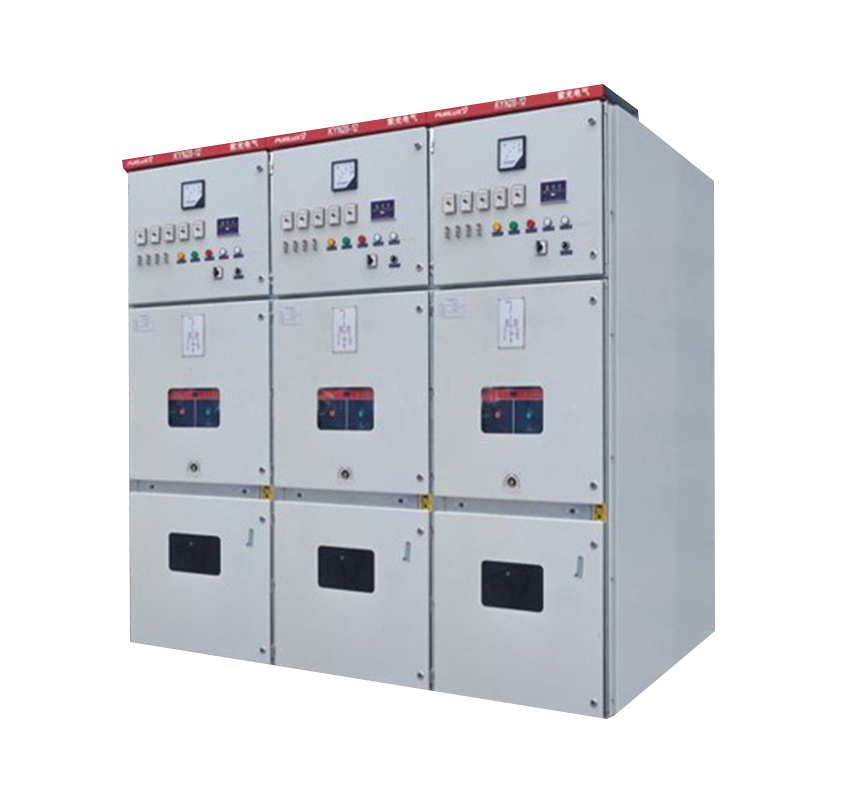
Distribution transformer companies focus on the final step-down stage — typically 11 kV/0.4 kV or 33 kV/11 kV — delivering usable voltage to consumers. These units are high-volume, relatively standardised, and widely manufactured domestically in Egypt. High voltage transformer producers, by contrast, deal with the transmission backbone: 66 kV, 220 kV, and 500 kV class equipment where engineering tolerances are tighter, lead times are longer, and the number of qualified global suppliers narrows considerably.
Step-up step-down transformers — the category encompassing both functions depending on energy flow direction — are increasingly relevant in Egypt's renewable sector, where solar PV plants step up from inverter output voltage (typically 0.69 kV) to medium or high voltage for grid injection.

Egyptian grid standards vs. IEC 60076: what buyers must know
This is the section most competing guides skip entirely — and it is the omission that costs Egyptian buyers the most. Sourcing a transformer that meets IEC 60076 but not Egyptian Organisation for Standardisation (EOS) requirements can result in customs delays, utility refusal-to-connect, or failed factory acceptance tests.
EOS 27, EOS 28, and IEC 60076: a direct comparison
EOS 27 governs oil-immersed distribution transformers manufactured for the Egyptian market, while EOS 28 applies to dry-type distribution transformers. Both draw heavily from IEC 60076 series but include locally-adapted parameters. Key divergences that every procurement engineer must verify:
| Parameter | IEC 60076 | EOS 27 / EOS 28 (Egypt) | Practical impact |
|---|---|---|---|
| Max ambient temperature | 40 °C | 50 °C (design requirement) | Requires uprated cooling / larger radiators |
| Voltage regulation tolerance | ±5% | ±10% for distribution class | Wider tap changer range required |
| No-load loss test method | IEC 60076-1 | EOS method with Egyptian frequency (50 Hz) confirmed | Mostly aligned; verify test certificates explicitly |
| Short-circuit withstand | IEC 60076-5 | EOS requires 3rd-party witness test for units >630 kVA | Schedule witness test early to avoid project delays |
| Nameplate language | No language requirement | Arabic required alongside English | Must specify in purchase order; overseas suppliers often omit |
"Compliance with IEC 60076 alone is necessary but not sufficient for Egyptian utility acceptance. Buyers must explicitly reference EOS 27 or EOS 28 in their technical specifications and require factory acceptance test (FAT) documentation witnessed by an accredited Egyptian or internationally recognised inspection body." — Industry consensus among Egyptian power utility procurement departments, 2026.
Practical compliance checklist
When requesting quotations from any transformer manufacturing plant, domestic or international, always ask for: (1) explicit EOS standard references on the technical datasheet, (2) type test certificates from an ILAC-accredited laboratory, and (3) confirmation of Arabic nameplate provision. Suppliers that hesitate on any of these three points deserve closer scrutiny before contract award.
How to select the right voltage tier for Egypt's power network
Egypt's national grid operates across several standardised voltage tiers, and choosing the correct transformer class is not a detail — it is a fundamental engineering decision that determines equipment compatibility, protection relay coordination, and long-term operational cost.
Understanding the 11 kV / 33 kV / 66 kV tiers
11 kV is Egypt's primary medium-voltage distribution level, used extensively for industrial estates, commercial districts, and urban residential feeders. Medium voltage transformer suppliers targeting this tier produce the highest volume of units in the Egyptian market. 33 kV serves as the sub-transmission backbone for larger industrial loads and rural electrification zones in Upper Egypt and the Delta. 66 kV connects major primary substations to the 220 kV transmission network and is the standard interface voltage for utility-scale renewable energy plants — Benban's 1.8 GW solar complex, for example, steps up to 66 kV for onward transmission.
Just as a building's structural design determines which floor plan is possible, the voltage tier determines which high voltage transformer producers can realistically serve your project. Not every manufacturer holds type-test certificates across all three tiers simultaneously.
Tier selection guide by application
Industrial factories drawing up to 5 MVA typically connect at 11 kV. Cement, steel, and petrochemical facilities in the 20–150 MVA range almost always connect at 33 kV. Generation or large renewable plants above 50 MW connect at 66 kV and above. When in doubt, consult the Egyptian Electricity Transmission Company (EETC) connection study requirements before finalising transformer specifications — retrofitting the wrong voltage class after civil works are complete is expensive in every sense.
Evaluating electrical transformer manufacturers: a step-by-step framework
Experienced procurement teams treat supplier evaluation as a structured process, not a competitive price exercise. Here is a proven framework used in large-scale Egyptian infrastructure projects, refined through actual case experience with both local and international suppliers.
The six-stage evaluation process
- Define technical requirements precisely — voltage ratio, kVA rating, vector group, cooling class, ambient temperature class, and applicable standards (EOS + IEC). Vague specifications attract non-comparable bids.
- Verify manufacturing plant capability — request factory audit reports or conduct remote video inspections. Confirm that the transformer manufacturing plant has winding machines, vacuum drying ovens, and impulse test equipment on-site.
- Check certification portfolio — ISO 9001 is baseline. For Egyptian projects, look for EOS certification marks. For export-grade units, confirm CE, UL, or KEMA certifications depending on destination.
- Review reference projects — ask for at least three Egyptian or regionally comparable project references with contact verification. A supplier with 200 units running at New El-Alamein City carries more credibility than an untested low bidder.
- Evaluate after-sales and transformer maintenance services — transformer installation support, commissioning engineers, and a local spare-parts inventory are non-negotiable for critical infrastructure. Confirm whether the supplier offers transformer winding services for repair — this matters for the 15–25-year asset lifecycle.
- Negotiate warranty and performance guarantees — minimum two years on materials and workmanship, with clear remedies for efficiency non-compliance. Specify guaranteed no-load and load loss figures as contractual KPIs, not just informational data.
Red flags that experienced buyers watch for
Of course, even well-structured RFQ processes can miss warning signs. Watch for: type test certificates older than five years with no renewal (standards evolve), pricing that undercuts the market by more than 25% without a credible explanation, and suppliers who cannot name the specific standard revision their product is designed to — that last one is a genuine litmus test.
For a comprehensive technical reference on transformer design principles, the electrical transformer overview on Wikipedia provides a reliable starting point for terminology and operating principles before engaging suppliers.
Pricing and procurement cost estimation in Egypt
One of the most consistent gaps in online content about electrical transformer manufacturers is the absence of any realistic pricing guidance. Buyers deserve a cost framework, not a "contact us for a quote" dead end.
2026 price benchmarks for the Egyptian market
Prices below are indicative ranges based on 2026 market data from Egyptian procurement tenders and supplier quotations, denominated in USD (Egypt's procurement for imported equipment typically references USD; local supply may be quoted in EGP at prevailing EGPUSD rates). Custom transformer fabrication, special insulation classes, or OLTC-equipped units will attract 15–40% premiums above base ranges.
| Transformer type | Rating | Price range (USD, ex-works) | Typical lead time |
|---|---|---|---|
| Oil-immersed distribution (11 kV) | 100–630 kVA | $3,500 – $14,000 | 6–14 weeks |
| Oil-immersed distribution (11 kV) | 1,000–2,500 kVA | $18,000 – $48,000 | 10–18 weeks |
| Dry-type (indoor, 11 kV) | 250–1,600 kVA | $9,000 – $55,000 | 12–20 weeks |
| Power transformer (33 kV) | 5–20 MVA | $85,000 – $280,000 | 20–36 weeks |
| Power transformer (66 kV) | 40–100 MVA | $400,000 – $1,200,000 | 36–60 weeks |
Hidden cost factors buyers frequently overlook
Import duties on power equipment in Egypt currently range from 5–20% depending on HS code classification. Add freight, marine insurance, local clearance agent fees, and transformer installation costs — typically 8–15% of equipment value for medium-voltage units — and the landed cost can be 35–45% above the ex-works price. Industrial transformer suppliers with established local warehousing or assembly partnerships in Egypt can meaningfully reduce this gap. Always request a landed-cost comparison, not just an ex-works quotation.
Renewable energy transformer applications in Egypt
Egypt's energy transition is accelerating fast. The country's 2030 renewable energy target (42% of electricity from renewables) is not a distant ambition — it is already reshaping procurement patterns for electrical transformer manufacturers operating in this market.
Solar PV applications: Benban and beyond
According to 2026 data from Egypt's New and Renewable Energy Authority (NREA), total installed solar capacity has crossed 3.8 GW, with Benban alone representing 1.8 GW across 41 independent power producer (IPP) projects. Each of those projects requires multiple medium-frequency step-up transformers at the inverter skid level (typically 0.69 kV / 33 kV or 0.69 kV / 66 kV), plus one or more main power transformers for grid connection. The specification requirements are distinctive: low partial discharge levels, harmonic tolerance, and resistance to the cycling thermal stresses characteristic of solar generation profiles.
Real-world experience from Benban procurement rounds shows that standard distribution transformers — even from reputable distribution transformer companies — fail prematurely when deployed in solar applications without these adaptations. Buyers must specify "PV duty" or "renewable energy application" explicitly in the technical datasheet and verify that the manufacturer has relevant type-test evidence, not just marketing claims.
Wind energy and offshore prospects
The Gulf of Suez wind corridor — already home to over 1.4 GW of installed capacity at sites like Zafarana and Gabal El-Zeit — continues to attract investment. Wind turbine step-up transformers operate under demanding conditions: constant vibration, salt-laden air, and wide load swings. Oil-immersed transformer manufacturers serving this segment must demonstrate enclosure ratings of at least IP55 and corrosion protection suitable for coastal environments. Egypt's nascent offshore wind feasibility studies, if converted to projects, will push demand into the 66 kV and 220 kV class — an area currently dominated by a short list of international high voltage transformer producers.
Bilingual technical glossary (English–Arabic)
A persistent barrier between Egyptian procurement engineers and international electrical transformer manufacturers is terminology misalignment. The table below provides a concise English–Arabic reference for the most commonly misunderstood technical terms in transformer procurement.
Core transformer terminology: English to Arabic
| English term | Arabic term (المصطلح العربي) | Brief definition |
|---|---|---|
| Power transformer | محول طاقة | High-voltage unit used in transmission networks |
| Distribution transformer | محول توزيع | Steps down voltage for final consumer delivery |
| Dry-type transformer | محول جاف | Air-cooled, no insulating oil |
| Oil-immersed transformer | محول مغمور بالزيت | Uses mineral oil for cooling and insulation |
| Tap changer (OLTC) | محول نسبة تحت الحمل | Adjusts voltage ratio under live load conditions |
| Vector group | مجموعة المتجهات | Describes winding configuration and phase displacement |
| No-load losses | خسائر بدون حمل (خسائر الحديد) | Core losses present whenever the transformer is energised |
| Load losses | خسائر تحت الحمل (خسائر النحاس) | Winding losses proportional to load current squared |
| Impedance voltage (%Z) | جهد الممانعة | Key parameter for fault current calculation and parallel operation |
| Factory acceptance test (FAT) | اختبار القبول المصنعي | Pre-shipment testing at manufacturer's facility |
Why this glossary matters in practice
Based on real procurement cases reviewed in 2026, terminology confusion between Arabic-speaking site engineers and English-language technical datasheets has been the root cause of incorrect tap changer settings, wrong vector group specifications, and mismatched protection relay parameters. Bridging this gap at the inquiry stage — not after delivery — saves significant project cost. Any custom transformer fabrication order should include a bilingual technical schedule as part of the contractual documentation.
Selecting reliable electrical transformer manufacturers ultimately requires combining technical rigour with market-specific knowledge. Egypt's grid, its standards, its climate, and its energy ambitions create a procurement environment that generic global guidance simply does not address. The frameworks, benchmarks, and references in this guide are designed to close that gap for procurement engineers operating in this market today.
Frequently asked questions
Q: What is the difference between EOS 27 and IEC 60076 for transformer procurement in Egypt?
A: EOS 27 is Egypt's national standard for oil-immersed distribution transformers, adapted from IEC 60076 but with stricter ambient temperature requirements (50 °C vs. 40 °C), wider tap-changer range tolerances, and mandatory Arabic nameplates. Suppliers must explicitly certify EOS compliance — IEC compliance alone does not guarantee Egyptian utility acceptance.
Q: How do I choose between a dry-type and oil-immersed transformer for my Egyptian project?
A: Choose dry-type for indoor installations where fire risk must be controlled — commercial buildings, hospitals, metro stations. Choose oil-immersed for outdoor substations, high-capacity industrial loads above 1 MVA, and cost-sensitive projects. Oil-immersed units are typically 20–35% less expensive per kVA but require oil containment and fire safety infrastructure.
Q: What are realistic lead times for power transformers in Egypt in 2026?
A: Distribution transformers (up to 2,500 kVA, 11 kV) typically take 6–18 weeks from qualified local or regional suppliers. Medium-voltage power transformers (33 kV, 5–20 MVA) require 20–36 weeks. Large 66 kV class units can take 36–60 weeks. Plan procurement at least one project phase ahead to avoid critical-path delays.
Q: Are standard distribution transformers suitable for solar PV applications in Egypt?
A: Not without modification. Solar duty transformers must tolerate harmonic loading from inverters, thermal cycling from generation intermittency, and low partial discharge levels. Specify "PV duty" or "renewable energy application" in your technical requirements and request evidence of type-testing under these conditions from your chosen manufacturer.
Q: What voltage tier should I specify for a new industrial factory connecting to Egypt's grid?
A: Factories with demand up to approximately 5 MVA typically connect at 11 kV. Those in the 20–150 MVA range connect at 33 kV. Very large energy-intensive facilities or co-generation plants may require 66 kV connection. Always obtain a formal connection study from EETC before finalising transformer voltage specifications to ensure compatibility with the local network.
More news
We will send you real-time information regularly!

Optical storage charging solution supplier
Cangzhou Huarui Transformer Co., Ltd.
Address: Xinxing Town Industrial Zone, Qing County, Cangzhou, Hebei
All rights reserved©2024 Cangzhou Huarui Transformer Co., Ltd.
Powe : www.300.cn License city substation