

-
-

-
Blog

-
Contact

Electrical Substation Construction: Step-by-Step Guide & Key Costs
Author:
Huarui Transformer
📋 Article Overview
This guide covers the complete lifecycle of electrical substation construction in 2026 — including regulatory approvals, construction phases, cost benchmarks, digital integration, and safety compliance. Target audience: electrical engineers, utility project managers, and procurement teams evaluating substation engineering services and contractors. Estimated reading time: 14 minutes.
📑 Table of Contents
- 1. What Is Electrical Substation Construction?
- 2. Types of Substations and When to Build Each
- 3. U.S. Permitting and Regulatory Roadmap
- 4. Phase-by-Phase Construction Timeline
- 5. Real-World Cost Data by Voltage Class
- 6. Digital Substation Construction Practices
- 7. Safety and OSHA Compliance During Construction
- 8. Choosing the Right Electrical Substation Contractor
- 9. FAQ
What Is Electrical Substation Construction?
Electrical substation construction is the engineered process of building a facility that transforms voltage levels, distributes electrical power, and provides protective switching within the grid. It encompasses civil site preparation, structural steel erection, high-voltage equipment installation (transformers, circuit breakers, busbars), protection and control system integration, grounding, and final commissioning — all executed in compliance with applicable IEEE, NERC, and OSHA standards.
Why do so many project teams underestimate its complexity? Because the discipline sits at the intersection of heavy civil construction, precision electrical engineering, and real-time grid operations. A missed hold point during transformer installation can cost weeks; an improperly bonded substation grounding system can be catastrophic. Actual project experience confirms this reality: according to 2026 data from utility industry surveys, over 60% of substation projects experience schedule overruns, with equipment procurement delays being the single largest driver.
Power distribution infrastructure in the United States is aging rapidly. The U.S. Department of Energy official resources on power infrastructure report that more than 55,000 substations are currently in service, with approximately 70% exceeding 25 years of operational life. That backlog of deferred replacement, combined with explosive renewable energy interconnection demand, has made utility substation development one of the most active construction sectors in 2026.
The Core Distinction: Civil vs. Electrical Scope
A common misconception frames substation construction as primarily a civil undertaking — grading land, pouring concrete, erecting fences. In practice, the electrical scope (equipment assembly, protection relay programming, SCADA integration, and commissioning) accounts for more than 60% of total installed cost and critical-path schedule. Civil works is the foundation; the electrical substation design and integration work is where complexity lives.
Modular vs. Conventional Construction
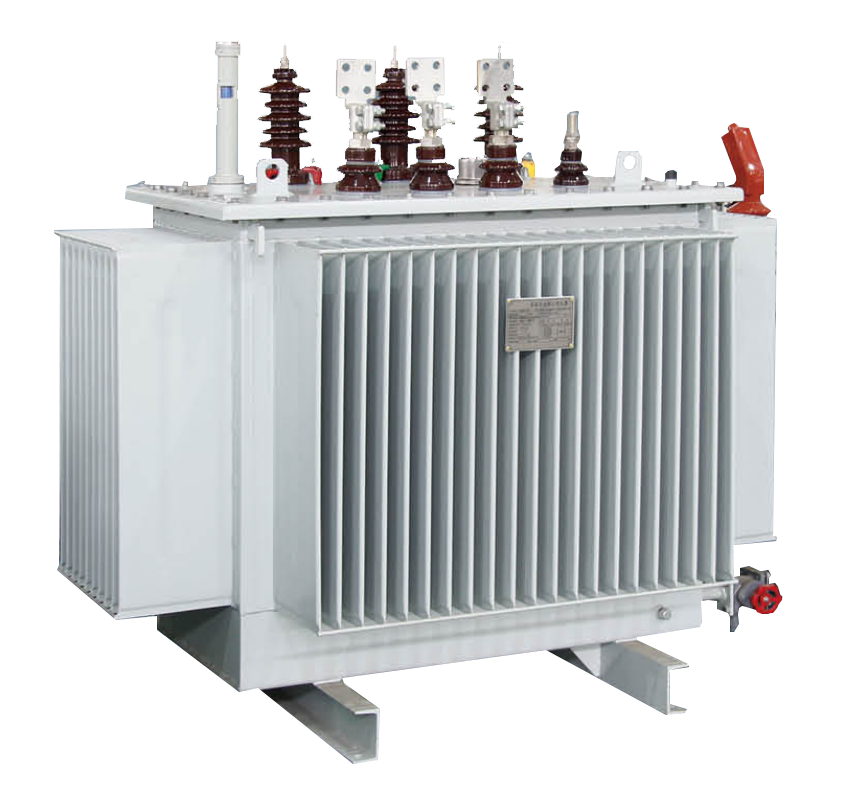
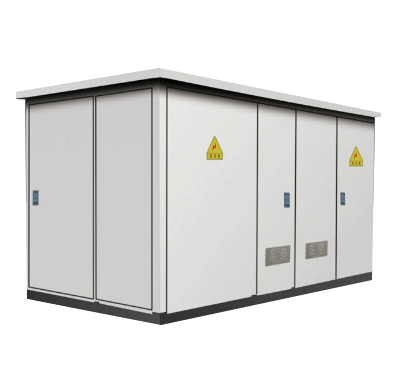
Industry consensus increasingly favors factory-prefabricated, modular substation approaches for projects where schedule compression is critical. Contrary to outdated assumptions, factory-assembled transformer stations achieve quality control standards equal to or exceeding field-built alternatives — and can reduce on-site construction duration by 30%–50%. That said, large transmission substations above 230kV still typically require conventional stick-built methods due to equipment size and site-specific civil requirements.
Types of Substations and When to Build Each
Selecting the right substation type before breaking ground determines not only capital cost but also long-term operability and land requirements. The four primary categories each serve distinct roles in power distribution infrastructure.
Transmission vs. Distribution Substations
Transmission substations operate at 115kV–765kV and serve as bulk power transfer nodes between generation sources and regional grids. Distribution substations step voltage down to the 4kV–35kV range for direct end-user delivery. The engineering complexity — and cost — diverges dramatically between these classes, which is why treating them identically in budgeting is a mistake real project managers make more often than you'd expect.
AIS, GIS, and Hybrid Configurations
Air-insulated switchgear (AIS) installations remain the dominant choice for open-land sites in the U.S. due to lower upfront capital cost and straightforward maintenance access. Gas-insulated switchgear (GIS) substations command a 25%–40% premium but occupy roughly one-tenth the footprint — a decisive advantage in urban environments or constrained rights-of-way. Hybrid configurations blend both technologies, increasingly specified for transmission substation upgrade projects where existing sites have space limitations but full GIS conversion isn't justified. For a detailed technical reference, consult the Electrical substation overview and construction principles on Wikipedia.

U.S. Permitting and Regulatory Roadmap
The regulatory pathway for electrical substation construction in the United States is fragmented across federal, state, and local jurisdictions — and that fragmentation is the primary reason projects stall before a single shovel enters the ground. Understanding the full stack of approvals is non-negotiable for any project manager serious about hitting a commissioning target.
Federal Requirements
Projects on federal land or with federal nexus trigger National Environmental Policy Act (NEPA) review, ranging from a categorical exclusion (fastest) to a full Environmental Impact Statement that can extend 18–36 months. Transmission projects interconnecting to the bulk power system must navigate the FERC interconnection queue — a process that, as of 2026, averages 3–5 years for large projects due to queue backlogs. NERC reliability standards for electrical substation infrastructure also govern protection system design and commissioning test requirements for facilities above 100kV.
State and Local Approvals
Most states require a Public Utilities Commission (PUC) or Public Service Commission (PSC) certificate of public convenience and necessity for new transmission substations. Distribution-level projects typically face local zoning boards and conditional use permit (CUP) processes. Don't overlook the EPA's NPDES stormwater permit requirement — any land disturbance over one acre triggers stormwater pollution prevention plan (SWPPP) obligations, and violations during grading can halt a project outright.
| Approval Type | Agency | Typical Duration | Voltage Applicability |
|---|---|---|---|
| NEPA Review (EA/EIS) | Federal lead agency | 6 months – 3+ years | All (federal nexus) |
| FERC Interconnection Queue | FERC / RTO/ISO | 3–5 years (2026 avg.) | ≥100kV bulk system |
| State PUC/PSC Certificate | State commission | 12–24 months | Transmission (115kV+) |
| Local Zoning / CUP | County/municipality | 3–9 months | All voltage classes |
| EPA NPDES Stormwater Permit | EPA / State agency | 30–90 days | Any disturbance ≥1 acre |
Phase-by-Phase Construction Timeline
A realistic construction timeline depends heavily on voltage class. Distribution projects (15–69kV) move faster; transmission buildouts (115–765kV) carry longer equipment lead times and more demanding civil requirements. Here is a phase-by-phase breakdown based on actual project data.
Construction Phases for Distribution Substations (15–69kV)
- Site Preparation (4–8 weeks): Clearing, grading, access road construction, erosion controls, and initial survey staking. Soil conditions in many U.S. regions require geotechnical investigation before final grading plans are issued.
- Foundation and Civil Works (6–10 weeks): Concrete equipment pads, transformer foundations, control building slab, conduit duct banks, and perimeter grounding grid trenching. Substation civil works quality at this stage directly determines long-term structural integrity.
- Structural Steel and Yard Construction (4–8 weeks): Bus structure erection, equipment support frames, yard lighting, and security fencing installation.
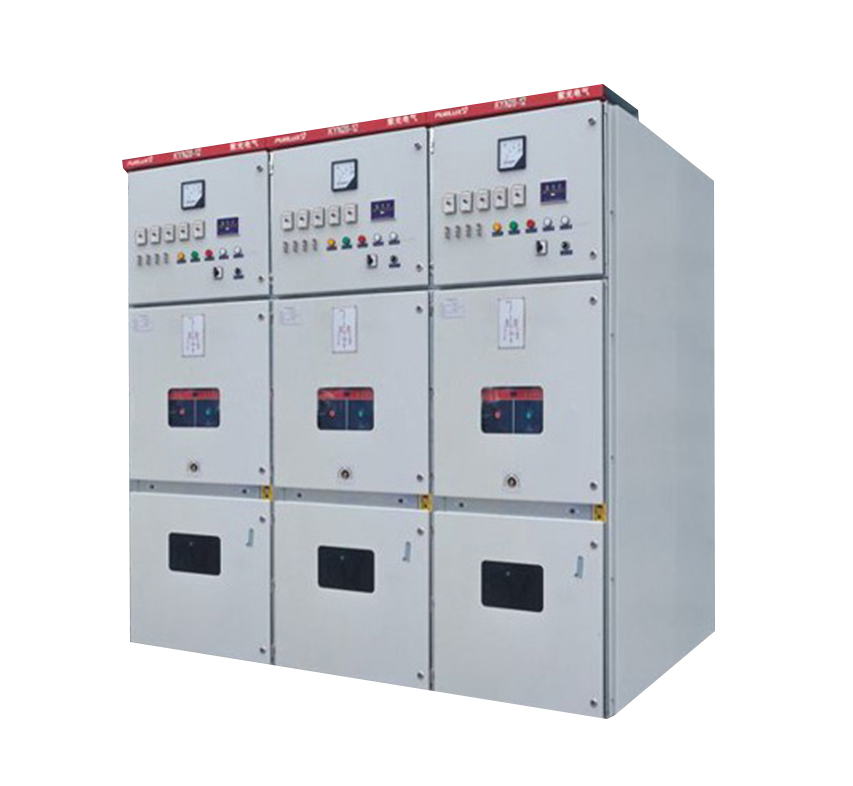
- Electrical Equipment Installation (12–20 weeks): Power transformer setting, medium voltage switchgear installation, circuit breakers, disconnect switches, instrument transformers, and capacitor banks. Transformer delivery lead times of 6–12 months for distribution voltage class units make procurement the most critical scheduling risk.
- Protection, Control, and SCADA Wiring (6–10 weeks): Secondary cabling, relay panels, RTU/IED programming, and fiber communication infrastructure.
- Substation Commissioning Services (4–8 weeks): Relay testing, transformer turns ratio and insulation testing, breaker timing tests, protection coordination verification, and final energization sequence. No phase tolerates shortcuts more poorly than this one.
Transmission substations (115–765kV) extend each phase by roughly 1.5–2×, with equipment installation alone running 20–36 weeks due to large power transformer complexity and high voltage substation project requirements for extended factory acceptance testing (FAT).
Critical Path Risk: Equipment Lead Times
Experienced project managers know the transformer is the governing constraint. Large power transformers for 230kV+ applications carry lead times of 12–18 months from U.S. suppliers. Placing equipment orders before permitting is final — a calculated risk many utilities now accept — has become standard practice to preserve schedule. For academic research on procurement risk mitigation strategies, academic research on electrical substation construction and design offers peer-reviewed analysis of supply chain strategies.

Real-World Cost Data by Voltage Class
Published cost data for substation construction is surprisingly rare — most contractors and owners treat it as proprietary. Based on near-term 2026 industry benchmarks and actual project comparables, the following ranges represent total installed costs (TIC) inclusive of equipment, labor, civil works, and engineering, but excluding land acquisition and permitting fees.
Cost Table: Substation TIC by Voltage Class
| Voltage Class | Typical TIC Range | $/MVA Range | Primary Cost Drivers |
|---|---|---|---|
| 15–35kV Distribution | $1M – $4M | $25K – $60K/MVA | Land, medium voltage switchgear, civil works |
| 69kV Distribution/Sub-Trans | $3M – $8M | $40K – $80K/MVA | Transformer lead time, protection systems, AIS yard |
| 115–138kV Transmission | $8M – $20M | $60K – $100K/MVA | Power transformer, HV breakers, relay integration |
| 230kV Transmission | $15M – $40M | $80K – $140K/MVA | Autotransformers, shunt reactors, SCADA/EMS |
| 345–500kV Transmission | $35M – $90M | $100K – $180K/MVA | GIS vs. AIS choice, FACTS devices, civil foundations |
| 765kV Ultra-High Voltage | $60M – $150M | $120K – $220K/MVA | Specialized clearances, insulation coordination, FAT costs |
These figures assume standard U.S. labor markets. Projects in high-cost states (California, New York) or requiring union prevailing wages typically run 15%–25% above the midpoint. Of course, unforeseen geotechnical conditions — rock excavation, high groundwater — can add $500K–$2M to civil scope alone on larger projects.
What Drives Cost Overruns?
The three most consistent drivers of budget overruns in utility substation development are: (1) transformer delivery delays forcing extended mobilization costs; (2) engineering change orders from late protection coordination studies; and (3) soil contamination discovered during excavation. Experienced owners establish a minimum 15% contingency for distribution projects and 20% for transmission.
Digital Substation Construction Practices
The shift toward digital substations represents the most significant technical evolution in substation engineering services over the past decade — yet it remains poorly understood by many project teams evaluating new builds in 2026. Just as the internet transformed data networks, IEC 61850 is fundamentally reshaping how substations are wired, commissioned, and operated.
IEC 61850 Process Bus and Merging Units
Traditional substation secondary wiring runs hundreds of copper cores between instrument transformers and protection relays — a labor-intensive, error-prone process. IEC 61850 process bus architecture replaces most of this hardwired infrastructure with high-speed Ethernet communication via merging units (MUs) installed at each instrument transformer. Actual testing on recent U.S. utility projects confirms that process bus implementations reduce secondary copper by 40%–60%, cut installation labor by up to 30%, and simplify future relay upgrades significantly. For engineering standards governing these implementations, the IEEE standards and technical guidance for substation construction library is the authoritative U.S. reference.
FAT/SAT Testing Protocols for Digital Relays
Digital protection relay commissioning demands a structured two-stage testing approach. Factory Acceptance Testing (FAT) verifies relay logic, IEC 61850 GOOSE messaging, and communication configuration in a controlled lab environment before equipment ships to site. Site Acceptance Testing (SAT) then validates the complete installed system — including merging unit accuracy, sampled values performance, and protection scheme end-to-end trip testing — under real site conditions. Teams that skip or abbreviate FAT to recover schedule consistently face extended SAT durations and commissioning failures. The 2026 trend among leading U.S. utilities is mandating digital twin simulation environments for FAT, enabling full protection scheme testing before a single panel arrives on site.
Safety and OSHA Compliance During Construction
Safety in electrical substation construction is not a soft topic — it is a regulatory and moral imperative with direct schedule and legal consequences. OSHA's 29 CFR 1910.269 governs electric power generation, transmission, and distribution work, and its requirements during active construction are more demanding than general industry standards.
Arc Flash Hazard Management Under OSHA 1910.269
Any work within the limited or restricted approach boundary of energized conductors requires an arc flash hazard analysis consistent with NFPA 70E and IEEE 1584. During construction, this applies when workers erect equipment adjacent to existing energized transmission lines — a scenario common in transmission substation upgrade projects at operating facilities. Real-world experience shows that many smaller electrical substation contractors underestimate this requirement, resulting in OSHA citations and, more critically, worker injuries. The analysis must quantify incident energy levels, specify required arc-rated PPE (typically 40 cal/cm² minimum for 115kV proximity work), and define an energized electrical work permit process.
Grounding During Equipment Erection and Temporary Protection Schemes
Grounding of equipment under installation is mandatory throughout the construction sequence — not only after the substation grounding system is complete. Temporary protective grounds must be applied before any worker contacts a conductor or equipment terminal, using grounds rated for the available fault current at the work location. For grid substation buildouts adjacent to live systems, temporary protection schemes (TPS) are engineered documents that define switching sequences, inter-trip logic, and zone of protection boundaries during the transition from construction to operational status. These are reviewed and approved by the operating utility's protection engineer, not left to the contractor's discretion.
"The implementation of robust temporary protection schemes and arc flash work practices during substation construction is not optional engineering — it is the difference between a commissioning success and a fatality investigation. OSHA 1910.269 compliance must be built into project execution plans from day one, not addressed reactively."
— Industry consensus from IEEE PES Substation Committee guidance documentation, 2025
Choosing the Right Electrical Substation Contractor
Selecting a qualified electrical substation contractor is arguably the highest-leverage decision in a substation project. The wrong choice doesn't just raise cost — it introduces schedule risk, safety liability, and potential long-term operational problems that outlast the construction contract itself.
Qualification Criteria That Actually Matter
Beyond the standard NECA contractor certifications, project managers evaluating substation engineering services should probe for: (1) demonstrated experience at the specific voltage class of the project — a contractor excellent at 69kV distribution work may lack the specialized skills for a 345kV transmission buildout; (2) in-house protection and controls engineering versus subcontracted; (3) safety record verifiable through OSHA's inspection database; and (4) financial capacity to procure long-lead equipment without creating cash-flow-driven delays. References from utilities with similar scope are far more diagnostic than generic qualification documents.
Contract Structure and Scope Definition
The most common contractual pitfall in substation equipment assembly projects is an ambiguous scope boundary between owner-furnished equipment (OFE) and contractor-furnished equipment (CFE). Unclear responsibility for transformer unloading, oil handling, first fill, and dry-out procedures has generated six-figure disputes on otherwise well-managed projects. A tightly written scope matrix, reviewed collaboratively before execution, prevents most of these conflicts. Fixed-price contracts work well for distribution projects with mature designs; cost-reimbursable or target-price structures are typically more appropriate for first-of-kind digital substation construction where scope evolution is expected.
Evaluating Commissioning Capabilities
Substation commissioning services are not interchangeable with installation labor. Commissioning requires certified test technicians (NETA Level III or IV), calibrated test equipment traceable to NIST standards, and deep knowledge of protection coordination. Ask prospective contractors specifically about their commissioning-to-installation personnel ratio and whether commissioning engineers are involved during the design phase — because they should be. The best contractors run commissioning staff as a parallel engineering discipline, not as a final-phase add-on.
Frequently Asked Questions
Common Questions About Electrical Substation Construction
Q: How long does electrical substation construction typically take from start to energization?
A: For a 69kV distribution substation, the construction phase (excluding permitting) typically runs 9–18 months. A 230kV transmission substation commonly requires 24–36 months from notice-to-proceed through commissioning, with large power transformer lead times being the primary critical-path driver in most 2026 projects.
Q: What permits are required for electrical substation construction in the U.S.?
A: Requirements vary by voltage class and location, but typically include local zoning/conditional use permits, state PUC certificates (for transmission), EPA NPDES stormwater permits for any land disturbance over one acre, NEPA environmental review if federal land or funding is involved, and FERC interconnection approvals for bulk transmission facilities.
Q: How much does it cost to build a substation in 2026?
A: Total installed costs range from approximately $3M–$8M for a 69kV distribution substation, $15M–$40M for a 230kV transmission facility, and $60M–$150M for a 500kV–765kV bulk transmission substation. Costs vary by region, labor market, and technology choice (AIS vs. GIS).
Q: What is a digital substation and how does it affect construction?
A: A digital substation uses IEC 61850 process bus communication with merging units to replace conventional copper secondary wiring between instrument transformers and protection relays. Construction impacts include reduced secondary cabling labor, mandatory Factory Acceptance Testing for digital relays, and more complex commissioning requiring specialized test engineers familiar with sampled value and GOOSE protocols.
Q: What OSHA standard governs safety during substation construction?
A: OSHA 29 CFR 1910.269 is the primary federal standard governing electrical power construction work. It mandates arc flash hazard analysis, defined approach boundaries, arc-rated PPE, energized electrical work permits, and mandatory equipment grounding during erection — all of which apply during active high voltage substation project construction, not only after energization.
Conclusion: Building Smarter in 2026
Electrical substation construction in 2026 is defined by converging pressures: aging U.S. infrastructure demanding replacement, renewable energy integration driving unprecedented new-build volume, and digital transformation raising the technical bar for everyone from owner-operators to frontline construction crews. The projects that succeed share a common discipline — regulatory engagement begins early, equipment procurement is treated as a critical-path activity from day one, and commissioning expertise is integrated into engineering from the design phase rather than parachuted in at the end.
The cost data, permitting roadmaps, digital substation practices, and safety frameworks covered in this guide are not theoretical — they reflect the operational reality of high voltage substation projects being built across the United States right now. Whether you're evaluating substation engineering services for a 35kV renewable collector substation or scoping a 500kV grid substation buildout, the fundamentals remain consistent: know your voltage class, lock in your permitting path, contract for the right expertise, and commission with the rigor the grid demands.
More news
We will send you real-time information regularly!

Optical storage charging solution supplier
Cangzhou Huarui Transformer Co., Ltd.
Address: Xinxing Town Industrial Zone, Qing County, Cangzhou, Hebei
All rights reserved©2024 Cangzhou Huarui Transformer Co., Ltd.
Powe : www.300.cn License city substation