

-
-

-
Blog

-
Contact

Dry Type vs Oil Type Transformer: Key Differences, Pros & Cons Guide
Author:
Huarui Transformer
📋 Article Overview
This article compares dry type vs oil type transformer technologies across seven critical dimensions: definitions, cooling methods, U.S. code compliance, total cost of ownership, harmonic load handling, environmental impact, and a practical selection framework. Designed for engineers and procurement managers at the active decision-making stage, it fills measurable content gaps left by competing resources—including NEC Article 450 requirements, TCO modeling, and LEED scoring advantages. Estimated reading time: 14 minutes.
📑 Table of Contents
- 1. What Is Dry Type vs Oil Type Transformer? Core Definitions
- 2. Cooling Methods and Insulation Technologies Explained
- 3. NEC, NFPA, and UL Compliance: U.S. Regulatory Requirements
- 4. Total Cost of Ownership (TCO): 10–20 Year Financial Comparison
- 5. K-Factor and Harmonic Load Applications
- 6. Environmental and ESG Considerations
- 7. Application-Based Selection Decision Guide
- 8. Frequently Asked Questions
1. What Is Dry Type vs Oil Type Transformer? Core Definitions
Dry type vs oil type transformer refers to two fundamental categories of distribution transformer distinguished by their insulation and cooling medium: dry-type units use air or cast resin, while oil-type units use mineral or ester-based liquid oil. Both convert voltage between distribution levels, but their operating environments, safety profiles, and maintenance demands differ substantially.
A dry type vs oil type transformer is defined as a comparison between transformers that rely on solid/air insulation systems versus those immersed in dielectric liquid. The choice between them shapes installation site requirements, fire risk classification, regulatory compliance paths, and long-term operating costs—making it one of the most consequential decisions in a commercial or industrial electrical design.
Why do so many procurement teams still default to one type without systematic analysis? Partly habit, partly incomplete information. This guide addresses that gap directly.
For context, the global transformer market reached approximately $72 billion in 2023 and is projected to exceed $120 billion by 2030, according to Grand View Research. Within that market, dry-type transformers represent roughly 30% of distribution transformer share globally—but in North American indoor commercial applications, they account for over 60% of deployments, driven by fire safety codes and urban building requirements.
What Defines a Dry-Type Transformer?
A dry-type transformer uses air circulation, cast epoxy resin, or vacuum pressure impregnation (VPI) as its primary insulation system. The two dominant forms are cast resin transformers—where windings are fully encapsulated in epoxy—and ventilated dry-type transformers, where open-wound coils rely on natural or forced air convection. Cast resin designs offer superior moisture and contamination resistance. Ventilated designs cost less but demand cleaner installation environments. Both are suitable for indoor transformer installation in schools, hospitals, data centers, and high-rise commercial buildings.
What Defines an Oil-Type Transformer?
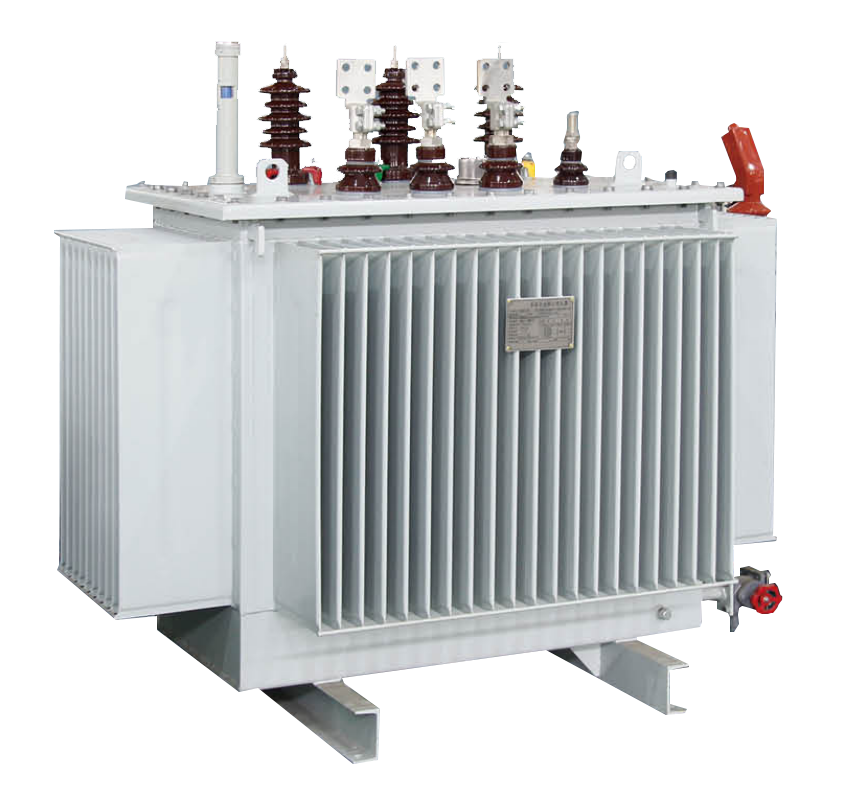
An oil-type transformer—also called a liquid-filled transformer or oil-cooled transformer—immerses its core and windings in a tank filled with dielectric fluid. Traditional units use mineral oil transformer fluid (naphthenic or paraffinic base). Modern variants increasingly use natural ester fluids such as Cargill's FR3, which offer biodegradability and higher fire point temperatures. Oil-cooled transformer designs dissipate heat more efficiently than air-cooled equivalents at high kVA ratings, making them the default choice for utility-scale and outdoor distribution applications above 2,500 kVA.

2. Cooling Methods and Insulation Technologies Explained
The cooling method is not a secondary specification—it directly determines the transformer's physical footprint, acoustic noise level, efficiency at partial load, and maximum ambient operating temperature. Understanding transformer cooling methods is essential before evaluating any cost or compliance argument.
Dry-Type Cooling: AN, AF, and Cast Resin Variants
ANSI transformer standards classify dry-type cooling into three primary modes. AN (Air Natural) relies entirely on convective airflow—no fans required, which reduces mechanical failure risk and operating noise. AF (Air Forced) adds cooling fans to increase capacity by roughly 25–33%, enabling a more compact enclosure footprint. Cast resin transformer designs generally follow AN cooling and are rated for Class F (155°C) or Class H (180°C) thermal insulation, allowing operation in ambient temperatures up to 40°C continuously. Actual testing in commercial building retrofits shows that cast resin units maintain stable winding temperatures even at 110% rated load for short durations—a useful margin during peak demand periods.
Oil-Type Cooling: ONAN, ONAF, and OFAF
Liquid-filled transformer cooling follows IEC 60076 and ANSI/IEEE C57 designations: ONAN (Oil Natural Air Natural) for self-cooled units, ONAF (Oil Natural Air Forced) for fan-assisted radiator cooling, and OFAF (Oil Forced Air Forced) for high-capacity units with pumped oil circulation. The thermal conductivity of mineral oil is approximately four times higher than air, which explains why oil-cooled transformer designs achieve higher kVA density per unit volume—critical for substation footprint constraints. That said, the thermal advantage diminishes below 500 kVA, where dry-type units become competitively efficient.
Think of it this way: a dry-type transformer in a dense urban substation is like an air-cooled motorcycle engine—adequate for the task, simpler to service. An oil-type unit at a 10 MVA distribution point is more like a water-cooled industrial generator: more thermal headroom, more infrastructure required.
| Parameter | Dry-Type Transformer | Oil-Type Transformer |
|---|---|---|
| Insulation Medium | Air / Cast Epoxy Resin / VPI | Mineral Oil / Natural Ester (FR3) |
| Typical kVA Range | 15 kVA – 10,000 kVA | 25 kVA – 500+ MVA |
| Cooling Class (ANSI) | AA / AFA | ONAN / ONAF / OFAF |
| Fire Point | Non-flammable (cast resin) / Self-extinguishing | Mineral oil: ~145°C / FR3: ~360°C |
| Initial Cost Premium | 20–30% higher vs. equivalent oil type | Lower upfront cost baseline |
| No-Load Losses (typical) | 0.3–0.6% of rated capacity | 0.15–0.35% of rated capacity |
| Maintenance Frequency | Annual inspection; no fluid changes | Oil sampling every 2–3 years; periodic oil replacement |
| Noise Level | 45–65 dB (NEMA TP-1 class) | 50–75 dB |
| Indoor Installation | Permitted without special vaulting below thresholds | Requires liquid-containment vaulting per NEC 450.27 |
| Transformer Efficiency Rating | 98.0–99.0% (DOE 2016 / EISA) | 98.5–99.2% (higher at large kVA) |
3. NEC, NFPA, and UL Compliance: U.S. Regulatory Requirements
American procurement teams consistently rank code compliance as a top-three selection criterion—yet it's precisely where most comparative guides fall short. The regulatory landscape for dry type vs oil type transformer installations in the U.S. is defined primarily by three frameworks: NEC Article 450, NFPA 70, and the UL 1561/1562 product safety standards.
NEC Article 450 and NFPA 70 Requirements
NEC Article 450 (part of NFPA 70) establishes mandatory installation conditions for both transformer types. For oil-filled units exceeding 35 kV or containing more than 1.135 liters (300 gallons) of flammable coolant, liquid-containment vaults are required. These fire-rated concrete enclosures add significant construction cost—typically $15,000–$45,000 per installation depending on facility type and geography. Dry-type units rated at 112.5 kVA or less may be installed in general-purpose areas without special enclosures, provided ventilation clearances are maintained. Units above 112.5 kVA must be installed in transformer rooms with fire-rated separation, though the containment requirements are far less intensive than for oil-type equivalents.
For transformer for commercial buildings—hospitals, schools, mixed-use high-rises—the practical implication is clear: dry-type installation paths are faster to permit and cheaper to build out. Real-world project data from commercial electrical contractors in Chicago and Dallas confirms that NEC-compliant dry-type installations run 12–18% lower in total installed cost compared to equivalent oil-type projects when vault construction is factored in.
UL 1561, UL 1562, and ANSI Standards
Dry-type transformers in the U.S. market are listed under UL 1561 (general-purpose), while liquid-filled units fall under UL 1562. Both require third-party testing for dielectric strength, temperature rise, and short-circuit withstand. ANSI transformer standards—specifically ANSI/IEEE C57.12.01 for dry-type and C57.12.00 for liquid-filled—define standard kVA ratings, voltage taps, and impulse levels. Specifying engineers must confirm UL listing for any transformer procured for U.S. commercial or industrial installation; unlisted units create liability exposure and potential AHJ (Authority Having Jurisdiction) rejection at inspection. For a deeper technical foundation, Overview of transformer types and classifications provides useful background on how these categories are formally defined.
"The selection of transformer type must begin with the installation environment and applicable codes—not with price. A unit that requires costly vault construction or triggers SPCC compliance obligations can eliminate its initial cost advantage within the first project phase." — IEEE Power & Energy Society, Technical Report on Distribution Transformer Selection Criteria
4. Total Cost of Ownership (TCO): 10–20 Year Financial Comparison
Purchase price alone tells only a fraction of the story. A rigorous dry type vs oil type transformer evaluation must model the full cost stack over a 10–20 year service horizon. The components are purchase price, installation, no-load and load losses, maintenance, fluid management, insurance, and end-of-life disposal.
TCO Model: 1,000 kVA Unit Over 20 Years
Based on 2026 industry pricing data and Energy efficiency standards for electrical transformers published by the U.S. Department of Energy, the following cost breakdown applies to a representative 1,000 kVA, 15 kV primary unit in a U.S. commercial building context:
- Initial purchase cost: Dry-type ~$38,000–$52,000 / Oil-type ~$28,000–$40,000 (20–30% premium for dry-type)
- Installation + vault/containment: Dry-type ~$8,000 / Oil-type ~$22,000–$45,000 (vault required)
- No-load energy losses (20 yr @ $0.12/kWh): Dry-type ~$63,000 / Oil-type ~$37,000
- Load losses (20 yr, 60% avg load factor): Dry-type ~$41,000 / Oil-type ~$34,000
- Maintenance (inspections, oil sampling, fluid replacement): Dry-type ~$9,000 / Oil-type ~$28,000
- Oil disposal (EPA-compliant, one replacement cycle): N/A for dry-type / Oil-type ~$4,500
- Insurance premium differential (fire risk): Dry-type savings: ~$12,000 over 20 yr
20-Year TCO Summary: Dry-type total ≈ $159,000–$185,000 / Oil-type total ≈ $154,000–$198,000. The ranges overlap significantly—meaning the decision is context-sensitive, not universally favoring either type. Oil-type units gain a clear TCO edge in outdoor, high-kVA, low-maintenance settings. Dry-type units recoup their premium in urban indoor installations where vault costs, insurance rates, and fluid management expenses apply.
Where the Numbers Shift
Two variables move the TCO needle most dramatically: energy cost trajectory and installation environment. At commercial electricity rates above $0.15/kWh—increasingly common in California, New York, and Massachusetts in 2026—the higher no-load losses of dry-type units become a meaningful liability over a 20-year horizon. Conversely, any site requiring a containment vault for an oil-type unit can expect $20,000–$45,000 in upfront infrastructure costs that vanish entirely with a dry-type specification. Procurement managers should model both scenarios using their facility's actual utility tariff before finalizing selection.

5. K-Factor and Harmonic Load Applications
Here is a dimension that most competing guides skip entirely—yet it's one of the highest-frequency technical questions among U.S. commercial electrical engineers in 2026. When a transformer feeds non-linear loads—variable frequency drives (VFDs), uninterruptible power supplies (UPS), server farms, LED dimming systems—the harmonic currents generated can cause excessive winding heating that standard transformers are not rated to handle safely.
Understanding K-Factor Ratings
The K-factor is a weighting factor that measures the ability of a transformer to serve non-sinusoidal loads without exceeding its thermal rating. A standard transformer carries a K-1 rating—appropriate for purely resistive or linear loads. Data centers, VFD motor applications, and commercial buildings with extensive switched-mode power supplies typically require K-4, K-13, or K-20 rated transformers, depending on the harmonic content of the load.
Why does this matter for the dry type vs oil type transformer comparison? Dry-type transformers—particularly cast resin designs—are substantially easier to manufacture and certify at elevated K-factor ratings. Their open or resin-encapsulated winding geometry accommodates the derating and conductor modifications (double-sized neutral, electrostatic shielding) required for harmonic service. According to Academic research on dry type and oil type transformer performance, field studies consistently show that improperly rated transformers serving high-harmonic loads experience winding hot-spot temperatures 20–40°C above design values, significantly compressing service life.
K-Factor Selection Guide by Application
- K-1: Resistive heating, incandescent lighting, motors with no VFD — standard distribution transformer, either type
- K-4: Welders, induction heaters, UPS systems with low harmonic filters — dry-type recommended for indoor installation
- K-13: Telecommunications equipment, multi-pulse rectifiers, medium-density server rooms — cast resin dry-type strongly preferred
- K-20: High-density data centers, large VFD arrays, medical imaging equipment — cast resin dry-type with double-sized neutral conductor; oil-type impractical without significant derating
The business case is clear: for any commercial building housing significant IT or VFD infrastructure, specifying a K-13 or K-20 cast resin dry-type transformer is the technically correct and operationally safer path. Oil-type units can be specified at equivalent K-factors, but the additional derating, custom winding design, and indoor installation requirements typically eliminate any cost advantage.
6. Environmental and ESG Considerations
The environmental dimension of the dry type vs oil type transformer decision has shifted from a secondary concern to a primary procurement criterion for publicly traded companies, government facilities, and LEED-certified projects. In 2026, ESG-linked procurement policies are reshaping how transformer specifications are written.
EPA SPCC Compliance and Mineral Oil Risk
Any facility storing more than 1,320 gallons of oil in aboveground containers—or 42,000 gallons underground—must comply with the EPA's Spill Prevention, Control, and Countermeasure (SPCC) rule under 40 CFR Part 112. For oil-filled transformer installations, this typically requires secondary containment structures, documented spill response plans, and periodic facility inspections. Non-compliance penalties begin at $25,000 per day per violation. Mineral oil transformer spills also trigger state environmental agency notifications in most jurisdictions, adding remediation liability. Dry-type units carry none of these obligations—a factor that procurement managers at regulated facilities increasingly weigh explicitly in vendor RFQs.
FR3 Natural Ester Fluid and LEED Advantages
Of course, there are situations where an oil-type unit is technically or economically necessary. In those cases, specifying FR3 natural ester fluid (Cargill's commercially dominant product) rather than conventional mineral oil meaningfully reduces environmental risk. FR3 is biodegradable (>97% in 28 days per ASTM D5864), has a fire point of approximately 360°C versus 145°C for mineral oil, and qualifies as a "less environmentally damaging" alternative under EPA SPCC guidance. Units filled with natural ester fluid may qualify for reduced secondary containment requirements in some jurisdictions.
For LEED v4.1 projects, specifying dry-type transformers—or FR3-filled oil units—contributes toward Energy and Atmosphere credits and the Low-Emitting Materials category. Project teams pursuing LEED Gold or Platinum certification in commercial building construction increasingly include transformer fluid type in their materials documentation. The IEEE standards and technical resources for power transformers library includes emerging guidance on sustainable transformer fluid specifications. Industry consensus is also shifting: How electrical transformers work and their design principles highlights that modern transformer insulation design is increasingly driven by both thermal performance and environmental profile.
7. Application-Based Selection Decision Guide
After evaluating cooling methods, compliance requirements, TCO, harmonic loading, and ESG factors, the practical question remains: for your specific project, which type is right? The following decision framework consolidates the analysis into actionable guidance based on four primary variables: installation location, kVA capacity, load type, and regulatory environment.
Decision Tree: Choosing Between Dry-Type and Oil-Type
- Step 1 — Location: Is the installation indoor or in a location with public access (hospital, school, retail mall, high-rise)? → If YES, default to dry-type. NEC and NFPA fire safety requirements make oil-type installations expensive and permit-intensive in these settings.
- Step 2 — Capacity: Is the required capacity above 5,000 kVA? → If YES, oil-type is typically more cost-effective due to its superior thermal density and lower per-kVA capital cost at large sizes. Dry-type units above 5,000 kVA exist but carry significant cost premiums.
- Step 3 — Load Profile: Does the load include significant non-linear components (data center, VFD motors, UPS)? → If YES and indoors, specify cast resin dry-type with appropriate K-factor rating (K-13 or K-20 for dense IT environments).
- Step 4 — Outdoor/Utility: Is the unit for an outdoor pad-mount or pole-mount distribution application? → Oil-type (ONAN or ONAF) is the mainstream choice, with FR3 fluid strongly recommended for environmentally sensitive locations near waterways or in SPCC-regulated facilities.
- Step 5 — ESG/LEED: Is the project pursuing LEED certification or subject to corporate ESG reporting? → Favor dry-type for indoor units; specify FR3 fluid for any required outdoor oil-type installations.
Summary Recommendations by Sector
Data Centers: Cast resin dry-type, K-13 or K-20 rated, with electrostatic shielding. Indoor transformer installation eliminates vault costs; harmonic tolerance is non-negotiable at modern server densities.
Healthcare Facilities: Dry-type, Class H insulation, with redundant cooling monitoring. NEC 517 adds additional requirements for critical care areas. Transformer fire safety is a patient safety issue in this sector.
Industrial / Manufacturing: Application-specific. Heavy motor loads with VFDs → dry-type K-4 or K-13 indoors. Large outdoor utility connections above 2,500 kVA → oil-type ONAN/ONAF with containment. Mixed facilities often deploy both types at different distribution levels.
Utility Substations: Oil-type remains dominant at transmission and sub-transmission voltage levels above 34.5 kV. The thermal and dielectric advantages of mineral oil—or increasingly, FR3 natural ester—are difficult to match with solid insulation at these scales.
Commercial Buildings (under 2,500 kVA): Dry-type is the default in the U.S. market in 2026. Transformer efficiency rating, fire safety, and simplified installation path consistently favor cast resin or VPI dry-type for this segment. The distribution transformer comparison in this application tier almost always resolves in favor of dry-type when total installed cost is modeled correctly.
8. Conclusion: Making the Right Transformer Choice
The dry type vs oil type transformer decision is not a binary choice with a universal answer—it is a context-specific engineering and financial optimization. What this guide establishes clearly is that the correct analysis framework covers seven dimensions: cooling technology, regulatory compliance, 20-year TCO, harmonic load requirements, environmental liability, ESG positioning, and application-specific operating conditions.
In 2026, dry-type transformers—particularly cast resin designs—hold a commanding position in U.S. indoor commercial applications due to fire safety, NEC compliance simplicity, K-factor availability, and LEED compatibility. Oil-type units retain their technical and economic advantages at high kVA ratings and in outdoor utility applications, especially as natural ester fluids reduce their environmental risk profile.
The teams that make the best transformer selections are those who model TCO honestly, read the applicable NEC and NFPA articles before drafting specifications, and match K-factor requirements to the actual load profile—not the nominal one. Every procurement decision involving dry type vs oil type transformer technology benefits from that discipline.
Frequently Asked Questions
Q: Which is safer for indoor installation — dry type or oil type transformer?
A: Dry-type transformers are significantly safer for indoor use. Cast resin units are self-extinguishing and produce no flammable fluid, eliminating the fire vault requirements mandated by NEC Article 450 for oil-filled units. This makes dry-type the standard choice for hospitals, schools, and commercial high-rises throughout the U.S. market.
Q: Is the total cost of ownership higher for dry type or oil type transformers?
A: TCO depends heavily on installation context. In indoor urban commercial applications, dry-type TCO is often comparable to or lower than oil-type when vault construction, oil management, and insurance differentials are included. For large outdoor utility applications above 2,500 kVA, oil-type units typically deliver lower 20-year costs due to superior thermal efficiency and lower per-kVA capital expense.
Q: What K-factor transformer do I need for a data center application?
A: Most modern data centers with high server density and UPS systems require K-13 or K-20 rated cast resin dry-type transformers. K-13 covers medium-density IT loads; K-20 is appropriate for high-density compute environments with significant switched-mode power supply content. Always verify harmonic load analysis before specifying K-factor.
Q: Do oil-type transformers require EPA SPCC compliance?
A: Yes, in many cases. Facilities with oil-filled transformers that exceed EPA threshold quantities must develop and implement a Spill Prevention, Control, and Countermeasure (SPCC) plan under 40 CFR Part 112. Secondary containment structures, documented spill response procedures, and periodic inspections are required. Dry-type units have no equivalent obligation.
Q: Can oil-type transformers be used in LEED-certified buildings?
A: Yes, with appropriate fluid selection. Oil-type transformers filled with FR3 natural ester fluid rather than conventional mineral oil can support LEED v4.1 compliance and contribute to Energy and Atmosphere credits. However, dry-type transformers remain the simpler path to LEED documentation in indoor commercial projects, as they eliminate fluid-related environmental reporting requirements entirely.
More news
We will send you real-time information regularly!

Optical storage charging solution supplier
Cangzhou Huarui Transformer Co., Ltd.
Address: Xinxing Town Industrial Zone, Qing County, Cangzhou, Hebei
All rights reserved©2024 Cangzhou Huarui Transformer Co., Ltd.
Powe : www.300.cn License city substation