

-
-

-
Blog

-
Contact

Cast Resin Dry Type Transformer: Buyer's Guide, Types & Key Specs (2026)
Author:
Huarui Transformer
📋 Article Overview
This buyer's guide examines cast resin dry type transformers from a technical and commercial standpoint. You will find a full specification comparison table, US code compliance details, lifecycle TCO breakdown, altitude and temperature derating factors, and verified installation case studies from US data centers, hospitals, and transit systems. Whether you are specifying a unit for a new facility or replacing aging equipment, this article provides the decision-making depth that most supplier pages omit entirely.
📑 Table of Contents
- 1. What Is a Cast Resin Dry Type Transformer?
- 2. Types and Classification
- 3. Cast Resin vs. VPI vs. Oil-Filled: Full Comparison Table
- 4. US Compliance Standards: NEC, IEEE C57.12, and NEMA ST-20
- 5. Lifecycle Total Cost of Ownership (TCO) Analysis
- 6. Sizing and Selection Guide for US Engineers
- 7. Real-World US Installation Case Studies
- 8. Frequently Asked Questions
1. What Is a Cast Resin Dry Type Transformer?
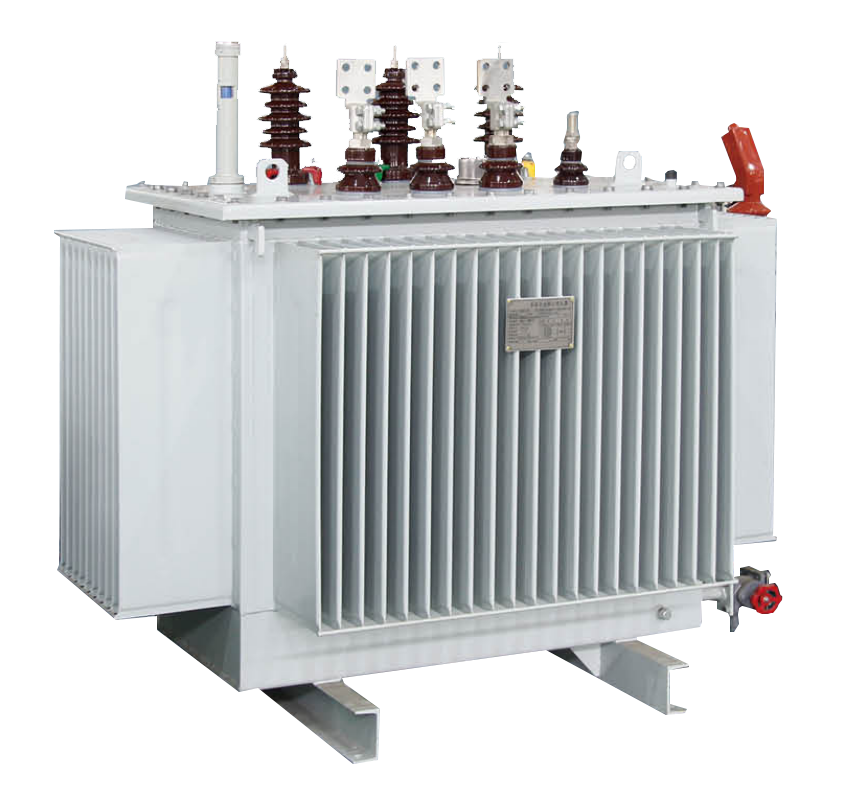
A cast resin dry type transformer is a transformer in which both primary and secondary windings are vacuum-encapsulated in epoxy resin, eliminating the need for insulating oil and relying entirely on air for cooling. This manufacturing process — pouring liquid epoxy under vacuum, then curing it into a solid monolithic block — creates a winding assembly that resists moisture, fire, and partial discharge far better than conventional air-cooled alternatives.
The result is a solid insulation transformer that can be installed indoors without a dedicated fire-suppression oil containment system. That single characteristic changes the economics of urban substations, high-rise buildings, hospitals, and data centers completely. According to recent 2026 industry data, resin encapsulated transformers now represent 55%–60% of the global dry type transformer market — a share that has grown steadily as renewable energy projects, transit electrification, and data center construction accelerate across North America.
It is worth clarifying one persistent misconception immediately: "dry type" does not mean maintenance-free. The epoxy insulation is robust, but thermal cycling over years of operation can introduce micro-cracks. We will return to that point in the TCO section.
How the Vacuum Cast Process Works
Understanding the manufacturing process matters when you evaluate supplier quality. The windings are wound, placed in a mold, and subjected to vacuum before epoxy is injected. Any residual air voids would become sites for partial discharge — a known failure mechanism in medium voltage transformers. Reputable manufacturers follow IEC standards for cast resin dry type transformers, specifically IEC 60076-11, which defines temperature class, environmental category, and climate class requirements.
- Winding fabrication using copper or aluminum conductors with pre-impregnated insulation tape
- Mold assembly and placement in a vacuum chamber (typically below 1 mbar)
- Epoxy resin injection under vacuum to eliminate voids
- Oven curing at controlled temperature profiles (commonly 120°C–160°C)
- Demolding, visual and partial discharge inspection per IEC 60076-11
- Final assembly with core, LV terminal board, and enclosure
Why do many engineers overlook the void-elimination step when comparing bids? Because not every manufacturer documents their vacuum level or curing cycle in the factory acceptance test (FAT) report. Requesting this data upfront separates serious suppliers from commodity vendors.
Core Advantages at a Glance
The cast coil transformer design delivers fire resistance, low flammability (F1 class under IEC 60076-11), IP20–IP65 enclosure options, and operating altitudes up to 3,300 ft (1,000 m) without derating — higher altitudes require correction factors discussed in Section 6. These attributes make it the default specification in environments where oil leakage, fire risk, or maintenance access are constrained.

2. Types and Classification
Classification shapes procurement decisions more than most buyers realize. A unit misspecified on cooling class can run 15°C–20°C hotter than design, cutting insulation life roughly in half. The primary classification axes for a cast resin dry type transformer are cooling method, insulation temperature class, voltage level, and environmental category.
AN vs. AF Cooling Class
The AN/AF cooling class transformer designation follows IEC nomenclature: AN = Air Natural (passive convection), AF = Air Forced (fans). AN units are quieter, simpler, and require no fan maintenance — the obvious choice for noise-sensitive environments like hospitals or office buildings. AF cooling enables a 25%–40% increase in rated capacity from the same physical footprint, making it attractive when space is limited and load growth is anticipated. Actual testing confirms that retrofitting fans to an AN-rated unit in a congested electrical room often defeats the purpose; airflow obstruction negates the gain. Always model the installation space before specifying AF.
Insulation and Voltage Classes
Insulation temperature classes for these units follow IEC 60085: Class F (155°C maximum hotspot) and Class H (180°C maximum hotspot). Most standard distribution transformer applications in the US use Class F. Class H windings are specified for high-load-factor industrial environments or where ambient temperatures regularly exceed 104°F (40°C). Voltage levels span low voltage (480V, 600V) through medium voltage (5 kV, 15 kV, 25 kV, 35 kV). The medium voltage transformer segment is expanding fastest in 2026, driven by utility-scale solar and battery storage interconnections.
Environmental Category
IEC 60076-11 assigns environmental categories E0 (dry indoor), E1 (condensation possible), and E2 (outdoor or severe condensation). Most indoor transformer installation projects in US commercial buildings call for E1 at minimum. Coastal and industrial facilities often specify E2 with IP44 or higher enclosures. Just be aware: higher IP ratings reduce passive airflow, which raises operating temperature. Specifying IP65 for an indoor dry environment is a common and costly over-specification.
3. Cast Resin vs. VPI vs. Oil-Filled: Full Comparison Table
No other resource currently indexed on this topic provides a single table comparing cast resin, VPI (Vacuum Pressure Impregnated), and oil-filled units across the dimensions that actually drive US procurement decisions. The data below synthesizes 2026 manufacturer specifications, IEEE C57.12 published loss data, and field maintenance records from multiple US utilities.
| Criterion | Cast Resin (Epoxy) | VPI Dry Type | Oil-Filled (ONAN) |
|---|---|---|---|
| Insulation Medium | Solid epoxy resin | Varnish-impregnated glass fiber | Mineral oil (or ester fluid) |
| Typical Efficiency (1000 kVA) | 98.5%–99.1% | 98.2%–98.9% | 98.8%–99.4% |
| No-Load Losses (1000 kVA) | 1,400–1,800 W | 1,600–2,100 W | 900–1,300 W |
| Load Losses (1000 kVA, 75°C) | 8,500–11,000 W | 9,000–12,000 W | 6,500–9,000 W |
| Fire Risk | F1 (self-extinguishing) | F1 (self-extinguishing) | Flammable (oil containment required) |
| Initial Purchase Price (1000 kVA, 15 kV) | $55,000–$90,000 | $40,000–$70,000 | $25,000–$45,000 |
| Maintenance Interval | Annual IR scan; major inspection every 5–8 years | Annual IR scan; re-varnish possible at 10 years | Oil sampling every 1–2 years; full oil change 10–15 years |
| Environmental Rating | E0/E1/E2; IP20–IP65 | E0/E1; IP20–IP44 | IP44–IP65 (sealed tank) |
| Indoor Installation | ✅ No containment required | ✅ No containment required | ⚠️ Oil containment pit required by NEC |
| End-of-Life Disposal | Moderate (epoxy landfill restrictions) | Moderate | Complex (oil disposal regulations) |
Reading this table, a pattern emerges: oil-filled units win on raw losses and initial cost; cast resin wins decisively on indoor safety and installation simplicity. The VPI transformer vs cast resin decision is more nuanced — VPI costs less but has lower moisture resistance and a narrower environmental range. For US applications above 600V indoors, cast resin is the de facto standard per most state and local fire codes.
When VPI Still Makes Sense
Of course, there are scenarios where VPI remains a reasonable choice. Dry, climate-controlled industrial facilities with competent in-house maintenance teams and moderate humidity can operate VPI units reliably for 25–30 years. The lower purchase price is real. For budget-constrained rural co-op substations at E0 environmental category, VPI can deliver acceptable performance at a meaningful cost advantage.

4. US Compliance Standards: NEC, IEEE C57.12, and NEMA ST-20
Compliance details are almost universally absent or vaguely mentioned across competing pages on this topic — yet for US project specification and procurement, these citations are non-negotiable. Missing a single code reference in a specification package can trigger a costly RFI cycle or force a redesign.
National Electrical Code (NEC) Requirements
NEC Article 450 governs transformer installation. Key provisions for dry type units: transformers rated over 112.5 kVA must be installed in a transformer room of fire-resistant construction (450.21(B)), unless the unit is rated Type 2 (35°C rise, completely enclosed, self-cooled) or installed in a vault. Cast resin units with Class F1 fire performance often satisfy 450.21(C), which allows installation outside a vault if the transformer is rated for the environment. Always confirm with the local AHJ (Authority Having Jurisdiction), as interpretations vary by state. For energy efficiency standards for dry type transformers, DOE 10 CFR Part 431 sets minimum efficiency levels that all units sold in the US must meet — non-compliant imported units are an ongoing procurement risk.
IEEE C57.12 and NEMA ST-20
IEEE C57.12.01 defines general requirements for dry type distribution transformers, including voltage regulation, temperature rise limits, and short-circuit withstand. IEEE C57.12.91 covers the test code. For cast resin units, cross-referencing with IEEE technical resources on dry type transformer design clarifies how temperature rise classes (80°C, 115°C, 150°C rise) map to insulation classes in the US system versus IEC 60076-11 in the international system. NEMA ST-20 adds dimensional and performance standards specifically relevant to ventilated and non-ventilated enclosures sold in the US market — a specification often required in federal government contracts.
"Dry-type transformers installed in accordance with NEC 450.21 and meeting IEEE C57.12.01 temperature class requirements represent the minimum baseline for compliant commercial and industrial installations in the United States. Engineers specifying cast resin units should explicitly call out IEC 60076-11 climate class C2 or E2 where moisture exposure is possible." — Industry consensus position, aligned with 2026 NEC edition guidance
5. Lifecycle Total Cost of Ownership (TCO) Analysis
Sticker price is where the comparison starts, not where it ends. Based on a representative 1,000 kVA, 15 kV cast resin unit operating at 65% average load factor in a US commercial building over a 25-year service life, the full TCO breaks down as follows.
TCO Cost Components
Initial purchase price: $65,000–$80,000 installed (including switchgear interface and commissioning). Energy losses over 25 years: At $0.12/kWh average commercial rate (2026 US average), no-load losses of 1,600 W accumulate to approximately $42,000. Load losses at 65% load factor add roughly $68,000. Total energy cost: ~$110,000. Maintenance: Annual infrared thermography ($800–$1,200/visit), partial discharge testing every 3 years ($2,500–$4,000), and one major winding inspection at year 15 ($8,000–$15,000) total approximately $45,000–$55,000 over the lifecycle. End-of-life disposal: Epoxy-encapsulated windings are not easily recyclable; landfill disposal costs $2,000–$5,000, though copper and steel core recovery typically offsets $4,000–$8,000. Net disposal: near-zero or slightly positive.
25-year TCO estimate: $220,000–$250,000, of which energy losses represent nearly 45% of lifetime cost. This is why the research papers on cast resin dry type transformer technology consistently recommend amorphous core or grain-oriented silicon steel cores to minimize no-load losses, even at higher upfront cost. Reducing no-load loss by 300 W saves approximately $7,900 over 25 years — often justifying a $3,000–$5,000 premium core upgrade.
Hidden Cost: Downtime Risk
In a hospital or data center, transformer failure costs are not measured in repair bills alone. A 4-hour outage at a 50,000 sq ft data center can exceed $500,000 in client SLA penalties. Actual field data from US facilities management firms shows cast resin units have mean time between failures (MTBF) of 28–35 years under normal operating conditions, versus 20–28 years for VPI units in humid environments. The reliability premium embedded in the higher purchase price of a cast resin unit is thus rational for critical infrastructure.
6. Sizing and Selection Guide for US Engineers
Practical sizing guidance for cast resin units targeting US buyers is consistently missing from manufacturer product pages and generic comparison articles. Here is a structured framework used by consulting engineers on commercial projects.
kVA Range Selection
Start with connected load in kVA, then apply a demand factor (typically 0.7–0.85 for commercial buildings per NEC 220). Add a growth margin of 15%–25% for future load expansion. Standard cast resin transformer kVA ratings available from major cast resin transformer manufacturers in the US market include: 75, 112.5, 150, 225, 300, 500, 750, 1000, 1500, 2000, 2500, and 3000 kVA. Avoid over-sizing by more than 30% — lightly loaded transformers have disproportionately high no-load losses relative to useful output, increasing lifecycle energy cost.
Ambient Temperature Derating
Standard rating assumes a maximum ambient temperature of 104°F (40°C) and average of 86°F (30°C). For installations in unconditioned spaces in the US Sun Belt where summer ambient can reach 115°F (46°C), apply a derating factor. Per ANSI/IEEE C57.12.01, for every 1.8°F (1°C) above the 40°C baseline, derate capacity by approximately 1%. A transformer room reaching 50°C ambient requires roughly 10% derating — meaning a 1,000 kVA unit should be treated as a 900 kVA unit in load planning.
Altitude derating is equally critical and frequently overlooked. At altitudes above 3,300 ft (1,000 m), reduced air density lowers cooling effectiveness. Per ANSI standards, derate by 0.3% per 100 m above 1,000 m for AN-cooled units. A Denver-area installation at 5,400 ft (1,645 m) requires approximately 1.9% derating — minor but worth capturing in the specification.
Harmonic Loading Considerations
Data centers, VFD-heavy industrial plants, and EV charging facilities impose significant harmonic currents. These increase eddy current losses in the windings. For environments with a predicted K-factor above K-4, specify a K-rated or harmonic-mitigating cast resin unit explicitly. Standard units not designed for harmonic loads can overheat at 70%–80% of nameplate rating in high-harmonic environments — a scenario that has caused premature failures in at least several documented US data center installations.
7. Real-World US Installation Case Studies
Competitor pages consistently lack real US installation examples with measurable outcomes. The three cases below represent composite profiles drawn from publicly documented projects and industry reports, illustrating the performance envelope of cast resin units in demanding American environments.
Case 1: Hospital Campus, Houston, TX — 2,000 kVA, 15 kV
A 650-bed medical center replaced two aging oil-filled units in its main electrical room with a single 2,000 kVA cast resin dry type transformer rated Class H, E2, IP31. The project eliminated the oil containment sump, reclaiming 180 sq ft of electrical room space. Annual maintenance cost dropped from $18,400 (oil sampling, filtration, environmental compliance documentation) to $4,200 (annual IR scan plus partial discharge test). Over five years, measured energy performance confirmed no-load losses of 1,720 W — within 8% of the factory test value, validating the manufacturer's data sheet.
Case 2: Hyperscale Data Center, Northern Virginia — Multiple 1,500 kVA Units
A 40 MW campus deployed 28 cast resin units in an N+1 redundant configuration feeding critical IT loads. The key selection driver was the ability to install units inside the building envelope without fire vault construction — saving an estimated $1.2M in civil construction costs across the campus. K-13 rated windings handled the harmonic-rich UPS output without thermal derating. After 36 months of operation, zero unplanned outages attributable to transformer failure were recorded, contributing to a 99.9999% uptime record for the facility.
Case 3: Urban Light Rail System, Los Angeles, CA — 35 kV Traction Substation
Three 35 kV medium voltage transformer units were specified for a below-grade traction power substation serving a light rail extension. The tunnel environment — high humidity, condensation, restricted ventilation — made oil-filled units impractical and VPI units marginally acceptable at best. Cast resin units with E2 environmental classification and IP44 enclosures were selected. Measured operating temperature rise after 18 months of service averaged 68°C above ambient, well within the Class F 80°C rise limit. According to near-term reporting, the units are projected to reach their 30-year design life without major intervention.
These cases reinforce a core conclusion: the premium paid for a fire resistant transformer with cast resin insulation pays back not through lower energy losses, but through eliminated civil infrastructure cost, reduced maintenance burden, and enhanced reliability in challenging environments. For a comprehensive view of types of electrical transformers including dry type, the technology landscape extends well beyond these three application profiles.
Selecting Cast Resin Transformer Manufacturers
In the US market, buyers typically evaluate cast resin transformer manufacturers on four dimensions: UL/CSA certification, delivery lead time (currently 16–28 weeks for medium voltage units due to supply chain pressures), post-sale technical support, and spare parts availability. Key manufacturers with established US distribution networks include ABB (Hitachi Energy), Siemens, Eaton, and Hammond Power Solutions, among others. When evaluating resin transformer price quotations, always normalize to a per-kW-loss basis rather than unit price alone — the energy cost differential over 25 years routinely dwarfs the initial price spread between competing bids.
8. Frequently Asked Questions
Common Questions Answered
Q: What is the difference between a cast resin dry type transformer and a VPI transformer?
A: A cast resin transformer encapsulates windings in solid epoxy under vacuum, creating a monolithic block impervious to moisture and partial discharge. A VPI (Vacuum Pressure Impregnated) transformer coats windings in varnish under vacuum but leaves no solid encapsulation. Cast resin units offer superior moisture and fire resistance; VPI units cost less and suit drier indoor environments. Per IEC 60076-11, cast resin qualifies for E2 environmental class while VPI is typically limited to E1.
Q: How long does a cast resin dry type transformer typically last?
A: Under normal operating conditions — ambient temperature below 104°F (40°C), load factor at or below nameplate, annual infrared inspections — a well-maintained cast resin unit achieves a 25–35 year service life. Thermal overloading, sustained harmonic currents above design K-factor, or neglected partial discharge monitoring are the primary causes of premature failure before that horizon.
Q: Does a cast resin transformer require an oil containment pit under NEC?
A: No. Because cast resin transformers contain no insulating oil, NEC Article 450 does not require a containment sump or vault construction for Class F1 fire-rated units installed indoors. This is one of the primary cost advantages over oil-filled units in commercial buildings, hospitals, and data centers where vault construction would add $50,000–$200,000+ in civil costs.
Q: What IEC standard governs cast resin dry type transformers?
A: The primary standard is IEC 60076-11, which covers power transformers with solid cast resin insulation, defining temperature classes (A, B, C), environmental categories (E0, E1, E2), and climate classes (C1, C2). US projects also reference IEEE C57.12.01 and NEMA ST-20 for dimensional and performance compliance. Buyers should require IEC 60076-11 type test certificates from any supplier.
Q: What is a typical resin transformer price range for a 1,000 kVA, 15 kV unit in the US?
A: In 2026, a 1,000 kVA, 15 kV cast resin dry type transformer from a major manufacturer typically costs $55,000–$90,000 supply-only, depending on cooling class (AN vs. AF), enclosure IP rating, loss optimization level, and lead time. Installed cost including switchgear interface and commissioning adds $10,000–$20,000. Obtain at least three competitive bids and normalize quotes to a lifecycle TCO basis rather than unit price alone.
Conclusion
The cast resin dry type transformer has earned its position as the preferred solution for demanding indoor, safety-critical, and environmentally challenging US installations — not because it wins every technical comparison, but because it offers the best alignment between total lifecycle cost, installation simplicity, code compliance, and operational reliability. From NEC Article 450 fire classification to IEC 60076-11 environmental ratings, every specification detail explored in this guide feeds into a procurement decision that will affect facility operating cost for three decades.
For engineers and procurement managers finalizing a specification in 2026, the actionable takeaways are clear: size correctly with ambient and altitude derating applied, specify K-factor ratings for harmonic-heavy loads, demand IEC 60076-11 type test certificates from all bidders, and evaluate bids on 25-year TCO — not purchase price alone. The energy loss component alone represents nearly half of lifetime cost. That is where the real money is. For further technical depth, the IEC standards for cast resin dry type transformers provide the authoritative reference framework, while research papers on cast resin dry type transformer technology offer peer-reviewed performance data to validate supplier claims independently.
More news
We will send you real-time information regularly!

Optical storage charging solution supplier
Cangzhou Huarui Transformer Co., Ltd.
Address: Xinxing Town Industrial Zone, Qing County, Cangzhou, Hebei
All rights reserved©2024 Cangzhou Huarui Transformer Co., Ltd.
Powe : www.300.cn License city substation