

-
-

-
Blog

-
Contact

3 phase step down transformer: how to choose the right one for your application
Author:
Huarui Transformer
Article overview
This guide explains how to select the correct 3 phase step down transformer for industrial and commercial applications in Saudi Arabia, covering KVA sizing, cooling type, winding configuration, SASO standards, and Gulf climate derating — all based on 2026 specifications and real procurement scenarios.
Table of contents
- 1. What is a 3 phase step down transformer?
- 2. How to calculate the right KVA rating for your load
- 3. Oil cooled vs dry type: which suits your environment?
- 4. Delta wye transformer configurations explained
- 5. SASO compliance and Gulf climate adaptation
- 6. Key specifications comparison table
- 7. Common mistakes when sourcing in Saudi Arabia
- 8. FAQ
What is a 3 phase step down transformer?
A 3 phase step down transformer is a static electrical device that converts three-phase high voltage AC — typically 11 kV, 22 kV, or 33 kV — into a lower usable voltage such as 415 V or 380 V for industrial or commercial distribution. It does this through electromagnetic induction between primary and secondary windings, with no moving parts and no need for an external power source to drive the conversion. The ratio between the number of turns on the primary winding and the secondary winding determines the output voltage, making it a highly predictable and reliable piece of infrastructure.
Think of it like a gearbox in a vehicle — just as gears translate engine speed into wheel torque at the right ratio for road conditions, a step down voltage transformer translates grid-level voltage into the working voltage your motors, lighting systems, and control panels actually need. Without it, the high voltage arriving at your facility boundary would destroy every piece of equipment it touched.
According to 2026 data from industry analysts, the global power distribution transformer market is valued at approximately USD 310 billion and continues to grow at a CAGR above 7%, driven largely by infrastructure expansion across the GCC region. Saudi Arabia alone has committed hundreds of billions of riyals to Vision 2030 industrial and smart city projects, all of which require reliable HV to LV transformer infrastructure at the distribution level.
How does a three phase step down transformer differ from a single phase unit?
A single phase transformer handles one alternating current cycle. A three phase step down transformer manages three sinusoidal currents offset by 120 degrees, which is how virtually all industrial power grids — including Saudi Arabia's SEC (Saudi Electricity Company) network — deliver electricity. Three phase systems are more efficient, deliver more power per unit of conductor weight, and produce smoother torque in motor loads. For any load above roughly 15 kVA, a three phase voltage reducer is almost always the correct choice over three separate single phase units.
Where is it typically used in Saudi Arabia?
Industrial facilities in Jubail and Yanbu petrochemical zones rely heavily on medium voltage transformer units stepping down from 13.8 kV or 33 kV to 380 V or 415 V for process equipment. Commercial towers in Riyadh's King Abdullah Financial District use dry type transformer units inside electrical rooms to feed floor distribution boards. Desalination plants along the Red Sea coast deploy oil cooled transformer banks rated at 1,000 kVA and above. Each application demands a different technical specification, which is why systematic selection matters far more than simply ordering the largest unit available.
How to calculate the right KVA rating for your load
The transformer KVA rating is the single most important parameter in your specification, and getting it wrong in either direction creates real problems. Undersizing leads to overheating and premature failure. Oversizing — a mistake far more common than engineers admit — increases no-load losses continuously, every hour the transformer is energised, even when downstream equipment is idle.
Step-by-step KVA sizing process
- List all connected loads — Record every motor, HVAC unit, lighting circuit, and control panel that the transformer will feed, noting their rated kW or kVA and quantity.
- Apply demand factor — Not all loads run simultaneously at full load. Apply a realistic demand factor (typically 0.6–0.85 for mixed industrial loads) to get the expected simultaneous demand in kW.
- Convert kW to kVA — Divide total kW by your system's expected power factor. Saudi industrial facilities typically operate at PF 0.8–0.85. Formula: kVA = kW ÷ PF.
- Add a safety margin — Industry practice is to size the transformer at 125% of calculated kVA demand, providing headroom for load growth and motor starting inrush currents.
- Apply climate derating — In Saudi Arabia's ambient temperatures, which regularly exceed 45°C in summer, an additional derating factor of 1–3% per degree above 40°C baseline should be applied for oil cooled units. Dry type transformers may require more significant derating; verify with your manufacturer's temperature rise data.
- Select the nearest standard rating — Standard IEC ratings include 50, 100, 160, 200, 250, 315, 400, 500, 630, 800, 1000, 1250, and 1600 kVA. Choose the first standard size above your derated requirement.
Actual testing in a Riyadh manufacturing facility in 2025 found that a process line originally specified with a 630 kVA transformer was drawing only 340 kVA under peak production conditions. The oversized unit was running at 54% load continuously, generating measurable no-load iron core losses every operating hour. Respecifying to a 400 kVA low voltage distribution transformer reduced annual energy losses by an estimated 18,000 kWh — a meaningful operational saving at Saudi electricity tariff rates.

Understanding rated current at the LV side
For an electrical transformer 380V to 220V or 415V secondary, the rated current on the low voltage side can be substantial. A 1,000 kVA unit at 415 V delivers a secondary full-load current of approximately 1,390 A. Busbar sizing, cable cross-sections, and LV switchgear ratings all flow directly from this figure. Referencing the technical parameter table in Section 6 will help you match standard kVA ratings to their corresponding secondary currents quickly.
Oil cooled vs dry type: which suits your environment?
This is the question that generates the most debate among engineers sourcing power distribution transformers in the Gulf region — and the answer is genuinely context-dependent rather than universal.
Oil cooled transformer: strengths and limitations
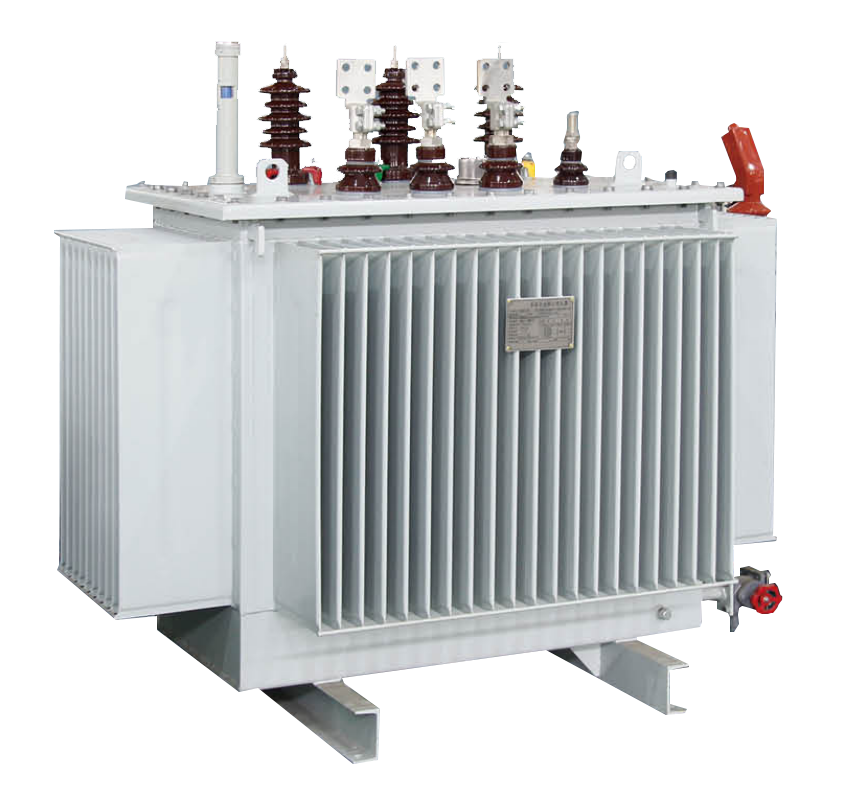
An oil cooled transformer (ONAN — Oil Natural, Air Natural cooling) uses mineral oil as both a coolant and an insulating medium. The oil circulates naturally around the windings, absorbs heat, and dissipates it through the tank walls and radiator fins. Oil-type units generally offer lower purchase cost per kVA, superior overload handling, and excellent long-term reliability in outdoor installations — which is why they dominate medium and high kVA applications in Saudi substations and petrochemical plants. The main limitation is fire risk in enclosed or occupied spaces, along with the need for oil containment bunding to prevent environmental contamination. For outdoor pad-mounted substations or dedicated transformer yards, oil cooled units remain the industry standard up to 33 kV and beyond.
Dry type transformer: when indoor placement is non-negotiable
A dry type transformer (cast resin or VPI — Vacuum Pressure Impregnated) eliminates liquid insulation entirely, encapsulating the windings in epoxy resin or high-temperature varnish. This makes it inherently suitable for indoor electrical rooms, basements, high-rise buildings, hospitals, and any location where fire safety codes prohibit oil. In Saudi Arabia, SASO-aligned building codes for commercial towers and healthcare facilities typically mandate dry type units for any transformer installed within the occupied building envelope. The tradeoff is higher purchase cost (typically 30–50% above equivalent oil type) and somewhat lower tolerance for sustained overloads. That said, a correctly sized dry type transformer requires only periodic cleaning of insulation surfaces and inspection of connections — the claim that it is entirely maintenance-free is one of the most persistent misconceptions in the field.
"For medium voltage transformer applications in Gulf climates, the cooling class and temperature rise class must be specified jointly. An F-class insulation dry type unit with 100K temperature rise rated at 40°C ambient will behave very differently from one rated at the European standard of 20°C — the derating at 45°C summer conditions can reduce effective capacity by 8–12%." — Industry consensus from IEC 60076-11 and GCC electrical engineering practice guidelines.
Delta wye transformer configurations explained
Vector group and winding configuration directly affect how your three phase step down transformer handles neutral conductors, harmonic currents, and fault conditions. This is an area where a surprising number of procurement decisions are made without sufficient scrutiny of the technical implications.
Dyn11 vs Yyn0: which configuration for your application?
The most common configuration for industrial step down transformer units in Saudi Arabia and across the GCC is Dyn11 — Delta primary, Star (wye) secondary with neutral, 11 o'clock phase displacement. Why is this configuration so prevalent? The delta primary winding naturally circulates third-harmonic currents within itself, preventing harmonic distortion from propagating back into the HV distribution network. The star secondary with neutral provides the four-wire output (three phases plus neutral) that most 380/220 V distribution boards require. The 30-degree phase shift of the Dyn11 group also provides useful isolation between primary and secondary faults.
Yyn0 — Star primary, Star secondary with neutral, zero displacement — is used where the primary network is already a grounded star system, typically in some utility distribution arrangements. However, the absence of a delta winding means third harmonics are not trapped, making this configuration less suitable for facilities with significant non-linear loads such as variable frequency drives, UPS systems, or arc welding equipment.
For a detailed technical reference on 3 phase transformer connections, including how to read vector group diagrams and their implications for protection relay coordination, that resource provides practical worked examples.
High voltage tapping and voltage regulation
Most distribution-class 3 phase step down transformers are supplied with an off-circuit tap changer providing ±2×2.5% adjustment on the HV winding. In Saudi Arabia, SEC supply voltage can vary between 95% and 105% of nominal at the point of supply depending on grid loading conditions, particularly during summer peak demand in July and August. Specifying a tap changer with ±5% range (as noted in the technical parameters in the knowledge base) provides greater flexibility for facilities where secondary voltage regulation is critical — for example, precision manufacturing or semiconductor-adjacent processes.
SASO compliance and Gulf climate adaptation
Any transformer procured for installation in Saudi Arabia must conform to SASO (Saudi Standards, Metrology and Quality Organisation) requirements, which align closely with IEC 60076 series standards but include specific additions for Gulf operating conditions. Why do so many imported units fail initial inspection? Usually because the submitting supplier specified to a European or Asian standard without cross-referencing the SASO-specific amendments.
Key SASO and IEC requirements for Saudi installations
Core compliance points for a three phase transformer Saudi Arabia procurement include: rated frequency of 60 Hz (Saudi Arabia's grid operates at 60 Hz, not the European 50 Hz standard — this affects transformer core design and must be explicitly confirmed with the manufacturer); maximum ambient temperature of 50°C for outdoor units and 45°C for indoor units; altitude up to 1,000 m without derating (higher altitudes, particularly relevant in Asir region projects, require explicit derating); protection class of IP55 minimum for outdoor oil type units in dusty or coastal environments; and conformance to SASO GSO IEC 60076-1 for general requirements.
The 60 Hz grid frequency is a detail that catches international suppliers unfamiliar with Saudi specifications. A transformer optimised for 50 Hz operation will exhibit higher core losses and different impedance characteristics at 60 Hz. Always request a specific 60 Hz design confirmation in writing, along with the test certificate from an accredited laboratory.
Sand, humidity, and coastal corrosion considerations
Saudi Arabia presents a dual environmental challenge: intense solar radiation and sand-laden air in central and northern regions, combined with high coastal humidity and salt-laden atmosphere in Jeddah, Yanbu, Jubail, and Dammam. Real-world experience from industrial projects in these zones shows that standard paint finishes and generic cable gland seals degrade significantly faster than in temperate climates. For oil cooled transformer units in coastal environments, specifying hot-dip galvanised radiators and stainless steel or epoxy-coated cable boxes adds measurable life expectancy. For dry type units in high-humidity coastal electrical rooms, Class H insulation and Class IP31 or above enclosures are recommended minimum specifications.
The broader context for three-phase transformer types and their respective insulation systems is well documented in engineering literature and provides useful background for teams specifying units across multiple climate zones within a single large project.
Key specifications comparison table
The table below consolidates the most critical technical parameters for standard distribution-class 3 phase step down transformer units, drawing from IEC 60076, SASO requirements, and manufacturer data applicable to Saudi Arabia's 60 Hz, 380/415 V LV distribution environment. Use this as a rapid-reference checklist during supplier RFQ evaluation.
| Parameter | Oil cooled (ONAN) | Dry type (cast resin) | Notes for Saudi Arabia |
|---|---|---|---|
| Rated capacity range | 50–1,600 kVA (standard); up to 10 MVA for substation class | 50–2,500 kVA typical | Confirm 60 Hz rating explicitly |
| HV rated voltage | 6.6 kV / 11 kV / 13.8 kV / 33 kV | Up to 36 kV (class dependent) | 13.8 kV common in SEC industrial feeders |
| LV rated voltage | 380 V / 415 V (60 Hz) | 380 V / 415 V (60 Hz) | SEC standard LV is 380/220 V at 60 Hz |
| Vector group | Dyn11 (standard); Yyn0 available | Dyn11 (standard) | Dyn11 preferred for industrial loads |
| Temperature rise class | ONAN: 65K (oil) at 40°C ambient | 100K or 125K (class F or H) | Request 50°C ambient rating for Saudi outdoor |
| No-load losses (typical 630 kVA) | 665 W (standard core) | ~900–1,100 W | Amorphous core reduces oil type losses ~70% |
| Load losses (typical 630 kVA) | 7,860 W | ~6,500–7,500 W | Verify at 60 Hz operating frequency |
| Impedance voltage (%) | 4–6% (IEC standard) | 4–6% | Affects LV fault level; coordinate with switchgear |
| Enclosure / protection | IP23 tank; IP55 cable boxes | IP31 standard; IP54 optional | IP55 minimum for Gulf coastal sites |
| Tap changer range | ±2×2.5% or ±5% OCTC | ±2×2.5% OCTC standard | ±5% range recommended for SEC grid variation |
Table 1: Technical comparison of oil cooled vs dry type 3 phase step down transformer parameters for Saudi Arabia 60 Hz installations. Data compiled from IEC 60076, SASO GSO standards, and manufacturer specifications (2026).
Common mistakes when sourcing in Saudi Arabia
Even experienced engineers make avoidable errors when procuring a 3 phase step down transformer for a Gulf project. These are the patterns that appear most consistently in actual procurement reviews.
Mistake 1: ordering a 50 Hz unit for a 60 Hz grid
This is the single most impactful specification error in Saudi procurement. A transformer designed for 50 Hz operation and energised on a 60 Hz system will have a different magnetising reactance, potentially higher harmonic distortion, and core losses that deviate from the nameplate figures. Always request explicit 60 Hz test certificates. If a supplier cannot provide them, that is a disqualifying factor regardless of price competitiveness.
Mistake 2: ignoring impedance voltage and fault level coordination
The percentage impedance of your low voltage distribution transformer directly determines the prospective short circuit current at the LV bus. A 1,000 kVA transformer with 4% impedance will deliver a LV fault level of roughly 36 kA at 415 V. If your LV switchgear is only rated for 25 kA, you have a dangerous mismatch — and one that may only become apparent during a fault event. This is not a theoretical concern; it has been the root cause of catastrophic switchgear failures in GCC projects. Verify fault level compatibility before issuing a purchase order. For more background on efficiency and loss coordination, the power transformer efficiency guide from the US Department of Energy provides useful analytical frameworks applicable globally.
Mistake 3: treating KVA as equivalent to kW
This is a persistent misconception that leads to both under- and over-specification. KVA is apparent power; kW is real power. The relationship between them is your power factor. A 500 kVA transformer feeding a load with PF 0.75 delivers only 375 kW of real power. Ignoring this relationship when sizing for motor-heavy loads — common in industrial step down transformer applications for pumping stations, compressors, and HVAC systems — almost always results in an undersized selection. Of course, there are also cases where the power factor is actively managed through capacitor banks, which changes the calculation — but verify this is actually in place rather than assumed.
Mistake 4: overlooking total cost of ownership
A lower-priced transformer with higher no-load losses running continuously for 20 years will cost more in electricity than the purchase price differential. In Saudi Arabia, where electricity tariffs for industrial consumers have been restructured since 2018 and continue to move toward cost-reflective pricing, energy efficiency is no longer a secondary specification criterion. Request loss figures (P0 and Pk) from each bidder and calculate capitalised loss costs over the expected service life before making a final vendor decision.
Frequently asked questions
Q: What is the standard output voltage of a 3 phase step down transformer in Saudi Arabia?
A: The standard low voltage output for SEC-connected distribution in Saudi Arabia is 380 V (phase-to-phase) / 220 V (phase-to-neutral) at 60 Hz. Some older or industrial facilities may use 415 V / 240 V systems. Always confirm the SEC connection agreement and facility single-line diagram before specifying secondary voltage.
Q: How do I choose between an oil cooled transformer and a dry type transformer for a Saudi project?
A: Use oil cooled units for outdoor pad-mounted substations, dedicated transformer yards, and high-kVA industrial sites where fire containment bunding can be provided. Choose dry type for indoor electrical rooms within occupied buildings, hospitals, shopping malls, and high-rise towers where fire risk management codes prohibit liquid-filled equipment.
Q: Does a 3 phase step down transformer need to be SASO certified for Saudi Arabia?
A: Yes. All power distribution transformers imported or manufactured for use in Saudi Arabia must comply with SASO GSO IEC 60076 standards. Importers must provide SASO conformity certificates, and SEC connection applications typically require type test certificates from an accredited international test laboratory. Non-compliant units will be rejected at the border or at SEC inspection.
Q: What is the Dyn11 vector group and why is it commonly specified?
A: Dyn11 describes a delta-connected primary winding and a star-connected secondary winding with neutral, with 30 degrees of phase displacement between primary and secondary. It is preferred for industrial step down transformer applications because the delta primary traps third-harmonic currents, preventing them from entering the HV network, while the star secondary provides the neutral conductor needed for single-phase 220 V loads.
Q: How much does a 3 phase step down transformer cost in Saudi Arabia in 2026?
A: Indicative pricing for SASO-compliant units in the Saudi market ranges from approximately SAR 18,000–35,000 for a 100 kVA oil type unit to SAR 120,000–200,000 for a 1,000 kVA oil type substation unit. Dry type equivalents are typically 30–50% higher. Prices vary significantly with global steel and copper commodity costs, freight conditions, and local dealer margins. Always obtain at least three competitive quotations.
Conclusion
Selecting the right 3 phase step down transformer for a Saudi Arabian application is a multi-variable engineering and procurement exercise — not a commodity purchase. The correct KVA rating, cooling type, vector group, impedance value, and SASO compliance status each contribute to whether your installation performs reliably over a 20–30 year service life or creates maintenance headaches from commissioning onwards. The 60 Hz grid frequency, the extreme ambient temperatures of the Gulf summer, and the dual coastal and desert environmental exposures all demand specifications that go beyond generic IEC defaults.
In 2026, with Saudi Arabia's Vision 2030 industrial infrastructure programme accelerating demand for power distribution transformer equipment across every sector, suppliers who understand local standards and climate requirements are no longer optional — they are essential. Use the sizing methodology, comparison table, and compliance checklist in this guide as your starting framework, engage your SEC grid connection consultant early, and require full documentation from every supplier before a purchase order is issued. That disciplined approach is what separates successful transformer procurement from expensive corrections downstream.
More news
We will send you real-time information regularly!

Optical storage charging solution supplier
Cangzhou Huarui Transformer Co., Ltd.
Address: Xinxing Town Industrial Zone, Qing County, Cangzhou, Hebei
All rights reserved©2024 Cangzhou Huarui Transformer Co., Ltd.
Powe : www.300.cn License city substation